Founder Diaries · Home Fragrance · Air Conditioning & Closed Rooms
By Sonal Sahani · ISIPCA Versailles 11 min read Updated August 2026
This is the most legible smell in the whole of home diagnostics, and almost nobody reads it. The fact that it arrives in the first minute and then fades is not incidental to the problem — it is the single most informative thing about it, and it tells you that what you are smelling is a finite deposit being blown off a surface rather than something the room is producing. Deposits are on things. Things can be washed. Behind that first minute sits a small piece of physics involving condensation, a plastic tray and a pipe through the wall, and once you have it, the fix is a ten-minute habit that costs nothing and that hardly anybody has been told about.
Quick answers — read this first
Why it fades: the initial surge of airflow lifts what has settled on the filter and coil, and there is only so much of it. It depletes within a minute or two. A smell that fades is a deposit; a smell that holds a level is a supply.
Where the deposit comes from: the coil runs below the dew point, so water condenses on it whenever the compressor is running. It drips into a drain pan and leaves through a pipe. Wet metal, wet plastic and a damp dust-loaded filter in a warm room are ideal for microbial growth.
The habit almost nobody has: run fan-only mode for five to ten minutes before switching the unit off, so the coil dries instead of sitting soaked all night. Many remotes have a dry or self-clean setting that does this automatically.
The honest note: no diffuser, candle or reed does anything about this. Masking it is treating a machine problem with a smell.
The short answer
Short answer: whatever has grown on the wet evaporator coil and the damp filter is lifted by the first strong movement of air and delivered to the room. It fades because the supply is finite — you are smelling a deposit being depleted, not a source that keeps producing. That timing is the diagnosis.
The mechanism: the coil runs below the dew point, so it condenses water for every minute the compressor runs; the water collects in a drain pan and leaves through a drain line. A unit that runs hard and is then switched off at the wall leaves a cold soaked coil standing in a warm room, which is a growth chamber for the next several hours.
The fixes, at ₹0: five to ten minutes of fan-only mode before switching off, or the dry or self-clean setting if the remote has one; filter out and washed every two to four weeks in season; the drain line checked for a free-running drip. A coil clean is a service job.
Fragrance is not part of this answer — the
Hotel Collection at ₹299 and the
Sukoon at ₹1,899 are for a room whose machine is already clean.
Straight answer
Why does my air conditioner smell musty for the first minute after I switch it on, and then stop?
1. Because you are smelling something that was already there, being blown off. The fan starts, air moves across the filter and the coil for the first time in hours, and it carries with it what has settled and grown on those surfaces. There is a limited quantity of it. Within a minute or two it has largely gone, which is why the smell fades rather than holding.
2. The reason those surfaces are hospitable is condensation. The evaporator coil runs below the room's dew point — that is how a machine takes both heat and moisture out of the air — so water forms on the metal for as long as the compressor is running, runs down into a drain pan underneath and leaves through a pipe in the wall.
3. What makes it worse is switching off a wet machine. A unit that has been cooling hard and is then killed at the remote leaves a soaked coil and a wet pan standing in a warm closed room for the next several hours. That is close to ideal conditions, and it happens every single night.
4. So the fix almost nobody applies: run fan-only mode for five to ten minutes before you switch off. The compressor stops, the fan keeps turning, and the coil dries. Many remotes have a dry or self-clean setting built for exactly this. It costs nothing and it prevents the problem rather than treating it.
5. Then the filter, every two to four weeks in season, and a coil clean once a year. The filter is yours to do. The coil, the blower wheel and the drain are a technician's job and worth booking, and SOSA does not sell that service.
6. And plainly: no diffuser, candle or reed does anything about this. Running fragrance over it is treating a machine problem with a smell, which leaves you with two smells and one unsolved fault.
A portion of every order supports girl-child education through Nanhi Kali.
TL;DR: the first minute is a deposit being blown off the filter and coil by the initial airflow, and it fades because the deposit runs out. Condensation keeps those surfaces wet, and a unit switched off wet stays wet in a warm room all night. Run fan-only for five to ten minutes before switching off, wash the filter fortnightly in season, and book a coil clean. No fragrance touches any of this.

What a fragrance is for, and what it is not for
SOSA Hotel Collection · 15ml ₹299 / 15ml
I would rather print this than have you find it out at ₹299. A first-minute smell from an air conditioner is a wet metal problem, and there is no drop, reed or candle in existence that reaches inside a fan coil. Running a diffuser into it does not remove anything; it adds a second smell to the first and makes the original harder to identify, which is a genuine cost when you are trying to work out what is wrong. Wash the filter, dry the coil with fan mode, get the unit serviced if it persists — and then, if you want the room to have a character of its own, this is the range that does that job. Water-based, ultrasonic only, three to six drops per tank, IFRA-standard and composed in India.
Where the water goes, and what grows in it
An air conditioner is not really a cold-air machine, and understanding what it actually is makes this whole problem obvious. It is a device for moving heat out of a room, and it does that by running a coil so cold that the air passing over it gives up both its warmth and a large part of its moisture — which is why a room feels drier as well as cooler, and why there is a pipe leaving your wall that drips onto something you would rather it did not. Every litre of water that leaves through that pipe formed on metal inside the unit first. The smell in the first minute is the story of what happens to metal, plastic and fabric that are wet for six hours a night, in a warm room, with a supply of dust arriving on the airstream.
1
THE PHYSICS
Condensation, a drain pan and a pipe through the wall
Follow the water, because everything else on this page follows from it. The evaporator coil in the indoor unit is deliberately held below the dew point of the room's air, so moisture condenses onto it in the same way it condenses onto a cold glass of water on a humid afternoon. The coil is not a smooth surface: it is a dense stack of thin aluminium fins with tubing running through them, designed to maximise contact area with the air, which also makes it superb at holding water and trapping anything the filter did not catch. The condensate runs down the fins into a shallow drain pan underneath, and from the pan into a drain line that leaves through the wall. On a humid night in an Indian coastal city that is a real quantity of water, hour after hour. Three separate places in that chain can go wrong and each has a characteristic result. The coil itself grows biofilm between the fins, which is the classic sour first-minute smell and the hardest of the three for you to reach. The drain pan holds a shallow layer of standing water with dust in it, and if the pan is dirty or the water is not draining freely it goes stale in the way any small body of still water goes stale. And the drain line can partially block with dust and slime so that water backs up and sits, which is also the commonest reason a unit starts dripping indoors. You can check the last of the three in ten seconds and for nothing: when the unit has been running for twenty minutes on a humid day, go and look at where the drain pipe comes out. It should be dripping steadily or running. If it is dry while the room is being cooled hard, the water is going somewhere else, and somewhere else is inside your wall or inside the machine.
2
WHY IT FADES
A deposit depletes; a source does not
Now the part that makes this the most satisfying smell in the house to diagnose. When the fan spins up from rest, the air velocity across the filter and coil goes from nothing to its full working figure in a second or two, and that surge is far more effective at lifting settled material than the steady flow that follows it. Everything that has accumulated on those surfaces since the machine last ran — the volatile products of whatever has been growing there, the fine dust sitting on the filter mat, the moisture still clinging to the fins — gets its one moment of being airborne. Then it is gone, because there was only ever a limited amount of it, and the machine spends the rest of the evening delivering air across surfaces it has already stripped. This is why the smell has a shape: loud, short, and not repeatable until the unit has been off for hours and the deposit has rebuilt. Contrast that with a source, which is something still actively producing: a dry drain trap, a damp patch in a wall, a bin. Sources hold a level or get worse the longer you stand there. Deposits fade. If you take one habit of thought from this page, take the habit of asking whether a smell fades or holds, because it sorts almost every domestic smell into things you wash and things you have to find. It also explains the two situations that make the first minute much worse: a unit that has not been run for a week or a season, which has had a long time to accumulate, and a unit that was switched off soaking wet after a hard run, which has had ideal conditions overnight to convert that water into something you can smell.
3
THE PREVENTION
Five to ten minutes of fan mode, every night, for nothing
Which points straight at the fix, and it is prevention rather than treatment. Before you switch the unit off, put it into fan-only mode for five to ten minutes. The compressor stops, the coil stops being cold, and the fan keeps moving room air across it until it is dry rather than soaked. A dry coil in a warm room is a far less interesting place to live than a wet one, and doing this nightly changes the conditions rather than fighting their results. Look at your remote before you decide it is a chore: a great many units sold in the last decade have a dry mode, a self-clean, a blow or a clean function, and on most of them it is exactly this — the fan continuing for a set period after cooling stops. If yours has it, use it, and it becomes automatic. If it does not, ten minutes of fan before bed is the manual version. Then the filter, which is the part you own: out, rinsed on the dusty side under a tap, dried completely and put back, every two to four weeks while the machine is in daily use. A damp filter refitted wet is worse than the dirty one you took out. And then the honest limit of what you can do yourself: the coil, the blower wheel and the drain need a technician with the correct chemicals and a way of catching the run-off, and if a first-minute smell survives a clean filter and a fortnight of drying the coil, that service is what you are buying next. It is not something SOSA sells and I would be doing you no favours by suggesting a ₹299 alternative to it.
The one habit worth taking from this page: never switch off a wet air conditioner. Five to ten minutes of fan mode first, every night, and the problem largely stops happening rather than being repeatedly cured.
The parts, and which of them you can touch
A split unit has five places where this smell can originate, and they are not equally accessible. The table sorts them by who does the work, which is the practical question — two of the five are yours and take ten minutes, one is a five-second observation, and two require a technician. The first row is the one to do tonight.
Part by part
Where the first-minute smell actually comes from, and who can reach it
| The part |
What it does |
How it starts to smell |
You, or a technician |
| The filter ★ |
Catches dust before it reaches the coil, sitting directly in the airstream |
Loads with dust, gets damp from the coil behind it, and grows a mat you are breathing through |
You. Ten minutes, a tap, every two to four weeks in season · ₹0 |
| The evaporator coil |
Runs below the dew point so heat and moisture leave the air |
Dense aluminium fins stay wet for hours; biofilm forms between them and is blown off on start-up |
A technician. Once a season, and worth booking |
| The drain pan |
Collects the condensate running off the coil |
Holds a shallow layer of standing water with dust in it, which goes stale if it does not drain freely |
A technician, usually with the coil clean |
| The drain line |
Carries the water out through the wall |
Partially blocks with dust and slime; water backs up and sits, and the unit may start dripping indoors |
Check it yourself in five seconds: is it dripping while the room cools? · ₹0 |
| The blower wheel |
Moves air across the coil and into the room |
Fine dust bonds to damp blades and builds up, which reduces airflow as well as smelling |
A technician. Not a home job |
| The room itself |
Everything the machine did not cause |
A smell that builds through the evening rather than fading in a minute is not the machine at all |
You. Two windows, twenty minutes · ₹0 |
Shop this guide
For a room whose machine is already clean
The SOSA principle
A smell that fades is being used up. A smell that holds is being made. The first minute of an air conditioner is the clearest example of the first kind in the house.
Which is why the answer is a tap and ten minutes of fan mode rather than anything with a price on it, and why a fragrance running over the top of it only makes the original harder to identify.
The ten-minute habit, and the sentence about fragrance
Set the routine up once and it stops being a task. Every night, five to ten minutes of fan-only mode before the unit goes off — or the dry, blow or self-clean setting if your remote has one, which does the same thing without you remembering it. Every two to four weeks in the season of daily use, the filter out and under a tap. Once a month, a five-second look at the drain pipe outside while the room is being cooled hard, to confirm it is running rather than dry. Once a season, a technician for the coil, the blower and the drain, at which point you will discover what was actually in there and will not need persuading again. Those four items are the whole of the maintenance argument on this page, and three of them are free. There is one further free step that belongs here because it prevents a misdiagnosis: before you spend money on a service, open two windows on opposite walls for twenty minutes with the machine off, then come back and switch the unit on. If the smell arrives with the fan in a room whose air you have just changed completely, the machine is unambiguously the source. If it does not arrive at all, you have been chasing the wrong thing, and what you have is a sealed-room problem that ventilation solves.
Now the commercial part, and it is a short one, because this page has almost nothing to sell you. No diffuser, candle or reed diffuser reaches inside a fan coil, and running fragrance to cover a first-minute smell is treating a machine problem with a smell. You end up with both, and the second one makes the first harder to identify, which matters when the underlying fault is a drain that has stopped draining. So the honest sequence is: filter, fan mode, service if needed, and then — separately, later, for a different reason — decide whether you want the room to have a character. If you do, the Hotel Collection is ₹299 for 15ml, ₹999 for 100ml and ₹1,799 for 300ml at about ₹6 per millilitre, composed at three to six drops per tank and run at three in a bedroom you keep sealed. The Sukoon at ₹1,899 covers 270 to 320 sq ft with steady, 2H and 4H timers and includes three 15ml scents of your choice; the Boond at ₹899 is the smaller machine for one room, and the dose is per tank rather than per litre, so the smaller one costs nothing in fragrance and delivers less per hour. Keep whichever machine you buy out of the air conditioner's airstream, and if the room already feels clammy rather than dry, do not buy one at all this month: a cool-mist ultrasonic adds 30 to 50 millilitres of water an hour to the air.
Then the constraints, and the principle this page is really about. The Hotel Collection is water-based and belongs in an ultrasonic machine only — the Sukoon, the Boond and the Megh — not in a reed diffuser, which is a separate alcohol-free line with its own five scents, and not in the waterless Vaayu at ₹11,999, which takes its own undiluted oil. Never put raw essential or carrier oils into an ultrasonic, because they clog the 2.4MHz misting plate. Rinse the tank when you change scent. SOSA does not make a room or linen spray for the home; the sprays in the range are car perfumes, formulated and sized for a car. A candle puts scent into a room in fifteen to twenty minutes and must be attended and put out; a reed needs 24 to 72 hours before it is doing anything at all, which makes it the wrong buy for a smell you noticed this morning and the right one for a room you want to hold a level for months. And the principle: the value of a symptom is in its shape, not its strength. A brief loud smell that fades is telling you where it lives, and a page that responded to it by recommending a fragrance would be throwing away the most useful information you have.
A cold coil that is switched off soaking wet is not a fault. It is a growth chamber, and it is set up fresh every night you use the remote instead of the fan.
— Sonal Sahani, SOSA
The SOSA edit
Almost everything worth doing about a first-minute smell costs nothing, so this table is mostly free rows and one row that belongs to a technician rather than to us. The fragrance rows are at the bottom and they are honest about what they are for, which is a room whose machine has already been dealt with.
The SOSA edit
A musty first minute, in the order that actually works
| Do |
What it is |
Why it comes where it does |
Cost |
| 1. Fan mode before OFF ★ |
Five to ten minutes of fan-only, or the dry, blow or self-clean setting, so the coil dries before the unit stops |
First, because it prevents the condition rather than treating the result. Nightly, and it costs nothing |
₹0 |
| 2. The filter |
Out, rinsed on the dusty side, dried completely, refitted. Every two to four weeks in season |
The part of the machine that is yours, sitting directly in the air you breathe |
₹0 |
| 3. The drain line |
A five-second look at the outdoor end while the room is cooling hard — it should be dripping or running |
A dry pipe during heavy cooling means water is sitting somewhere it should not be |
₹0 |
| 4. A coil and blower service |
A technician cleaning the evaporator, the blower wheel and the drain pan, once a season |
If the smell survives a clean filter and a fortnight of drying. SOSA does not sell this |
Not ours |
| 5. Hotel Collection 15ml
|
Seven water-based scents, three to six drops per tank, ultrasonic only |
Afterwards, and for a different reason: the room's character, not the machine's fault |
₹299 |
| 6. Sukoon or Boond
|
500ml, 270–320 sq ft, steady/2H/4H timers, three scents included; or 300ml for one room |
Last. Skip it entirely if the room feels clammy — a cool mist adds 30–50 ml of water an hour |
₹1,899 / ₹899 |
Honest notes for buyers: fragrance is the last step, never the first. It layers on air that is already clean and moving, and it will not remove a source — not damp, not a dry drain trap, not a loaded sofa, not a filter that needs washing. Deal with the cause, change the air, then scent the room. On timing: a candle puts scent into a room in fifteen to twenty minutes and a
Sukoon reaches a steady level in about twenty, while a
reed diffuser needs a day to three days before it is doing its job — the wrong buy for a deadline and the right buy for a room you want to hold one level for months. SOSA does not make a room or linen spray for the home; the sprays in the range are car perfumes. A cool-mist ultrasonic adds 30–50 ml of water an hour to the air, so it is the wrong machine for a room you are trying to dry out. The
Hotel Collection is water-based and runs in the
Sukoon,
Boond and
Megh only — not in reeds and not in the waterless
Vaayu. Reed diffusers are a separate alcohol-free line with their own scents. Candles must be attended and put out. The Hotel Collection scents are SOSA's own interpretations inspired by the world's finest hotels; SOSA is an independent Indian fragrance house, not affiliated with or endorsed by any hotel brand. A portion of every order supports girl-child education through Nanhi Kali.

The machine to buy later, and only later
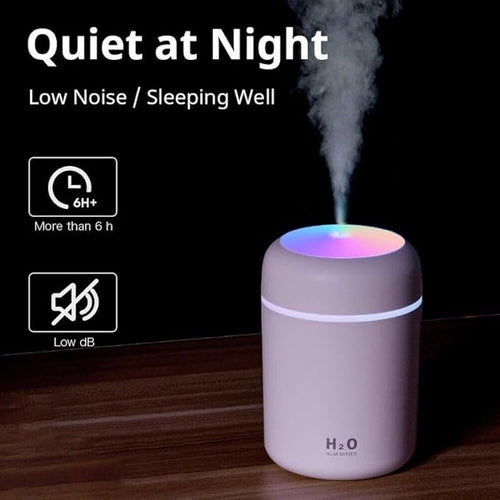
SOSA Sukoon ₹1,899
500ml BPA-free tank, 270–320 sq ft, 16–18 hours per fill on low at 30–50 ml/h against 9–12 on high, 2.4MHz cool-mist plate, seven-colour LED, remote, auto shut-off and steady, 2H and 4H timers, with three 15ml
Hotel Collection scents included.
It is a good machine and it is the wrong purchase this week — this week's purchase is ten minutes of fan mode every evening, which costs nothing, and possibly a coil service, which SOSA does not sell. One further honest note for anyone whose room already feels clammy: a cool-mist diffuser adds 30 to 50 millilitres of water an hour to the air, so it belongs in a dry, air-conditioned room and not in a humid one.
A note from Sonal
I like this question more than almost any other in the cluster, because it has a real answer and the answer is not a product. A smell with a clear shape in time is a gift: it is telling you where it lives before you have looked anywhere. Loud for a minute, then nothing, and you already know you are dealing with something sitting on a surface inside the machine rather than something the room is generating. I have watched people spend months and a lot of money on the wrong end of that sentence, and it is usually because the first thing anybody suggested to them had a fragrance in it.
The fan-mode habit is the piece of advice I would most like to see spread, and it is nobody's secret — it is printed in most manuals and built into most remotes as a setting people have never used. Ten minutes of fan before the unit goes off, every night, so the coil is dry rather than soaked when the room warms back up. I have suggested it to enough people now to be confident about what it does, and it is the only advice I give that requires no purchase, no effort and no memory once the setting is found. What I will not do is sell somebody a bottle for it. If you want a scent in that room afterwards, I would be glad to sell you one, and I will tell you the same thing then: it is a finishing layer, and the machine comes first.
Everything is made and supported from Pune, and a part of every order funds girl-child education through Nanhi Kali. You get a home that smells like somewhere you chose; a girl gets a classroom. That equation has always felt right to me.
Frequently asked questions
Why does my AC smell musty only for the first minute?
Because the surge of airflow when the fan starts lifts what has settled and grown on the filter and the evaporator coil, and there is a finite amount of it. It depletes within a minute or two, which is why the smell fades rather than holding a level.
What causes the smell inside the air conditioner in the first place?
Condensation. The coil runs below the room's dew point, so water forms on it for as long as the compressor runs, collects in a drain pan and leaves through a drain line. Wet metal, a damp dust-loaded filter and a warm room are ideal conditions for microbial growth.
How do I stop the AC smelling on start-up?
Run fan-only mode for five to ten minutes before you switch the unit off, so the coil dries instead of sitting soaked overnight; many remotes have a dry or self-clean setting that does this. Then wash the filter every two to four weeks in season, and book a coil clean once a season.
Will a diffuser or a candle help with an AC that smells musty?
No. Nothing you can put in the room reaches inside a fan coil, and adding a scent on top gives you two smells and one unfixed fault. Deal with the filter and the coil first. The
Hotel Collection at ₹299 is for a room whose machine is already clean.
Is a coil clean something I can do myself?
The filter is yours and takes ten minutes. The evaporator coil, the blower wheel and the drain pan need a technician with the right chemicals and a way of catching the run-off, and that is worth booking once a season. SOSA does not sell that service.
A machine problem, honestly labelled
Ten minutes of fan mode costs nothing — and it is the answer to this one
When the machine is clean and the room is right, the Hotel Collection is ₹299 for 15ml, ₹999 for 100ml and ₹1,799 for 300ml at about ₹6 per millilitre, at three to six drops per tank. The Sukoon is ₹1,899 for 270–320 sq ft with steady, 2H and 4H timers and three 15ml scents of your choice included, and the Boond is ₹899. A cool-mist diffuser adds 30–50 ml of water an hour, so it is the wrong machine for a clammy room. Free shipping above ₹499, and a portion of every order supports girl-child education through Nanhi Kali.
Shop the Hotel Collection → See the Boond · ₹899
Continue the read
More from SOSA
Editorial standards & sources
About this guide: Written by Sonal Sahani, ISIPCA Versailles-trained founder and perfumer at SOSA Home & Body, on why an air conditioner's musty smell arrives in the first minute and then fades — a finite deposit lifted off the filter and evaporator coil by the initial surge of airflow — on the condensation, drain pan and drain line behind it, on why a unit switched off wet stays wet in a warm room, on the fan-only dry-down that prevents it at no cost, and on why no fragrance format addresses any of it.
Facts verified August 2026: Diagnostic facts used in this guide: a closed room accumulates what it cannot exchange, so cross-ventilation needs two openings rather than one; a drain's U-bend water seal evaporates in roughly two to four weeks of disuse and then admits sewer gas, which is corrected by pouring water down the drain; microbial growth in fabric and on surfaces accelerates above about 60% relative humidity, and Indian monsoon indoor humidity commonly runs 80–95%, which is the one situation where ventilating on a wet day can import moisture rather than remove it; an air-conditioner's cold, wet evaporator coil and filter grow biofilm that is blown into the room on start-up; textiles adsorb cooking aerosol and body oils and re-release them for weeks; and olfactory adaptation makes a constant household smell undetectable to its residents within about a fortnight while visitors still perceive it. Timings: a scented candle scents a normal room in roughly 15–20 minutes, a Sukoon ultrasonic diffuser reaches a steady level in about 20 minutes from cold, and a reed diffuser needs roughly 24–72 hours. SOSA products and prices: Sukoon 500ml ₹1,899 (270–320 sq ft, 16–18h on low, 9–12h high, 30–50 ml/h, 2.4MHz cool mist, remote, steady/2H/4H timers, BPA-free, auto shut-off, includes three 15ml Hotel Collection scents of your choice); Boond 300ml ₹899; Megh 6-litre ₹3,499; waterless Vaayu ₹11,999 (up to 1000m³); Aangan ₹25,999. Hotel Collection water-based fragrance 15ml ₹299, 100ml ₹999, 300ml ₹1,799, Pack of 7 at 15ml ₹1,799; dose 3–6 drops per tank. Reed diffusers (separate alcohol-free line): Morning Freshness from ₹749, Garden Bloom and Evening Calm from ₹799, Fresh Brew and Mountain Breeze from ₹849; 130ml from ₹1,249; duos from ₹1,498; 300ml refills ₹2,399. Scented candles: Bookshop 80g ₹379, Amber Rose 130g ₹599 and 220g ₹799, Smoked Oudh 130g ₹449, ceramic jar candles ₹949, Pure Calm wax melt set ₹854. Free shipping above ₹499. SOSA does not make a room or linen spray for the home. The Hotel Collection scents are SOSA's own interpretations; SOSA is not affiliated with or endorsed by any hotel brand. Prices subject to change — see the live product pages.