Founder Diaries · Home Fragrance · Air Conditioning & Closed Rooms
By Sonal Sahani · ISIPCA Versailles 11 min read Updated August 2026
Two to four weeks during the season you use it daily, and monthly if you run it occasionally. More often than that if you live on a dusty road, if there are pets in the house, or if anybody smokes indoors — and I would put four years, which is the interval I hear most commonly, somewhere close to never. This is the most immediately actionable page in this group and there is nothing complicated in it: ten minutes, a tap, and a filter that has to be completely dry before it goes back. What follows is the method, the calendar, the three things people forget, and one honest paragraph at the end about where fragrance actually fits.
Quick answers — read this first
How often: every two to four weeks during the season of heavy daily use; monthly if the unit is used lightly; every one to two weeks in a dusty city, with pets in the house, or if anybody smokes indoors.
How: unit off, front panel lifted, filters slide out. Rinse under a tap from the clean side so dust is pushed out rather than in, mild soap if it feels greasy, and dry completely in the shade before refitting.
The two rules: a damp filter is worse than a dirty one, and never run the unit without the filter — dust then lands directly on the coil, where only a technician can remove it.
What people forget: the outdoor unit needs clear airflow, the drain line needs to be running freely, and the coil needs a professional clean once a season.
The short answer
Short answer: every two to four weeks while the air conditioner is in daily use. Monthly for light use. Every one to two weeks in a dusty city, in a house with pets, or where anybody smokes indoors. Ten minutes at a tap, and it is the single highest-yield piece of home maintenance in the summer.
The method: switch off at the wall, lift the front panel, slide the filters out, rinse from the clean side under a tap, mild soap if greasy, shake off the water and dry completely in the shade before refitting — a damp filter is worse than a dirty one, and strong sun can warp the mesh. Never run the unit with the filter removed.
Also on the calendar: the outdoor unit kept clear of clutter and plants, the drain line checked monthly for a free-running drip, and a professional coil and blower clean once a season.
Then fragrance, and only then: the
Hotel Collection at ₹299 for 15ml, the
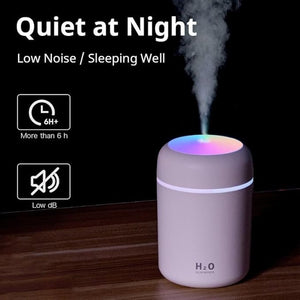
Sukoon at ₹1,899 with timers and three scents included, or the alcohol-free
reed diffuser line from ₹749. Free shipping above ₹499.
Straight answer
How often should I actually clean my air-conditioner filter to stop the room smelling?
1. Every two to four weeks during the season you use it daily. That is the working answer for most Indian homes between March and October. It is ten minutes, it needs nothing but a tap, and almost nobody does it at anything like that frequency.
2. Monthly if the unit is used lightly — a few evenings a week, or a guest room that runs occasionally. Less use means less air pulled through the mesh and a slower rate of loading.
3. Every one to two weeks if any of three things apply: you live on a dusty road or near construction, there are pets in the house, or anybody smokes indoors. Those three load a filter several times faster than an ordinary flat does.
4. How: unit off at the wall, front panel lifted, filters slid out, rinsed under a tap from the clean side so the dust is pushed out rather than driven deeper. Mild soap if the mesh feels greasy, which it will in a kitchen-adjacent room. Then dry completely in the shade before it goes back.
5. Two rules that matter more than the schedule: a damp filter is worse than a dirty one, and never run the unit without the filter. A wet mesh in a warm unit is a growth site; a missing one sends dust straight onto the coil, where only a technician can get it off.
6. And the three things people forget: the outdoor unit needs clear air around it, the drain line should be dripping freely while the room cools, and the coil needs a professional clean once a season.
A portion of every order supports girl-child education through Nanhi Kali.
TL;DR: every two to four weeks during heavy seasonal use, monthly for light use, and every one to two weeks with dust, pets or smoking in the house. Rinse from the clean side, mild soap if greasy, and dry completely in the shade — a damp filter is worse than a dirty one and the unit must never run without one. Add the drain line, the outdoor unit and one professional coil clean a season.

The step after the filter, never instead of it
SOSA Hotel Collection · 15ml ₹299 / 15ml
Seven water-based scents at ₹299 for 15ml, three to six drops per tank, ultrasonic only.
A washed filter changes what is in the air. A fragrance changes what clean air is like. Doing the second without the first is the most common mistake in this whole category and it is an expensive one, because you end up buying bottle after bottle to solve a problem that a tap and ten minutes would have solved. In an air-conditioned room I would run something cool and dry rather than warm: the
1 Hotels-inspired Forest Suite, cedarwood, vetiver and green leaves, at three drops. ₹999 for 100ml and ₹1,799 for 300ml at about ₹6 per millilitre once you know which one you want.
How to do it properly, in ten minutes
The frequency is the headline, but the method is where most of the value is, because a filter cleaned badly can leave the room worse than it was. There are three ways to get this wrong and all of them are common: rinsing from the dirty side so the dust is driven further into the mesh, refitting before it is properly dry, and running the machine in the meantime with nothing in the slot. None of it needs tools, none of it needs a technician, and on almost every split unit the whole operation is a lifted panel and two plastic frames that slide down and out. What it does need is doing on a schedule rather than when somebody finally notices a smell.
1
THE NUMBERS
Two to four weeks in season, monthly for light use, fortnightly if the air is dirty
Take the schedule properly, because vague advice is why this never gets done. During the season when the machine runs most nights — for most of India that is somewhere between March and October, and longer in the south and on the coast — the interval is every two to four weeks. Closer to two if it runs eight hours a night, closer to four if it runs for two or three. For light use, monthly is enough: a unit that runs a few evenings a week is pulling a fraction of the air through the mesh, and a filter loads in proportion to the air that passes through it rather than to the calendar. Then the three multipliers, any one of which takes you to every one to two weeks. Dust, first, and this is not a marginal factor in an Indian city — a flat on a main road, near construction, or in a dry dusty month loads a filter several times faster than a quiet upper floor in the monsoon. Pets, second: animal hair and dander are exactly the size of particle a filter is built to catch, and a household with a dog or a cat will see a visibly different mesh at two weeks. Smoking indoors, third, which loads the filter with a sticky tar-bearing residue rather than dry dust, and that residue is both harder to rinse off and considerably more noticeable in the airstream. There is also a clean way to calibrate all of this: after your first wash, take the filter out again at two weeks and look at it against the light. If it is visibly grey, two weeks is your interval. If it is barely marked, go to four. Your own room tells you more than any general figure can, and you only have to do it once to know.
2
THE METHOD
Out, rinsed from the clean side, and dried completely before it goes back
Now the operation itself, which takes ten minutes and has two steps people get wrong. Switch the unit off at the wall rather than only at the remote. Lift the front panel — on almost every split unit it hinges upward and stays up — and the filters, usually two of them, slide down and out with no tools. Before you wash anything, hold one up against a window or a light. The state of it is normally the entire explanation for whatever brought you to this page, and seeing it once changes the habit permanently in a way that reading about it does not. Then rinse under a running tap from the clean side — that is, the side that faces the coil, so the water pushes the dust back out the way it came rather than driving it deeper into the mesh. This is the step almost everybody gets backwards. If the mesh feels greasy, which it will in a studio flat or any room that shares air with a kitchen, use a little mild soap and a soft brush; grease is what turns a dust layer into a mat that will not rinse. Shake the water off. Then dry it completely, in shade and moving air rather than in direct sun, because strong sun can warp a thin plastic frame — and a filter refitted while still damp is worse than the dirty one you took out, since you have put a wet organic surface back into a warm dark box. An hour or two is usually enough. Two further rules: never run the unit with the filter removed, because everything the mesh would have caught goes straight onto the wet evaporator coil where only a technician can reach it, and if your filters have torn or the plastic frame has cracked, replace them rather than persevering, since a filter with a gap in it is a filter that is not working.
3
THE FORGOTTEN THREE
The outdoor unit, the drain line, and the coil clean nobody books
Then the three items that are not the filter and that get left out of every list. First, the outdoor unit, which needs a clear volume of air around it to reject the heat it is carrying out of your room. If it is boxed into a shaft, screened by a plant that has grown across it, stacked around with things on a balcony or blocked at the back by a wall too close to it, the machine works harder for less cooling and stays wet indoors for longer, which is directly relevant to the smell. Half a metre of clear air and no leaves against the fins is the whole requirement, and it costs nothing to check once a season. Second, the drain line. Once a month, while the room is being cooled hard on a humid day, go and look at where the condensate pipe discharges. It should be dripping steadily or running. A dry pipe during heavy cooling means the water is standing somewhere it should not be — in the pan, or in a partially blocked line — and standing water is a smell waiting to happen as well as the commonest reason a unit starts dripping indoors. Third, and the one I would spend actual money on: a professional coil and blower clean, once a season. The filter is yours; the evaporator fins, the blower wheel and the drain pan need a technician with the correct chemicals and a way to catch the run-off. Book it before the season rather than during it, when everybody else is calling. It is not a service SOSA provides, and it is the single most effective thing on this page for a smell that has survived a properly maintained filter.
The calibration worth doing once: wash the filter, then look at it again exactly two weeks later. Visibly grey means two weeks is your interval. Barely marked means four. Your own street is more informative than any general figure.
The maintenance calendar
Everything above on one page, sorted by how often it happens rather than by how important it is. Four of the six rows cost nothing and take under ten minutes; one costs money and is worth it; and the last row is the fragrance step, which is deliberately at the bottom because that is where it belongs.
The calendar
What to do, how often, and how long it takes
| How often |
What to do |
How long |
Why it matters |
| Every 2–4 weeks in season ★ |
Filter out, rinsed from the clean side, dried completely in the shade, refitted |
Ten minutes |
The mesh sits in the airstream you breathe. Fortnightly with dust, pets or smoking indoors |
| Every night |
Fan-only mode for the last five to ten minutes, or the dry or self-clean setting |
Nothing, once set |
A coil switched off wet stays wet in a warm room until morning |
| Monthly |
Look at the outdoor end of the drain pipe while the room is cooling hard |
Five seconds |
It should be dripping or running. Dry means water is standing somewhere it should not be |
| Monthly |
Clear the outdoor unit: no plants against the fins, no clutter, half a metre of free air |
Five minutes |
A blocked outdoor unit means longer run times and a coil that stays wet indoors for longer |
| Once a season |
A technician: evaporator coil, blower wheel and drain pan cleaned professionally |
One visit |
The parts you cannot reach. SOSA does not sell this and it is the right thing to spend on |
| After all of the above |
Fragrance — three drops in a sealed room, on a timer, or a reed that needs no routine |
Twenty minutes to a level |
A clean filter changes the air. A scent changes the character of clean air |
Shop this guide
The step that comes after the tap
The SOSA principle
A clean filter changes what is in the air. A fragrance changes what clean air is like. Doing the second without the first is the most common mistake in this whole category.
Ten minutes at a tap every two to four weeks, a coil clean once a season, and then — separately, for a completely different reason — three drops of something cool and dry on a timer.
The three things people forget, and where fragrance fits
Put the whole routine into the year rather than into a list, because that is what makes it survive August. At the start of the season, before the first hot week: filters washed, outdoor unit cleared, and a coil and blower service booked while technicians are still answering the phone. Through the season: filters every two to four weeks, or every one to two if your street is dusty, there are animals in the house or somebody smokes indoors; the drain pipe checked monthly for a free-running drip; and the last five to ten minutes of every night in fan mode so the coil is dry rather than soaked when the room warms up. At the end of the season: one final filter wash before the unit stands idle, which is what prevents the alarming first start next year. And a habit that belongs beside all of this and is not about the machine at all: twenty minutes of cross-ventilation with two openings, because a maintained air conditioner in a sealed room still gives you a sealed room. The filter fixes what the machine adds. It does nothing about what the room accumulates while it is shut, and I would rather you know which of the two you are solving before you decide it has not worked.
Then the honest fragrance paragraph, which is the reason this page ends the way it does. A clean filter changes what is in the air. A diffuser changes the character of clean air. They are different jobs and doing the second without the first is the most common mistake in this whole category — it is also an expensive mistake, because somebody scenting over a loaded filter tends to conclude that the scent is not strong enough and buys another, and then a bigger machine, when the ten minutes at a tap would have settled it. So: filter first, always. Then, if you want the room to have a character rather than to smell of nothing, the Hotel Collection is ₹299 for 15ml, ₹999 for 100ml and ₹1,799 for 300ml at about ₹6 per millilitre, composed at three to six drops per tank, and in an air-conditioned room I would run something dry and cool — the 1 Hotels-inspired Forest Suite, cedarwood, vetiver and green leaves — at three drops. The Sukoon at ₹1,899 covers 270 to 320 sq ft with steady, 2H and 4H timers and three 15ml scents of your choice; the Boond at ₹899 is the one-room version. If your filter has gone four years without a wash, be realistic about whether a machine needing a weekly refill will fare any better, and buy a reed instead: the reed diffuser line is alcohol-free with its own scents from ₹749, needs 24 to 72 hours to establish and then holds one level for months with nothing to remember.
Then the constraints and the principle. Keep any diffuser out of the direct blast from the indoor unit, at waist height or above and across the room, since a cold draught over a cool mist strips the top off a composition and leaves the base standing alone. If the room feels clammy rather than dry, do not add a cool-mist machine at all: it puts 30 to 50 millilitres of water an hour into the air, which is the wrong direction for a room with a moisture problem. The Hotel Collection is water-based and runs only in the Sukoon, the Boond and the Megh — not in a reed, which is a separate line, and not in the waterless Vaayu at ₹11,999, which takes its own undiluted oil. Raw essential and carrier oils clog the 2.4MHz plate and must never go into an ultrasonic. Rinse the tank when you change scent, and buy the 15ml at ₹299 before you commit to a 300ml 300ml refill at ₹1,799. SOSA does not make a room or linen spray for the home. And the principle, which is the whole of this cluster in one line: deal with the source, change the air, then scent the room. A filter is the cheapest source you will ever deal with, and it is the one that makes everything you buy afterwards work as intended.
Ten minutes at a tap every two to four weeks is the highest-yield maintenance in an Indian summer. Four years, which is the interval I hear most often, is close enough to never.
— Sonal Sahani, SOSA
The SOSA edit
A buying order in which the first three rows cost nothing and the fourth is not sold here. The fragrance rows come last on purpose, and the final row is the sentence I would most like a reader to leave with, printed rather than implied.
The SOSA edit
The AC filter question, in buying order
| Buy or do |
What it is |
When it earns its place |
Cost |
| 1. The filter, on a schedule ★ |
Out, rinsed from the clean side, mild soap if greasy, dried completely in shade, refitted |
Every two to four weeks in season; fortnightly with dust, pets or smoking. Ten minutes |
₹0 |
| 2. Fan mode before switching off |
Five to ten minutes of fan-only, or the dry or self-clean setting if the remote has one |
Nightly. It keeps the coil from standing wet in a warm room until morning |
₹0 |
| 3. The drain line and the outdoor unit |
A monthly look at the condensate drip, and half a metre of clear air around the outdoor unit |
Monthly, five minutes for both. Both affect how wet the machine stays indoors |
₹0 |
| 4. A seasonal coil clean |
A technician on the evaporator fins, blower wheel and drain pan, once a year |
The parts you cannot reach. SOSA does not sell this and it is the right thing to spend on |
Not ours |
| 5. Hotel Collection 15ml or the Sukoon
|
Seven water-based scents at three to six drops per tank; the 500ml machine has steady, 2H and 4H timers and includes three scents |
After the filter. Three drops of something dry and cool in an air-conditioned room |
₹299 / ₹1,899 |
|
A reed diffuser — for a household that forgets |
Alcohol-free, its own five scents, no electricity, one level for months |
If the filter has gone four years, a machine needing a weekly refill will not fare better. 24–72 hours to establish |
from ₹749 |
Honest notes for buyers: fragrance is the last step, never the first. It layers on air that is already clean and moving, and it will not remove a source — not damp, not a dry drain trap, not a loaded sofa, not a filter that needs washing. Deal with the cause, change the air, then scent the room. On timing: a candle puts scent into a room in fifteen to twenty minutes and a
Sukoon reaches a steady level in about twenty, while a
reed diffuser needs a day to three days before it is doing its job — the wrong buy for a deadline and the right buy for a room you want to hold one level for months. SOSA does not make a room or linen spray for the home; the sprays in the range are car perfumes. A cool-mist ultrasonic adds 30–50 ml of water an hour to the air, so it is the wrong machine for a room you are trying to dry out. The
Hotel Collection is water-based and runs in the
Sukoon,
Boond and
Megh only — not in reeds and not in the waterless
Vaayu. Reed diffusers are a separate alcohol-free line with their own scents. Candles must be attended and put out. The Hotel Collection scents are SOSA's own interpretations inspired by the world's finest hotels; SOSA is an independent Indian fragrance house, not affiliated with or endorsed by any hotel brand. A portion of every order supports girl-child education through Nanhi Kali.
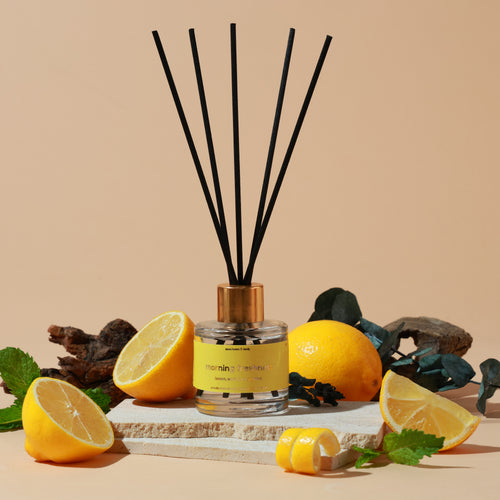
For the room where nobody will remember a machine
Morning Freshness reed diffuser ₹749
Malabar lemon, peppermint and eucalyptus, alcohol-free, from the separate
reed diffuser line with its own scents.
If your AC filter has gone four years without a wash, the realistic assumption is that a diffuser needing a weekly refill will not survive either — and a reed is the format that asks nothing of you at all. No electricity, no timer, one level held for months, and the cool citrus-and-eucalyptus register is the one that sits most naturally in a cold room. It takes 24 to 72 hours to establish, and it has no view whatever on the state of your coil. ₹749 for the standard size, ₹1,249 for 130ml, refills ₹2,399.
A note from Sonal
I ask everybody the same question now and the answer is almost always the same. When did you last take the filter out. Four years, or never, or a shrug — and none of those people are careless, because nobody ever told them there was anything to take out. An air conditioner is sold as a box that makes a room cold, and the fact that it is also a fan pulling every particle in the room through a mesh, in front of a coil that is wet for six hours a night, is not in the advertisement. So I would rather spend a page on a tap and ten minutes than on anything with my name on it.
The sentence I most want to leave you with is the one about the two different jobs. Washing the filter changes what is in the air. A diffuser changes what clean air is like. Doing the second without the first is the most common mistake in this category and it is the one that costs people the most money, because the scent that is not working gets replaced by a stronger one, and then by a bigger machine, and the mesh in the wall is still grey. Once the filter is on a schedule and the coil has been serviced, an air-conditioned room becomes one of the nicest spaces in an Indian home to scent — cool, dry, quiet air, which carries a dry composition beautifully at three drops. That is the order. It has never once been the other way round.
Everything is made and supported from Pune, and a part of every order funds girl-child education through Nanhi Kali. You get a home that smells like somewhere you chose; a girl gets a classroom. That equation has always felt right to me.
Frequently asked questions
How often should I clean my AC filter?
Every two to four weeks during the season you use it daily, and monthly if the unit is used lightly. Every one to two weeks if you live on a dusty road, there are pets in the house, or anybody smokes indoors. It takes about ten minutes.
How do I clean an AC filter properly?
Switch off at the wall, lift the front panel and slide the filters out. Rinse under a tap from the clean side so the dust is pushed out rather than driven deeper, use mild soap if the mesh feels greasy, then dry it completely in shade and moving air before refitting.
Can I put the filter back while it is still damp?
No. A damp filter is worse than a dirty one, because you have put a wet organic surface back into a warm dark box. Give it an hour or two to dry fully, and avoid strong direct sun, which can warp a thin plastic frame.
Can I run the air conditioner without the filter?
Never. Everything the mesh would have caught goes straight onto the wet evaporator coil, and that is a surface only a technician can clean. If a filter is torn or its frame is cracked, replace it rather than running without it.
Will cleaning the filter stop my room smelling completely?
It stops the part of the smell that arrives with the airflow, which is often all of it. What it cannot do is exchange the air in a sealed room, and it does not reach the coil or the drain pan. Add twenty minutes of cross-ventilation and a seasonal coil clean, then consider fragrance.
Ten minutes, a tap, every two to four weeks
Wash the filter first — then decide what you want the room to smell like
The Hotel Collection is ₹299 for 15ml, ₹999 for 100ml and ₹1,799 for 300ml at about ₹6 per millilitre, at three to six drops per tank and three in an air-conditioned room. The Sukoon is ₹1,899 for 270–320 sq ft with steady, 2H and 4H timers and three 15ml scents of your choice included, and the Boond is ₹899. The alcohol-free reed diffusers are a separate line with their own scents from ₹749, needing 24 to 72 hours to establish. Free shipping above ₹499, and a portion of every order supports girl-child education through Nanhi Kali.
Shop the Hotel Collection → See the reed diffusers →
Continue the read
More from SOSA
Editorial standards & sources
About this guide: Written by Sonal Sahani, ISIPCA Versailles-trained founder and perfumer at SOSA Home & Body, on how often an air-conditioner filter actually needs washing — every two to four weeks in the season of heavy use, monthly for light use, and fortnightly with dust, pets or indoor smoking — on the correct method and why a damp filter is worse than a dirty one, on the outdoor unit, the drain line and the seasonal coil clean that people leave out, and on why a clean filter and a fragrance are two different jobs done in one fixed order.
Facts verified August 2026: Diagnostic facts used in this guide: a closed room accumulates what it cannot exchange, so cross-ventilation needs two openings rather than one; a drain's U-bend water seal evaporates in roughly two to four weeks of disuse and then admits sewer gas, which is corrected by pouring water down the drain; microbial growth in fabric and on surfaces accelerates above about 60% relative humidity, and Indian monsoon indoor humidity commonly runs 80–95%, which is the one situation where ventilating on a wet day can import moisture rather than remove it; an air-conditioner's cold, wet evaporator coil and filter grow biofilm that is blown into the room on start-up; textiles adsorb cooking aerosol and body oils and re-release them for weeks; and olfactory adaptation makes a constant household smell undetectable to its residents within about a fortnight while visitors still perceive it. Timings: a scented candle scents a normal room in roughly 15–20 minutes, a Sukoon ultrasonic diffuser reaches a steady level in about 20 minutes from cold, and a reed diffuser needs roughly 24–72 hours. SOSA products and prices: Sukoon 500ml ₹1,899 (270–320 sq ft, 16–18h on low, 9–12h high, 30–50 ml/h, 2.4MHz cool mist, remote, steady/2H/4H timers, BPA-free, auto shut-off, includes three 15ml Hotel Collection scents of your choice); Boond 300ml ₹899; Megh 6-litre ₹3,499; waterless Vaayu ₹11,999 (up to 1000m³); Aangan ₹25,999. Hotel Collection water-based fragrance 15ml ₹299, 100ml ₹999, 300ml ₹1,799, Pack of 7 at 15ml ₹1,799; dose 3–6 drops per tank. Reed diffusers (separate alcohol-free line): Morning Freshness from ₹749, Garden Bloom and Evening Calm from ₹799, Fresh Brew and Mountain Breeze from ₹849; 130ml from ₹1,249; duos from ₹1,498; 300ml refills ₹2,399. Scented candles: Bookshop 80g ₹379, Amber Rose 130g ₹599 and 220g ₹799, Smoked Oudh 130g ₹449, ceramic jar candles ₹949, Pure Calm wax melt set ₹854. Free shipping above ₹499. SOSA does not make a room or linen spray for the home. The Hotel Collection scents are SOSA's own interpretations; SOSA is not affiliated with or endorsed by any hotel brand. Prices subject to change — see the live product pages.