



2. Humidity changes how long those compounds linger once they're released. High humidity slows evaporation and dispersal, so monsoon air holds on to odour longer than the drier air of a typical winter would, even if the underlying source is producing the same amount.
3. Monsoon adds a mechanism the other two seasons don't have: trapped moisture. Damp upholstery, closed windows and condensation give monsoon its own characteristic mustiness on top of whatever the drains and grease traps are already contributing.
4. Winter is usually the easiest season, not because odour production stops but because both processes slow down. Cooler temperatures reduce release rates and typically drier air disperses what is released more readily, which is why the same café often seems to need the least attention in its coolest months.
5. None of this is a reason to change the fragrance itself. The honest response to a seasonal smell shift is a seasonal maintenance and extraction schedule — the fragrance in the washroom or entrance can and should stay exactly as it is, all year.
A café's smell changes with the seasons because temperature and humidity are doing different jobs in each one — the fix for that is a maintenance calendar, not a rotating fragrance.
Why the same room smells different across the year
Odour a café produces starts with a source — a drain, a grease trap, food waste, damp fabric — and how much of that source's compounds actually make it into the air depends heavily on temperature. Heat accelerates the process, which is why the same drain that seems manageable in December can produce a noticeably stronger smell in May, with no change to how often it's being cleaned. This is a straightforward release-rate effect, not a sign that anything has gone wrong with the room, and it's why two cafés with identical fit-outs in different cities can report very different seasonal patterns simply because their local temperature curves differ.
Humidity works on the other side of the same process, governing how long whatever has been released stays detectable in the air. Monsoon humidity is high enough, for long enough, that odour compounds disperse and evaporate more slowly than they would in drier conditions — so a source producing a fixed amount of odour will read as stronger and more persistent during the monsoon months than the same source would in a dry, cool spell. Monsoon also introduces its own additional mechanism: trapped moisture in fabric, closed-up rooms and condensation on cool surfaces, which produces a musty character that summer heat and winter dryness don't, and which no amount of extra fragrance in the washroom will resolve on its own.
Winter tends to be the season where both mechanisms work in the café's favour at once — cooler temperatures slow release from the same sources, and typically drier air lets whatever is released clear more readily. This is why a café that seems to need constant attention in June and July can feel comparatively easy to manage by December, even with an identical cleaning routine underneath. None of this argues for a different fragrance in any season — it argues for a maintenance and extraction schedule that flexes with what temperature and humidity are actually doing to the room, season by season, while the fragrance itself stays exactly where this cluster's own zoning rules already put it.
What actually changes, season by season
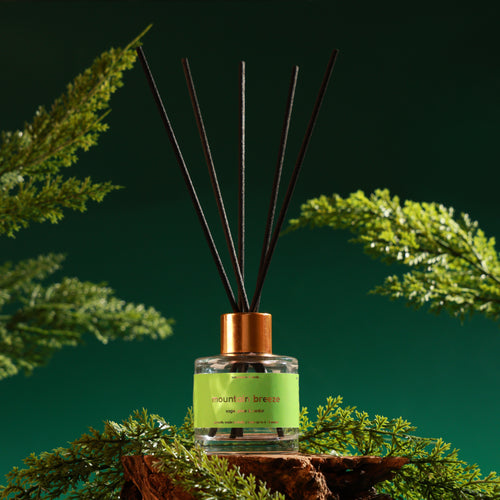
 Mountain Breeze₹849Drains, grease traps and materials all release compounds faster as temperature rises, so summer is typically when source maintenance needs the shortest interval of the year.
Summer, monsoon and winter, compared
The zoning rules for fragrance don't move between rows below — what changes is how much source and extraction attention each season needs.
| Season | What drives it | What needs more attention | Fragrance verdict |
| Summer | Sustained heat speeds up release from drains, grease and materials | Shorter intervals between source maintenance and cleaning | Unchanged — washroom and separated entrance only |
| Monsoon | High humidity slows dispersal; trapped moisture adds mustiness | Extraction, airing and upholstery, beyond the usual cleaning routine | Unchanged — same two zones, same register |
| Winter | Cooler, often drier air slows both release and lingering | The easiest season, but not a reason to skip routine maintenance | Unchanged — same two zones, same register |
| Dining room and counter, in any season | The café's own coffee, food and beverage aroma | No fragrance is ever the right response here, regardless of season | Never scented |
| Washroom, in any season | The genuine commercial opportunity in every season this cluster covers | A dry, non-edible register at a scale matched to the room | Usually |
| Seasonal change affects how hard source control and extraction have to work in every row above — it never moves fragrance into or out of a zone that the three-zone rule already settles. | |||
Mountain Breeze · washroom, all seasons₹849Shop →  Sukoon · larger washroom suite₹1,899Shop →
  Vaayu · multi-zone, seasonal run windows₹11,999Shop →
What to adjust, and what to leave alone
Never assume a seasonal change in how a café smells means the fragrance has failed or needs replacing — the more likely explanation is that a source's release rate or the air's ability to disperse it has genuinely shifted with the weather.
Sometimes the honest response is simply a shorter interval between drain and grease-trap cleaning in summer, or a longer daily extraction run and closer attention to upholstery in monsoon — both are scheduling changes, not purchases.
Usually, the washroom and any genuinely separated entrance need the same fragrance, at the same scale, in every season — a 50ml reed diffuser at six reeds still covers up to 150 sq ft in June, in August and in December alike.
What to buy, if anything
The same two zones this cluster recommends everywhere else, at the same scale, regardless of season.
| Route | Premises | Why | What it costs |
| No fragrance, adjusted maintenance schedule | Dining room, counter and any area near food service, in every season | Seasonal odour shifts come from source and air conditions, not from an absent fragrance | ₹0 — a scheduling change |
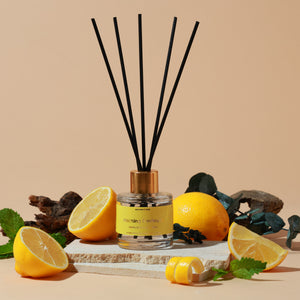
| Reed diffuser, Mountain Breeze or Morning Freshness | A washroom under 150 sq ft, in any season | A dry register that doesn't need to change with the weather | ₹749–₹849 |
| Reed diffuser, 130ml | A larger washroom, 150–270 sq ft | Longer runtime without moving to a machine | ₹1,249–₹1,349 |
| Sukoon ultrasonic | A washroom suite or small retail corner, 270–320 sq ft | Steady coverage across every season | ₹1,899 |
| Vaayu, wall or HVAC mounted, zoned | A multi-zone café adjusting run windows seasonally | Independent scheduling lets extraction and airing flex without touching the fragrance itself | ₹11,999 per unit |
Owners often bring me what sounds like a fragrance problem — 'it smelled fine in winter, and now in July it doesn't' — and it's almost never actually about the fragrance. The washroom diffuser hasn't changed; the room's drains and the air around them have, because heat is doing more work on them than it was three months earlier. It usually takes one visit to the washroom, not a new fragrance order, to confirm that.
The mistake I try to head off is swapping the fragrance itself when a season turns, thinking a stronger or different scent will compensate for what the weather is doing. It doesn't, because the fragrance was never the variable driving the change — the source's release rate and the air's humidity were, and those need a maintenance response, not a fragrance one. I've watched owners work through two or three scent changes in a single monsoon looking for one that 'holds up' before realising the room itself needed attention, not the reed diffuser sitting in it.
What I do recommend changing, freely, is the schedule around the fragrance — a shorter refill interval if a badly ventilated washroom runs through a diffuser faster in summer, more frequent airing in monsoon. The fragrance itself, at the register and scale a room actually needs, can stay exactly as it is in every season, and in my experience that consistency is part of what regulars come to recognise about a café without ever being able to name it.
Questions about seasonal changes in café odour
- How Do Chennai's Heat and Humidity Affect Café Odours? — the same mechanism, examined in one sustained climate.
- How Do Pune's Monsoon Months Affect Café Odour and Humidity? — the monsoon mechanism, in a specific city.
- Should Café Owners Change Their Odour-Control Strategy With the Seasons? — what to actually adjust once the mechanism is understood.
- Why Does My Café Smell Stale Before Opening? — a related timing question about how odour builds up overnight.
- Brand: the SOSA founder story.
SOSA products & prices (verified September 2026): Reed diffusers 50ml ₹749–₹849 (to 150 sq ft, 6–8 weeks at six reeds) · 130ml ₹1,249–₹1,349 (above 150 sq ft, 14–18 weeks) · reed refill 300ml ₹2,399. Ultrasonic: Boond ₹899 (~150 sq ft) · Sukoon ₹1,899 (270–320 sq ft, ships with three 15ml Hotel Collection fragrances) · Megh ₹3,499 (6L tank, ~100 hrs runtime, ~215 sq ft — a runtime machine, not a coverage upgrade). Waterless cold-air: Safar ₹3,999 (no published coverage figure) · Vaayu ₹11,999 (up to 1000 m³, roughly 2,000–3,000 sq ft; 400ml tank lasting about 90+ days; app and onboard control, 1h/4h/8h/24h run windows, adjustable intensity, key-lock, under 38 dB, freestanding or wall/HVAC mount, 5W, CE/RoHS/SGS) · Aangan ₹25,999 (8,000–10,000 sq ft). Hotel Collection water-based fragrance 15ml ₹299 · 100ml ₹999 · 300ml ₹1,799 is for ultrasonic machines; reed oil and Hotel Collection are not interchangeable. Reed diffusers are alcohol-free, phthalate-free, paraben-free, IFRA-compliant and low VOC, handmade in small batches in Pune. Every purchase funds a girl's education through Nanhi Kali. Prices and availability subject to change — see the live product pages.