



2. Monsoon reverses that same building's behaviour for a genuinely long stretch. Sustained humidity, doors and windows either shut against rain or opened onto wet air, and a building designed to breathe suddenly holding onto moisture it was never built to manage for months at a time.
3. A routine built for the dry season often simply isn't revisited when the season changes. The room's air-exchange pattern, humidity load and materials' moisture content are genuinely different for months, and a plan calibrated for the dry season doesn't automatically fit the wet one.
4. The honest first step is reviewing ventilation and cleaning cadence for the season, not fragrance. A courtyard café that closes up defensively against rain needs the same air-exchange and drying review as any sealed building would, whatever the season.
5. A washroom register can usually stay the same product — what changes is how often it's checked. Sustained humidity can affect how quickly a reed evaporates and how soon materials nearby need attention, which is a scheduling detail worth reviewing, not a reason to add more fragrance.
Pune's monsoon doesn't call for a different fragrance — it calls for the same honest zone rules, reviewed on a seasonal calendar rather than set once and left alone.
Why Pune's monsoon is a seasonal switch, not a spike
Pune sits at enough elevation, and holds a generally milder, drier climate for much of the year, that a distinct café building style has grown up around it: high ceilings, open verandas, courtyard seating, cross-ventilation by design rather than by necessity. For most months, that design keeps a space comfortable without leaning on heavy mechanical cooling, and it's a genuinely sound way to build a café in that climate.
Monsoon changes that same building's behaviour for a stretch measured in months, not an afternoon. Doors and windows that stayed open for cross-ventilation get shut against sustained rain, or stay open onto air that is itself carrying far more moisture than the dry season's breeze ever did. A building designed to breathe suddenly starts holding onto moisture the way a sealed building might, and it does so for as long as the rain keeps the doors and windows behaving differently.
Because the dry season is genuinely the building's normal state for most of the year, a scenting or cleaning routine built around that normal state is easy to leave unreviewed when the season changes. The room's air-exchange pattern, its humidity load and how quickly its materials hold or release moisture are simply different for months at a stretch, and a plan calibrated for October doesn't fit July just because nobody thought to check.
The three decisions a monsoon season changes
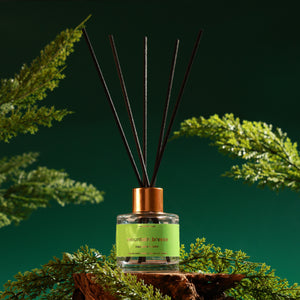
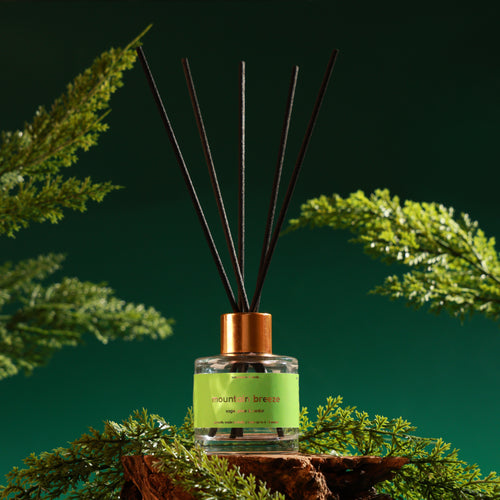
 Mountain Breeze₹849Testing a dry-season assumption in the middle of monsoon usually reveals a completely different air pattern than the one the café was actually designed around.
Season by season, what actually changes
The building's own behaviour, not the calendar date, is what actually decides which column of this table applies at any given time.
| Season or condition | Typical building behaviour | What this changes | Where fragrance fits |
| Dry season, doors and windows open for cross-ventilation | Steady, moderate air exchange, low humidity | The normal cleaning and scenting routine holds | Washroom and retail, as usual |
| Onset of monsoon, doors and windows shut against rain | The exchange pattern reverses toward closed-room behaviour | Ventilation and cleaning cadence need reviewing for the closed period | Not the dining room, regardless of the season |
| Sustained monsoon weeks, high ambient humidity indoors | Materials begin holding moisture and odour the way they wouldn't in the dry season | Cleaning and drying cadence steps up for the season | The washroom register may need checking more often, not increasing |
| Monsoon with doors propped for airflow despite the rain | The same open-door mechanism covered elsewhere in this series, now under wet conditions | A genuinely separated entrance is tested the same way, wet or dry | Confirm the boundary still holds during monsoon, not just in the dry season |
| Season turning back to dry, cross-ventilation resuming | The exchange pattern reverts toward the building's normal state | Cleaning cadence can step back down; scenting resumes its usual setting | The normal washroom and retail routine |
| Assuming one scenting or cleaning setup, chosen once, should carry a Pune café through both its dry season and its monsoon unchanged — the building's own air-exchange behaviour changes enough between the two that the plan deserves a review at each turn of the season, not a single decision made once. | |||
Mountain Breeze · steady through most of the year₹849Shop →  Sukoon · a washroom suite reviewed seasonally₹1,899Shop →
  Vaayu · zoned, revisited at each season change₹11,999Shop →
What actually needs reviewing, in order
Never assume a scenting plan built for Pune's dry season will behave the same way once monsoon sets in — the building's own air-exchange and humidity pattern changes for a sustained stretch, not a single wet afternoon.
Sometimes the honest adjustment is simply a cleaning and drying cadence that steps up for the monsoon months and steps back down once the season passes, with the dining room staying unscented throughout regardless of the season.
Usually, the washroom and any retail corner can keep the same product and the same modest register year-round, provided refill intervals and reed condition are checked more often during the wettest stretch of the year.
What to buy, reviewed twice a year
Matched to the season the café is actually in, not a single setting chosen once and left alone through monsoon.
| Route | Premises | Why | What it costs |
| No fragrance change, only a ventilation and cleaning review | Any Pune café moving from dry season into monsoon | The building's own air-exchange and humidity behaviour is what's changing, not a fragrance need | No purchase — a seasonal review |
| Reed diffuser, Mountain Breeze | A washroom with sealed, ventilated surfaces | Holds a dry register through most of the year without change | ₹749–₹849 |
| Check reeds and refill timing more often through monsoon | The same washroom, once sustained humidity affects evaporation | Matches the room's changed moisture load, without adding more fragrance | No extra purchase — a scheduling check |
| Sukoon ultrasonic, reviewed each season | A washroom suite or retail corner, 270–320 sq ft | Steady coverage across both seasons once cleaning cadence is right | ₹1,899 |
| Vaayu, zoned, schedule reviewed twice a year | Washrooms and entrance across a larger Pune café or small chain | Independent scheduling that can be revisited each season without reinstalling anything | ₹11,999 per unit |
Pune is one of my favourite cities to talk to café owners in, because so many of them have built genuinely lovely, open, cross-ventilated spaces — courtyards, verandas, high ceilings — that work beautifully for most of the year without needing to think about air exchange at all.
The conversation changes the moment monsoon comes up. The same owners who've never had to think about ventilation suddenly have a building behaving like a sealed one for weeks at a stretch, and the instinct is often to reach for a stronger fragrance to answer a smell that's actually a humidity and air-exchange question in disguise.
What I ask for instead is a simple seasonal habit: look at the building's ventilation and cleaning cadence at the start of monsoon, and again when it ends. It's a small discipline, and it does more for a Pune café's air than any change to the fragrance ever will.
Questions about Pune's monsoon and café odour
- Why Does Fragrance Disappear When Café Doors Stay Open? — the underlying mechanism this seasonal review depends on.
- Why Does My Café Smell Musty During Monsoon? — the general monsoon mechanism, considered across cities rather than for Pune alone.
- Why Does My Café Smell Different in Summer, Monsoon and Winter? — the year-round pattern this month's review sits inside.
- Should Café Owners Change Their Odour-Control Strategy With the Seasons? — the scheduling question this post answers for one season and one city.
- Brand: the SOSA founder story.
SOSA products & prices (verified September 2026): Reed diffusers 50ml ₹749–₹849 (to 150 sq ft, 6–8 weeks at six reeds) · 130ml ₹1,249–₹1,349 (above 150 sq ft, 14–18 weeks) · reed refill 300ml ₹2,399. Ultrasonic: Boond ₹899 (~150 sq ft) · Sukoon ₹1,899 (270–320 sq ft, ships with three 15ml Hotel Collection fragrances) · Megh ₹3,499 (6L tank, ~100 hrs runtime, ~215 sq ft — a runtime machine, not a coverage upgrade). Waterless cold-air: Safar ₹3,999 (no published coverage figure) · Vaayu ₹11,999 (up to 1000 m³, roughly 2,000–3,000 sq ft; 400ml tank lasting about 90+ days; app and onboard control, 1h/4h/8h/24h run windows, adjustable intensity, key-lock, under 38 dB, freestanding or wall/HVAC mount, 5W, CE/RoHS/SGS) · Aangan ₹25,999 (8,000–10,000 sq ft). Hotel Collection water-based fragrance 15ml ₹299 · 100ml ₹999 · 300ml ₹1,799 is for ultrasonic machines; reed oil and Hotel Collection are not interchangeable. Reed diffusers are alcohol-free, phthalate-free, paraben-free, IFRA-compliant and low VOC, handmade in small batches in Pune. Every purchase funds a girl's education through Nanhi Kali. Prices and availability subject to change — see the live product pages.