




What it means: the worsening is evidence of reach. A clean that changes nothing at all was mostly cosmetic.
The sequence that avoids it: ventilate while you clean, work top to bottom, do all wet work last, and leave two windows open for twenty minutes afterwards.
The timing note: scenting a room in the middle of a clean is the worst possible moment for it.
2. Warm water makes old deposits volatile again. Six months of cooking aerosol on a kitchen wall or a chimney surround is stable, oxidised and quiet until hot water and a degreaser hit it. Then it becomes readable, and briefly quite unpleasant, before it goes down the drain.
3. Vacuuming and moving furniture re-suspend what had settled. Dust, skin, fabric fibres and everything they have adsorbed spend most of their life on horizontal surfaces. A vacuum, a broom and a shifted sofa put a portion of that back into the breathing zone for an hour.
4. Wet mopping raises the humidity of a closed room, and humidity amplifies everything. A bucket of water spread across a floor in a shut flat pushes relative humidity up for an hour or two, and every material in the room releases more readily into moist air than into dry.
5. And moving heavy furniture exposes floor nobody has seen in years. Behind the fridge, under the sofa, beneath a wardrobe — genuinely undisturbed areas, and often the actual answer to a smell you have been chasing for months.
6. So ventilate through it rather than stopping. Two windows open before you start and for twenty minutes after you finish, top to bottom, and all the wet work last. That sequence removes most of the bad hour without removing any of the benefit.
A portion of every order supports girl-child education through Nanhi Kali.
The four things cleaning stirs up
It helps to be blunt about what cleaning is, physically. You are taking material that has been sitting stably on surfaces — grease, dust, fibre, skin, food residue, everything those have adsorbed over months — and mobilising it so that it can be removed. Mobilising is the operative word. For a period in the middle, that material is not on the surface and not yet out of the house; it is in the air of the room you are standing in, which is precisely where you can smell it.
The order to clean in, and what each step stirs up
This is the sequence I would follow in a normal Indian flat, and it is built entirely around not making yourself do the same work twice or breathe the same dust twice. The principle underneath it is that gravity is on your side if you work downwards, and that water should be the last thing to arrive rather than the first.
| Step | What it stirs up | Why it goes here | What to have open |
|---|---|---|---|
| 1. Open two windows before anything ★ | Nothing — this is the step that carries everything else away | First, always. Two openings on opposite or adjacent walls; one window is ventilation and two is exchange | Both, and the ceiling fan on |
| 2. High surfaces, fans, tops of cupboards | Heavy settled dust, which falls onto everything below | Before anything underneath it, so you clean the fallout once rather than twice | Windows; fans off while you wipe the blades |
| 3. Fabric — cushions, throws, curtains, bedlinen into the wash | Fibres and everything textiles have adsorbed over weeks | Early, because it is the longest job and the machine runs while you do the rest | Windows |
| 4. Move the furniture, then vacuum | Re-suspended floor dust, and whatever was behind the fridge or under the sofa | After the fabric and before the wet work. Check the filter or bag first | Windows, and pay attention here |
| 5. Kitchen degreasing with warm water | Old cooking film becoming volatile again — the worst twenty minutes of the day | Late, and with the exhaust fan running throughout as well as the windows | Windows and the chimney or exhaust |
| 6. Wet mopping, last | Humidity, which amplifies everything still in the room for an hour or two | Last, so the floor dries into air that is already moving and nothing walks across it | Windows for twenty minutes afterwards |

The sequence that avoids most of the bad hour
Start by opening the windows before you touch anything, which sounds obvious and is skipped by nearly everybody, because the instinct is to shut the house up so the dust does not come in. Two openings on opposite or adjacent walls, kept open for the entire clean and for twenty minutes afterwards, is the single change that turns a bad afternoon into an unremarkable one — one window lets air rock back and forth in the same place, while two lets it cross, and everything you are mobilising needs somewhere to go. Then work top to bottom: fans and the tops of cupboards first, then shelves and surfaces, then fabric into the machine, then floors. Gravity means every high surface you disturb sends its dust onto whatever is below it, so cleaning downwards means doing the fallout once instead of twice. Keep all wet work for the end, in every room and in the house as a whole, so that the floor dries into air that has already been moving for an hour and nothing gets walked across it. In the kitchen, run the chimney or exhaust fan throughout the degreasing and for ten minutes after, not just during, because the worst twenty minutes of the day happens over that sink and extraction removes it at the source rather than letting it distribute through the flat. And before you vacuum, check the bag or the filter: a vacuum with an overdue filter returns a fraction of what it lifts through its own exhaust, which is a genuinely common and completely invisible reason a room smells worse after being cleaned.
Then the monsoon exception, which matters more here than on most pages in this cluster, because two of the four mechanisms are humidity-driven. When outdoor relative humidity is at 80 to 95 percent, opening the windows imports water rather than removing it, and a wet-mopped room that cannot dry will hold its amplified state for hours rather than for one. On those days, invert the advice: keep the windows shut, run the ceiling fans and every exhaust fan you have, use noticeably less water on the floor, mop in sections so that one part is drying while you do the next, and do the wet work in the morning rather than the evening so there is some daylight warmth to help. If a room is genuinely damp rather than merely humid — a wall that is cool to the touch, paper that feels soft, a musty smell that predates the cleaning — then the smell is not a cleaning artefact at all and it will not go when the floor dries. That is a moisture problem, and it needs finding rather than scenting. It is also the one situation in which I would actively tell you not to buy an ultrasonic diffuser, because a cool-mist machine adds 30 to 50 millilitres of water an hour to the air and is precisely the wrong product for a room you are trying to dry out. Candles and reeds add no moisture at all and are the right choice in a damp flat, which is a distinction worth more than any scent recommendation on this page.
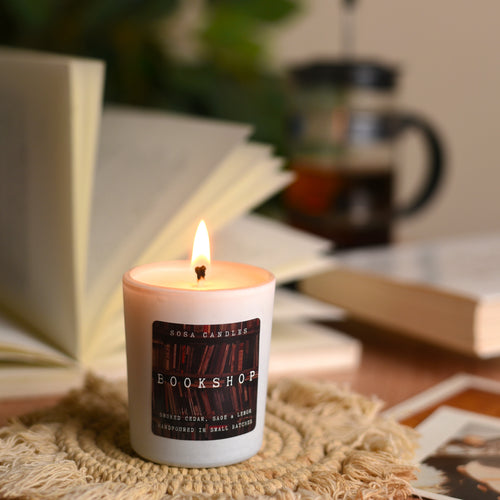
Then the evening, when everything on this page finally pays off. By the time the floor is dry and the windows have been open for twenty minutes, you are standing in the cleanest air your flat will have all week — and that, rather than the middle of the afternoon, is when fragrance does what it is supposed to do. The timings sort the product for you. A Bookshop candle at ₹379 puts scent into a normal room in fifteen to twenty minutes and must be attended and put out, which suits one evening. The Sukoon at ₹1,899 reaches a steady level in about twenty minutes from cold and stops on a 2H timer: a 500ml BPA-free tank, 270–320 sq ft, 16–18 hours per fill on low at 30–50 ml/h against 9–12 on high, a 2.4MHz cool-mist plate, a remote, auto shut-off and three 15ml Hotel Collection scents of your choice included, run at three to six drops per tank — the dose is per tank rather than per litre, so the Boond at ₹899 takes the same drops for one room and the Megh at ₹3,499 covers an open-plan flat. And a reed diffuser from ₹749 is the one thing genuinely worth setting up on cleaning day itself, since its 24 to 72 hours of establishing coincide with the days the room takes to settle. None of them removes anything, and this is the sentence I would keep if I could keep only one: if the bad smell is still there tomorrow, it was a source rather than a side effect, and fragrance on top of a source gives you two smells instead of one. SOSA makes no room or linen spray for the home; the water-based Hotel Collection runs in the Sukoon, Boond and Megh only, never in a reed and never in the waterless Vaayu at ₹11,999; reed oil clogs a 2.4MHz plate; and you will stop noticing whatever you choose within about a fortnight, at which point the answer is one honest guest rather than two more drops.
The SOSA edit
A sequence rather than a shopping list, because five of these six rows are about the order you do things in and cost nothing. The products at the bottom belong to the evening after, with one exception that belongs to the day itself.
| Do this | What it is | When it is the right answer | Price |
|---|---|---|---|
| 1. Two windows, before you start ★ | Cross-ventilation on opposite or adjacent walls, kept open throughout and for twenty minutes after | Always, except on a heavily wet monsoon day, when fans replace windows | ₹0 |
| 2. Top to bottom, dry before wet | High surfaces, then shelves, then fabric into the machine, then floors last | Every clean. Gravity means you deal with the fallout once instead of twice | ₹0 |
| 3. Check the vacuum bag or filter first | An overdue filter returns a fraction of what it lifts through the exhaust | Before vacuuming. It is a common and completely invisible cause of a worse-smelling room | ₹0 |
| 4. Extraction on while degreasing, and ten minutes after | The chimney or exhaust fan running through the kitchen's worst twenty minutes | Whenever warm water goes onto old cooking film. It removes it at source | ₹0 |
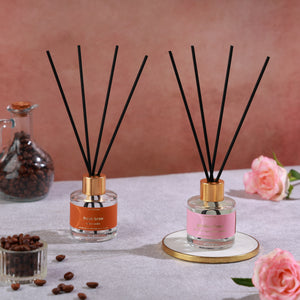
| 5. Set up a reed on the day | 24–72 hours to establish, which for once is an advantage — it rises as the room settles | On deep-clean day itself. No electricity and no moisture added to a room that has just been mopped | from ₹749 |
| 6. A candle or the Sukoon, in the evening | 15–20 minutes for a candle, about twenty for the Sukoon from cold, with three 15ml scents included | Once the floor is dry and the air has turned over. Never mid-clean, which is the worst timing there is | ₹379 / ₹1,899 |

Versailles
I have watched people abandon a good clean halfway through because the flat had started to smell unpleasant and they took it as evidence they were making things worse. It is evidence of the opposite. Everything you are removing has to pass through the air on its way out, and for a while the air is where it is. The kitchen is the clearest case: six months of cooking film sits on a wall doing nothing at all until warm water and a degreaser hit it, and then for twenty minutes it is the loudest thing in the building. That is not the clean failing. That is the clean working, in the only way it can.
So the whole skill is sequence, and it is free. Windows open before you touch anything and for twenty minutes after you stop, top to bottom so you deal with the fallout once, and all the wet work last. What I would ask you not to do is light something in the middle of it. I have done it and it is a waste — you are adding fragrance to the dirtiest air of the week, in a room whose humidity is up, twenty minutes before you open the windows and let it all out again. Wait for the evening, when the floor is dry and the place has turned over, and the same candle at ₹379 will do more than three of them did at four in the afternoon. And if the smell is still there the next morning, stop looking at your cleaning. It was never a side effect; it was a source, and it wants finding rather than covering.
Everything is made and supported from Pune, and a part of every order funds girl-child education through Nanhi Kali. You get a home that smells like somewhere you chose; a girl gets a classroom. That equation has always felt right to me.
Frequently asked questions
- Why my kitchen smells worse after I clean it — the degreasing case, at length.
- Why my floor smells different once it has dried — what the drying half of it is doing.
- Why a deep clean stops working within a week — what happens after the bad hour is over.
- Why the clean smell disappears by evening, and how to make it stay — the pillar for this group.
- Brand: the SOSA founder story.
Facts verified August 2026: Diagnostic facts used in this guide: a closed room accumulates what it cannot exchange, so cross-ventilation needs two openings rather than one; a drain's U-bend water seal evaporates in roughly two to four weeks of disuse and then admits sewer gas, which is corrected by pouring water down the drain; microbial growth in fabric and on surfaces accelerates above about 60% relative humidity, and Indian monsoon indoor humidity commonly runs 80–95%, which is the one situation where ventilating on a wet day can import moisture rather than remove it; an air-conditioner's cold, wet evaporator coil and filter grow biofilm that is blown into the room on start-up; textiles adsorb cooking aerosol and body oils and re-release them for weeks; and olfactory adaptation makes a constant household smell undetectable to its residents within about a fortnight while visitors still perceive it. Timings: a scented candle scents a normal room in roughly 15–20 minutes, a Sukoon ultrasonic diffuser reaches a steady level in about 20 minutes from cold, and a reed diffuser needs roughly 24–72 hours. SOSA products and prices: Sukoon 500ml ₹1,899 (270–320 sq ft, 16–18h on low, 9–12h high, 30–50 ml/h, 2.4MHz cool mist, remote, steady/2H/4H timers, BPA-free, auto shut-off, includes three 15ml Hotel Collection scents of your choice); Boond 300ml ₹899; Megh 6-litre ₹3,499; waterless Vaayu ₹11,999 (up to 1000m³); Aangan ₹25,999. Hotel Collection water-based fragrance 15ml ₹299, 100ml ₹999, 300ml ₹1,799, Pack of 7 at 15ml ₹1,799; dose 3–6 drops per tank. Reed diffusers (separate alcohol-free line): Morning Freshness from ₹749, Garden Bloom and Evening Calm from ₹799, Fresh Brew and Mountain Breeze from ₹849; 130ml from ₹1,249; duos from ₹1,498; 300ml refills ₹2,399. Scented candles: Bookshop 80g ₹379, Amber Rose 130g ₹599 and 220g ₹799, Smoked Oudh 130g ₹449, ceramic jar candles ₹949, Pure Calm wax melt set ₹854. Free shipping above ₹499. SOSA does not make a room or linen spray for the home. The Hotel Collection scents are SOSA's own interpretations; SOSA is not affiliated with or endorsed by any hotel brand. Prices subject to change — see the live product pages.