




Two: residual detergent, fabric conditioner and body oils oxidise slowly over months. That is why it is not the smell it went in with — oxidation makes new molecules rather than fading the old ones.
Three: the storage material contributes its own note — cardboard, plastic, cedar, an old trunk, naphthalene.
The fixes: air it on a hanger for a full day; sun it where the fabric allows; store in breathable cotton rather than sealed plastic in a humid climate; and wash before storing rather than after taking out, because body oils oxidise in storage and set.
2. Because what the garment carried in has oxidised. Residual detergent, fabric conditioner and the skin oils left at collars and underarms react slowly with oxygen over months. Oxidation does not fade a smell — it converts it into different molecules, which is why the result is unfamiliar rather than faint.
3. Because the container has been contributing the whole time. Cardboard, plastic, cedar, a steel trunk, newspaper, naphthalene — each has its own volatile signature, and six months of enclosure is plenty of time for cotton to take it up.
4. So air it on a hanger for a full day, not for an hour. Desorption from fibre is slow and needs moving air. Two hours of sun helps where the fabric and the dye will take it, and a shaded breeze where they will not.
5. And wash before storing rather than after taking out. This is the correction that actually changes next year: body oils that are invisible when you fold a garment oxidise over months into a yellow mark and a set smell that no later wash removes.
A portion of every order supports girl-child education through Nanhi Kali.

Three things happen inside a closed box
Storage is the only situation in domestic life where a textile is asked to sit in unchanging air for half a year, and it turns out that is long enough for slow processes to become the dominant ones. Nothing goes wrong in a well-packed box. Three ordinary things simply go on for a very long time, and the result is a garment that smells of its own history rather than of dirt. It is worth taking them one at a time, because each has a different correction and two of the three are decided before you close the lid.
The container you chose, and what it gives back
What each common storage material contributes over six months, and how easily it comes out again. The last column is the one to read before you pack anything away this year, because most of what happens in storage is decided by decisions made at the moment the lid closes.
| Stored in | What it contributes | How it behaves in humidity | How easily it airs out | Verdict |
|---|---|---|---|---|
| Cotton bag or old pillowcase ★ | Almost nothing of its own | Breathes, so the garment equilibrates with the room rather than with a sealed atmosphere | Quickly — usually a few hours on a hanger | The best option in an Indian climate, provided the room itself is dry |
| Cardboard box | Papery, dusty, faintly sweet — lignin, starch and adhesive | Absorbs moisture readily and holds it against the fabric; softens and attracts insects | Moderately — a full day in moving air | Acceptable short term, poor for a season, and never on a floor |
| Sealed plastic box | A slow plastic off-gas, much faster when warm | Seals in whatever RH the room had when you closed it; condenses on the lid at night and drips back | Slowly, because the note is on every fibre evenly | The commonest mistake in this country. Use it only if the contents are certainly dry |
| Cedar or camphorwood chest | Its own volatile oils, deliberately and strongly | Reasonably stable, and the timber itself buffers small humidity swings | Slowly — cedar is designed to persist | Fine if you want cedar on your clothes. That is a choice rather than a neutral option |
| Steel trunk | Metal, old paint, and whatever lined it decades ago | Cold surfaces, so condensation forms inside the walls in a warm room | Slowly, and the metallic note is stubborn | Line it with clean cotton and do not store anything damp in it |
| Naphthalene in anything | A single overwhelming note that sublimes and coats every fibre in the container | Unaffected by humidity, and it does nothing at all about it | Weeks of airing, and it is the hardest thing on this table to remove | The subject of its own page. Air and time, rather than a stronger smell on top |
| The room the boxes live in | Whatever you decide, once the storage itself is right | Unchanged by storage — this is the air the containers breathe | Not applicable; it is a background rather than a residue | A reed on the shelf, at ₹849. Outside the box, always |

A day on a hanger, and washing before rather than after
Start with what to do with the garment in your hands right now, because most of it is free and it works. Hang it — do not fold it back — in moving air for a full day rather than for an hour. The equilibrium that produced the smell is broken by giving the fibre somewhere to release into, and desorption from a woven surface is slow: an hour takes the edge off and misleads you into thinking it has not worked, while twenty-four hours in a room with a window open and a fan running usually finishes the job entirely. Hang it with space around it, on a wide hanger so the shoulders open out, and turn it inside out for the second half of the day so the inner face gets its turn. Then sun, where the fabric and the dye will take it. Two hours of direct morning sun on cotton and linen is genuinely effective — ultraviolet degrades a good deal of what is sitting on the fibre, and the warmth accelerates release — but it will fade dark dyes and prints, it is unkind to silk, and it will damage wool and anything with elastane in it. For those, a shaded balcony with a breeze for a full day does most of the same work more slowly. If after a day of airing the smell is still there in the seams and the collar, it is not equilibrium, it is oxidised residue, and it needs a wash rather than more air — a longer cycle at the warmest temperature the label allows, with the detergent measured rather than poured, since the point is to remove residue rather than to add more of it.
Then the correction that matters far more than any of the above, because it decides what next year looks like. Wash before storing, not after taking out. Almost everybody does the opposite: the clothes come out in October smelling odd, they get washed then, and they go away again the following March in whatever state the last wearing left them. That is exactly backwards. A garment worn once and put away looks perfectly clean and carries an invisible deposit of skin lipid at the collar, the cuffs and the underarms — and over six months in a warm box that lipid oxidises, yellows the fibre and sets a smell into it that no later washing removes. The mark you find on a stored shirt in October was not there in March; it was made in the box. So the rule is that nothing goes into storage unwashed, including the item you wore only to a wedding and hung up again, and nothing goes in at all until it is completely dry to the back of the hand — cold rather than faintly warm from an airer, because a garment that finishes drying inside a sealed box takes the whole box with it. Fold loosely rather than tightly, since a hard crease held for six months in cotton becomes a permanent weakness, and leave the container two-thirds full rather than packed, for the same reason a wardrobe rail needs gaps. And label the lid, which sounds like tidiness advice and is actually smell advice: a box that gets opened once in the middle of the season has its air exchanged once, and that is worth more than anything you could put inside it.
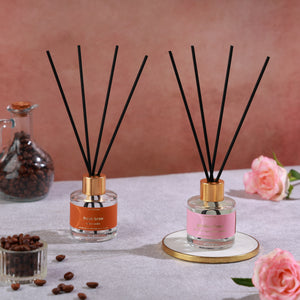
Then the last two things, one about what not to put in the box and one about what to do with the room. Nothing scented goes into long-term storage — no reed, no oil, no strongly perfumed sachet, no cake of soap between the folds. Everything this page has said about equilibrium applies with even more force to a fragrance: in a sealed container it saturates the headspace, every garment adsorbs it evenly, and six months later you have a box of clothes that all smell of one thing you chose in March and may not want in October. Naphthalene is the extreme demonstration of exactly this principle, and the fact that people spend years trying to get it out of their clothes ought to be instructive about putting anything else in. What is legitimate is scenting the room the storage lives in, once the boxes themselves are right. A box room, a landing, the shelf above a guest bed and the top of a wardrobe are the least ventilated corners in a flat, and an alcohol-free reed diffuser gives one of them a steady character with nothing to switch on: Mountain Breeze at ₹849 is Himalayan pine, sage and cedar, which suits a storage corner particularly well, and it needs 24 to 72 hours to establish before you judge it. If the room is one you actually use, a Boond at ₹899 runs the water-based Hotel Collection at three to six drops per tank and reaches a steady level in about twenty minutes, with the Sukoon at ₹1,899 the larger version for 270–320 sq ft. Both belong in the room and neither belongs in the box, and in a damp month I would run neither and open the window instead.
The SOSA edit
Two lists in one, really: what to do with the clothes in front of you, and what to do differently when they go away again. The second list is the one that matters, because storage smell is almost entirely decided at the moment the lid closes.
| Do | What it is | Why it works | Cost |
|---|---|---|---|
| 1. A full day on a hanger ★ | Hung with space around it in moving air, turned inside out halfway through, window open and a fan running | Breaks the equilibrium by giving the fibre somewhere to release into. An hour is not enough; a day usually finishes it | ₹0 |
| 2. Sun, where the fabric allows | Two hours of morning sun on cotton and linen; a shaded breeze for silk, wool, elastane and dark dyes | Ultraviolet degrades much of what sits on the fibre and warmth accelerates release. It will also fade prints, so choose | ₹0 |
| 3. Wash before storing, not after | Everything goes into the box laundered, including what was worn once, and nothing goes in warm or faintly damp | Skin lipid at a collar oxidises over months into a yellow mark and a set smell that no later wash removes | ₹0 |
| 4. Cotton rather than sealed plastic | Bags, old pillowcases or a cloth-covered shelf; boxes two-thirds full; loose folds; a label on the lid | Plastic seals in the room's humidity and condenses it back onto the fabric at night. Breathable storage equilibrates with the room | ₹0 |
| 5. Open the box once mid-season | One afternoon in the middle of the six months, lid off, contents shaken out and left an hour | One air exchange in the middle of a storage period is worth more than anything you could put inside the box | ₹0 |
| 6. Mountain Breeze for the storage corner | Himalayan pine, sage and cedar, alcohol-free reed, 24–72 hours to establish, one level for months | Gives a box room or a landing a steady character. It scents the air the containers sit in, not the containers | ₹849 |
| Not in the box: anything scented | No reed, no oil, no perfumed sachet, no soap between the folds — and this includes naphthalene | A sealed container saturates, so every garment adsorbs it evenly. Six months later it is on all of them and hard to remove | — |

Versailles
I like this question more than most, because the answer is not really about a problem. A box of clothes left alone for six months is a small closed experiment in equilibrium, and what comes out is a genuinely accurate record of what went in and what it was kept in. The cotton has spent half a year releasing into air it could not escape and breathing it back in; the traces of soap and skin it carried have slowly turned into something else; and the cardboard or the plastic or the cedar has been quietly contributing the whole time. Nothing has gone wrong. Time has simply been allowed to act.
The practical part of that is one correction and one refusal. The correction is to wash things before they go away rather than after they come out, because an invisible mark at a collar in March is a permanent one by the following March, and I have watched people lose good clothes to that single misordering. The refusal is that nothing scented goes into a storage box, mine included. An enclosure does not disperse a fragrance, it concentrates it and hands it to every garment equally, and the number of people still trying to get naphthalene out of a sari they inherited should settle the argument permanently. Air the clothes, put the box right, and if you want the corner where the boxes live to smell of something, put a reed on the shelf outside them.
Everything is made and supported from Pune, and a part of every order funds girl-child education through Nanhi Kali. You get a home that smells like somewhere you chose; a girl gets a classroom. That equation has always felt right to me.
Frequently asked questions
- Why your wardrobe smells of naphthalene, and how to get rid of it — the storage note that takes longest to leave.
- Why your cupboard smells musty in monsoon — the humidity that decides whether storage goes well.
- Why the area around your wardrobe smells stale — the same enclosure argument at daily scale.
- Why your wardrobe smells stale, and how to fix it properly — the complete guide for this group.
- Brand: the SOSA founder story.
Facts verified August 2026: Diagnostic facts used in this guide: a closed room accumulates what it cannot exchange, so cross-ventilation needs two openings rather than one; a drain's U-bend water seal evaporates in roughly two to four weeks of disuse and then admits sewer gas, which is corrected by pouring water down the drain; microbial growth in fabric and on surfaces accelerates above about 60% relative humidity, and Indian monsoon indoor humidity commonly runs 80–95%, which is the one situation where ventilating on a wet day can import moisture rather than remove it; an air-conditioner's cold, wet evaporator coil and filter grow biofilm that is blown into the room on start-up; textiles adsorb cooking aerosol and body oils and re-release them for weeks; and olfactory adaptation makes a constant household smell undetectable to its residents within about a fortnight while visitors still perceive it. Timings: a scented candle scents a normal room in roughly 15–20 minutes, a Sukoon ultrasonic diffuser reaches a steady level in about 20 minutes from cold, and a reed diffuser needs roughly 24–72 hours. SOSA products and prices: Sukoon 500ml ₹1,899 (270–320 sq ft, 16–18h on low, 9–12h high, 30–50 ml/h, 2.4MHz cool mist, remote, steady/2H/4H timers, BPA-free, auto shut-off, includes three 15ml Hotel Collection scents of your choice); Boond 300ml ₹899; Megh 6-litre ₹3,499; waterless Vaayu ₹11,999 (up to 1000m³); Aangan ₹25,999. Hotel Collection water-based fragrance 15ml ₹299, 100ml ₹999, 300ml ₹1,799, Pack of 7 at 15ml ₹1,799; dose 3–6 drops per tank. Reed diffusers (separate alcohol-free line): Morning Freshness from ₹749, Garden Bloom and Evening Calm from ₹799, Fresh Brew and Mountain Breeze from ₹849; 130ml from ₹1,249; duos from ₹1,498; 300ml refills ₹2,399. Scented candles: Bookshop 80g ₹379, Amber Rose 130g ₹599 and 220g ₹799, Smoked Oudh 130g ₹449, ceramic jar candles ₹949, Pure Calm wax melt set ₹854. Free shipping above ₹499. SOSA does not make a room or linen spray for the home. The Hotel Collection scents are SOSA's own interpretations; SOSA is not affiliated with or endorsed by any hotel brand. Prices subject to change — see the live product pages.