


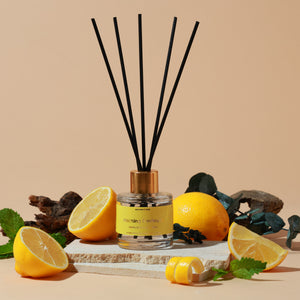

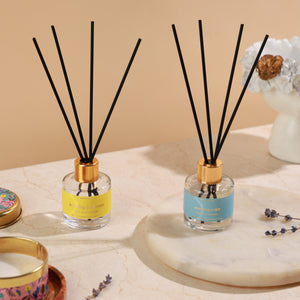
Distance: spend by how much you know about the person, not by how important they are. The obligation list sits at ₹749–₹799; close relationships need a decision, not a default.
Visibility: anyone who will see each other's gift must receive the identical gift. Four aunts in one room, eight people on one floor — one SKU, bought many times.
Reciprocity: never match an expensive gift with an equal one. Matching escalates the exchange and commits you both to it next year. Respond warmly and deliberately below the line.
Cash first for anyone who works for you — house help, a driver, security or building staff. An object alongside is a courtesy and never a substitute.
- The straight answer
- Part one — the three axes
- Part two — spend by distance and visibility
- Part three — reciprocity, and why matching is a trap
- Part four — where Diwali etiquette actually goes wrong
- Part five — what this guide cannot offer you
- Part six — twelve awkward situations, answered
- A note from Sonal
- FAQs
2. Direction decides meaning. A gift travelling down a reporting line reads as thanks and nothing else. Sideways it is ordinary courtesy. Upward it carries a second possible reading that neither party will ever discuss, so keep it low in value, plain, unpersonalised, and give it from the team where a team exists.
3. Distance decides spend. Not seniority, not affection — how much you actually know about them. The less you know, the more the gift should be a good default rather than a bold choice, and the less it should cost. The obligation list sits comfortably at ₹749–₹799 a head.
4. Visibility decides uniformity. Anyone who will see each other's gift must receive the same gift. Four aunts who will compare notes, eight colleagues on one floor, three neighbours on one landing. Giving the same thing is not laziness in that situation; it is fairness, and it must be visibly the same rather than accidentally similar.
5. Never match an expensive gift. Matching value is the reciprocity trap: it confirms the level, obliges the other person to hold it next year, and turns a courtesy into a ratchet. Respond warmly, promptly and deliberately below the line.
6. Cash comes first for anyone who works for you. House help, a driver, security staff, the person who cleans the building. Cash is flexible and it is what most people would choose. An object alongside acknowledges the person; it is never a substitute, and a gift never stands in for a bonus.
7. Buy two SKUs, not eight. A list of fourteen does not need fourteen decisions. One repeated gift for the middle tier and individual thought at the top is faster, cheaper and produces a better outcome than shopping name by name. Nine at ₹799 is 9 × ₹799 = ₹7,191.
8. Keep two spares on a shelf. The doorway emergency — somebody arrives with something and you have nothing — is solved in advance or not at all, and a rushed reciprocal gift reads worse than an honest thank-you. Buy spares you would be content to keep.
Everything is composed and handmade in small batches in Pune, and a portion of every order supports girl-child education through Nanhi Kali.

Part one — the three axes
Etiquette pages usually proceed relationship by relationship, which produces forty rules that contradict each other at the edges. It is more useful to hold three questions and apply them to any name on the list. Which way is this gift travelling? How far away is this person from me in information terms? And who else will see it? Every convention in Indian Diwali gifting that is worth keeping falls out of one of those three, and where two of them conflict, visibility usually wins.
 Morning Freshness₹749 · 50mlThe instinct is to spend according to importance, which produces expensive gifts for people you barely know. The better axis is information. A cousin you see once a year should receive a good default; your mother should receive a decision. That is not about spending less on the cousin — it is that a broadly acceptable gift is precisely the right instrument where you have no information and precisely the wrong one where you have plenty. A safe bottle handed to someone who knows you well reads, accurately, as a choice that was optimised rather than made. So: ₹749–₹799 across the middle of the list, and at the top either the specific thing only you would have thought of, or — if fragrance genuinely is their subject — a 130ml at ₹1,349 chosen because you know the scent is right rather than despite not knowing.
Part two — spend by distance and visibility
The table below is axes two and three working together. The columns that matter most are the second and the last: who else sees it, and why not to spend more. No price is quoted for any category outside our own range, and every total is arithmetic on our listed prices — SOSA publishes no bulk pricing and no discount of any kind.
| Relationship | Will other people see it? | Sensible band | The SOSA object at that band | Why not to go higher |
|---|---|---|---|---|
| The obligation list — aunts, cousins, neighbours ★ | Yes, and they compare | ₹749–₹799 a head | Garden Bloom 50ml, identical for all | More sets a level you must hold every year |
| Close family — parent, sibling, spouse | Rarely — received privately | Whatever the decision requires | Something specific, or a 130ml ₹1,349 | Money is not the missing ingredient here; thought is |
| A colleague at your own level | Yes — the whole floor sees it | ₹379–₹474, the same for everyone | Jar candle ₹379 or mug ₹474 | A larger gift obliges colleagues to match you |
| Your reporting manager, from you alone | Possibly, on a desk | ₹379–₹849, never more | Mountain Breeze 50ml ₹849 | Value upward becomes a question they must answer |
| Your manager, from the whole team | Yes, and that is the point | Per head: ₹1,498 ÷ 8 ≈ ₹187 | Day & Night duo ₹1,498, one card | Collect quietly; nobody should feel counted out |
| People who work for you | Yes — staff talk to each other | Cash, at whatever you have decided | Then a Sandalwood jar ₹449 alongside | An expensive object instead of cash is worse, not better |
| A client or supplier contact | Often, in an office | ₹474–₹664 | Cloud trinket dish ₹664 | Above this it stops reading as a courtesy |
| A household hosting you for three days | Yes — you will live inside it | ₹1,249–₹1,598 | A duo ₹1,548 or a 130ml | You are a guest, not a sponsor of the household |
| The honest caveat: these bands describe a normal urban Indian list and nothing more. Families differ, offices differ, and a small firm where everyone has known each other for fifteen years does not run on the same conventions as a large organisation with a written policy. Read your own room first. What does not vary between them is the structure underneath: a gift that will be compared should be identical, a gift travelling upward should be small, and a gift given where you hold real information should be chosen rather than defaulted. | ||||
 Misty Mornings · the lightest correct gesture₹379Shop →
 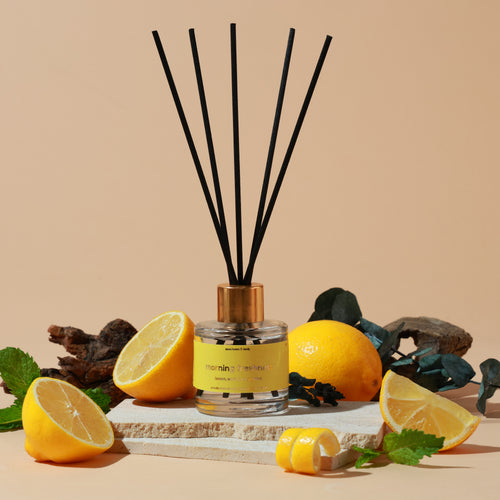 Morning Freshness · the honest floor₹749Shop →
 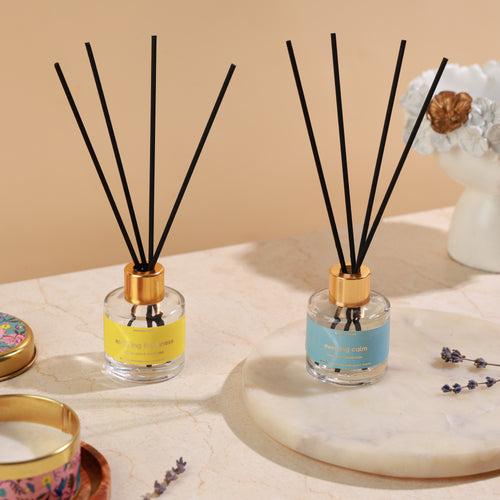 Day & Night duo · top tier, or pooled₹1,498Shop →
Part three — reciprocity, and why matching is a trap
The second half of etiquette is what happens when a gift arrives at your door. Improvisation here is expensive: an exchange between two households tends to hold whatever level it reached last year, so a single matched response commits both sides to it indefinitely. The whole skill is responding warmly without confirming a level. The table below is the ladder, and it is deliberately unlike the spend table above — different question, different columns, different failure.
| What arrived | The trap | The response that does not escalate | What it costs |
|---|---|---|---|
| Something markedly more expensive than yours ★ | Matching it, and locking the level in for next year | Thank them properly and deliberately do not match | Whatever you had already planned |
| Something from a household you had not listed | Rushing out to buy an obvious replacement | A spare from the shelf, given without commentary | ₹799, bought weeks earlier |
| Something when you have literally nothing | A visibly hurried gift, which reads worse than none | An honest thank-you now, something later if you wish | ₹0 in the moment |
| The same category you had bought for them | Treating the duplication as an embarrassment | Nothing — a consumable duplicates harmlessly | ₹0 |
| Something you cannot use, sealed and unopened | Passing it on inside the same circle | Only regift sealed, unused, and well outside that circle | ₹0, if the three conditions hold |
| An expensive gift from someone who works for you | Reciprocating upward into an awkward position | Thank them warmly; keep your own giving as planned | Cash at Diwali, as decided |
| The honest caveat: none of this is about being ungenerous. Generosity that ratchets is not generosity, it is an obligation being built between two families who will both be quietly resentful of it in four years. The graceful position is a level you can hold every year without thinking about it — which usually means one repeatable gift, at a price you would be happy to pay again, given to everybody in the visible group. | |||
Part four — where Diwali etiquette actually goes wrong
Almost nobody fails at Diwali by giving something ugly. The failures are structural and there are four of them. The first is a tier-one effort spent on a tier-two name — hours of agonising over a cousin you last saw twelve months ago, while the people you actually love receive something bought in the last twenty minutes of the same evening. Sorting the list first fixes this and nothing else does. The second is the inverted staff gift: an object handed to somebody who works in your home or building in place of cash. Cash is flexible, it is what most people would choose, and it is the established convention; an object alongside it acknowledges the person. The order is what matters, and I have watched it inverted often enough to state it in three sections of this guide.
The third failure is the accidental difference inside a visible group. Four aunts, four different bottles at four slightly different prices, chosen with genuine care — and received as a ranking. Nobody says anything and everybody notices. If you want to give one person more, give it privately or not at all; within the room, one SKU, bought as many times as the room has people. The fourth is escalation by matching, described in the section above: a single reciprocal gesture at an unfamiliar level quietly resets what both households expect, and neither of you chose that.
There is a fifth thing, less a failure than a misunderstanding, and it affects what you buy. A Diwali home is already at maximum fragrance — lamps, incense, flowers, a kitchen running for days. Nothing you send will be noticed on the night, and a diffuser does not mask, cancel or clean anything; it sits alongside whatever is already in the air, and during heavy cooking the sensible move is ventilation rather than more fragrance. A bottle given at Diwali is really a gift for the fortnight after the festival, once the house is being put back together. It also carries a handling note that belongs in any Diwali guide: fragrance oil is flammable, so a bottle stands well away from diyas, candles and lamps, on a tray, out of reach of children and pets.
Part five — what this guide cannot offer you
A guide that only lists what a shop can do is an advertisement. Here is what SOSA cannot do for your list, stated in one place so you can plan around it rather than discover it at checkout. There is no bulk programme. No published discount slab, no minimum order quantity, no stated invoicing arrangement, no custom branding service and no lead time — none of those exist, and any page that quotes you one has invented it. The only route for a large order is to ask through the contact page before you commit. Every total here is arithmetic on listed prices: 9 × ₹799 = ₹7,191, 14 × ₹749 = ₹10,486.
There is no gift card, no gift hamper, no gift box and no curated gift set. The duo at ₹1,498–₹1,598 is the nearest thing we sell to a set and it is honestly a two-bottle product, not a hamper. Gift wrapping, gift notes, direct-to-recipient shipping and delivery timing are unconfirmed — check at checkout rather than assuming them, and I promise no delivery window anywhere. Free shipping above ₹499 is the only logistics fact that exists here. And there is a price floor: the least expensive SOSA reed diffuser is ₹749. Nothing below that is a reed diffuser in any size. Below it sit jar candles from ₹379, the Sandalwood jar at ₹449, wax melts at ₹474 which need a burner we do not supply, mugs at ₹474 and ₹569, the Amber Rose candle at ₹599, the Cloud trinket dish at ₹664 and a candle two-pack at ₹664.
Two further gaps before you build a list around us. The reed range has no oud, no musk-forward scent and no aquatic, so if the person wants one of those, buy it elsewhere rather than letting me stretch the nearest thing to cover it. And replacement reeds are not sold separately — the 300ml refill at ₹2,399 and the 500ml at ₹3,499 are oil only, with no vessel and no reeds included, which makes them excellent value for somebody who already owns a bottle and a peculiar parcel for somebody who does not. The 15ml Hotel Collection at ₹299 has the same problem in reverse: it is a water-based fragrance for the tank of an ultrasonic machine and it is useless to anyone without one.
Part six — twelve awkward situations, answered
The guide compressed into the cases people write in about. Where a figure appears it is arithmetic on listed prices, and where the honest answer is to buy nothing, that is what the row says.
| The awkward situation | The etiquette answer | What to hand over | Cost |
|---|---|---|---|
| Four aunts who compare notes ★ | Identical gifts, visibly identical | Garden Bloom 50ml × 4 | 4 × ₹799 = ₹3,196 |
| Somebody sent you something expensive | Thank them warmly; do not match it | Whatever you had already planned | Unchanged |
| A gift arrives and you have nothing | An honest thank-you beats a rushed parcel | Nothing now; a spare next time | ₹0 |
| You want to give your manager something | Check the policy; keep it small if none | Mountain Breeze 50ml | ₹849 |
| Your team of eight wants to give together | Pool it, one card, everyone signs | Day & Night duo | ₹1,498 ÷ 8 ≈ ₹187 |
| Your appraisal is pending | Give nothing upward until it closes | A short written note | ₹0 |
| House help, driver, building staff | Cash first, always; object second | Cash, then a Sandalwood jar | ₹449 on top of the cash |
| Someone on the list does not mark Diwali | Acknowledge yours; assume nothing of theirs | The same plain object as everyone else | ₹749 or ₹379 |
| You are staying in their home for three days | Choose a scent you can live inside | Fresh & Grounded duo | ₹1,548 |
| You gave them the same thing last year | Fine if it is consumed; a refill or a second scent | A different 50ml, or a 300ml refill if you saw the bottle | ₹799 or ₹2,399 |
| A one-room flat, or a home with a toddler | The flat decides, not the relationship | Everyday Beautiful Mug | ₹474 |
| You are over-buying and you know it | Cut names, not rupees | Fewer bottles, chosen properly | Less than you planned |
Versailles
I did not expect to end up writing about etiquette. I trained as a perfumer, and for two years everything I wrote was about composition, reed count and why fibre survives a monsoon where rattan clogs. Then the Diwali questions started arriving, and almost none were about fragrance. They were about a list of fourteen people, a weekend, and a specific anxiety about getting it wrong in front of a family.
What I have come to think is that the anxiety is misplaced but not irrational. Nobody is judging the object. They are reading the structure around it — whether everyone in the room got the same thing, whether the amount matched the closeness, whether the person who works in your home was handled with respect. Get the structure right and almost any decent object works. Get it wrong and the most beautiful thing on the shelf will not save it.
That is why this guide spends more words on sorting a list than on choosing a scent, and why it contains a whole section about what we cannot sell you. No hamper, no gift box, no bulk programme, no delivery promise, and no oud, musk or aquatic in the reed range. I would rather you knew that before you built a plan around us than after.
I will not tell you that any bottle will be appreciated, remembered or will make you look generous. I have no way of knowing that, and neither does anyone else writing gift copy in October. I can tell you what a bottle does, how long it lasts, what it costs, and which names on your list it is genuinely wrong for. Everything is composed and handmade in small batches in Pune, and a part of every order funds a girl's classroom through Nanhi Kali.
Frequently asked questions
SOSA range & prices used in this guide (verified from the live store, 27 August 2026): Reed diffusers — alcohol-free, phthalate-free, paraben-free, IFRA-compliant compositions on a heat-stable coconut-derived (CCT) carrier, in a refillable glass bottle with six fibre reeds; 50ml lasts 6–8 weeks, 130ml lasts 14–18 weeks. Morning Freshness 50ml ₹749 · 130ml ₹1,249; Garden Bloom ₹799 · ₹1,299; Evening Calm ₹799 · ₹1,299; Fresh Brew ₹849 · ₹1,349; Mountain Breeze ₹849 · ₹1,349. Duo sets: Day & Night ₹1,498, Fresh & Grounded ₹1,548, Warmth & Bloom ₹1,598 (2 × 50ml); ₹2,498–₹2,598 (2 × 130ml). Oil-only refills 300ml ₹2,399 · 500ml ₹3,499 (vessel and reeds not included). The least expensive SOSA reed diffuser is ₹749 — no reed diffuser exists below that price in any size. Below it: scented jar candles from ₹379 (roughly 15–18 hours), Sandalwood or Smoked Oudh jar candle ₹449, wax melts ₹474 (a burner is needed and is not included), ceramic mugs ₹474, ribbed and face mugs and taper candles ₹569, Amber Rose candle ₹599, ceramic trinket dish ₹664, candle two-pack ₹664 (roughly 30–36 hours). Machines: Boond 300ml ₹899 · Sukoon 500ml ₹1,899 · Megh 6L ₹3,499 (~215 sq ft, a runtime and humidity machine rather than a coverage upgrade) · waterless Vaayu ₹11,999 · Safar car and travel diffuser ₹3,999. The water-based Hotel Collection (15ml ₹299 · 100ml ₹999 · 300ml ₹1,799) is a fragrance for an ultrasonic machine, not a standalone gift. SOSA publishes no bulk or corporate gifting terms — there is no discount slab, no minimum order quantity, no stated GST-invoicing arrangement, no custom branding service and no published lead time — and SOSA sells no gift card, gift hamper, gift box or curated gift set. Larger orders should be discussed with SOSA directly through the contact page before committing. Gift wrapping, gift notes, direct-to-recipient shipping and delivery timing are unconfirmed — check at checkout rather than assuming them; no delivery date is promised anywhere in this guide. Per-head and total costs shown are arithmetic on the listed prices, not quotations. Fragrance adds scent to a room; it does not clean air, remove cooking or smoke smells, or change how anyone feels. Fragrance oil is flammable — keep any diffuser away from diyas, candles and open flame. Composed and handmade in small batches in Pune, India; tested through 45°C summer heat and 85% monsoon humidity. Free shipping above ₹499. A portion of every order supports girl-child education through Nanhi Kali. Prices subject to change — see the live product pages.