
 Bookshop candle ₹379
  Everyday Beautiful Mug ₹474
  Cloud trinket dish ₹664
 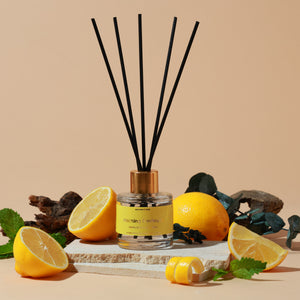 Morning Freshness ₹749
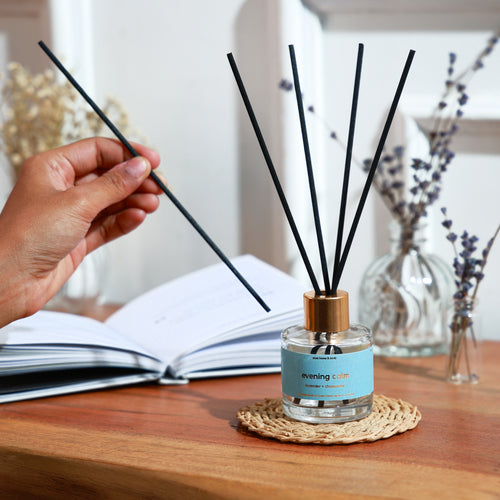
 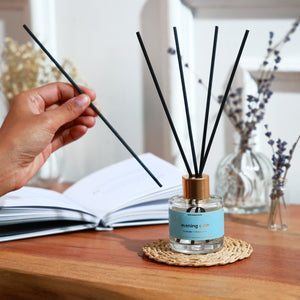 Evening Calm ₹799
Do not scramble. Do not leave the room to find something, do not hand back anything you were given by someone in the same circle, and do not promise to send something. A promise made in a doorway is a debt you have now written down.
Send something later only if you would have anyway. A week or two later, framed as its own gift rather than as a settlement. An Evening Calm 50ml at ₹799 arriving separately is a gift; the same bottle handed over at the door is a receipt.
The prevention is a shelf, not a plan. Two or three identical spares — a 50ml at ₹749, a jar candle at ₹379 — kept on the rule that you would be content to keep them yourself if nobody comes.
2. Say nothing about having nothing. One light acknowledgement is fine if it is natural to you; three apologies are not. Repeated apology hands your discomfort to the other person and makes them reassure you, which is a strange thing to ask of someone who has just brought you a present.
3. Do not leave the room to find something. The gap is visible, the return is visible, and the object will look like what it is. A gift produced in ninety seconds is not a gift, it is a receipt.
4. Do not hand back anything from the same circle. At Diwali the nearest unopened object is very often something that arrived from a neighbour, a cousin or a colleague — frequently one who knows the person now standing in front of you. This is the single most avoidable error available in the moment.
5. Do not promise to send something. A promise in a doorway converts a pleasant exchange into an outstanding item, and it usually goes unhonoured for weeks. If you intend to send something, send it. Do not announce it.
6. If you send something later, frame it as its own gift. A week or two afterwards, on its own, with no reference to what they brought. A 50ml at ₹799 is a complete object with 6–8 weeks of stated life, and free shipping starts at ₹499, so one bottle clears the line on its own.
7. Prevent it next year with three spares and one rule. Keep two or three of one thing where you can reach it, and let the rule be that you would be content to keep them yourself if nobody comes. That single rule is what stops a spare shelf becoming a cupboard of things nobody wants.
Everything is composed and handmade in small batches in Pune, and a portion of every order supports girl-child education through Nanhi Kali.
Part one — the ninety seconds
Everything that goes wrong here goes wrong inside two minutes, under mild social panic, in a doorway with other people watching. The useful thing is to know beforehand what you are going to do, because the decision is not one anybody makes well in the moment.
 Cloud trinket dish₹664The scramble is leaving the room to find something. It is visible, it is audible, and whatever returns with you carries the whole story. The same-circle handback is worse and commoner: the nearest unopened object at Diwali usually came from someone in the same building, office or family, and passing it on inside that circle is the one regifting error with no recovery. The promise is the quietest of the three and the most persistent — I will send you something creates an item that both of you now remember, and it is very often still outstanding in December. Against all three, the spare shelf is the practical answer: two or three of one thing, kept where you can reach them, chosen so that you would be perfectly happy to keep them if the year goes quietly. A Cloud trinket dish at ₹664 passes that test in most homes; so does a mug at ₹474.
Part two — four moves at the door, ranked
The options actually available to you in the moment, in order from best to worst, with what each one looks like from the other side of the doorway. The right answer is at the top and costs nothing.
| The move | What it looks like from their side | What it costs you | When it is actually right |
|---|---|---|---|
| Receive it well, thank them specifically, say nothing else ★ | A gift that landed. The exchange is complete | Nothing | Almost always. This is the answer |
| Hand over a sealed spare from your own shelf | Normal, provided it is genuinely a spare and looks unopened | ₹379–₹799, already spent | When you keep spares deliberately and it does not read as improvised |
| Promise to send something | A debt has been created and acknowledged out loud | Nothing now, and a nagging obligation later | Almost never. Send it instead of announcing it |
| Disappear inside and find something | Visibly assembled. Their gesture has been converted into a transaction | Whatever it cost, plus the awkwardness | Not a move I would use at all |
| Pass on an unopened gift from someone in the same circle | Fine until the day it is recognised, and then permanent | Nothing, then a great deal | Never inside the same building, office or family |
| The honest caveat: there is one situation where handing something over on the spot genuinely matters, and it is when the person at your door works for you and has brought something on their own initiative. Household staff, a building guard, a driver. Here the imbalance is not merely social, and the right response is not an object at all — it is cash, offered separately and without ceremony, because cash is flexible and it is what most people would choose. A gift alongside is a courtesy; it is never the substitute, and it should never be reached for as one in a hurry. | |||
 Bookshop candle · the low-cost spare₹379Shop →
  Everyday Beautiful Mug · needs nothing else₹474Shop →
 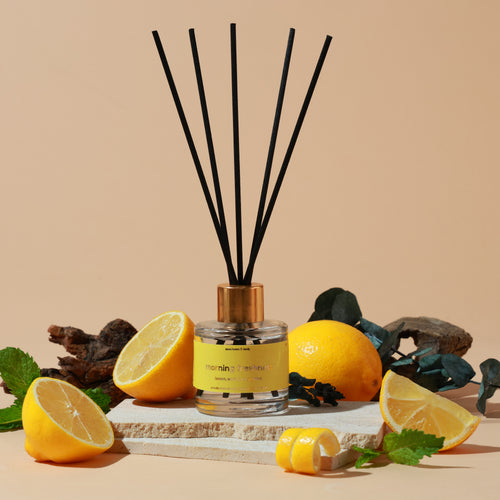 Morning Freshness · the spare I would keep three of₹749Shop →
Part three — the follow-up, and when to send nothing
The commonest thing I am asked after the doorway itself is whether something has to follow. The honest answer is that in most cases nothing does. A one-way gift is not an unresolved situation; it is simply a gift. Neighbours give without expecting return, colleagues do, and people who like you do. If you send something back to every person who was generous to you, you are running an account, and running an account is precisely the state this whole subject is trying to avoid. Where a follow-up genuinely earns its place is where the relationship is ongoing and reciprocal by its nature — a family you exchange with every year, a friend whose home you are in regularly, someone whose gesture was clearly the start of a habit rather than a one-off.
When you do send something, the shape matters more than the size. Send it separately, a week or two later, and let it arrive as its own object with its own reason. Do not attach it to what they gave you, do not mention the doorway, and do not scale it against their gift — that arithmetic starts a ladder that gets more expensive every year. A 50ml reed diffuser at ₹749 to ₹849 is almost exactly the right weight for this: substantial enough not to look like a token, small enough not to demand a response, and consumable, so it finishes and leaves nothing behind. Free shipping starts at ₹499, so a single bottle clears the line while a ₹379 candle on its own does not — which is one of the few pieces of arithmetic on this page that works in your favour.
And there is a version of this situation that deserves separating out entirely, because the ordinary etiquette does not apply. If the person who arrived with something works for you — house help, a guard, a driver, someone from the building — the imbalance is not merely social and should not be resolved with an object grabbed from a shelf. Cash is flexible, it is the established convention, and it is what most people in that position would choose; give it separately, without ceremony, and add something small only if you want to. The order matters: cash first, object second, never object instead. I have watched this get inverted often enough to want it written plainly on a page about being caught unprepared, because being unprepared is exactly when the inversion happens.
Part four — what to send, by who was at the door
Seven people who might have caught you empty-handed, whether anything should follow, and what to say if it does. Where the answer is nothing, that is the answer rather than a hedge.
| Who caught you empty-handed | Send something afterwards? | When, and how | What I would send |
|---|---|---|---|
| A neighbour on your floor ★ | Not necessary. A proper thank-you is complete | If you want to, next week, unannounced | Bookshop jar candle ₹379 or a mug ₹474 |
| A relative you exchange with every year | Yes — the exchange is the convention here | Within a fortnight, as its own gift | Evening Calm 50ml ₹799 |
| A colleague who brought something to the office | Only if you are gifting that group at all | Give the whole group the same thing, or nobody | Morning Freshness ₹749, identical across the team |
| Your boss or someone senior | No. An upward reply can read as something else entirely | A written thank-you, and nothing further | Nothing — or a card |
| Someone who works for you | Yes, and cash comes first | Separately, without ceremony, as soon as you can | Cash, plus a Sandalwood candle ₹449 if you want an object too |
| An unexpected guest with a family in tow | One gift to the household, not one each | Hand over a sealed spare, or send afterwards | Garden Bloom 50ml ₹799 for the home |
| Someone you barely know, gifting a whole building | No. It was a distribution, not a gesture at you | Thank them when you next pass them | Nothing |
Versailles
I have been on both sides of this doorway. The year we launched, I took bottles round to half a dozen neighbours on our floor and watched two of them go slightly grey and start looking around the room. One vanished for a minute and came back with something clearly intended for somebody else. I have never forgotten how uncomfortable it made me — not because the gift was small, but because I had accidentally created a task for a person I was trying to be nice to.
The other one simply said thank you, told me she would put it in the hallway, and asked what was in it. That was a much better minute for both of us, and it cost her nothing at all. The gap between those two responses was not generosity. It was only preparation.
So the advice on this page is mostly free, and the part that is not free is deliberately small. Keep two or three things in a cupboard that you would be pleased to keep yourself, and the emergency stops existing. If those things happen to be made by us in Pune, I am glad; if they are a pair of mugs and a candle from anywhere at all, the habit works exactly as well.
Frequently asked questions
- Keeping spare gifts ready — how many, and the rule that makes the habit work.
- Is it okay to regift — the three conditions, and the two that rule it out.
- Answering an expensive gift and how much to spend.
- The Diwali gifting etiquette guide — the whole subject in one page.
- Brand: the SOSA founder story.
SOSA range & prices used in this guide (verified from the live store, 27 August 2026): Reed diffusers — alcohol-free, phthalate-free, paraben-free, IFRA-compliant compositions on a heat-stable coconut-derived (CCT) carrier, in a refillable glass bottle with six fibre reeds; 50ml lasts 6–8 weeks, 130ml lasts 14–18 weeks. Morning Freshness 50ml ₹749 · 130ml ₹1,249; Garden Bloom ₹799 · ₹1,299; Evening Calm ₹799 · ₹1,299; Fresh Brew ₹849 · ₹1,349; Mountain Breeze ₹849 · ₹1,349. Duo sets: Day & Night ₹1,498, Fresh & Grounded ₹1,548, Warmth & Bloom ₹1,598 (2 × 50ml); ₹2,498–₹2,598 (2 × 130ml). Oil-only refills 300ml ₹2,399 · 500ml ₹3,499 (vessel and reeds not included). The least expensive SOSA reed diffuser is ₹749 — no reed diffuser exists below that price in any size. Below it: scented jar candles from ₹379 (roughly 15–18 hours), Sandalwood or Smoked Oudh jar candle ₹449, wax melts ₹474 (a burner is needed and is not included), ceramic mugs ₹474, ribbed and face mugs and taper candles ₹569, Amber Rose candle ₹599, ceramic trinket dish ₹664, candle two-pack ₹664 (roughly 30–36 hours). Machines: Boond 300ml ₹899 · Sukoon 500ml ₹1,899 · Megh 6L ₹3,499 (~215 sq ft, a runtime and humidity machine rather than a coverage upgrade) · waterless Vaayu ₹11,999 · Safar car and travel diffuser ₹3,999. The water-based Hotel Collection (15ml ₹299 · 100ml ₹999 · 300ml ₹1,799) is a fragrance for an ultrasonic machine, not a standalone gift. SOSA publishes no bulk or corporate gifting terms — there is no discount slab, no minimum order quantity, no stated GST-invoicing arrangement, no custom branding service and no published lead time — and SOSA sells no gift card, gift hamper, gift box or curated gift set. Larger orders should be discussed with SOSA directly through the contact page before committing. Gift wrapping, gift notes, direct-to-recipient shipping and delivery timing are unconfirmed — check at checkout rather than assuming them; no delivery date is promised anywhere in this guide. Per-head and total costs shown are arithmetic on the listed prices, not quotations. Fragrance adds scent to a room; it does not clean air, remove cooking or smoke smells, or change how anyone feels. Fragrance oil is flammable — keep any diffuser away from diyas, candles and open flame. Composed and handmade in small batches in Pune, India; tested through 45°C summer heat and 85% monsoon humidity. Free shipping above ₹499. A portion of every order supports girl-child education through Nanhi Kali. Prices subject to change — see the live product pages.