

Why it buys so little: a flip works by inverting a gradient that takes days to build. After twenty-four hours there is barely a gradient to invert, so you are turning over a reed that has almost nothing to give back.
The sensible upper bound: twice a week. That covers a heat wave, nine or ten reeds, or a hot kitchen. Beyond that you are spending handling and oil for a difference you cannot reliably detect.
The mess: reed oil marks wood and stone permanently. Seven flips a week means seven chances to drip, and it transfers dust and skin oil onto the wet end, which is what actually clogs a reed.
2. The benefit per flip collapses as you flip more often. A reed accumulates the heavy, slow part of the composition at its exposed end over days. Weekly, you are inverting a gradient that has fully developed. Daily, you are inverting one that has barely started, so most of the gesture does nothing.
3. It costs you weeks, modestly but genuinely. Each flip briefly puts a film of oil on the outside of the fibre that evaporates quickly, and keeps every reed permanently at its maximum delivery surface. Expect a 50ml to land at the low end of 6–8 weeks. That is a much smaller effect than reed count or a west-facing shelf, but you are paying it every day for very little.
4. It costs you reeds, and reeds are the part we do not sell separately. Repeated handling frays and compresses a fibre tip and transfers dust and skin oil onto the wet end. Reeds are the consumable in this system and refreshing them every few months is already the guidance; daily handling brings that forward.
5. And it will mark your furniture. Reed oil stains wood and stone permanently. Seven flips a week is seven chances to catch the neck of the bottle, and it is invariably the good sideboard. Stand the bottle on a tray, always, whatever your cadence.
6. Twice a week is the sensible upper bound. Worth it in a 45°C summer, in a hot kitchen, or with nine to ten reeds standing in a 50ml. Beyond that, do a fifteen-minute doorway test before you touch the bottle again — the problem is very often your own nose rather than the reeds.
Composed and handmade in small batches in Pune, and a portion of every order supports girl-child education through Nanhi Kali.
Part one — the maths, the weeks and the mess
There are three separate accounts to settle here and people usually think about only the first. The gain account asks what one more flip actually returns; the time account asks what it takes off the bottle; the handling account asks what seven contacts a week do to your reeds, your hands and the surface underneath. Daily flipping loses on all three, which is unusual — most of the arguments on this blog are genuine trades where you buy one thing with another. This one is closer to a straight loss, and the only reason it is a common habit is that it feels diligent.
 Oil refill₹2,399 · 300mlTwo things raise throughput when you flip often. The obvious one is that no reed is ever allowed to slow down, so the bottle runs permanently near its designed maximum. The less obvious one is that inversion briefly leaves a film of oil along the outside of the newly raised length, which evaporates far faster than oil travelling through the fibre. Neither effect is dramatic — flip frequency is a much weaker accelerant than reed count, direct sun or a 45°C afternoon — but the direction is consistent. A 50ml flipped daily will sit near six weeks rather than eight. If you have decided to run hard anyway, the sensible response is the oil-only refill at ₹2,399 for 300ml, roughly ₹7–8 per millilitre against ₹15–17 for a fresh 50ml.
Part two — every cadence, costed honestly
Five schedules, what each returns, and what each takes. The bottle-life column assumes a 50ml with its standard six fibre reeds in an ordinary room, out of direct sun and away from a vent; these are our own working figures from in-house testing and customer correspondence rather than laboratory measurements.
| Cadence | Detectable gain over weekly | 50ml bottle life | Handling and mess | My verdict |
|---|---|---|---|---|
| Once a week ★ | The reference point — the calibrated cadence | The full 6–8 weeks | 52 handling events a year | Do this |
| Twice a week | Slight, and genuinely useful in heat or at 9–10 reeds | Around the middle of 6–8 weeks | 104 events a year — still easy to keep tidy | The reasonable ceiling |
| Every other day | Very hard to detect against a twice-weekly bottle | Nearer six weeks than eight | 180 events a year, and the reeds start to look tired | Effort with no visible return |
| Every day | None you could pick out blind | Around six weeks | 365 events a year · the furniture risk becomes real | Not worth doing |
| Twice a day | None — you are inverting a gradient that has not formed | Around six weeks, no better than daily | Frayed reed tips, oil on hands, dust pressed into fibre | Stop; something else is wrong |
| The honest caveat: nobody can pick a daily-flipped bottle from a weekly-flipped one in a blind test of the same room, and I would not ask you to believe otherwise. The differences in the first column are ours, from repeated in-house testing, and the point of the table is the fourth column rather than the second. | ||||
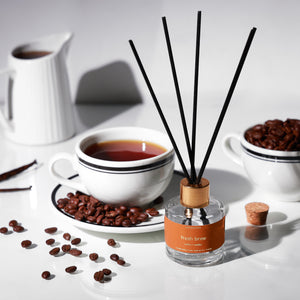
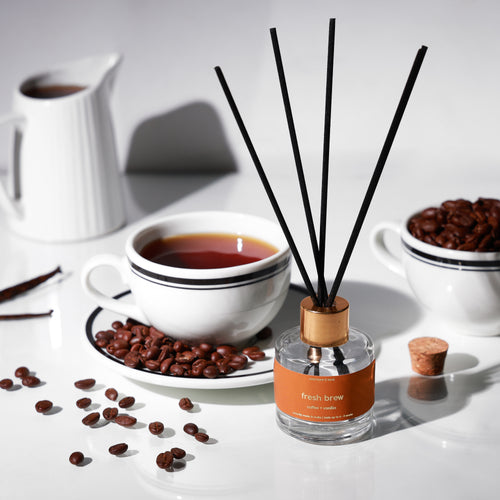 Fresh Brew · 9.5/10from ₹849Shop →
 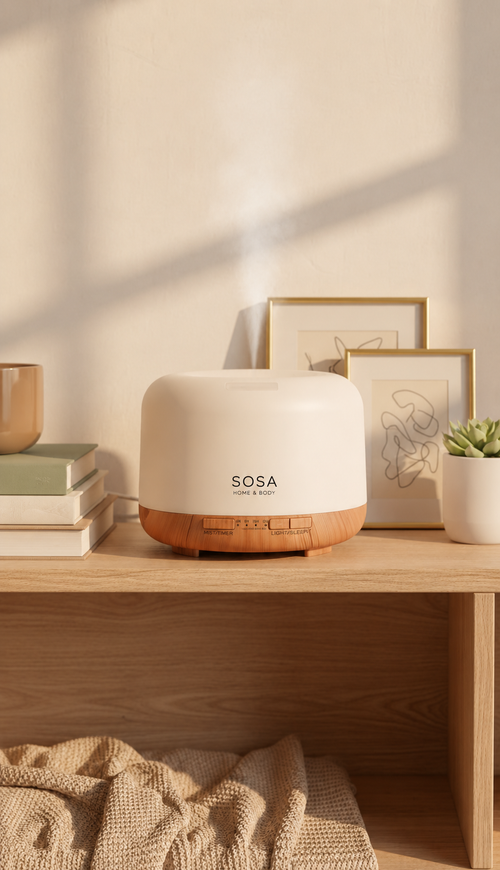 Sukoon · scent on demand₹1,899Shop →
 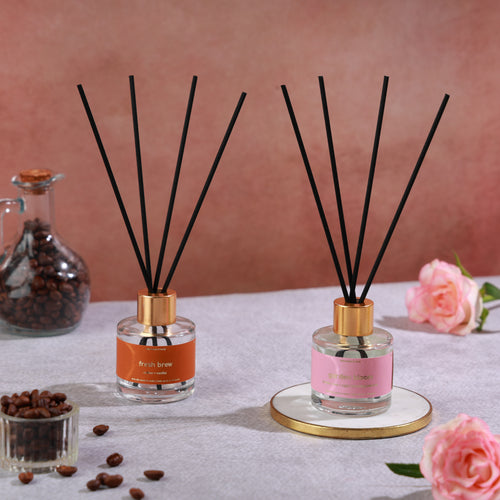 Oil refill · if you run it hard₹2,399Shop →
Part three — why people start flipping every day
In four years of reading these emails, almost nobody flips daily because they read it somewhere. They arrive at it by escalation: the room seemed quieter than it was last month, a flip helped for an evening, so they flipped again the next day, and the habit set. The thing that makes this so persistent is that the first hours after a flip genuinely are the loudest the bottle gets, so every single flip appears to confirm the theory. What the daily flipper is chasing is the surge, and the surge is by definition temporary — it is the sound of six reeds changing state, not the level the composition was built to hold.
Underneath that, three different problems account for nearly all of it, and none is solved by frequency. The first is olfactory adaptation: your nose stops reporting a constant within minutes, and it adapts hardest in your own home, where the background is familiar and continuous. That is why the flip works so well as a placebo — you have changed something, and change is exactly what a nose is built to notice. Before you touch the bottle tomorrow, go and stand outside for fifteen minutes, somewhere with its own smell, and pay attention to the first three seconds when you come back. Most people discover the room was fine. The second is placement: a bottle in an alcove, behind a sofa or inside a cabinet releases into air that never moves, and no cadence rescues that — move it to a console near a doorway at waist to chest height, several feet from an AC vent and out of direct sun. The third is a composition quieter than the room needs, and the honest fix for that is a bottle, not a schedule.
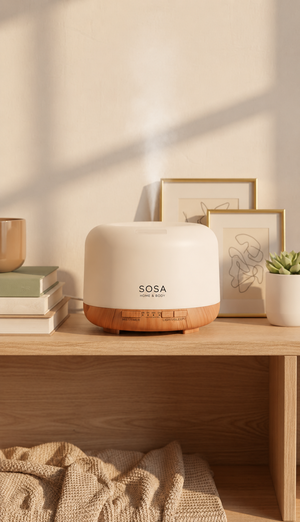
And then there is a fourth group, which I have a good deal of sympathy for: people who do not want a constant background at all. They want the flat to smell strongly of coffee and cedar when people arrive at eight, and of nothing much at eleven. No flipping schedule produces that, because a reed diffuser is a constant, passive, deliberately low format with no fan, no heat and no switch. Flipping daily is the closest thing to a volume control the format offers, which is precisely why people keep reaching for it, and it is still not one. If scent on demand is what you want, a Sukoon at ₹1,899 covers 270–320 sq ft, runs 16–18 hours on low, has a remote and steady, two-hour and four-hour timers, and comes with three 15ml Hotel Collection scents in the box. It is a different product line running water-based fragrance — reed oil never goes into it — and moving to one is not a failure of the reed. Most homes end up running both, in different rooms, for different reasons.
Part four — what to do instead, by what you were trying to fix
Every reason people give me for flipping daily, with the cheaper thing that actually addresses it. Three of the five rows cost nothing at all.
| What daily flipping was trying to solve | The fix that actually addresses it | What it costs you | Price |
|---|---|---|---|
| "I stopped being able to smell it" ★ | Fifteen minutes out of the room, then judge the first three seconds on return | A quarter of an hour and some honesty | Free |
| "It only smells near the bottle" | Move it into gentle passing air near a doorway, waist to chest height | Nothing — and it often lengthens the bottle | Free |
| "It fades between flips" | Twice a week in a heat wave or at 9–10 reeds; otherwise weekly | A few days off the bottle at most | Free |
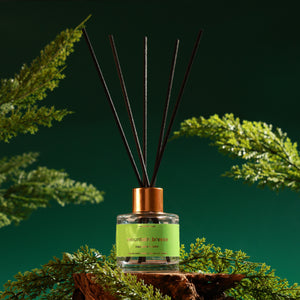
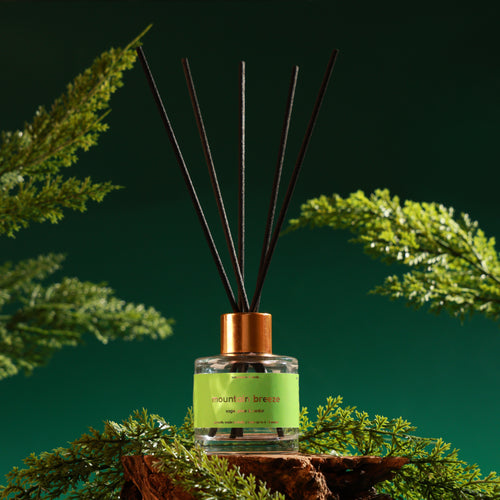
| "It is simply too quiet for this room" | Move up the scale — Fresh Brew 9.5 or Mountain Breeze 9.4 | A new bottle and a change of character | ₹849 / 50ml |
| "I run it hard and it costs too much" | Oil-only refill — keep your vessel, keep your reeds | Nothing; roughly half the per-millilitre price | ₹2,399 · 8–11 months |
| "I want it strong at eight and gone by eleven" | Sukoon ultrasonic — timers, remote, 270–320 sq ft | A different format, and a plug socket | ₹1,899 |
Versailles
We tested this properly before I was willing to write it down, because "flip weekly" is the sort of instruction brands repeat without ever having checked. Two identical 50ml bottles of the coffee composition, same room in Pune, same distance from the door, one flipped every Sunday and one flipped every morning for the whole life of both. The daily bottle finished earlier and did not, on any day either of us could agree on, smell better.
What it did do was leave a mark on the shelf, and by week four its reeds looked distinctly more tired than the other set — darker at the tips, and a little compressed where they had been handled. That mattered to me more than the weeks, because reeds are the part of this system we do not currently sell on their own. It is a gap in our range and I would rather say so than pretend the reeds last forever.
So the guidance stands at weekly, with twice a week allowed in a Delhi June or if you are running nine or ten reeds. If you find yourself past that, the bottle is not the problem you are solving. Everything is composed and handmade in Pune, and a part of every order funds a girl's classroom through Nanhi Kali.
Frequently asked questions
- How often should you flip? — cadence by condition, from a Delhi June to a cool sealed room.
- Does flipping finish the oil faster? — the trade stated plainly, and why it is the right one.
- All the reeds or only some? and is weekly enough? — pattern and calibration.
- The complete reed-flipping guide — this page and the eight around it, in one place.
- Brand: the SOSA founder story.
SOSA reed diffuser range & prices (verified August 2026): alcohol-free, phthalate-free, paraben-free and IFRA-compliant compositions on a heat-stable coconut-derived (CCT) carrier, low-VOC, supplied in a refillable glass bottle with six fibre reeds; 50ml lasts 6–8 weeks and 130ml lasts 14–18 weeks. Morning Freshness (Malabar lemon · peppermint · Nilgiri eucalyptus) 50ml ₹749 · 130ml ₹1,249 · 9.0/10; Garden Bloom (British rose · night-blooming jasmine) 50ml ₹799 · 130ml ₹1,299 · 8.9/10; Evening Calm (Kashmir lavender · chamomile) 50ml ₹799 · 130ml ₹1,299 · 8.9/10; Fresh Brew (Coorg coffee · Kerala vanilla) 50ml ₹849 · 130ml ₹1,349 · 9.5/10; Mountain Breeze (Himalayan pine · sage · Indian cedar) 50ml ₹849 · 130ml ₹1,349 · 9.4/10. Reed diffuser refills are oil only — you reuse your own vessel and reeds: 300ml ₹2,399 (roughly 8–11 months) · 500ml ₹3,499 (roughly 14–18 months), about ₹7–8 per ml against ₹15–17 per ml for a 50ml bottle. Duo sets ₹1,498–₹1,598 for 2 × 50ml and ₹2,498–₹2,598 for 2 × 130ml. Strength figures are positions on SOSA’s own internal strength scale, not an industry standard. Replacement reeds are not sold as a separate SKU; SOSA guidance is to refresh reeds every few months. The reed line is separate from the water-based Hotel Collection for ultrasonic machines (15ml ₹299 · 100ml ₹999 · 300ml ₹1,799) and the two are not interchangeable. Diffusers: Boond 300ml ₹899 · Sukoon 500ml ₹1,899 · Megh 6L ₹3,499 · waterless Vaayu ₹11,999. Composed and handmade in small batches in Pune, India; tested through 45°C summer heat and 85% monsoon humidity. Free shipping above ₹499. A portion of every order supports girl-child education through Nanhi Kali. Prices subject to change — see the live product pages.