





The cause: the towel spends too many hours damp. Used wet, hung folded so only a quarter of its surface is exposed, in a warm humid bathroom.
Two things that make it worse over time: fabric conditioner coats the fibre and makes towels less absorbent and slower to dry, and detergent residue from overloaded washes does the same.
The fix, all free: hang spread out rather than folded, run the exhaust fan, wash hot with no conditioner, and strip the build-up with vinegar or soda.
2. So the towel is not carrying a smell. It is carrying the thing that makes one. This is why every attempt to judge a towel by sniffing it off the rail fails, and why rewashing without changing anything else produces a towel that smells clean until Tuesday.
3. The root cause is hours spent damp, and a folded towel is the main culprit. Hung doubled over a rail, roughly a quarter of the towel's surface is exposed to air and two large faces are pressed together. In a warm, humid, often windowless bathroom, the inside of that fold stays wet for most of the day.
4. Fabric conditioner is quietly making it worse every wash. Softener works by leaving a waxy film on the fibre. That film repels water, so the towel absorbs less and dries more slowly, which lengthens the damp window at both ends. It is a loop, and it tightens over years.
5. The fix is free: spread it out, dry it faster, wash it hotter, and strip the build-up. Hung fully open rather than folded, exhaust fan on for twenty minutes after a shower or the towel out on the balcony, washed at 60°C with no conditioner, and one strip wash with vinegar or soda to remove what has accumulated.
A portion of every order supports girl-child education through Nanhi Kali.

Why it only smells when it gets wet
Almost every household smell is a smell all the time, which is why this one throws people. A towel that reeks in the shower and is odourless on the rail seems to be behaving inconsistently, so the usual conclusion is that the bathroom is the problem, or the water, or the humidity that day. None of those. The inconsistency is the diagnosis, and it points at one thing so precisely that you can more or less stop looking anywhere else. A smell that switches on with water is a smell being manufactured rather than stored, and there is only one kind of thing in a bathroom that manufactures anything.
Where the damp hours come from
A towel's problem is measured in hours spent above damp, so this table is arranged that way rather than by cause. The column that matters is the third one — how many hours of wetness each habit adds or removes on a normal day. There is no product row, because there is no product: SOSA does not make a linen spray, and the last row says so where an offer would normally sit.
| Habit | What it does to the towel | Effect on damp hours | The fix | Cost |
|---|---|---|---|---|
| Hung folded over a rail ★ | Two faces pressed together; roughly a quarter of the surface exposed and the wettest part sealed in the middle of the fold | Adds six to ten hours a day, every day | Hang it fully open across a wide rail or two hooks a foot apart, so every part of the surface has air on one side | ₹0 |
| Dried inside a closed bathroom | The room is warm, small and often already near saturation, so the air cannot accept much more water | Adds four to eight hours | Exhaust fan on for twenty minutes after the last shower, window open, or the towel moved to a balcony rail for an hour | ₹0 |
| Fabric conditioner on towels | A waxy cationic film builds up wash on wash; it repels water, cuts absorbency and slows release | Adds one to three hours, and grows every year | Stop entirely on towels. Strip the existing film with a hot wash and a cup of white vinegar in the conditioner slot | ₹0 |
| An overloaded drum | Thick terry packs solid, the load stops tumbling and the rinse cannot clear surfactant from the weave | Adds one to two hours, and leaves food behind | Load to about two-thirds. Towels alone rather than mixed in with a full wash of clothes | ₹0 |
| Washing at 30 or 40 degrees | Cool cycles with liquid detergent reduce the population without clearing it; the survivors shelter in the pile | No direct effect, but it decides whether the reset ever happens | 60°C for towels, which nearly all cotton terry tolerates. One hot wash resets what thirty cool ones leave behind | ₹0 |
| A towel used by two people, or reused for a week | More skin oil delivered per day, and less time between wettings for it ever to dry out | Adds two to four hours | One towel per person, changed twice a week in summer and monsoon. Rotate three sets rather than washing two to death | ₹0 |
| A towel that is simply finished | Years of film and residue in a fibre that has also worn flat; it no longer dries and no longer absorbs | Permanent | Replace it. Past a certain point a towel cannot be recovered, and the strip wash tells you which ones those are | — |
| Not in the range: a linen or fabric spray | SOSA does not make one. The sprays in the range are car perfumes, sized for about three cubic metres of moving air | None | Printed rather than implied. Fragrance over a sour towel gives you both smells the moment the towel gets wet | — |
The wash, the strip and the rail
Start with the reset, because a towel that is years into this needs one before any habit will hold. Run the towels alone, hot — 60°C, which almost all cotton terry takes without complaint — with your normal detergent and no fabric conditioner whatsoever. Temperature is doing something the cool cycle cannot: it emulsifies the body oils that are feeding the population and it kills a far larger share of what is living in the pile. Then strip the accumulated coating, on a separate wash rather than the same one. Either a hot cycle with about a cup of plain white vinegar in the fabric conditioner compartment, which cuts the cationic film and the limescale together, or a hot cycle with about half a cup of washing soda in the drum with the detergent, which lifts greasy residue. Do one or the other. Putting an acid and an alkali into the same cycle neutralises both and achieves nothing but a load of salty towels, and it is the commonest mistake made by people following two pieces of good advice at once. Do a second rinse if the machine offers one. If, after both, a towel still smells sour when you wet a corner, it is done — years of residue in a flattened pile is not a recoverable situation, and replacing two old bath sheets is a better use of money than anything with a fragrance in it. Then keep it hot: towels at 60°C every time, permanently, and everything else at whatever you like. This is the one category of laundry where the temperature is not negotiable, and it is also the category where the fabric is most tolerant of it.
Then the drying, which is where the problem either recurs or does not, and it is worth more than the wash. Spin at the highest speed the machine offers before the towel leaves the drum, because every extra revolution is water you do not have to evaporate on a rail in a humid room. Get the load out within the hour rather than leaving it sitting; thick terry in a warm sealed drum is the fastest-souring situation in the house. Then dry it outdoors if you possibly can. Sun and moving air together do in two hours what a bathroom rail does in a day, and sunlight has a genuine additional effect on what is living in the fibre. Indoors, and in monsoon, the variable is airflow rather than heat: space the towels so they are not touching, put a pedestal fan on the airer rather than opening a window onto rain, and do not fold or put away anything that is not dry to the back of the hand. Then the daily habit, which is the single highest-value change on this page and costs nothing at all: hang the used towel fully spread out. A rail wide enough to take it flat, or two hooks a foot apart, or over the back of a chair by an open window — anything that stops two wet faces being pressed together for the working day. Run the exhaust fan for twenty minutes after the last shower rather than switching it off on your way out, and if the bathroom has a window, open it. Between them, unfolding the towel and running the fan remove more damp hours than any other pair of changes available to you, and neither has a price.
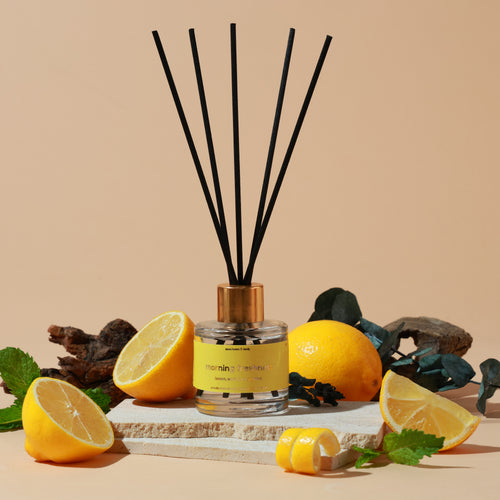
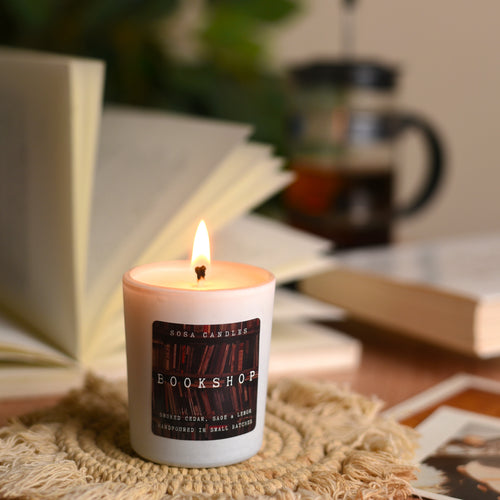
Then the part where you would expect a fragrance company to arrive with a bottle. There is no bottle. Nothing in the SOSA range treats a textile, SOSA does not make a linen spray or a fabric mist, and no fragrance in existence lowers the number of hours a towel spends damp — which is the only variable that matters here. There is a specific reason scenting is worse than useless in this case, and it is worth stating because it applies to every perfumed laundry product on the shelf: the sour note switches on when the towel is wet, and so does anything you have added to the fibre. You have therefore arranged for both to arrive at the same moment, against your own face, and a nose does not average two smells — it detects the difference between them, and it detects a familiar fragrance sitting over an unfamiliar sourness particularly well. That is why a heavily perfumed towel can be considerably more unpleasant than a plain sour one. Where SOSA is relevant is the bathroom as a room, once the towels have stopped being the problem. A bathroom is small, used in short bursts, and usually has nowhere sensible to put a machine, which makes it the one room where a candle is the natural format: the Bookshop candle at ₹379 puts scent into a normal room in fifteen to twenty minutes and burns for roughly 15 to 18 hours, and it must be attended and put out. An alcohol-free reed diffuser from ₹749 is the unplugged alternative, holding one level for months, though it needs 24 to 72 hours to establish and is therefore a habit rather than a rescue. Morning Freshness at ₹749 — Malabar lemon, peppermint and eucalyptus — is the register I would choose there, because it reads as air and clean laundry rather than as perfume. And the principle underneath the whole cluster applies here in its plainest form: fragrance is a finishing layer on air that is already clean. A sour towel is not air. It is a source, and sources get dealt with first.
The SOSA edit
Six free corrections, one that costs the price of new towels, and a fragrance only for the room and only at the end. This is the shortest commercial section in the group, because there is genuinely nothing to sell against a problem made of damp hours.
| Do | What it is | Why it works | Cost |
|---|---|---|---|
| 1. Hang it fully spread out ★ | A wide rail or two hooks a foot apart, never doubled over a single bar with two wet faces touching | It roughly quadruples the surface available for evaporation, which is the largest single change available and the only free one that works every day | ₹0 |
| 2. Wash at 60°C, no conditioner | Towels alone, hot, with your usual detergent and nothing in the softener slot, permanently | Heat emulsifies the body oils feeding the population; softener is a waxy film that cuts absorbency and slows drying every wash | ₹0 |
| 3. One strip wash | A hot cycle with a cup of white vinegar in the conditioner slot, or half a cup of washing soda in the drum. One or the other, never both | It removes accumulated softener film and greasy residue. An acid and an alkali in the same cycle cancel each other out | about ₹30 |
| 4. Fan on for twenty minutes after the shower | The exhaust fan left running after the last person leaves, and the window open if there is one | A saturated bathroom cannot accept water from a towel. Removing the room's moisture is what lets the towel dry at all | ₹0 |
| 5. Load two-thirds, spin high, out within the hour | Terry packs solid and cannot rinse in a full drum; the highest spin removes water you would otherwise evaporate on a rail | It clears the surfactant residue that holds moisture in the fibre, and stops the load souring inside a warm sealed drum | ₹0 |
| 6. Replace the ones that are finished | If a towel still smells sour when you wet a corner after a hot wash and a strip wash, it is not recoverable | Years of film in a flattened pile is a permanent state. Two new bath sheets are better spent than anything scented | — |
| Not in the range: a linen spray | SOSA makes no linen or fabric spray for the home; the sprays in the range are car perfumes | Fragrance in the fibre switches on with water at the same moment the sourness does, so you get both against your face | — |
Versailles
I like this question more than almost any other in this group, because the person asking it has already made the observation that solves it and has not realised. They always say the same thing: it smells fine until I use it. That sentence is the whole diagnosis. A smell that appears with water is a smell being manufactured on the spot rather than stored, and the only things in a bathroom capable of manufacturing anything are alive. Once somebody hears it put that way they stop looking for a better detergent, which is where most of the money in this category gets wasted.
The fixes are unglamorous and they are all free. Unfold the towel, run the fan, wash hot, and stop using conditioner on terry entirely — that last one saves money and improves the towel at the same time. The softener industry has persuaded an entire generation that a towel should feel like a blanket, and the coating that produces the feeling is precisely what stops it drying and stops it drying you. I have not put conditioner on a towel in fifteen years. And on the fragrance question I will be blunt, because it costs me nothing to be: perfume in a towel arrives at exactly the same moment the sourness does, on wet skin, at close range, which is the worst possible arrangement. Fix the drying. Then, if you want the bathroom to smell of something, put a candle on the shelf.
Everything is made and supported from Pune, and a part of every order funds girl-child education through Nanhi Kali. You get a home that smells like somewhere you chose; a girl gets a classroom. That equation has always felt right to me.
Frequently asked questions
- Why your washing machine is making your clothes smell — the other end of the same chain, and the drum that never dries.
- Why clothes smell odd even though they were just washed — the six laundry causes, each with its free fix.
- Why bath towels make the whole bathroom smell — the same towel, seen from the room it hangs in.
- Why your wardrobe smells stale, and how to fix it properly — the complete guide for this group.
- Brand: the SOSA founder story.
Facts verified August 2026: Diagnostic facts used in this guide: a closed room accumulates what it cannot exchange, so cross-ventilation needs two openings rather than one; a drain's U-bend water seal evaporates in roughly two to four weeks of disuse and then admits sewer gas, which is corrected by pouring water down the drain; microbial growth in fabric and on surfaces accelerates above about 60% relative humidity, and Indian monsoon indoor humidity commonly runs 80–95%, which is the one situation where ventilating on a wet day can import moisture rather than remove it; an air-conditioner's cold, wet evaporator coil and filter grow biofilm that is blown into the room on start-up; textiles adsorb cooking aerosol and body oils and re-release them for weeks; and olfactory adaptation makes a constant household smell undetectable to its residents within about a fortnight while visitors still perceive it. Timings: a scented candle scents a normal room in roughly 15–20 minutes, a Sukoon ultrasonic diffuser reaches a steady level in about 20 minutes from cold, and a reed diffuser needs roughly 24–72 hours. SOSA products and prices: Sukoon 500ml ₹1,899 (270–320 sq ft, 16–18h on low, 9–12h high, 30–50 ml/h, 2.4MHz cool mist, remote, steady/2H/4H timers, BPA-free, auto shut-off, includes three 15ml Hotel Collection scents of your choice); Boond 300ml ₹899; Megh 6-litre ₹3,499; waterless Vaayu ₹11,999 (up to 1000m³); Aangan ₹25,999. Hotel Collection water-based fragrance 15ml ₹299, 100ml ₹999, 300ml ₹1,799, Pack of 7 at 15ml ₹1,799; dose 3–6 drops per tank. Reed diffusers (separate alcohol-free line): Morning Freshness from ₹749, Garden Bloom and Evening Calm from ₹799, Fresh Brew and Mountain Breeze from ₹849; 130ml from ₹1,249; duos from ₹1,498; 300ml refills ₹2,399. Scented candles: Bookshop 80g ₹379, Amber Rose 130g ₹599 and 220g ₹799, Smoked Oudh 130g ₹449, ceramic jar candles ₹949, Pure Calm wax melt set ₹854. Free shipping above ₹499. SOSA does not make a room or linen spray for the home. The Hotel Collection scents are SOSA's own interpretations; SOSA is not affiliated with or endorsed by any hotel brand. Prices subject to change — see the live product pages.