



The high-commitment one: amber-oriental — correct if you wear warm perfume, expensive to change your mind about.
The one to avoid: sweet-floral. It lasts longest on fibre and clashes with the most perfumes.
Judged on four things: fabric retention, clash risk, enclosed-room behaviour, and whether it can do anything about mothballs.
2. The joint winner: dry woody. Cedarwood, vetiver and green leaves — slightly more retentive than tea, but it thins on cloth rather than sweetening. 1 Hotels-inspired Forest Suite.
3. The high-commitment family: amber-oriental. The longest-lived of the five on fibre. Genuinely excellent if you wear warm fragrance and want the clothes deliberately scented — but a decision you re-encounter every wear, and one drop is the ceiling.
4. The one to avoid: sweet-floral. The worst combination of the four tests. It holds on fibre almost as long as amber, it is the most legible to other people, and a powdery sweetness on a shirt underneath a crisp modern perfume is the specific failure that makes people give up on wardrobe scenting.
5. What no family can do. None of these fix naphthalene, camphor or damp — those need removal and ventilation. A fragrance run over camphor is perceived alongside it, and the pair is worse than camphor alone.
Made in India, composed by an ISIPCA Versailles-trained perfumer — and a portion of every order supports girl-child education through Nanhi Kali.

Why the family is the right unit here, and why this room breaks the usual rules
Families group materials by volatility and molecular weight, and in most rooms that only tells you how fast something fades. In a wardrobe it tells you something far more consequential, because the heavy, slow-evaporating materials that make a fragrance last in air are the same materials that fibre holds on to. Cotton, wool, silk and cashmere are porous and, in the case of the protein fibres, chemically hospitable to large fragrance molecules. Air exchanges on its own; cloth exchanges nothing until you wash it. So a family celebrated elsewhere for lasting all evening is, in here, a family that will still be on a coat in March. That asymmetry reverses the usual ranking — the families that lose in a living room for being too light win in a wardrobe for exactly the same reason.
So here are the four tests behind the ranking that follows, because they are what separate the families rather than taste. First, fabric retention — how long a trace survives on wool and cotton, which is the only measure that captures what other people will experience. Second, clash risk with the perfume you actually wear: a wardrobe trace rises off your clothes on a different curve from anything sprayed on skin, so a family occupying the same register as your fragrance competes rather than layering under it. Third, enclosed-room behaviour, because a walk-in is usually under forty square feet, often windowless and built to hold still air, so every family concentrates rather than disperses and the heavier ones concentrate hardest. Fourth, the mothball question, which I include because it is why half of you are reading — and the honest answer is that no family passes it. Naphthalene and camphor are volatile, penetrating and medicinal; a scent laid over them is perceived as a muddle rather than a replacement.
The families that contend, and the one that does not
 The clean pairFrom ₹299The picks inside it: Westin-inspired White Tea Serenity and The Ritz-Carlton-inspired Quiet Luxury. These are built from light, unsweetened materials — aloe, white tea, a papery bergamot — that lift and disperse rather than deposit. On a scarf hung in the room for a week they leave the faintest trace of any family here, which is the ambition when cloth has to coexist with a perfume you chose deliberately. It is also the lowest clash risk of the five, because there is nothing distinctive enough to argue with anything. In an enclosed room it scales down cleanly instead of turning into something else, which heavier families do not.
The family matrix
Five families, seven bottles, one small room where the scent leaves with you. Read across to the behaviour on cloth rather than the notes you like — the pack of seven 15ml at ₹1,799 tests all five on a scarf, which is the only test that reflects this room.
| Scent | Notes | Character | Best for |
|---|---|---|---|
|
Westin-inspired ★ White Tea Serenity |
White tea · aloe · cedar | Clean white-tea — lowest fabric retention, lowest clash risk of all five | Anyone who owns several perfumes; the default answer for this room |
|
1 Hotels-inspired Forest Suite |
Cedarwood · vetiver · green leaves | Dry woody — slightly more retentive, but thins rather than sweetening on cloth | Denim, outerwear, tailoring and leather; anyone who wants character |
|
The Ritz-Carlton-inspired Quiet Luxury |
White tea · bergamot · cedar | Clean white-tea, brighter side — bergamot lift, still very low retention | A dressing area you also groom in; wardrobes of shirting and pale cotton |
|
The St. Regis-inspired Old-World Glamour |
Amber · violet · woods | Amber-oriental — the longest-lived on fibre, and the highest commitment | Only if you wear warm fragrance and want the clothes deliberately scented. One drop |
|
Four Seasons-inspired Warm Welcome |
Citrus · floral · sandalwood | Citrus-floral over sandalwood — opens bright, dries down powdery on wool | A living room rather than a wardrobe; the drydown is the part cloth keeps |
| Not in this family, for reference: Shangri-La-inspired Tea Garden is the survivable floral, jasmine framed by two teas rather than by sugar; W Hotels-inspired Lobby Bar is citrus and pepper over amber and the loudest of the seven in an enclosed room. See all seven. | |||
Hotel Collection · all five familiesFrom ₹299Shop →  Sukoon · a larger dressing room₹1,899Shop →
  Boond · the walk-in wardrobe₹899Shop →
Dose by family, and the rule that outranks the dose
The general Hotel Collection guidance is three to six drops per tank, and it does not apply in this room for any family. Clean white-tea at two drops, dry woody at two, amber-oriental at one, and anything floral at one if you are running it at all. The logic is the same one that ranked the families: light materials dilute and disperse, while heavy materials hold and accumulate, so the same dose is doing several times as much work by the third day. The trap is that the two winning families are quiet at the top — you stand at the machine, decide nothing is happening, and add drops you cannot detect until they are on your clothes. Judge from the doorway ten minutes after switching off.
Then the rule that matters more than any of it. An ultrasonic diffuser puts water vapour into the air along with the fragrance, and a walk-in wardrobe is the worst place in a house to add moisture: small, sealed, unventilated, and packed with exactly the materials that suffer. During an Indian monsoon that is not a theoretical risk — damp plus still air plus densely hung wool, silk and leather is how mildew starts, and mildew is a far worse and more permanent problem than whichever family you chose. So whichever one you pick: run it for fifteen to twenty minutes with the door propped open, switch it off before you close the room, never leave it misting inside a sealed wardrobe, and in a humid month keep it clear of leather bags, shoes and jackets.
Placement and housekeeping apply across all five families. Stand the machine on a low shelf or a vanity, a metre clear of anything hanging, and never directly beneath a rail — mist should disperse into air rather than settle onto cloth. Rinse the tank whenever you change family — the light ones are easiest to contaminate, and a residue of amber will make a white tea smell sweetened, undoing the entire ranking above. Use filtered water in hard-water cities, and never put raw essential oils into an ultrasonic: too viscous to atomise, and they will foul the plate. Nothing here treats or protects fabric; these are fragrances for a room.
Which diffuser to run it in
Family choice decides what ends up on your clothes; machine choice decides whether that family's dose is achievable at all. The smallest machine is the correct one here, whichever family wins.
| Diffuser | Best for | Drops | Price |
|---|---|---|---|
|
Boond 300ml, USB, night light |
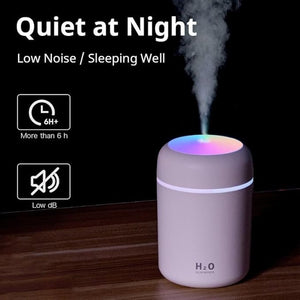
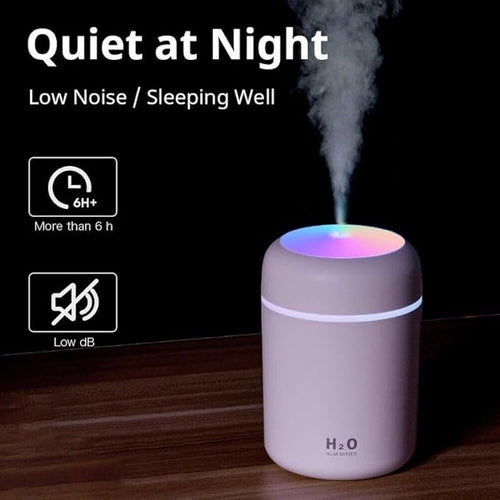
A walk-in wardrobe or dressing corner — the right machine for every family here | 1–2 drops | ₹899 |
|
Sukoon ★ 500ml, remote, mood light |
A larger dressing room with a window, or one open to a bathroom | 2 drops | ₹1,899 |
|
Megh 6 litre, large tank |
Not for an enclosed wardrobe — six litres of tank near hanging wool and leather is a moisture problem | 3 drops | ₹3,499 |
| Hotel Collection 15ml | Testing families on a scarf — or the pack of seven 15ml at ₹1,799 | Many fills | ₹299 |
| Refills · 100ml & 300ml | The family that won — 100ml at ₹999 lasts months at two drops a day | Months of use | from ₹999 |
Versailles
I test wardrobe fragrance differently from everything else I make, and the method is unglamorous. A scarf goes into the room for a week, then comes out, goes somewhere else entirely, and gets smelt in clean air. What the room smelt like that week is almost irrelevant — nobody except me was in it. Plenty of people will be standing next to the scarf.
That test produced the ranking on this page, and it embarrassed me the first time I ran it properly. Two of the families I would have recommended on charm alone were still clearly present at day ten, and one had changed character in a way I did not like. The light families, which impress nobody in a shop, came out of it cleanly.
So do not buy a family on this page. Buy the pack of seven 15ml at ₹1,799, or three at ₹299 each, and run the scarf test yourself for a fortnight against the perfume you actually wear. It costs less than one wrong 100ml. A portion of what you spend funds a girl's classroom through Nanhi Kali.
Frequently asked questions
- Best non-sweet fragrance for a walk-in wardrobe — why sweetness behaves differently on cloth.
- Best woody fragrance for a luxury walk-in wardrobe — the dry woody family, argued on cedar.
- Best clean-smelling fragrance for a closet or dressing area — the mothball routine, in order.
- Which Hotel Collection fragrance should you buy for a dressing room? — the full selector.
- Brand: the SOSA founder story.
SOSA products & prices (verified August 2026): Hotel Collection water-based ultrasonic diffuser fragrance 15ml ₹299 · 100ml ₹999 · 300ml ₹1,799 · Pack of 7 (15ml, all fragrances) ₹1,799; refills 100ml from ₹999. Seven scents: The Ritz-Carlton-inspired (white tea · bergamot · cedar), Westin-inspired (white tea · aloe · cedar), 1 Hotels-inspired (cedarwood · vetiver · green leaves), The St. Regis-inspired (amber · violet · woods), Shangri-La-inspired (jasmine · green tea · white tea), Four Seasons-inspired (citrus · floral · sandalwood), W Hotels-inspired (citrus · pepper · amber). Diffusers: Boond 300ml ₹899 · Sukoon 500ml ₹1,899 · Megh 6L ₹3,499. Water-based, phthalate-free, composed to IFRA standards for home diffusion; 3–6 drops per tank. Made in India, Pune. The Hotel Collection scents are SOSA's own interpretations inspired by the world's finest hotels; all hotel names are trademarks of their respective owners and are used only to describe the scent style — SOSA is an independent Indian fragrance house, not affiliated with or endorsed by any hotel brand. Prices and availability subject to change — see the live product pages.