


2. One lighting temperature throughout, not a mix of warm and cool fixtures. A clinic lit with a mismatched combination of warm bulbs in one room and cool fluorescent tubes in the next reads as unplanned, regardless of how good either fixture is individually.
3. Seating condition is noticed more than seating style. Worn upholstery, wobbling chairs or mismatched sets stand out far more than the specific design chosen — well-kept, matching and simply repaired seating reads as more considered than expensive seating showing wear.
4. Background sound and the washroom are the details most often skipped. A waiting area with an audible HVAC rattle or an echoing hard-surfaced room, and a washroom that is anything less than spotless, undo far more of a premium impression than most owners assume, because both are checked closely by nearly every visitor.
5. Scent belongs on this list, not above it. A restrained, consistent register applied only to patient-facing zones is one detail among several — it completes a considered interior and does not substitute for the reception desk, lighting, seating, sound or washroom standards around it.
Audit the reception desk, lighting consistency, seating condition, background sound and the washroom before treating scent as the detail that will change how the clinic feels — it belongs alongside those details, not ahead of them.
Why consistency, not any single detail, reads as premium
A patient walking into a clinic does not consciously inventory the lighting temperature, the state of the reception desk or whether the seating matches — they register, without naming it, whether everything they can see, hear and touch holds to the same standard. One expensive fixture next to a worn chair does not raise the overall impression; it draws attention to the gap between the two. This is why a shorter list of consistently well-kept details usually reads as more premium than a longer list with one or two standout, expensive choices sitting next to obviously neglected ones.
The details that get skipped are rarely the visible, big-ticket ones — most clinics get flooring and a reception desk right, because those were part of the original fit-out budget and someone was clearly responsible for them. What gets skipped is maintenance: the chair that started matching the set and has since been replaced with a different model, the light bulb that burned out and was replaced with a slightly different colour temperature, the washroom that was immaculate on opening day and has quietly slipped since. Consistency, in other words, is as much an ongoing standard as an initial design decision.
Scent sits at the end of this list, not the top of it, precisely because it is the newest addition to most clinics' thinking and therefore the easiest detail to over-weight. A strong, distinctive fragrance next to a worn desk or mismatched lighting does not compensate for either — it simply becomes the one detail a patient can name, which is rarely the impression a clinic actually wants to leave.
The three details worth auditing first
 Vaayu₹11,999Tidy cables, clear surfaces, and one lighting temperature used consistently through reception, corridor and waiting area do more for a premium impression than any single new purchase.
Comparing the details, by effort and cost
Every row compares a detail against what it typically takes to fix and hold consistent — most of this list is maintenance, not new spend.
| Detail | What usually goes wrong | What it takes to fix | What it costs |
| Reception desk | Clutter, visible cabling, mismatched materials | A tidy-up and a consistent finish | Usually no new spend |
| Lighting temperature | Mixed warm and cool fixtures across rooms | Standardise bulbs to one colour temperature | Cost of replacement bulbs |
| Seating | Worn upholstery or a mismatched replacement chair | Reupholster or replace to match the original set | Varies by scope |
| Background sound | Audible HVAC rattle, echo in a hard-surfaced room | Servicing, or soft furnishing to dampen echo | Varies by scope |
| Washroom | Standards slipping after opening week | A consistent cleaning schedule, checked regularly | Usually no new spend |
| Ambient scent | Treated as the detail that will carry the rest | A restrained, consistent register in patient-facing zones only | ₹11,999 |
 Vaayu · the scent line item₹11,999Shop →
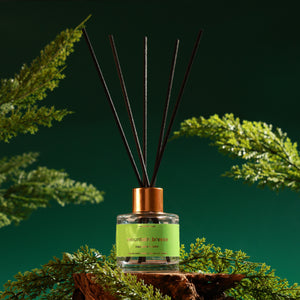
  Sukoon · a smaller premises, same logic₹1,899Shop → Mountain Breeze · a single cabin, same logic₹849Shop →
Where scent fits on this list, and where it does not
Once reception, lighting, seating, sound and the washroom are genuinely consistent, a restrained register in the entrance, reception and waiting area is the detail that completes the list — not the detail that carries it. Fresh, clean registers such as Morning Freshness or Mountain Breeze sit quietly alongside a considered interior without becoming the one thing a visitor names on the way out.
Consulting rooms, treatment and rehabilitation rooms, X-ray and any enclosed space where a patient is held for an extended period stay completely unscented, in line with this cluster's standard zoning doctrine — this rule does not change because the clinic is treating scent as one detail among several rather than the centrepiece.
Keep intensity low enough that scent stays in proportion to the rest of the list — noticed on arrival, forgotten within a minute, and never the loudest single detail in the room. A clinic that has done the maintenance work on its other details rarely needs, or wants, a fragrance strong enough to be the exception.
What to buy, once the basics are consistent
Every route below assumes the reception, lighting, seating, sound and washroom audit above has already been done — scent is sized to what remains, not to the whole list.
| Route | Premises | Why | What it costs |
| Vaayu, wall or duct mounted | A multi-room clinic with reception, corridor and consulting rooms already consistent | Completes a list that already holds together, without becoming the loudest item on it | ₹11,999 |
| Vaayu, at a smaller consistent premises | A well-kept single-zone clinic under 750 sq ft | The same proportion holds even where the rest of the list is more modest in scale | ₹11,999 |
| Sukoon, single zone | A smaller, genuinely consistent reception or waiting area | A proportionate choice for a more modest completed list | ₹1,899 |
| Reed, single cabin | One well-kept consulting room, nothing else to cover | The smallest proportionate addition for the smallest completed list | ₹749–₹1,349 |
| Fix the list first, add scent after | Reception, lighting, seating, sound or washroom standards still inconsistent | Scent completes a consistent list; it does not fix an inconsistent one | — |
When an owner asks me what will make their clinic feel more premium, I ask them to walk through their own reception as if they had never seen it before, and tell me the first three things they notice. Scent is almost never one of the three, and that is exactly the point I want them to reach on their own.
The clinics that feel most considered when I visit are rarely the ones that have spent the most — they are the ones where the reception desk is tidy, the lighting is the same temperature in every room, the chairs match and none of them wobble, and the washroom is as clean at four in the afternoon as it was at nine in the morning. Scent, in those clinics, is one more thing done well, not the thing doing all the work.
I am careful never to let a scent conversation become the whole conversation, because it so easily can. A clinic that fixes its lighting and its seating and only then adds a restrained fragrance will feel more premium than one that skips straight to fragrance and leaves the rest as it was — and I would rather say that plainly than sell the shorter route.
Questions clinic owners ask about premium details
- How can I make an orthopaedic clinic feel premium without making it feel like a spa? — the register choice that keeps this detail proportionate to a medical interior.
- Can I create a premium reception experience without scenting the entire clinic? — the same consistency argument applied specifically to reception.
- I've spent ₹10 lakh+ on my clinic interior — is ambient scent worth adding? — the cost side of where scent sits on this same list.
- Can a medical practice build a signature sensory identity without feeling like a retail store? — how this same restraint carries through into a longer-term brand identity.
- Brand: the SOSA founder story.
SOSA products & prices (verified September 2026): Reed diffusers 50ml ₹749–₹849 (to 150 sq ft, 6–8 weeks at six reeds) · 130ml ₹1,249–₹1,349 (above 150 sq ft, 14–18 weeks) · reed refill 300ml ₹2,399. Ultrasonic: Boond ₹899 (~150 sq ft) · Sukoon ₹1,899 (270–320 sq ft, ships with three 15ml Hotel Collection fragrances) · Megh ₹3,499 (6L tank, ~100 hrs runtime, ~215 sq ft — a runtime machine, not a coverage upgrade). Waterless cold-air: Safar ₹3,999 (no published coverage figure) · Vaayu ₹11,999 (up to 1000 m³, roughly 2,000–3,000 sq ft; 400ml tank lasting about 90+ days; app and onboard control, 1h/4h/8h/24h run windows, adjustable intensity, key-lock, under 38 dB, freestanding or wall/HVAC mount, 5W, CE/RoHS/SGS) · Aangan ₹25,999 (8,000–10,000 sq ft). Hotel Collection water-based fragrance 15ml ₹299 · 100ml ₹999 · 300ml ₹1,799 is for ultrasonic machines; reed oil and Hotel Collection are not interchangeable. Reed diffusers are alcohol-free, phthalate-free, paraben-free, IFRA-compliant and low VOC, handmade in small batches in Pune. Every purchase funds a girl's education through Nanhi Kali. Prices and availability subject to change — see the live product pages.