



2. It completes a sense every other interior decision leaves out. Flooring, lighting and furniture are seen; layout and acoustics are felt underfoot and heard; almost none of that spend addresses what a space smells like, which is the one sensory channel a considered interior has usually left untouched.
3. It is a finish, not a differentiator on its own. A well-chosen fragrance cannot substitute for a poorly finished interior, and it should not be sold to an owner as something that will make a mediocre fit-out competitive — its honest role is to complete a fit-out that is already good.
4. The proportion matters more than the absolute number. ₹11,999 reads as a rounding error against a ten-lakh-plus spend in a way it would not against a bare, unfinished shell — the decision is only proportionate once the rest of the interior work is genuinely done.
5. It is the one finish that reaches every visitor, without exception. Flooring finish, lighting temperature and furniture quality are all noticed to varying degrees depending on where someone sits or looks; a scent placed correctly in reception and the waiting area is the one sensory decision every visitor who enters the clinic passes through.
At a fraction of a percent of a serious interior spend, ambient scent is worth adding as the finishing decision it is — not as a differentiator, and not as a substitute for any of the design work the rest of the budget went toward.
Why scent is the one finish most interiors skip
A serious interior budget goes toward what can be drawn, specified and inspected before it is paid for — flooring material, light fixtures, joinery, signage, seating. Every one of those decisions is visual or, at most, tactile. None of them addresses what the finished room actually smells like, largely because it is the one sense a floor plan and a design brief cannot represent in advance. The result, in clinic after clinic, is an interior that has had real thought put into everything the eye can register and nothing put into the one channel it cannot.
This is not a failure of the designer or the owner — it is simply outside what an interior fit-out budget is built to cover. A flooring contractor, an electrician and a joinery workshop do not price fragrance into their scope, and there is no reason they should. The gap is structural, not an oversight, which is exactly why it is worth naming as a separate decision once the rest of the interior is finished, rather than assuming it was covered somewhere in the budget already spent.
The proportion argument only holds once that finishing is genuinely done. Adding scent to a half-fitted shell, with bare concrete and temporary lighting, does not complete anything — it sits oddly against work still in progress. The moment the interior itself is finished, though, the smallest remaining decision on the list, at a fraction of a percent of everything already spent, is the one that has been sitting there unaddressed the entire time.
The three ways to frame the cost, honestly
 Vaayu₹11,999Against a ten-lakh-plus fit-out, a single Vaayu unit is a fraction of a percent of the total — the comparison that actually makes the decision easy is proportion to what has already been spent, not a standalone price tag.
Comparing the interior spend, line by line
Every row places a typical interior line item against its own share of a ten-lakh-plus spend, to make the proportion argument concrete rather than abstract.
| Line item | Typical role in the fit-out | Share of a ₹10L+ spend | What it costs |
| Flooring | The largest single visible surface in the clinic | A meaningful double-digit share | Varies widely by material |
| Lighting | Sets the colour temperature of every room | A significant share, fixtures plus electrical work | Varies by fixture count and spec |
| Joinery and furniture | Reception desk, seating, cabinetry | A significant share | Varies by scope |
| Signage and branding | Wayfinding and the clinic's visible identity | A smaller but real share | Varies by scope |
| Vaayu waterless machine | The one line item that addresses what the finished space smells like | A fraction of a percent of the total spend | ₹11,999 |
| The proportion is the argument — ₹11,999 against a completed ten-lakh-plus interior is the smallest decision on the list, and it is also the only one that touches every visitor without exception. | |||
 Vaayu · the finishing decision₹11,999Shop →
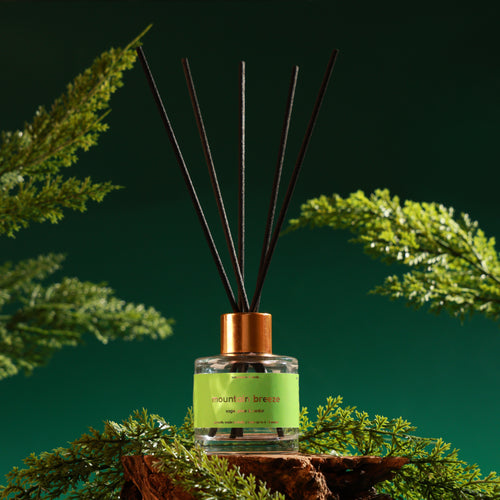
  Sukoon · a smaller premises, same logic₹1,899Shop → Mountain Breeze · a single cabin, same logic₹849Shop →
Keeping it proportionate to the interior, not competing with it
Choose a register that sits quietly alongside the interior's own visual identity rather than announcing itself — the same restraint this cluster recommends throughout applies just as much to a clinic with a ten-lakh interior as to a modest one. Fresh, clean, dry registers such as Morning Freshness or Mountain Breeze read as considered without drawing attention away from the flooring, lighting and joinery the rest of the budget went toward.
Scent the entrance, reception and waiting area — the same zones the interior spend was visibly directed at — and leave consulting rooms, treatment and rehabilitation rooms, X-ray and any enclosed space where a patient is held for an extended period completely unscented, in line with this cluster's standard zoning doctrine. There is no interior-spend threshold that changes this rule.
Keep intensity low enough that the fragrance completes the room rather than competing for attention with the interior work itself. A clinic that has spent seriously on its fit-out has usually shown real restraint in its material and lighting choices, and the fragrance decision should match that restraint rather than introduce the one loud element in an otherwise considered space.
What to buy, relative to the spend already made
Every route below is sized to the interior spend actually completed, not to the clinic's total floor area alone.
| Route | Interior spend completed | Why | What it costs |
| Vaayu, wall or duct mounted | ₹10 lakh+ fit-out, multi-room clinic, genuinely finished | A fraction of a percent of the spend already made; the one remaining sensory finish | ₹11,999 |
| Vaayu, at a smaller finished premises | A well-finished single-zone clinic under 750 sq ft | The same proportion argument holds even where the total spend is more modest | ₹11,999 |
| Sukoon, single finished zone | A smaller, genuinely finished reception or waiting area | A proportionate choice where the interior spend itself was more modest | ₹1,899 |
| Reed, single finished cabin | One well-finished consulting room, nothing else to cover | The smallest proportionate finish for the smallest completed space | ₹749–₹1,349 |
| Wait, and finish the interior first | Flooring, lighting, joinery or signage still incomplete | Scent completes a finished interior; it does not substitute for one still in progress | — |
Owners who ask me this question have usually just finished a long, expensive fit-out and are doing a final sweep of the budget before opening — and I answer it the same way every time, with a comparison rather than a pitch: ₹11,999 against whatever they have told me the interior cost.
That comparison does the work on its own. Against a genuinely finished ten-lakh-plus interior, a single Vaayu unit is the smallest decision left on the list, and it is the only one that addresses smell at all — every other decision on that list was visual or tactile by necessity, not by oversight.
What I will not do is tell an owner that scent will make their clinic more competitive, or that it is worth adding before the rest of the interior is finished. It is a finishing decision, not a rescue plan, and I say that plainly even to owners who arrive expecting a stronger sales pitch than that.
Questions clinic owners ask about the cost
- How can I make an orthopaedic clinic feel premium without making it feel like a spa? — the register choice that keeps this finish proportionate to a medical interior.
- What fragrance direction suits a high-end orthopaedic practice? — the direction that matches a genuinely finished interior.
- What small details make an orthopaedic clinic feel more premium? — scent as one of several finishing details, not the only one.
- Can a medical practice build a signature sensory identity without feeling like a retail store? — the restraint this finishing decision should carry through the brand.
- Brand: the SOSA founder story.
SOSA products & prices (verified September 2026): Reed diffusers 50ml ₹749–₹849 (to 150 sq ft, 6–8 weeks at six reeds) · 130ml ₹1,249–₹1,349 (above 150 sq ft, 14–18 weeks) · reed refill 300ml ₹2,399. Ultrasonic: Boond ₹899 (~150 sq ft) · Sukoon ₹1,899 (270–320 sq ft, ships with three 15ml Hotel Collection fragrances) · Megh ₹3,499 (6L tank, ~100 hrs runtime, ~215 sq ft — a runtime machine, not a coverage upgrade). Waterless cold-air: Safar ₹3,999 (no published coverage figure) · Vaayu ₹11,999 (up to 1000 m³, roughly 2,000–3,000 sq ft; 400ml tank lasting about 90+ days; app and onboard control, 1h/4h/8h/24h run windows, adjustable intensity, key-lock, under 38 dB, freestanding or wall/HVAC mount, 5W, CE/RoHS/SGS) · Aangan ₹25,999 (8,000–10,000 sq ft). Hotel Collection water-based fragrance 15ml ₹299 · 100ml ₹999 · 300ml ₹1,799 is for ultrasonic machines; reed oil and Hotel Collection are not interchangeable. Reed diffusers are alcohol-free, phthalate-free, paraben-free, IFRA-compliant and low VOC, handmade in small batches in Pune. Every purchase funds a girl's education through Nanhi Kali. Prices and availability subject to change — see the live product pages.