Founder Diaries · Clinics & Medical Centres · Shared Waiting Areas
By Sonal Sahani · ISIPCA Versailles 12 min read Updated September 2026
Most clinics have two bad hours and they are the same two hours every working day. The late-morning peak at around half past eleven, and the evening peak between half past five and half past seven, which is worse because it lands on a building that has already been full since breakfast. Everything a clinic can usefully do about waiting-area odour at those two hours is operational rather than purchased: the shape of the appointment book, the toilet extract fan, one propped door, the hour the mop goes round. And there is one instruction that matters more than all of them put together, which is that nobody touches the fragrance setting at either peak.
Quick answers — read this first
The two hours: roughly 11:00–12:30 and 17:30–19:30. The evening peak is the harder one because it arrives on top of a full day of occupancy in the same volume.
What actually works at those hours: stagger department start times by fifteen or twenty minutes so six clinics do not begin at once · a written one-attendant expectation with sensible exceptions · toilet extract fans on the main supply rather than the light switch · one internal or rear door propped to give air a path across the hall · fifteen minutes of purge at the afternoon trough · and no mopping during either peak.
The midday rule: nobody turns the fragrance up because the room got busy. Busy is a ventilation and occupancy problem, and a level set for forty-five people is unbearable for five at three o'clock. The
Vaayu at ₹11,999 is key-locked for precisely this reason.
The short answer
Short answer: treat the peak as a scheduling and ventilation event rather than a fragrance one. Flatten the peak in the appointment book, run the toilet extract for the whole session, prop one internal door, purge for fifteen minutes at the afternoon trough, and never adjust the fragrance upward. Those five cost nothing and they are worth more at half past eleven than any machine at any price.
The pick, once the hall is running properly: the
Vaayu at ₹11,999 — waterless, up to 1000 m³, app scheduling with 1h/4h/8h/24h timers, under 38 dB, and key-locked so the setting survives the busiest hour of the day. The
Aangan at ₹25,999 only where the volume is genuinely 8,000 to 10,000 sq ft or a double-height atrium. A peak is people, not cubic metres.
Shop: the
Vaayu ₹11,999 (400ml tank lasting about seventy-five days, four hotel-inspired scents included, freestanding, wall or HVAC mounted) and the
Aangan ₹25,999 (up to 3,000 m³, 800ml, under 42 dB). Water-based ultrasonic
Sukoon ₹1,899 and
Boond ₹899 suit a single administrative cabin with a named owner. Alcohol-free
reed diffuser from ₹749. Free shipping above ₹499.
Straight answer
What can a multi-speciality clinic actually do about waiting-area odour at eleven in the morning and six in the evening?
1. Flatten the peak in the appointment book before you touch the building. Six departments that all start their session at eleven produce one queue; six departments staggered at fifteen-minute intervals produce six small ones. The appointment software already does this and almost nobody uses it for it. It is the single largest lever any clinic has over how its hall smells, and it costs a conversation.
2. Count attendants, then write a policy about them. A clinic booking twenty-two patients in a session is planning for twenty-two people and receiving forty-five. One accompanying adult per patient, written down, with obvious exceptions for children, the elderly and anybody who needs help, takes a third of the bodies out of the room at the worst quarter of an hour.
3. Put the toilet extract fans on the main supply. Wired to the light switch, an extract fan runs for ninety seconds at a time and is off for the whole of the peak, which is exactly when the suite is in continuous use. Running for the session, it also pulls air out of the toilet suite and makes the hall draw replacement air, which is worth more at half past eleven than any product on this site.
4. Prop one door, and choose it carefully. Not the entrance — that is a pressure boundary with a street on the other side of it. An internal corridor door or a rear stair door on the opposite side of the hall gives air an actual path across the room rather than a puff at one end.
5. Purge at the trough, not at the peak. Every clinic has a quiet half-hour between the two peaks, usually between three and four. Fifteen or twenty minutes of genuine cross-ventilation then is worth more than an hour of trying at six, when the hall is full and the doors are all shut for the air conditioning.
6. And at both peaks, leave the fragrance alone. A level set for forty-five people is intolerable for five at a quarter past three, and nobody ever remembers to turn it back down. Set one intensity in the first week, key-lock it, let the timer run the opening hours, and put that sentence into the standard operating procedure so it survives a change of staff. The
Vaayu at ₹11,999 is key-locked and app-scheduled for exactly this reason.
A portion of every order supports girl-child education through Nanhi Kali.
TL;DR: peak-hour odour is a scheduling and ventilation event, not a fragrance one. Stagger department start times, write an attendant policy, run the toilet extract for the whole session, prop one internal door, purge at the afternoon trough, and never mop during a peak. Then leave the fragrance setting exactly where it was: the
Vaayu at ₹11,999 is key-locked so that the busiest hour of the day cannot change it.
The specification that exists because of half past eleven
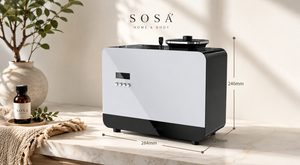
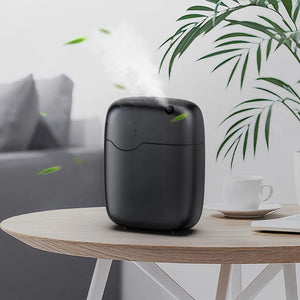
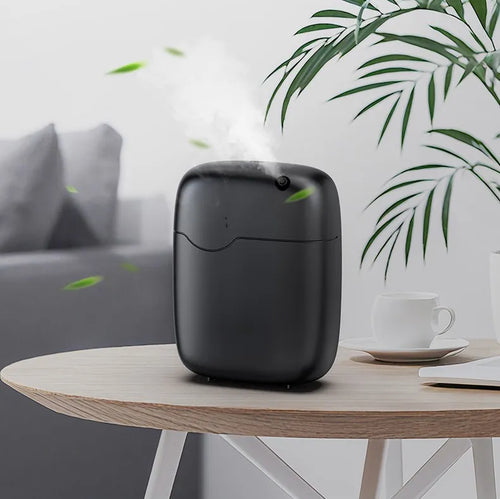
SOSA Vaayu · key-lock and app ₹11,999
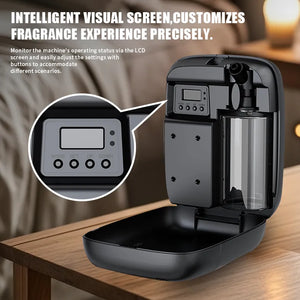
1h, 4h, 8h and 24h onboard timers, Bluetooth app scheduling, adjustable intensity, auto-stop and a key-lock on the machine itself. The key-lock is not there for patients. It is there for your own staff at the busiest hour of the day, when a receptionist with a full counter and a queue at her shoulder decides that the hall would be better for a bit more of something. The level that suits forty-five people at half past eleven is unbearable for five at a quarter past three, and in twenty years I have never met the person who remembers to turn it back down. Lock the setting, put the schedule in the app so facilities can change it from the office, and take the decision away from the busiest hour.
The two hours, and what is actually happening in them
A peak is not a smell, it is a rate. For the other ten hours of the day your hall is losing occupancy load about as fast as it gains it, and at the peak it gains faster than it can lose, so the difference accumulates in the room until the queue clears. That is why the evening peak is consistently the worse of the two even when it is the smaller one: it starts from a hall that has been accumulating since ten in the morning rather than from a hall that was empty overnight. Everything useful you can do at a peak is therefore about the rate — fewer people arriving at once, or more air leaving at once — and a diffuser changes neither of those.
1
THE BOOK
The appointment schedule is a ventilation control that nobody uses as one
Start with the lever that costs nothing and belongs to you rather than to your building. In most polyclinics every department starts its morning session at the same time, because that is when the doctors arrive, and the result is that the entire day's worst quarter of an hour is manufactured by your own software at eleven o'clock. Staggering start times across six departments at fifteen or twenty minute intervals spreads the same number of patients across ninety minutes instead of thirty, and in the halls where I have seen it done the peak head-count fell by about a third without a single appointment being lost. The second half of the same lever is the attendant count, which is the number Indian clinics systematically fail to plan for. Booking twenty-two patients and receiving forty-five people is normal, because the accompanying-adult ratio in an Indian polyclinic runs between 1.4 and 2.2, and a waiting hall sized on the appointment book is therefore sized at roughly half of what it receives. A written expectation of one accompanying adult, with plain exceptions for children, for elderly patients, for anybody with mobility needs and for anybody who is anxious about being alone, is not an unkind policy and most families accept it when it is explained at the time of booking rather than at the door. If you would rather not have that conversation, the alternative is a second, smaller seated area near the entrance for attendants.
2
THE AIR
Three free things at the peak, and the one that is worth the most
Then the building, where three interventions matter and all of them are cheaper than a machine.
The first and most valuable is the toilet extract, because in a clinic it is doing two jobs at once. Wired to the light switch — which is how it is wired in a great many Indian clinics — it runs for ninety seconds at a time and is effectively off during the busiest hour of the day, which is precisely the hour the suite is in continuous use. Put it on the main supply with the lights, or better on its own timer running the session, and it does the obvious job for the toilets and a second one for the hall: extracting air from the suite makes the building draw replacement air in from somewhere, and that somewhere is the front door. The second is the propped door, and the choice of door decides whether it does anything. The entrance is the wrong one: it is a pressure boundary with a street and a good deal of dust on the other side, and propping it at six in most Indian cities is a worse trade than the one you are trying to make.
What you want is two openings on opposite sides of the hall, so there is a path rather than a puff — an internal corridor door and a rear or stair door, opened together for a defined window. The third is timing that window correctly: purge in the trough between the two peaks, usually somewhere between three and four o'clock, when fifteen or twenty minutes of genuine cross-ventilation costs you nothing in comfort and resets the hall before the evening arrives.
The underlying arithmetic of why the evening is worse is the page to read alongside this one.
3
THE MIDDAY RULE
Nobody turns it up because the room got busy
Now the rule, which is the reason this page exists in a fragrance company's blog rather than a facilities manual.
At the peak, somebody will want the fragrance turned up. It will be your own staff rather than a patient, it will be at the worst quarter of an hour, and the reasoning will sound entirely sensible: the hall is heavy, we have a machine, the machine has a setting, turn the setting up. Here is why that is wrong on every level. A level that is right for forty-five people in a loaded room is not merely unnecessary at a quarter past three, it is unpleasant — and nobody remembers to turn it back down, so what you install is a permanent increase decided by the busiest fifteen minutes of a Tuesday. The room at the peak is already carrying more than it can clear; adding to the load does not replace what is in the air, it sits on top of it, and patients who would have registered a stuffy room now register a stuffy room that also smells strongly of something.
And there is a practical reason the equipment is built the way it is: the key-lock on the Vaayu exists because of this hour. Lock the setting, put the schedule in the app so facilities can change it deliberately from an office rather than impulsively from a counter, and write the sentence into the standard operating procedure so that it survives the next change of receptionist. What belongs in a clinic's scenting SOP is a one-page document, and this is the line on it that matters most.
The sentence I would have printed and taped inside the reception drawer: the fragrance setting does not change because the hall is full. Busy is an air problem. If the hall is heavy at six, open the rear door and check the extract, and tell facilities in the morning.
Nine levers, ranked by what they cost
Everything a multi-speciality clinic can do about waiting-area odour at its two peaks, in order of what it costs, with what each one actually changes at half past eleven and who in the building owns it. Six of the nine are free. The machine is eighth, and the ninth row is the thing to stop doing.
The peak-hour levers
What to do at half past eleven and half past six
| Lever |
Cost |
What it changes at the peak |
Who owns it |
| 1. Stagger department start times ★ |
₹0 |
Spreads the same patients across ninety minutes instead of thirty. Peak head-count typically falls by about a third |
Whoever controls the appointment software |
| 2. A written attendant expectation |
₹0 |
Takes the accompanying-adult ratio from about 2 to about 1.2 at the worst quarter of an hour, explained at booking rather than at the door |
Front office lead |
| 3. Toilet extract on the main supply |
A fan or rewiring |
Runs the whole session instead of ninety seconds at a time, and makes the hall draw replacement air through the front |
Maintenance |
| 4. Prop one internal or rear door |
₹0 |
Two openings on opposite sides gives air a path across the hall rather than a puff at one end. Never the entrance |
Housekeeping supervisor |
| 5. Fifteen minutes of purge at the trough |
₹0 |
Resets the hall between the two peaks, at the one time of day when opening up costs nothing in comfort |
Housekeeping supervisor |
| 6. Move the mop out of both peaks |
₹0 |
Cleaning chemistry at the fullest hour is two smells instead of one. Food, people and cleaning at once
|
Housekeeping lead |
| 7. Wipeable seating at the next refit |
Refit cost |
Removes the largest soft reservoir in the room, which is what carries the peak into the evening |
Facilities and procurement |
| 8. Vaayu at one locked setting |
₹11,999 |
Holds a steady background across both peaks and the trough between them. It does not change the air and it is not an air purifier |
Facilities |
| 9. Turning the fragrance up at the peak |
Free, and costly |
Makes the room worse rather than better, and nobody turns it back down. This is the one thing to stop doing |
Nobody — key-lock it |
Shop this guide
The peak-hour setup, in three products
The SOSA principle
A peak is a rate rather than a smell. The hall gains occupancy faster than it can lose it, and the difference sits in the room until the queue clears. Change the rate, or change the queue. Nothing else works.
Which is why the appointment book is the most powerful odour control a multi-speciality clinic owns, and why it is the one nobody thinks to use.
The operating card, and the rule nobody likes
Here is the day as I would write it on a card and tape inside the housekeeping cupboard. Night before: bins out, dressing waste out, mops dried flat rather than left standing in buckets. T-60 minutes: housekeeping opens up, windows open where there are windows, and water down every drain trap in every toilet and every unused sink — free, and the single most common cause of a clinic that smells. T-45: air conditioning on, so the building reaches temperature before the first patient rather than during the first consultation. T-30: the diffuser starts, on low, in the entrance and reception zone, which is ample time for it to reach its level. T-0: the first appointment, with the climb already over. Then the peak at eleven, the trough purge between three and four, the second peak at half past five, and the timer stopping the machine with the last appointment so that nothing runs overnight into an empty building. The Vaayu has 1h, 4h, 8h and 24h onboard timers plus Bluetooth app scheduling, so an eight-to-eight polyclinic sets this once and never touches it again. A 400ml tank lasts about seventy-five days on those hours: four refill visits a year per unit. The full opening sequence has its own page.
Then placement, because at a peak placement matters more than it does at any other hour. Put the machine at the edge of the reception zone rather than in the traffic line, three to four metres inside the entrance rather than at the threshold, above waist height — a cold-air mist falls rather than rises, so a machine on the floor is scenting a skirting board — and out of the direct throw of an air-conditioning vent. At the peak the hall is full of moving bodies and the air in a crowded room mixes far better than in an empty one, so the level you set at nine reads lower at half past eleven — which is the entire mechanism behind somebody wanting to turn it up. Do not. The Vaayu wall or HVAC mount is worth the fitting cost in a hall of this kind for a reason unrelated to performance: it puts the machine above reach in a room full of people you have never met, several of them bored and several of them small, and the key-lock handles everybody tall enough to be a problem anyway. Under 38 dB matters at the peak too, because that is when reception is loudest and the noise question deserves a straight answer.
And then the limits, which at a peak are sharper than at any other hour. If the hall genuinely cannot clear what it takes on at half past eleven, no machine at any price fixes that, and a bigger machine fixes it least of all. The Aangan at ₹25,999 covers up to 3,000 cubic metres and belongs in a genuinely large integrated centre or a double-height atrium; buying it for a 2,500 square foot polyclinic with a busy hour is spending ₹14,000 extra on the wrong diagnosis. Work the volume out properly — floor area divided by 10.76, multiplied by ceiling height, counting only the volumes a door closes, which takes 40 to 60 per cent of a clinic's plan area out of the sum because the clinical rooms are fragrance-free and their doors are shut. On the rest of the range: the ultrasonic Sukoon at ₹1,899, Boond at ₹899 and Megh at ₹3,499 hold standing water, which makes them honest for a single administrative cabin with a named owner and wrong for a public hall in a twelve-hour building. An alcohol-free reed diffuser from ₹749 needs 24 to 72 hours to establish and is barely noticed past a metre, which at a forty-seat peak means it is not noticed at all. Candles are not appropriate in a healthcare facility, because an open flame is a fire-safety and insurance matter rather than a fragrance one. And SOSA does not make a room spray, which is just as well: a spray is a twenty-minute product and the peak is two hours long.
Somebody will want it turned up at the worst quarter of an hour, and their reasoning will sound entirely sensible. Nobody has ever remembered to turn it back down at three o'clock.
— Sonal Sahani, SOSA
The SOSA edit
For a clinic manager trying to fix two specific hours of the day. The first three rows are free and belong to operations rather than to facilities, which is the honest shape of a peak-hour problem. The machine is fourth, and the last row is the habit to remove.
The SOSA edit
The two peaks, in order of what to do first
| Do this |
What it is |
When it earns its place |
Cost |
| 1. Stagger the session start times ★ |
Six departments at fifteen-minute intervals instead of six departments at eleven o'clock |
First, and it belongs to whoever runs the appointment software rather than to facilities |
₹0 |
| 2. Write the attendant expectation down |
One accompanying adult, explained at booking, with plain exceptions for children, elderly and anyone who needs help |
Second. It is the difference between planning for twenty-two people and receiving forty-five |
₹0 |
| 3. Extract fan on the supply, one door propped, purge at the trough |
The toilet extract running the session, an internal and a rear door opened together, fifteen minutes between three and four |
Third. Three free changes that between them do more at the peak than anything you can buy |
₹0 to a fan |
| 4. Vaayu at one locked setting |
Waterless, up to 1000 m³, 400ml lasting about 75 days, app and 1h/4h/8h/24h timers, under 38 dB, key-lock, auto-stop |
Fourth, once the hall clears properly. Opening hours only, one intensity, the lightest of the seven scents from ₹299 |
₹11,999 |
| 5. Aangan, only if the volume is real |
Up to 3,000 m³, roughly 8,000–10,000 sq ft, 800ml, HVAC-connected or standalone, under 42 dB |
Only for a genuinely large integrated centre or a double-height atrium. A peak is people rather than cubic metres |
₹25,999 |
| Stop doing: adjusting it at the peak |
Raising the intensity at half past eleven or half past six because the hall is full |
Never. It makes the room worse rather than better, and the setting never comes back down. Key-lock it and write it into the SOP |
— |
Honest notes for buyers: fragrance in a medical facility is housekeeping and presentation, never treatment. Nothing on this page claims that a fragrance reduces anxiety, aids recovery, improves sleep, cleans or disinfects air, or has any clinical effect whatsoever, because it does not and a diffuser is not an air purifier. Scenting belongs to the entrance, reception, shared waiting areas, inter-departmental corridors and administrative rooms. Consultation and examination rooms, treatment and procedure rooms, day-care surgery, dressing rooms, blood- and sample-collection rooms, laboratories, pharmacy dispensing, sterile stores, imaging rooms, oncology day-care and paediatric clinical areas should be left fragrance-free. A persistent smell is information about a dry drain trap, a bin, a soiled-linen route or an air-conditioning drain pan: find it and fix it rather than covering it. On the machines: the
Vaayu at ₹11,999 is waterless cold-air nebulisation with no standing water tank, covering up to 1000m³ or roughly 2,000–3,000 sq ft, with a 400ml tank lasting about 75 days, Bluetooth app control, 1h/4h/8h/24h timers, under-38dB running, auto-stop and a key-lock for public areas. The
Aangan at ₹25,999 covers up to 3,000m³ and connects to HVAC for a whole floor or an atrium. The ultrasonic
Sukoon,
Boond and
Megh are water-based, hold standing water and add 30–50 ml of water an hour to the air, which makes them suitable for a single administrative cabin with a named person emptying and drying the tank daily, and unsuitable for public clinical property. An alcohol-free
reed diffuser needs 24–72 hours to establish and suits a small lobby rather than a large waiting hall. Candles are not appropriate in a healthcare facility because an open flame is a fire-safety matter. SOSA does not make a room spray. The Hotel Collection scents are SOSA's own interpretations inspired by the world's finest hotels; SOSA is an independent Indian fragrance house, not affiliated with or endorsed by any hotel brand. A portion of every order supports girl-child education through Nanhi Kali.
Only when the peak is genuinely a volume problem
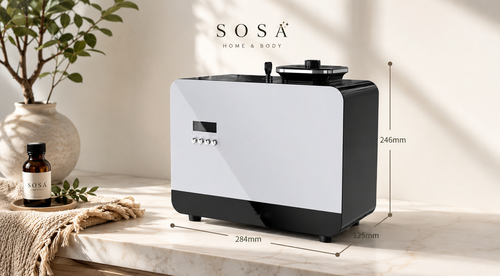
SOSA Aangan · up to 3,000 m³ ₹25,999
Up to 3,000 m³, roughly 8,000 to 10,000 sq ft, an 800ml reservoir, a metal body, programmable schedules, HVAC-connected or standalone, under 42 dB. This is the machine for a genuinely large integrated centre or a double-height atrium reception where the volume above the seating is the whole difficulty, and it is the wrong machine for a 2,500 sq ft polyclinic with a busy hour. A peak is people rather than cubic metres, and no machine at any price changes how many people are in a room. Work out the volume first — floor area divided by 10.76, multiplied by the ceiling height in metres, counting only the volumes a door closes — and buy to that number rather than to the eleven o'clock queue.
A note from Sonal
I spent a Tuesday in a Vasai waiting hall with a clicker counter, and the number that came out of it has been the most useful thing I own for this conversation. At 11:20 there were forty-nine people in a room with thirty-eight chairs. At 15:15 there were six. The machine, the seating, the air conditioning and the housekeeping rota were identical in both photographs, and the only thing anybody had ever proposed changing was the fragrance. The clinic manager had asked me whether there was a stronger scent for the busy hours. There is, and selling it to her would have been straightforwardly dishonest.
What she changed instead was the start times: paediatrics at 10:30, orthopaedics at 10:50, medicine at 11:10, and so on across six departments. The eleven-twenty count fell to thirty-three inside a month, under the number of chairs, and the complaint that had prompted the whole exercise stopped without anybody buying anything at all. She bought the machine the following quarter because the hall was then quiet enough to be worth presenting properly, and it has run at one setting ever since, key-locked, on a schedule that nobody at the counter can reach. That is the whole of my advice about peak hours: change the rate at which people arrive, change the rate at which air leaves, and leave the fragrance exactly where it is.
Everything is made and supported from Pune, and a part of every order funds girl-child education through Nanhi Kali. You get a space that smells like somewhere looked after; a girl gets a classroom. That equation has always felt right to me.
Frequently asked questions
What should a clinic do about waiting-area odour during peak hours?
Handle it as a scheduling and ventilation event rather than a fragrance one. Stagger department start times by fifteen or twenty minutes, write down a one-attendant expectation with sensible exceptions, put the toilet extract fans on the main supply, prop one internal or rear door so air has a path across the hall, purge for fifteen minutes at the afternoon trough, and keep the mop out of both peaks.
Should we increase the fragrance setting when the waiting room is full?
No. A level set for forty-five people is unpleasant for five at three o'clock, and in practice nobody ever turns it back down, so what you install is a permanent increase decided by the busiest fifteen minutes of the week. Busy is an occupancy and air-change problem. Set one intensity in the first week and key-lock it.
Which door should we prop open at the busy hour?
Not the entrance, which is a pressure boundary with a street and a car park behind it. You want two openings on opposite sides of the hall so that air has a path rather than a puff at one end: an internal corridor door and a rear or stair door, opened together for a defined window, ideally in the quiet half-hour between the two peaks.
Does a bigger scent machine handle peak hours better?
No, and this is where clinics most often overspend. A peak is people rather than cubic metres. The
Aangan at ₹25,999 is for a genuinely large integrated centre or a double-height atrium, and in a 2,500 sq ft polyclinic it is ₹14,000 spent on the wrong diagnosis. Work out the volume first and count only the rooms a door does not close.
Can we spray something in the waiting area at the busiest hour?
SOSA does not make a room spray — the sprays in our range are car perfumes. It is also a twenty-minute product against a two-hour peak, and in a hall that is short of air it adds a smell rather than removing one. A persistent smell is information about a source, so find it and fix it rather than covering it.
The morning-spray habit has its own page.
Two hours a day decide the answer
Change the rate, or change the queue — and leave the setting alone
The Vaayu is ₹11,999: waterless cold-air nebulisation with no standing water tank, up to 1000 m³ or roughly 2,000–3,000 sq ft, a 400ml tank lasting about seventy-five days, Bluetooth app scheduling with 1h/4h/8h/24h timers, under 38 dB, auto-stop and a key-lock so the busiest hour of the day cannot change the setting. The Aangan is ₹25,999 for a genuinely large centre or an atrium. Free shipping above ₹499, and a portion of every order supports girl-child education through Nanhi Kali.
See the Vaayu · ₹11,999 The Aangan · ₹25,999
Continue the read
More from SOSA
Editorial standards & sources
About this guide: Written by Sonal Sahani, ISIPCA Versailles-trained founder and perfumer at SOSA Home & Body, on what a multi-speciality clinic can genuinely do about waiting-area odour at its two daily peaks, covering staggered session start times, the accompanying-adult ratio, toilet extract wiring, which door is worth propping, the afternoon purge, and the rule that the fragrance setting is never raised because the hall is full.
Facts verified August 2026: Product facts used in this guide. SOSA Vaayu ₹11,999: waterless cold-air nebulising diffuser, atomises undiluted fragrance oil to a dry residue-free nano-mist with no water reservoir, coverage up to 1000m³ (approximately 2,000–3,000 sq ft), 400ml refillable tank lasting up to about 75 days per fill, Bluetooth app plus onboard control, 1h/4h/8h/24h timer scheduling, adjustable intensity, under 38 dB, DC 12V/1A at 5W, 165 × 80.5 × 215 mm and 0.9 kg, freestanding or wall or HVAC mounted, auto-stop and key-lock, CE, RoHS and SGS certified, supplied with four hotel-inspired fragrances. SOSA Aangan ₹25,999: HVAC-connected or standalone commercial nebulising diffuser, coverage up to 3,000m³ (roughly 8,000–10,000 sq ft), 800ml reservoir, metal body, programmable schedules, under 42 dB. Ultrasonic machines are water-based, hold standing water and consume 30–50 ml of water an hour: Sukoon ₹1,899 (500ml, 270–320 sq ft, 16–18 hours on low, 3–6 drops per tank, steady/2H/4H timers, three 15ml Hotel Collection scents included), Boond ₹899 (300ml), Megh ₹3,499 (6 litres). Hotel Collection water-based fragrance 15ml ₹299, 100ml ₹999, 300ml ₹1,799, Pack of 7 at 15ml ₹1,799 against ₹2,093 bought singly; the Vaayu and Aangan take their own undiluted oil rather than these water-based bottles. Alcohol-free reed diffusers from ₹749, requiring 24–72 hours to reach their working level. Free shipping above ₹499. Coverage arithmetic: cubic metres equal floor area in square feet divided by 10.76 and multiplied by ceiling height in metres, counting only the volumes that are actually scented. This guide makes no medical, therapeutic or clinical claim of any kind for fragrance: a diffuser does not purify, disinfect or clean air, and does not treat, calm or affect any patient or condition. Fragrance is housekeeping and presentation. Clinical areas should be left fragrance-free, and a persistent odour should be traced to its source and corrected rather than covered. SOSA is not affiliated with or endorsed by any hotel brand. Prices subject to change — see the live product pages.