



Nobody sees your total. Each person on your list encounters exactly one gift, once. The total is a figure that exists only inside your own head, and it is the figure you are most likely to be ashamed of.
Lists grow, budgets don't. Almost every list I have been shown grew by one name a year for a decade and lost none. That is what halved the per-head figure — not inflation, not your salary, not your generosity.
The two honest fixes: shorten the list and keep the gift, or keep the list and move every gift down one rung together. Both work. Mixing them — keeping twenty names and quietly giving four of them less — is the one that goes wrong.
2. Do this instead: total ÷ names. That quotient is the only number anyone on your list will ever encounter, because each of them meets exactly one gift. ₹6,000 ÷ 6 = ₹1,000. ₹6,000 ÷ 12 = ₹500. ₹6,000 ÷ 20 = ₹300. Same household, same total, three different experiences of Diwali.
3. If the quotient looks thin, the list grew — that is almost always what happened. One name added a year, none removed, for eight or ten years. Nobody notices it happening because it never happens all at once, and by the end the budget that comfortably covered six people is being asked to cover fourteen.
4. The comparison making you feel poor is not a fair one. When someone mentions what they gave, they mention their single most expensive gift. You are measuring your entire list against one line of someone else's. That is not a budget difference; it is a reporting difference.
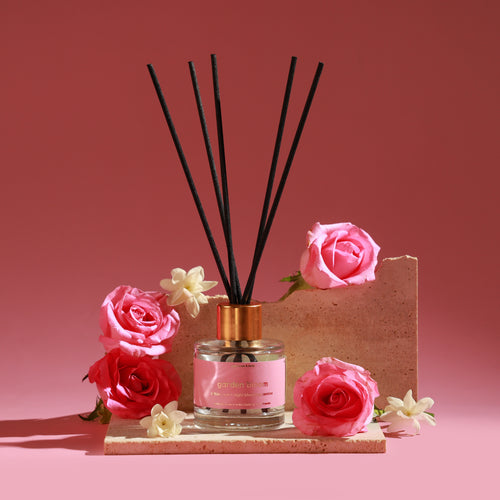
5. What ₹749 a head actually buys is not a small thing. A 50ml reed diffuser is a sealed glass bottle of fragrance oil that runs 6–8 weeks in the recipient's home, needs no flame, no socket and no second purchase, and does not spoil in a hot car boot. Very little at that money does all four.
6. Below ₹379 a head, our store has nothing giftable — the only sub-₹300 item is a 15ml machine refill at ₹299, which needs a machine to be worth anything. If your quotient lands there, the arithmetic is telling you about the list, not about you.
7. The two fixes are shortening and stepping down, and you should pick one. Either cut names and keep the gift where it is, or keep every name and move the whole list down one rung together. What causes trouble is the third option people drift into — keeping everybody and quietly giving four of them less than the others.
Everything is composed and handmade in small batches in Pune, and a portion of every order supports girl-child education through Nanhi Kali.
Part one — why a normal budget stopped feeling normal
Three things happen to a household's Diwali budget over a decade, and none of them is a fall in income. They are structural, they compound quietly, and together they explain nearly every message I get that begins with an apology. Understanding which of the three is affecting you is more useful than any national figure could be, because each one has a different fix and only one of them has anything to do with money.
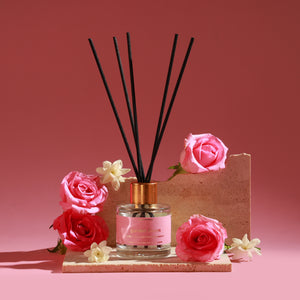
 Garden Bloom₹799 · 50mlNobody in the history of Indian gifting has ever announced their per-head average. What gets mentioned in an office corridor or a family group is the one gift somebody is pleased with — the largest thing they bought, given to the person they care most about. You then measure your fourteen-name total against their single line item and conclude that you are spending badly. You are not. You are comparing a whole list to a highlight. The same person's other eleven gifts, which you will never hear about, are almost certainly at or below whatever your quotient is. If you want a fair comparison, ask what someone gave the fourth person on their list. Nobody will remember, which is itself the answer.
Part two — one total, six different Diwalis
This is the whole argument in one table. The total is held fixed at ₹6,000 — chosen because it is an unremarkable figure, neither generous nor tight — and only the list length changes. Everything in the SOSA column is a real listed price. Nothing outside our range is priced anywhere on this page, because the comparison being made here is between list lengths, not between categories.
| Names on the list | Per head | What exists at SOSA at that figure | What the recipient receives | The honest verdict |
|---|---|---|---|---|
| 4 names ★ | ₹6,000 ÷ 4 = ₹1,500 | Day & Night duo ₹1,498 | Two bottles, two rooms, 6–8 weeks each | Reads as considered. The same total, spent well |
| 6 names | ₹6,000 ÷ 6 = ₹1,000 | Any 50ml at ₹749–₹849, with change | One bottle, 6–8 weeks, nothing to operate | Comfortable. Nobody would call this thin |
| 8 names | ₹6,000 ÷ 8 = ₹750 | Morning Freshness ₹749, almost exactly | The same bottle, at the floor of the range | The tightest point at which a reed diffuser still fits |
| 10 names | ₹6,000 ÷ 10 = ₹600 | Amber Rose candle ₹599; a ₹664 trinket dish is over | A candle — complete, but it needs someone who lights candles | Below the reed floor. The format changes here |
| 12 names | ₹6,000 ÷ 12 = ₹500 | Mugs ₹474 or wax melts ₹474 | A small object; the wax melt needs a burner they may not own | Workable, but only if it is identical across all twelve |
| 20 names | ₹6,000 ÷ 20 = ₹300 | Nothing giftable. The one ₹299 item is a machine refill | A token, into a house already full of tokens | The list is the problem, not the budget |
| The honest caveat: ₹6,000 is an illustration, not a recommendation, and your own total may be half or three times it — the point survives either way, because the shape of the table does not change when you scale it. Two further things this table cannot show you: your list is probably not one list but two or three that should have separate totals, and the third of those, the people who work for you, should start with cash rather than with any figure in this column. Run the division on each list separately and the numbers stop looking so alarming. | ||||
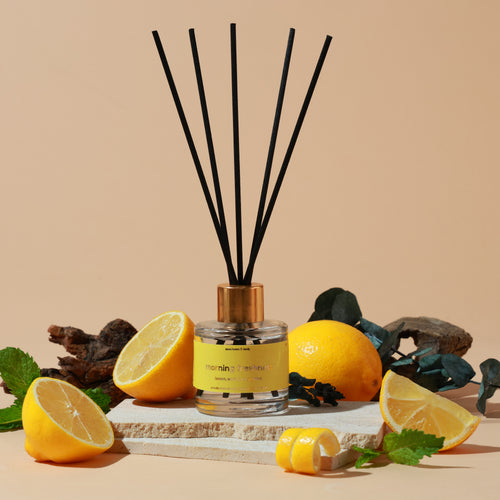
 Cozy Corner · where a long list lands₹379Shop → Morning Freshness · the reed floor₹749Shop →
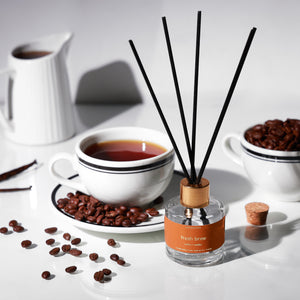
 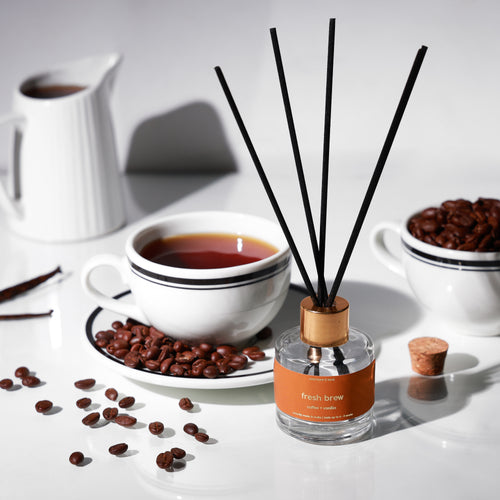 Fresh Brew · a ₹1,000 head with change₹849Shop →
Part three — the two honest fixes
The first fix is to shorten the list and hold the gift where it is. It sounds harsher than it is. Every list I have been shown carries names that are there because they were there last year — a colleague who left the company, a neighbour who moved, a family friend you have not spoken to in three years, someone you began reciprocating during a period when you saw them weekly and now see never. Removing those names is not a withdrawal of affection; in most cases there is no affection involved, only inertia. Take twelve names to eight and a ₹6,000 total moves from ₹500 a head to ₹750 a head, which is the difference between a small object and a glass bottle that runs for six to eight weeks. You did not spend a rupee more.
The second fix is the opposite and equally legitimate: keep everybody and move the entire list down one rung together. If it matters to you that nobody is left out — and for many households it genuinely does, particularly where the list is a building, a floor or an extended family that meets — then the correct response to a long list is a smaller identical gift, not a shorter list. Twelve people receiving the same ₹379 jar candle is 12 × ₹379 = ₹4,548 and it is a completely coherent Diwali. What makes this work is the word together. Everyone moves. The failure mode is the halfway version, where the list stays at twelve, four favourites quietly keep the larger gift and the other eight are stepped down — which is the one arrangement that produces a visible difference among people who will compare.
There is a third thing worth saying, which is not a fix but a correction. Most households do not have one Diwali list; they have two or three that have been added together into a single frightening number. An office list, a family list, and the people who work in the home are three separate obligations with three separate conventions, and adding them produces a total that feels impossible while each of its parts is perfectly ordinary. Split them and do the division on each. The office list at 8 × ₹749 = ₹5,992 and the family list at 6 × ₹799 = ₹4,794 are two sane decisions; ₹10,786 as a single figure is a number that makes people put their phone down and feel bad about themselves. And the third list, the people who work for you, does not begin with a product at all: it begins with cash, because cash is flexible and is what most people in that position would choose, with anything else sitting alongside it as a courtesy rather than in place of it.
Part four — what different households actually buy
Seven household shapes, the list length each tends to carry, and what I would actually buy in that situation. The totals are arithmetic on our listed prices rather than recommendations about how much anyone should spend — swap in your own numbers and the structure holds.
| Household shape | Names it usually carries | What I would buy | The arithmetic |
|---|---|---|---|
| A couple's first Diwali in their own home ★ | 4–5, mostly parents and one or two others | Morning Freshness 50ml, the same for all | 5 × ₹749 = ₹3,745 |
| One earner, parents and a short family list | 6 | Garden Bloom 50ml across the list | 6 × ₹799 = ₹4,794 |
| A family with staff and a floor of neighbours | 12, in two clear groups | 4 × Evening Calm 130ml, 8 × Sandalwood ₹449 | ₹5,196 + ₹3,592 = ₹8,788, cash separate |
| A joint family with a long relative list | 20 | Either 20 identical candles, or cut to 10 bottles | 20 × ₹379 = ₹7,580, or 10 × ₹749 = ₹7,490 |
| Someone buying for an office and a family | 8 + 6, two separate lists | One SKU per list, never one rate across both | 8 × ₹749 = ₹5,992 and 6 × ₹799 = ₹4,794 |
| A household where the total genuinely is small | Cut deliberately to 3 | Three real gifts, and no apology for the rest | 3 × ₹799 = ₹2,397 |
| A reader who is over-buying and knows it | 14, of which 4 are habit | Remove the four. Keep the gift where it is | 10 × ₹849 = ₹8,490 instead of 14 × ₹599 = ₹8,386 |
Versailles
The messages that made me want to write this page all had the same first line, some version of this is probably a small budget but. It came from people buying for ten or twelve people out of a household income they were managing carefully, and there was nothing small about what they were doing. They had simply divided a sensible number by a list that had been quietly growing since the first year they started buying.
I could have written a page with an average on it. There are figures floating around and I could have picked one, and it would have performed well. I am not going to, because I do not know how those numbers were collected and because an average across households with four names and households with twenty tells you precisely nothing about your own situation. The division you can do yourself in ten seconds tells you more than any survey would.
What I would say to anyone still uneasy is this. The person receiving your gift is holding one object. They do not know your total, they do not know your list length, and they are not running the comparison you are running. If what you hand them is a sealed bottle that will scent a room for six to eight weeks, that is a real gift at any total. Everything we make is composed in Pune in small batches, and a part of every order funds a girl's classroom through Nanhi Kali.
Frequently asked questions
- Three tiers on one budget — how to split a list that is really two or three lists.
- Should you spend equally on everyone? — the visibility rule, and where a difference shows.
- SOSA combinations at ₹10,000 — five baskets, each a different list shape.
- Gifting by total budget — ₹5,000 to ₹25,000, end to end.
- Brand: the SOSA founder story.
SOSA range & prices used in this guide (verified from the live store, 27 August 2026): Reed diffusers — alcohol-free, phthalate-free, paraben-free, IFRA-compliant compositions on a heat-stable coconut-derived (CCT) carrier, in a refillable glass bottle with six fibre reeds; 50ml lasts 6–8 weeks, 130ml lasts 14–18 weeks. Morning Freshness 50ml ₹749 · 130ml ₹1,249; Garden Bloom ₹799 · ₹1,299; Evening Calm ₹799 · ₹1,299; Fresh Brew ₹849 · ₹1,349; Mountain Breeze ₹849 · ₹1,349. Duo sets: Day & Night ₹1,498, Fresh & Grounded ₹1,548, Warmth & Bloom ₹1,598 (2 × 50ml); ₹2,498–₹2,598 (2 × 130ml). Oil-only refills 300ml ₹2,399 · 500ml ₹3,499 (vessel and reeds not included). The least expensive SOSA reed diffuser is ₹749 — no reed diffuser exists below that price in any size. Below it: scented jar candles from ₹379 (roughly 15–18 hours), Sandalwood or Smoked Oudh jar candle ₹449, wax melts ₹474 (a burner is needed and is not included), ceramic mugs ₹474, ribbed and face mugs and taper candles ₹569, Amber Rose candle ₹599, ceramic trinket dish ₹664, candle two-pack ₹664 (roughly 30–36 hours). Machines: Boond 300ml ₹899 · Sukoon 500ml ₹1,899 · Megh 6L ₹3,499 (~215 sq ft, a runtime and humidity machine rather than a coverage upgrade) · waterless Vaayu ₹11,999 · Safar car and travel diffuser ₹3,999. The water-based Hotel Collection (15ml ₹299 · 100ml ₹999 · 300ml ₹1,799) is a fragrance for an ultrasonic machine, not a standalone gift. SOSA publishes no bulk or corporate gifting terms — there is no discount slab, no minimum order quantity, no stated GST-invoicing arrangement, no custom branding service and no published lead time — and SOSA sells no gift card, gift hamper, gift box or curated gift set. Larger orders should be discussed with SOSA directly through the contact page before committing. Gift wrapping, gift notes, direct-to-recipient shipping and delivery timing are unconfirmed — check at checkout rather than assuming them; no delivery date is promised anywhere in this guide. Per-head and total costs shown are arithmetic on the listed prices, not quotations. Fragrance adds scent to a room; it does not clean air, remove cooking or smoke smells, or change how anyone feels. Fragrance oil is flammable — keep any diffuser away from diyas, candles and open flame. Composed and handmade in small batches in Pune, India; tested through 45°C summer heat and 85% monsoon humidity. Free shipping above ₹499. A portion of every order supports girl-child education through Nanhi Kali. Prices subject to change — see the live product pages.