

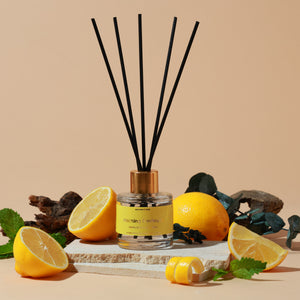
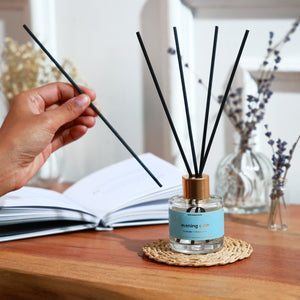
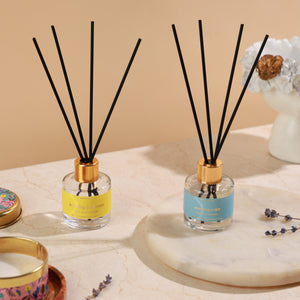

Equal money is not the same as equal gift. Inside a visible group, matching the rupees but varying the object is worse than not matching at all — the difference people notice is the size and shape of the bottle, not the receipt.
What flat spending genuinely buys you: the decision ends. One Garden Bloom 50ml at ₹799 for eight people is 8 × ₹799 = ₹6,392 and no further thought. That is a real benefit and I would not talk anyone out of it.
What it costs you: the top of the list gets the same as the middle. Graded across twelve names — 2 × ₹1,498 = ₹2,996, 4 × ₹849 = ₹3,396, 6 × ₹379 = ₹2,274, total ₹8,666 — costs less than 12 × ₹749 = ₹8,988 and serves the first two people far better.
2. Inside a group that compares, give the same object, not the same amount. This is the part people get wrong. Evening Calm 50ml at ₹799 and a ceramic trinket dish at ₹664 plus a wax melt at ₹474 are close enough in money and nothing like each other on a table. Identical means identical.
3. Flat spending's real product is the end of the decision. If your list is long and your week is short, one SKU bought repeatedly is worth more to you than the ₹100 a clever grading would save. 8 × ₹749 = ₹5,992. That is a decision made once, carried once, repeatable next year.
4. Flat spending's real cost is that the top of the list is funded at the middle's rate. Twelve names flat at ₹749 is ₹8,988. Twelve names graded — 2 × ₹1,498 = ₹2,996, then 4 × ₹849 = ₹3,396, then 6 × ₹379 = ₹2,274 — is ₹8,666. It costs ₹322 less and two people get a great deal more.
5. Grade between groups, never inside one. A graded list only becomes a problem at the seam, where two people in different tiers meet. So the tiers must be drawn along lines that do not cross: the office does not meet the family, the family does not meet the building staff.
6. Where the recipient works for you, this rule matters most. House help, drivers, guards and society staff talk to one another constantly and see each other daily — they are the tightest visibility group on your list. Whatever you give there must be identical. And cash comes first with that group; an object is a courtesy alongside it, never a replacement for it.
7. If two groups do overlap, level upward or change the format. Do not hope nobody notices. Either give both groups the same thing, or make the difference a difference of kind rather than of rank — a bottle for one, something from a different shelf for the other.
Everything is composed and handmade in small batches in Pune, and a portion of every order supports girl-child education through Nanhi Kali.
Part one — the case for flat, the case against it
Both positions are held sincerely and both are partly right, which is why the argument never resolves in the abstract. Flat spending is a discipline that protects you from a hundred small negotiations. Graded spending is an admission that your fourteen names are not fourteen equal relationships and never were. The reason the argument never settles is that people are arguing about fairness when the actual variable is who can see what. Here is each position at its strongest, and then the thing that decides between them.
 Day & Night duo₹1,498 · 2 × 50mlA flat number is set by the weakest relationship on the list, because that is the name where you decide what you are willing to spend. Everyone above it then receives that same figure. Run the two versions across twelve names and the graded one is not even more expensive. Flat: 12 × ₹749 = ₹8,988. Graded: two people at the ₹1,498 duo = ₹2,996, four at ₹849 = ₹3,396, six at a ₹379 jar candle = ₹2,274, which totals ₹8,666. Same weekend, ₹322 less, and two people receive two bottles instead of one. The flat version was not fairer. It was simply easier, and it moved money from the people you chose deliberately to the people you added out of habit.
Part two — sorting a list by visibility
This is the sorting exercise itself. Take your names and put each one into a group defined by a single question: will this person ever see, hear about or be told what someone else on my list received? Not "could they theoretically" — will they, in practice, this fortnight. The groups below are the ones that recur on nearly every Indian Diwali list, with what the visibility of each implies for how you buy. No prices are quoted here for anything outside our own range, because the argument is about structure rather than about money.
| Group on your list | Do they see each other's gift? | How tight the comparison is | What that forces | What I would buy for the group |
|---|---|---|---|---|
| People who work for you ★ | Yes — daily, and they discuss it | Tightest group on any list | Identical item, no exceptions, and cash first | One ₹449 jar candle, the same for all, alongside the envelope |
| A team or office floor | Yes — often opened at the same desk | Very tight; the odd one out is noticed within an hour | One SKU, one scent, one size | Morning Freshness 50ml ₹749 × the headcount |
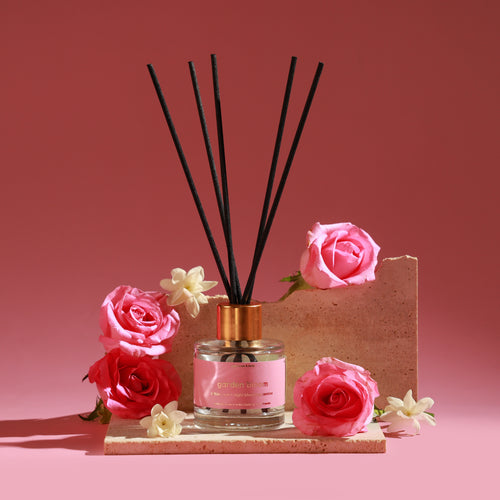
| Aunts, chachis and bhabhis in one family | Yes — at the same gathering, and afterwards | Tight, and it has a long memory across years | Identical, and identical again next year | Garden Bloom 50ml ₹799 × four or five |
| Neighbours on your floor | Usually — doors are open all week | Moderate; the format is noticed, the price is not | Same format, scent can vary | Any 50ml at ₹749–₹849, one scent per floor |
| Close family in your own home | Yes, but the hierarchy is already understood | Loose — nobody expects a parent and a cousin to match | Nothing. Spend by relationship | Day & Night duo ₹1,498 where it is warranted |
| Relatives in another city | No — they see one gift, theirs | None, unless a family group chat closes the loop | Nothing, beyond your own consistency | A 130ml at ₹1,249–₹1,349 if the relationship carries it |
| One-off courtesies and returns | No — isolated by definition | None | Buy the smallest correct thing | A ₹379 jar candle or an Everyday Beautiful Mug ₹474 |
| The honest caveat: visibility is not always knowable, and one group leaks into another more often than people expect — a cousin who works in your office, a neighbour who is also your aunt, a family group chat where photographs of everything arrive within the hour. Where two groups genuinely overlap, treat them as one group and level upward. Where you are unsure, assume they compare. The cost of assuming wrongly in that direction is a slightly larger gift; the cost of assuming wrongly in the other is a conversation you cannot take back. | ||||
Garden Bloom · widest agreement₹799Shop → 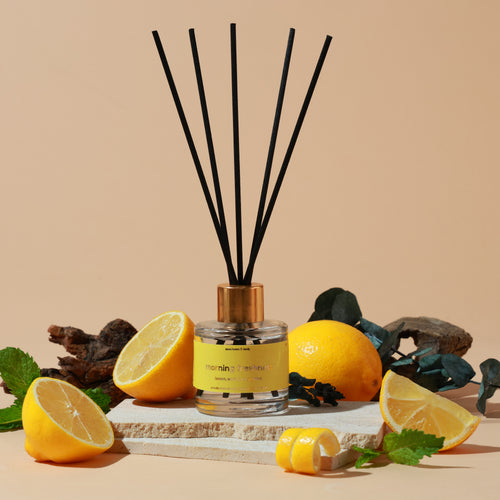 Morning Freshness · lowest flat rate₹749Shop →
 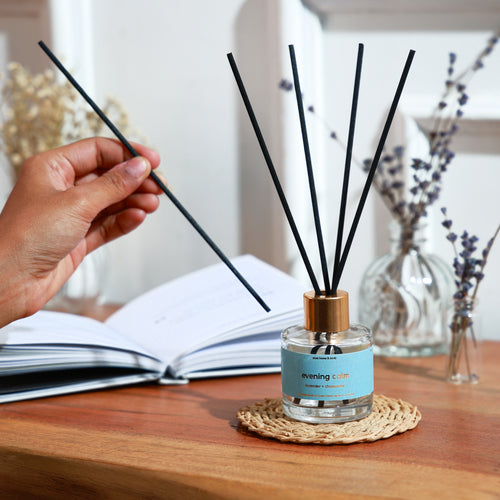 Evening Calm · the softest repeat₹799Shop →
Part three — where equal spending goes wrong
The commonest failure is not inequality; it is the near-miss. Equal money spent on different objects reads worse than a frank difference, because a near-match invites the comparison and then loses it. Two people holding a ₹799 bottle and a ₹474 mug plus a ₹299 refill have received the same money and will not feel they have. One holds a sealed glass bottle with a stated life; the other holds two smaller things, one of which needs a machine they may not own. If the group compares at all, the only version that survives is the identical one. This is the single most useful thing I can tell anyone buying for a list: inside a visible group, stop thinking in rupees and start thinking in objects.
The second failure is levelling down. A reader with fourteen names and a fixed total will sometimes take the flat rule seriously enough to reduce their mother's gift so that it matches a colleague's. Nobody in that situation is served. The colleague does not know, does not care and would not have compared. The mother receives the price ceiling set by the least important name on the list. If you take one operational instruction from this page, let it be that the flat rate should always be set by the group, never by the whole list — and that a group of one is allowed to exist. There is no rule of Indian gifting that requires your parents' gift to be priced against a courtesy return.
The third failure is subtler and worth naming because it recurs every year in the same shape. It is the reader who grades the list correctly, then hands the gifts over in the wrong order in the wrong place — the smaller one first, in front of the person receiving the larger one, in a doorway with everyone watching. Grading survives visibility only if the handover also does. Where a graded list has to be delivered in one room, either take the whole thing up to the higher tier for that room or hand them over separately. And where the group is people who work for you, the honest note has to be repeated: cash is flexible, cash is what most people would choose, and an object is something you add alongside it rather than instead of it. Whatever object you choose there, buy one item and buy it identically, because that is the group most likely to lay the gifts side by side and least able to shrug it off.
Part four — the decision, situation by situation
Seven common list shapes, and whether I would flatten or grade in each. The prices are ours and the arithmetic is shown so you can substitute your own numbers; the recommendation is about structure, not about the scent.
| Your list shape | Flat or graded | The buy | The arithmetic |
|---|---|---|---|
| One office, eight people, all on one floor ★ | Flat, and identical | Morning Freshness 50ml × 8 | 8 × ₹749 = ₹5,992 |
| Four aunts who will all be at the same lunch | Flat, and the same scent | Garden Bloom 50ml × 4 | 4 × ₹799 = ₹3,196 |
| Twelve mixed names across four unconnected groups | Graded between groups, flat inside each | 2 × duo, 4 × ₹849, 6 × ₹379 candle | ₹2,996 + ₹3,396 + ₹2,274 = ₹8,666 |
| Five staff who share a duty room | Flat, identical, cash first | Sandalwood jar candle × 5, plus envelopes | 5 × ₹449 = ₹2,245 on top of the cash |
| Two parents and six distant relatives in other cities | Graded — the six never meet | 2 × Evening Calm 130ml, 6 × ₹749 | 2 × ₹1,299 = ₹2,598, plus 6 × ₹749 = ₹4,494 |
| A group where one member is much closer to you | Flat inside the group, extra given separately | Group gift identical; the extra handed over another day | 6 × ₹799 = ₹4,794, plus whatever you give privately |
| Two groups that turned out to overlap | Level upward, treat as one | The higher item for all of them | 10 × ₹849 = ₹8,490 rather than a split |
Versailles
I learned this rule the wrong way round. An early Diwali, running a small team, I graded the gifts by how long each person had been with us and thought I had been thoughtful. They opened them at the same table within about four minutes of each other. Nobody said anything, which was worse than if they had. The following year I bought one thing, the same thing, for every person in that room, and the difference in how the morning felt was out of all proportion to the money involved.
What took me longer to understand was the other half of it — that the rule stops at the door of that room. My mother did not need to receive what the office received. My neighbour did not need to be priced against my sister. I had been applying a rule made for one table to a list that covered five different parts of my life, and it had cost me the ability to give properly to the two or three people I most wanted to give properly to.
So the advice I actually hold is narrow and I would rather state it narrowly than dress it up. Draw the rooms. Be identical inside them. Spend freely across them and do not explain yourself. And where the room is full of people who work for you, put cash first and let anything else be a courtesy on top of it. Everything we make is composed in Pune in small batches, and a part of every order funds a girl's classroom through Nanhi Kali.
Frequently asked questions
- Three tiers on one budget — the tier system with a fully costed worked example.
- How to split one Diwali budget across family, staff and neighbours.
- Is it rude to give everyone the same gift? — the one condition that decides it.
- Gifting by total budget — ₹5,000 to ₹25,000, end to end.
- Brand: the SOSA founder story.
SOSA range & prices used in this guide (verified from the live store, 27 August 2026): Reed diffusers — alcohol-free, phthalate-free, paraben-free, IFRA-compliant compositions on a heat-stable coconut-derived (CCT) carrier, in a refillable glass bottle with six fibre reeds; 50ml lasts 6–8 weeks, 130ml lasts 14–18 weeks. Morning Freshness 50ml ₹749 · 130ml ₹1,249; Garden Bloom ₹799 · ₹1,299; Evening Calm ₹799 · ₹1,299; Fresh Brew ₹849 · ₹1,349; Mountain Breeze ₹849 · ₹1,349. Duo sets: Day & Night ₹1,498, Fresh & Grounded ₹1,548, Warmth & Bloom ₹1,598 (2 × 50ml); ₹2,498–₹2,598 (2 × 130ml). Oil-only refills 300ml ₹2,399 · 500ml ₹3,499 (vessel and reeds not included). The least expensive SOSA reed diffuser is ₹749 — no reed diffuser exists below that price in any size. Below it: scented jar candles from ₹379 (roughly 15–18 hours), Sandalwood or Smoked Oudh jar candle ₹449, wax melts ₹474 (a burner is needed and is not included), ceramic mugs ₹474, ribbed and face mugs and taper candles ₹569, Amber Rose candle ₹599, ceramic trinket dish ₹664, candle two-pack ₹664 (roughly 30–36 hours). Machines: Boond 300ml ₹899 · Sukoon 500ml ₹1,899 · Megh 6L ₹3,499 (~215 sq ft, a runtime and humidity machine rather than a coverage upgrade) · waterless Vaayu ₹11,999 · Safar car and travel diffuser ₹3,999. The water-based Hotel Collection (15ml ₹299 · 100ml ₹999 · 300ml ₹1,799) is a fragrance for an ultrasonic machine, not a standalone gift. SOSA publishes no bulk or corporate gifting terms — there is no discount slab, no minimum order quantity, no stated GST-invoicing arrangement, no custom branding service and no published lead time — and SOSA sells no gift card, gift hamper, gift box or curated gift set. Larger orders should be discussed with SOSA directly through the contact page before committing. Gift wrapping, gift notes, direct-to-recipient shipping and delivery timing are unconfirmed — check at checkout rather than assuming them; no delivery date is promised anywhere in this guide. Per-head and total costs shown are arithmetic on the listed prices, not quotations. Fragrance adds scent to a room; it does not clean air, remove cooking or smoke smells, or change how anyone feels. Fragrance oil is flammable — keep any diffuser away from diyas, candles and open flame. Composed and handmade in small batches in Pune, India; tested through 45°C summer heat and 85% monsoon humidity. Free shipping above ₹499. A portion of every order supports girl-child education through Nanhi Kali. Prices subject to change — see the live product pages.