
 Cozy Corner ₹379
  Everyday Beautiful Mug ₹474
 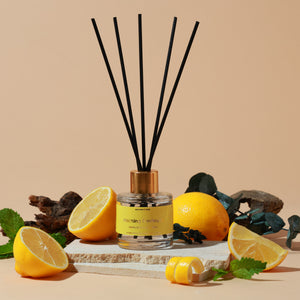 Morning Freshness ₹749
 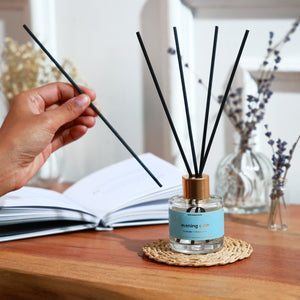 Evening Calm ₹799
 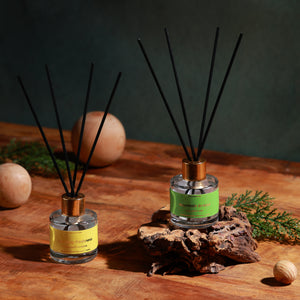 Fresh & Grounded duo ₹1,548
Step two: split into three groups — family, the people who work for you, and neighbours or the wider courtesy list. These are not tiers of affection. They are three groups with three completely different conventions attached.
Step three: settle the people who work for you first, separately, and with cash. Cash is flexible and it is what most people in that position would choose. An object alongside it is a courtesy; it is never a substitute for it, and it is never a substitute for a bonus.
Steps four and five: allocate what remains to the two other groups as groups rather than per head, then collapse the plan to two products. A worked example: 2 × ₹1,299 + 4 × ₹749 + 4 × ₹379 = ₹2,598 + ₹2,996 + ₹1,516 = ₹7,110 for ten names, in three lines.
2. Split into three groups, not into a ranking. Family, the people who work for you, and the courtesy list — neighbours, the wider office, the people you exchange something with because you always have. These groups have different conventions, and treating them as one list with a sliding scale is what produces the awkwardness.
3. Settle the staff group first, and settle it in cash. House help, a driver, security staff, the person who cleans the building's stairs. Cash is flexible, it is what most people in that position would choose, and it is the established convention. If you want to hand over an object as well — a candle at ₹449, a mug at ₹474 — do it as a courtesy alongside, never instead, and never as though it were a substitute for a bonus.
4. Allocate to the remaining two groups as groups. Decide what share of the money the family group gets and what share the courtesy group gets before you price anything. Per-head figures come out of that division; they never go into it.
5. Inside each group, buy one product for everybody in it. Uniformity within a group is not laziness. It is the only way to be certain nobody in a group that talks to itself receives visibly less than somebody else in it.
6. Collapse the whole plan to two or three product lines. Eight different items is eight decisions at purchase and a lookup at every handover. A worked ten-name example: 2 × ₹1,299 + 4 × ₹749 + 4 × ₹379 = ₹7,110, in three lines and one order.
7. Write down what you bought, for next October. Diwali is annual. A plan you can repeat unchanged is worth more than a plan that was clever once, and the only thing standing between you and repeating it is a note you did not make.
Everything is composed and handmade in small batches in Pune, and a portion of every order supports girl-child education through Nanhi Kali.
Part one — why the order of operations is the whole method
There is nothing clever in these steps taken individually. Every one is obvious. What makes the difference is that they happen in a fixed order, and the natural order — the one everybody uses — is almost exactly backwards. Most people start from a product, form a per-head figure from its price, multiply by a list they have not written down, and then discover the total. Here is what goes wrong when you do that.
 Sandalwood candle₹449The people who work for you belong outside the allocation exercise, and they belong outside it first. Cash is flexible, it is what most people in that position would choose, and it is the established convention at Diwali. Handing over an object in place of it is a downgrade dressed as thoughtfulness, and no ₹449 candle substitutes for a bonus. What an object does well is acknowledge the person rather than the transaction, which is a real thing and worth doing — so cash in an envelope, and then, if you want to, something small handed over separately. Match it to the home it goes to: a Sandalwood jar candle at ₹449 or a mug at ₹474 asks nothing of anybody, while a bottle of fragrance oil wants a shelf out of reach of small children. Where you do not know the household, do not guess about it — that is a good reason to keep the object simple.
Part two — the sequence, and what each step decides
The method in full, with the rule that settles each step and the mistake that each step exists to prevent. Nothing outside our own range is priced here; the point of the table is sequence, not shopping.
| Step | What you actually do | The rule that decides it | The mistake it prevents | Time it takes |
|---|---|---|---|---|
| 1 · Write the names ★ | Every name on one line each, no gifts yet | Nothing gets priced until the list exists | Discovering four more names on the last evening | Six minutes |
| 2 · Sort into three groups | Family · people who work for you · courtesy list | Group by convention, not by how much you like someone | One sliding scale across relationships that do not compare | Four minutes |
| 3 · Settle the staff group | Cash, in an envelope, decided separately | Cash first; an object alongside is a courtesy | An object standing in for money somebody would rather have | Decided before you shop |
| 4 · Allocate by group | A share of the remaining money to each group | Divide by group, then by head — never the reverse | Spending most of it on names one to four | Five minutes |
| 5 · Collapse to two or three products | One product per group, everyone in it identical | Fewest lines the list will tolerate | A matching problem at every doorway | One order |
| 6 · Write down what you bought | A note of which group got what | Plan for repeating, because Diwali is annual | Starting from nothing again next October | One minute |
| The honest caveat: step two is where the method is most likely to fail you, because real lists have people who sit in two groups at once — the neighbour who has become a friend, the cousin who is also a colleague, the person who works for you and has done so for twenty years. There is no rule that resolves those cleanly. What I would do is place them in the group where they will be seen, since that is the group whose members will compare, and then handle the relationship separately and privately rather than through the size of a Diwali gift. | ||||
 Cozy Corner · the courtesy group₹379Shop →
  Everyday Beautiful Mug · asks nothing of anybody₹474Shop →
 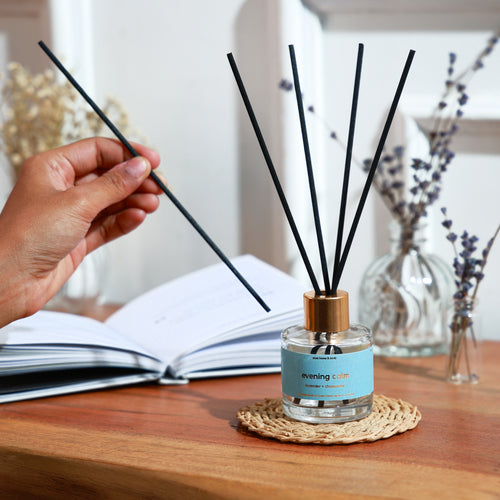 Evening Calm · the family group₹799Shop →
Part three — where the method breaks
Three situations defeat this method, and it is better to know them in advance than to discover them at step four. The first is the list with no groups at all. Some lists are genuinely flat: eleven neighbours in one building, or a whole office floor, all owed the same courtesy and none closer than the others. Sorting a flat list into groups is inventing a hierarchy rather than describing one, and the invented hierarchy will be visible by the second doorway. If your list is flat, skip to step five and buy one thing for everybody. That is not a failure of the method; it is the method arriving early.
The second is the group that is not really one group. Four aunts who speak to each other daily are one group whatever your private feelings; two cousins in different cities who never compare notes are two groups even though the relationship is identical on paper. Visibility decides grouping, not closeness — which occasionally means putting somebody you are fond of in the same group as somebody you are not, and giving both the identical thing. I would take that trade every time, because the cost of getting it wrong is not embarrassment for you, it is a slight to a person who did nothing.
The third is the case where the method tells you to buy less, and it is worth staying with. Run the steps honestly on a list of nine courtesy names and the answer is often 9 × ₹379 = ₹3,411 and nothing else — no family tier because you already give to family separately through the year, no upgrades because nobody in the group would register one. The method has no opinion about generosity; it only distributes what you have decided to spend, and it will happily tell you that you had decided to spend more than the list requires. The related conclusion, harder to accept, is that a fragrance bottle is the wrong object for some names on almost every list: a home with a newborn, somebody who dislikes scented things, a household already running fragrance in every room. A mug at ₹474 or a candle at ₹379 is the honest answer there.
Part four — one product per group, with a worked list
Here is the method applied to a real-shaped list: twelve names, three groups, three product lines. The staff line sits outside the arithmetic on purpose, because cash is the gift there and the object beside it is a courtesy rather than a budget line to optimise. Every figure is multiplication on our listed prices — not a quotation, not an offer, and not a term of any kind.
| Group | Names in it | The one product for that group | Unit price | Line arithmetic |
|---|---|---|---|---|
| Family · inner ★ | 2 — homes you could describe from memory | Evening Calm 130ml, 14–18 weeks | ₹1,299 | 2 × ₹1,299 = ₹2,598 |
| Family · wider | 4 — seen often, homes unseen | Morning Freshness 50ml, 6–8 weeks | ₹749 | 4 × ₹749 = ₹2,996 |
| Courtesy · neighbours | 4 — one building, all will compare | Cozy Corner jar candle, 15–18 hours | ₹379 | 4 × ₹379 = ₹1,516 |
| The ten gifted names | 10 | Three lines, one order | — | ₹2,598 + ₹2,996 + ₹1,516 = ₹7,110 |
| People who work for you | 2 or 3 — settled first, separately | Cash. Then, if you wish, a Sandalwood candle or a mug | ₹449 or ₹474 | 3 × ₹449 = ₹1,347, alongside the cash |
| Spares, optional | For whoever arrives unannounced | The same jar candle as the courtesy line | ₹379 | 3 × ₹379 = ₹1,137 |
Versailles
I learned this method from watching my mother, who did it every year without ever calling it anything. A sheet of paper, three columns, and the column on the far left — the people who worked in the house — settled first, in cash, before anything else was discussed. It was not framed as generosity or as a system. It was simply the order in which the work got done, and it meant nothing about that column was ever decided with what happened to be left over.
What I did not appreciate until I ran a business was the second half of it. She bought very few different things. Not because she was economising, but because a plan with three items in it can be carried out calmly across a fortnight, and a plan with nine cannot. The years I have tried to be clever with a long list are the years somebody got handed the wrong bag at the door.
I will not tell you this method makes anyone's Diwali better, or that any gift on it will be remembered. What I can tell you is what each of our products is, what it costs, what it asks of the person receiving it, and where I would stop. Everything is made in Pune in small batches, and part of every order funds a girl's classroom through Nanhi Kali.
Frequently asked questions
- ₹10,000 for Diwali gifts — the same sorting, costed to the rupee across fourteen names.
- ₹5,000 for all your gifting and the ₹15,000 plan.
- ₹25,000 for Diwali gifts — where a larger budget stops improving anything.
- Gifting by total budget — ₹5,000 to ₹25,000, end to end.
- Brand: the SOSA founder story.
SOSA range & prices used in this guide (verified from the live store, 27 August 2026): Reed diffusers — alcohol-free, phthalate-free, paraben-free, IFRA-compliant compositions on a heat-stable coconut-derived (CCT) carrier, in a refillable glass bottle with six fibre reeds; 50ml lasts 6–8 weeks, 130ml lasts 14–18 weeks. Morning Freshness 50ml ₹749 · 130ml ₹1,249; Garden Bloom ₹799 · ₹1,299; Evening Calm ₹799 · ₹1,299; Fresh Brew ₹849 · ₹1,349; Mountain Breeze ₹849 · ₹1,349. Duo sets: Day & Night ₹1,498, Fresh & Grounded ₹1,548, Warmth & Bloom ₹1,598 (2 × 50ml); ₹2,498–₹2,598 (2 × 130ml). Oil-only refills 300ml ₹2,399 · 500ml ₹3,499 (vessel and reeds not included). The least expensive SOSA reed diffuser is ₹749 — no reed diffuser exists below that price in any size. Below it: scented jar candles from ₹379 (roughly 15–18 hours), Sandalwood or Smoked Oudh jar candle ₹449, wax melts ₹474 (a burner is needed and is not included), ceramic mugs ₹474, ribbed and face mugs and taper candles ₹569, Amber Rose candle ₹599, ceramic trinket dish ₹664, candle two-pack ₹664 (roughly 30–36 hours). Machines: Boond 300ml ₹899 · Sukoon 500ml ₹1,899 · Megh 6L ₹3,499 (~215 sq ft, a runtime and humidity machine rather than a coverage upgrade) · waterless Vaayu ₹11,999 · Safar car and travel diffuser ₹3,999. The water-based Hotel Collection (15ml ₹299 · 100ml ₹999 · 300ml ₹1,799) is a fragrance for an ultrasonic machine, not a standalone gift. SOSA publishes no bulk or corporate gifting terms — there is no discount slab, no minimum order quantity, no stated GST-invoicing arrangement, no custom branding service and no published lead time — and SOSA sells no gift card, gift hamper, gift box or curated gift set. Larger orders should be discussed with SOSA directly through the contact page before committing. Gift wrapping, gift notes, direct-to-recipient shipping and delivery timing are unconfirmed — check at checkout rather than assuming them; no delivery date is promised anywhere in this guide. Per-head and total costs shown are arithmetic on the listed prices, not quotations. Fragrance adds scent to a room; it does not clean air, remove cooking or smoke smells, or change how anyone feels. Fragrance oil is flammable — keep any diffuser away from diyas, candles and open flame. Composed and handmade in small batches in Pune, India; tested through 45°C summer heat and 85% monsoon humidity. Free shipping above ₹499. A portion of every order supports girl-child education through Nanhi Kali. Prices subject to change — see the live product pages.