





The objections, answered: mosquitoes — a fitted mesh screen, and it is cheap; noise and dust — open the window on the quieter side and use the door as the second opening; security — a grille or a restrictor on lower floors; the AC — it cannot run with a window open, so you are choosing one or the other.
The one genuine exception: monsoon. On a wet night an open window imports moisture into a room already above 60% humidity and makes it worse. Run the AC in dry mode instead.
The practical answer for most bedrooms: bracket the night rather than leaving it open — ten minutes of two-opening cross-ventilation before bed and ten on waking, with the door open so the air has somewhere to go.
2. But the objections in an Indian bedroom are real. Mosquitoes, street noise, dust, security on a lower floor, monsoon damp, and an air-conditioner that cannot run against an open window. Any advice that waves these away has not been written for this country.
3. Four of the six have straightforward fixes. A fitted mesh screen for mosquitoes. A grille or a restrictor for security. For noise and dust, choose the quieter side of the flat and use the bedroom door as the second opening. For the AC, accept that it is a choice: cooled air or exchanged air.
4. Monsoon is the one genuine exception. On a wet night the outside air can be at 90% humidity, and bringing it into a room already above 60% makes the room damper and, within days, more musty rather than less. Run the air-conditioner in dry mode and do your exchange in a dry hour instead.
5. So the answer for most bedrooms is to bracket the night rather than leave it open. Ten minutes of two-opening cross-ventilation before bed and ten on waking, with the door open so the air has somewhere to go. It gets you most of the result, and it works on the nights an open window cannot.
A portion of every order supports girl-child education through Nanhi Kali.

Why an open window beats everything else
It is worth being precise about what the open window is actually doing, because the reason it works is also the reason the twenty-minute version works nearly as well. A stale morning bedroom is an accumulation problem rather than a production problem: the room does not start producing more smell at night, it stops removing what it produces, and eight hours of ordinary human occupation with nowhere for any of it to go is the entire mechanism. Anything that restores exchange addresses the cause. Everything else in the house — cleaning, scenting, dehumidifying — is addressing something further down the chain, and most of the time addressing something that was never the problem.
The five objections, and what each one costs to solve
Every reason an Indian bedroom window stays shut at night, how real each one is, what it takes to get around it, and my verdict. The first row is the one with the best return on money in this entire cluster, and the monsoon row is the only place on this page where I would tell you to keep the window closed.
| The objection | How real it is | The fix | Verdict |
|---|---|---|---|
| Mosquitoes ★ | Entirely real, and the most common reason of all in India | A fitted mesh screen on the window frame — inexpensive, permanent, available for every window type | Solved. Best return on money on this page, and it makes the free fix free again |
| Street noise and dust | Real on a main road, and not fully solvable | Use the quieter side of the flat; make the bedroom door the second opening; a few centimetres rather than wide open | Partly solved. If the road runs all night, bracket instead |
| Security, ground and lower floors | Real, and not something to be talked out of | A grille, or a window restrictor allowing a few centimetres. That is enough exchange over eight hours | Solved, at modest cost |
| The air-conditioner | Real — a split unit recirculates and cannot cool against an open window | None. This is a straight choice between cooled air and exchanged air | Choose cooling on hot nights, and bracket at both ends |
| Monsoon and wet nights | Real, and the one case where the free advice is wrong | Keep it shut. Outdoor air at 90% humidity into a room already above 60% makes it musty within days | The genuine exception. AC in dry mode, exchange in a dry hour |
| Nothing to hold the room in between | Not an objection, but the question people ask next | Three drops on the 2H timer before sleep, or a reed with no switch | ₹299 / Evening Calm ₹799 |
After the window shuts₹299Shop →  Reeds · for a shut windowfrom ₹749Shop →
 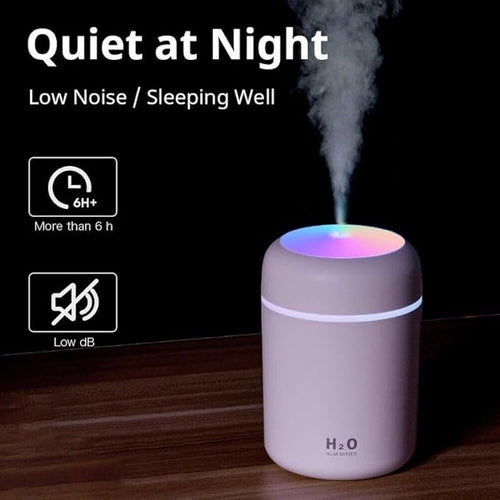 Boond · less per hour₹899Shop →
Bracketing the night, and what to do on the shut nights
Do the bracketing properly, because the details are what separate it from a token gesture. Two openings, not one. A window and the bedroom door counts, and in a flat where the bedroom has a single exterior window that is usually the only configuration available — open both and you have a path. Ten minutes is enough with a real through-draught, and a ceiling fan on low helps by stirring the corners that a draught alone leaves alone. Do the evening ten while you are brushing your teeth, so it costs you no time you were using for anything else, and the morning ten while you shower, with the duvet thrown right back so the mattress is releasing into moving air rather than into a sealed room. On the nights the window cannot be opened at all — monsoon, a hot night with the AC on, a road that never quietens — do the exchange in whatever dry, quiet window exists in the day, even if it is the middle of the afternoon. A bedroom aired at four in the afternoon and shut at ten is in far better condition at seven the next morning than one that was last opened on Sunday. And keep the rest of the free routine going alongside: bedlinen weekly, pillows and mattress in the sun for two hours on a dry day, the AC filter washed every two to four weeks in season, and a mug of water down the attached bathroom's floor drain and basin if that bathroom is used rarely, because the trap seal evaporates within two to four weeks and then the drain vents quietly into the room all night.
Then the layer for the shut hours, which is where a product legitimately comes in. What fragrance does in this situation is give a properly exchanged room a character of its own for the eight hours it is sealed. What it does not do, and cannot, is exchange air. A diffuser adds material to a room; a window removes it. Those are opposite operations and anyone selling you the first as a substitute for the second is selling you the wrong thing. With that said: the Hotel Collection is composed at three to six drops per tank and a bedroom takes three, run on low with the 2H timer while you are getting ready for bed so the room arrives at a level and the machine stops before you are asleep. The cool bottles suit this room — the Westin-inspired White Tea Serenity, white tea, aloe and cedar, or the Ritz-Carlton-inspired Quiet Luxury, at ₹299 for 15ml. If the window is shut for the whole monsoon, do not buy an ultrasonic diffuser for that room: it adds 30 to 50 millilitres of water an hour to air that is already the problem. Use Evening Calm at ₹799 — Himalayan lavender and chamomile from the separate alcohol-free reed diffuser line — or a candle, neither of which adds moisture, and remember that a reed needs 24 to 72 hours to establish rather than an evening. The dose is per tank rather than per litre, so the 300ml Boond at ₹899 takes the same three drops as the 500ml Sukoon at ₹1,899 and puts less into a small room per hour.
Two last things, one of which will save you money. The first is that you will stop being able to smell your own bedroom within about a fortnight — receptors adapt, a constant smell stops being reported, and in the room you spend eight sealed hours in every night this happens faster than anywhere else in the flat. The consequence for this page is specific: a reader who cannot smell their room will conclude that the ventilation stopped working and go looking for a stronger product, when what has actually changed is the observer. Ask one honest guest, or judge by the four seconds after you walk back in from outside, and never by how the room seems to you at eleven at night. The second is the standing rule of this whole cluster: fragrance is a finishing layer on air that is already clean and moving, and it removes no source at all. Not damp, not a dry drain trap, not a mattress that has never been aired, not a filter growing biofilm. On this particular page that has a sharper edge than usual, because the free answer is so much better than the paid one. Open the window if you can. Bracket the night if you cannot. Then, if you want the room to smell like somewhere you chose rather than merely like nothing, three drops before you sleep.
The SOSA edit
In the order I would actually spend on it, which starts with something we do not sell. The first three rows cost nothing or almost nothing and between them settle the question for most bedrooms. The last two are the layer for the hours the window is shut, with the monsoon caution printed rather than buried.
| Do this | What it addresses | When it is the answer | Cost |
|---|---|---|---|
| 1. A mesh screen on the bedroom window ★ | The mosquito objection, which is the reason most Indian windows stay shut at night | First, and we do not sell it. It converts the best free fix from impossible to permanent | Not ours |
| 2. Ten minutes before bed, ten on waking | Eight hours of accumulation in a sealed room | Every night the window cannot stay open. Two openings each time, with the door as one of them | ₹0 |
| 3. A window restrictor or grille on a lower floor | The security objection, which is legitimate | Ground and first floors. A few centimetres of opening is enough exchange over eight hours | Not ours |
| 4. Hotel Collection 15ml at three drops | Nothing structural. It gives the shut hours a character | On the 2H timer before you sleep, in a Boond at ₹899 or a Sukoon at ₹1,899 | ₹299 |
| 5. Evening Calm reed | The same thing, without electricity or a switch | If the window stays shut for the monsoon. A reed adds no moisture; an ultrasonic adds 30–50 ml an hour | ₹799 |
| Do not do this: scent instead of exchanging | Nothing. It puts material into air that needed material removed | Fragrance and ventilation are opposite operations, and only one of them addresses a stale room | — |
Versailles
There is no version of this page where the honest answer is a product, so I may as well say it in the first line of my own section. If you can sleep with the window open, do it, and you will probably find you need nothing from me at all. An air exchange running quietly for eight hours addresses the moisture, the carbon dioxide and the smell simultaneously, which is three problems for no rupees, and I have never found anything that competes with it. The reason the page is long is not that the answer is complicated. It is that in this country the window is shut for six good reasons, and most advice on the subject appears to have been written somewhere without mosquitoes.
So the thing I would actually buy first is a mesh screen, which is not ours and never will be. After that, the twenty minutes split across the two ends of the night, because clearance is fast and accumulation is slow, and that asymmetry is doing more work than people realise. The one night I would keep the window shut is a wet monsoon night, when the air outside is at ninety per cent and everything you let in has to go somewhere — that is the single case where the free advice is the wrong advice, and it deserves saying in a country where a third of the year is like that. Then, for the hours the room is sealed, three drops before you sleep. In that order, and not the other way round.
Everything is made and supported from Pune, and a part of every order funds girl-child education through Nanhi Kali. You get a home that smells like somewhere you chose; a girl gets a classroom. That equation has always felt right to me.
Frequently asked questions
- Why your bedroom smells stale every morning — the complete diagnosis — the pillar page for this group, with the full symptom-to-cause table.
- How to stop the bedroom smelling closed every morning — the routine this page's twenty minutes belongs to.
- Why a bedroom smells different after sleeping with the door closed — the door half of the same mechanism.
- Why a house smells damp during monsoon and what humidity level makes a house musty — the exception on this page, in full.
- Brand: the SOSA founder story.
Facts verified August 2026: Diagnostic facts used in this guide: a closed room accumulates what it cannot exchange, so cross-ventilation needs two openings rather than one; a drain's U-bend water seal evaporates in roughly two to four weeks of disuse and then admits sewer gas, which is corrected by pouring water down the drain; microbial growth in fabric and on surfaces accelerates above about 60% relative humidity, and Indian monsoon indoor humidity commonly runs 80–95%, which is the one situation where ventilating on a wet day can import moisture rather than remove it; an air-conditioner's cold, wet evaporator coil and filter grow biofilm that is blown into the room on start-up; textiles adsorb cooking aerosol and body oils and re-release them for weeks; and olfactory adaptation makes a constant household smell undetectable to its residents within about a fortnight while visitors still perceive it. Timings: a scented candle scents a normal room in roughly 15–20 minutes, a Sukoon ultrasonic diffuser reaches a steady level in about 20 minutes from cold, and a reed diffuser needs roughly 24–72 hours. SOSA products and prices: Sukoon 500ml ₹1,899 (270–320 sq ft, 16–18h on low, 9–12h high, 30–50 ml/h, 2.4MHz cool mist, remote, steady/2H/4H timers, BPA-free, auto shut-off, includes three 15ml Hotel Collection scents of your choice); Boond 300ml ₹899; Megh 6-litre ₹3,499; waterless Vaayu ₹11,999 (up to 1000m³); Aangan ₹25,999. Hotel Collection water-based fragrance 15ml ₹299, 100ml ₹999, 300ml ₹1,799, Pack of 7 at 15ml ₹1,799; dose 3–6 drops per tank. Reed diffusers (separate alcohol-free line): Morning Freshness from ₹749, Garden Bloom and Evening Calm from ₹799, Fresh Brew and Mountain Breeze from ₹849; 130ml from ₹1,249; duos from ₹1,498; 300ml refills ₹2,399. Scented candles: Bookshop 80g ₹379, Amber Rose 130g ₹599 and 220g ₹799, Smoked Oudh 130g ₹449, ceramic jar candles ₹949, Pure Calm wax melt set ₹854. Free shipping above ₹499. SOSA does not make a room or linen spray for the home. The Hotel Collection scents are SOSA's own interpretations; SOSA is not affiliated with or endorsed by any hotel brand. Prices subject to change — see the live product pages.