


Write it down before you change anything. Date, time, where the person was sitting, what the setting was. Three entries with times on them will tell you more than a year of impressions.
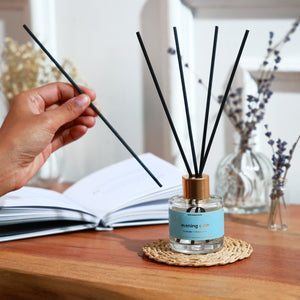
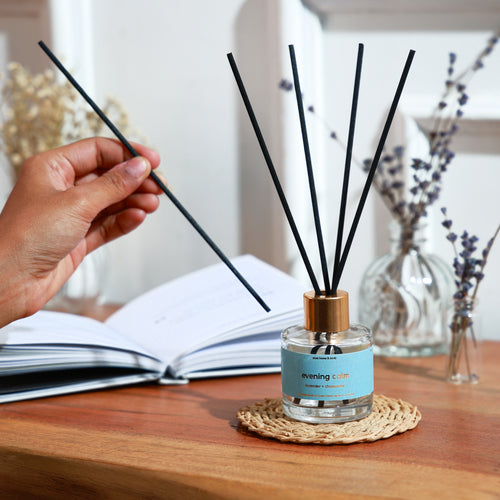
The first correction is free. Reed count is the only true volume control a bottle has — pulling two reeds takes ten seconds and costs nothing. Buying a different scent is almost never the answer to "too strong".
Two or three entries and the honest answer is to stop. Not to switch product. A level that keeps reading high in your room is telling you the room is the constraint, and no purchase fixes that.
2. Say the least true thing, and stop. "The reception has a light fragrance, the clinical areas do not, and there is a quieter seat here if you'd prefer." Then show them. No reassurance that it is safe, no assertion that it is not — neither is the desk's to make, and neither is mine.
3. Do not apologise at length. A long apology converts a preference into an incident and makes it harder for the next person to say anything. One sentence, one action, move on.
4. Log it the same day. Date, time of day, roughly where the person was sitting, the setting at the time, the weather if the doors were open, and whether it was the first hour after opening. Six lines in a notebook at the desk is enough. The log is the whole method.
5. Then change one variable. On reeds, take two out — reed count is the only true volume control a bottle has, and it costs nothing. On an ultrasonic, halve the drops. Never change the composition and the setting in the same week; you will learn nothing from either.
6. Re-judge from the right place. Not from the doorway on your way in, where your own nose is fresh and the room is at its most flattering. From the furthest chair, at your busiest hour, forty minutes in — and preferably by somebody who was not in the building all morning.
7. Set a stopping rule in advance and write it on the same page as the log. Mine would be two entries in a month, or any entry from a member of staff, and the action is to remove the source and leave it out for a full month before deciding anything.
8. Nothing changes about the boundary. Examination rooms, diagnostics, consultation cabins, the procedure suite and any post-operative area take nothing, in any format, at any level, before or after any remark. No product or setting here is described as safe, unsafe or suitable for any patient or staff group, and nothing on this page is medical, clinical, ventilation or regulatory advice. Composed and made in small batches in Pune, and a portion of every order supports girl-child education through Nanhi Kali.
Part one — why one remark is data, not an outlier
The reason practices mishandle this is not carelessness. It is that the remark arrives sounding like an opinion, and opinions invite a defence. Treat it instead as an instrument reading, and the whole situation becomes procedural. Three things follow.
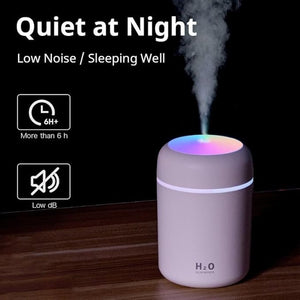
 Sukoon 500ml₹1,899 · remote, 2H/4HOlfactory adaptation is the most reliable fact in this trade: a nose stops reporting a steady, unchanging stimulus within minutes, and it adapts hardest in the space you occupy every day. That is a statement about you, not about anybody else — and it means that when you walk into your own reception and conclude the level is fine, you have measured almost nothing. It also explains the most common and most expensive error I see, which is adding a reed because the room seems to have faded. Nine times in ten the room has not faded; the person judging it has adapted. Build the correction into your method instead. Judge from the furthest chair rather than the doorway, forty minutes in rather than on arrival, at your busiest hour rather than at nine in the morning, and get somebody who has been out of the building to do it. A machine with a remote — Sukoon at ₹1,899 — helps here for one narrow reason: it makes the downward step instant, so the desk can act while the person is still in the room rather than after they have gone.
Part two — the first hour, minute by minute
This is the part I would print and keep at the counter. The fourth column exists because the errors here are all things people say rather than things they fail to do.
| Time from the remark | What the desk does | What it costs | What must not happen here | Who has the authority |
|---|---|---|---|---|
| 0–60 seconds ★ | One sentence, then offer and physically show a seat the fragrance does not reach | Nothing | No reassurance about safety in either direction, no medical comment, no long apology, no request that they wait while somebody is fetched | Whoever is at the counter — unconditionally, with no permission required |
| 1–5 minutes | Reduce or remove the source for the rest of the session — reeds out, or the machine stopped | Nothing | Do not switch it to a lower mode and call it done if the person is still in the room; stop it | Same person, same authority |
| Same session | Note the entry: time, seat, setting, whether doors were open, whether it was the first hour after opening | Two minutes | Do not write anything about the individual — the log records the room, never the person | Desk, on a shared sheet |
| End of the day | Decide whether the source goes back on tomorrow. Default is no, until somebody has re-judged the room properly | Nothing | Do not restore it quietly the next morning because the room feels empty to you — that is adaptation talking | Manager, from the log |
| Within the week | Re-judge from the furthest chair, forty minutes in, at the busiest hour, by somebody who has been outside | An hour of one person's time | Do not re-judge from the doorway, and do not do it first thing on a quiet morning | Manager or owner |
| The one change | Reeds: remove two. Ultrasonic: halve the drops. Nothing else changes that week | Nothing — reed count is free, drop count is free | Do not change composition and setting together, and do not order a new product in response to a single entry | Manager |
| After two entries in a month | Remove the source and leave the room unscented for a full month before reconsidering | Nothing, and it is the most valuable step on this table | Do not treat this as failure, and do not replace it with a different product in the same month | Owner, against the stopping rule written down in advance |
| The honest caveat: every row concerns the arrival zone — reception and waiting — and nothing else. Examination rooms, diagnostics, consultation cabins, the procedure suite and any post-operative area take nothing at any level and at any hour, and that is the practice's clinical judgement rather than a supplier's recommendation. Nothing here is medical, clinical, ventilation or regulatory advice. No claim is made, in either direction, about how anybody perceives, tolerates or responds to fragrance, and no SOSA product or setting is described as safe or unsafe for any patient or staff group. Some people are sensitive to airborne fragrance, which is why the clinical pathway stays fragrance-free and why a fragrance-free seat must genuinely exist where a person would ordinarily sit. A diffuser adds a scent to the air; it removes nothing already in it. | ||||
Evening Calm · pull two reeds, free₹799Shop → 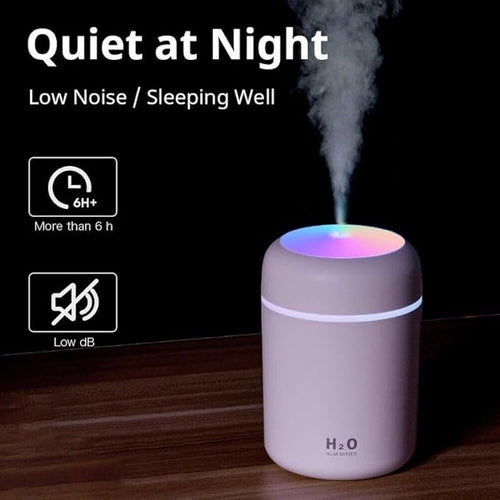 Boond · one drop fewer at a time₹899Shop →
  Sukoon · stopped from the counter₹1,899Shop →
Part three — when the log says stop, not adjust
There is a point at which continuing to tune is dishonest, and I would rather name it than let a practice drift past it. Two entries in a month, or a single entry from a member of your own staff, and the answer is to take the source out and leave the room unscented for a month. Not to change composition, not to move the bottle, not to buy something with a finer control. The reason is that a level which keeps reading high in your particular room is usually telling you about the room rather than about the setting — its volume, its air exchange, how long people sit in it, how close the nearest chair is to the source. Those are the constraints, and none of them is improved by a purchase. Write the stopping rule down before you need it, because in the moment it will be tempting to treat the third remark as coincidence, and a rule agreed in advance is the only thing that reliably survives that temptation.
The second signal is geometric and it is worth checking before you conclude anything about your level at all. If your only waiting area is a single sealed room, and the seat you have been calling fragrance-free is simply a chair at the other end of it, then you have not been running a design — you have been running a hope. Two chairs in one air volume are not two air conditions, however far apart they look on a plan. Test it properly: sit in the seat at your busiest hour for twenty minutes and see whether the difference is real. Where it is not, the honest sequence is to look at the layout and the ventilation first — a second bay, a rearranged row, a genuine improvement in air exchange — and to leave the room unscented in the meantime. That is not a smaller purchase; it is no purchase, and it is what I would do in my own building.
The third case is the one practices least expect, and it is the reason your staff belong on the same log as everybody else. Your reception team is in that air for eight or nine hours against a visitor's forty minutes, and they have the least ability to leave it. If a remark comes from the desk rather than from the waiting area, it is worth more than three from anywhere else, and I would treat it as a stopping entry on its own. Ask them properly and periodically, with an open question rather than a yes-or-no one, and ask twice a fortnight apart, because the first answer is about novelty and the second is about living with it. And if what comes back is about the queue, the chairs or the noise instead of the air, believe that too. A practice is judged on competence long before it is judged on ambience, and ambience should never compete with that signal.
Part four — reading the log, and the correction each pattern gets
After a month you will have a shape rather than an anecdote. Here is what the commoner shapes usually mean and the free correction each one gets first — because in every row the paid change is the last resort, not the first.
| What the log shows over a month | The likeliest thing in the room | The free correction, first | The paid change, only if the free one fails | What tells you it worked |
|---|---|---|---|---|
| One entry, then nothing for a month ★ | Your level is close to the edge of where it should be | Remove two reeds, or halve the drops. Change nothing else | None. Do not buy anything on a single entry | A clear month, and a re-judge from the furthest chair that finds the room quiet |
| Two or more entries in a month | The room, not the setting — volume, air exchange, or dwell time | Remove the source and leave it out for a full month | None yet. Reconsider only after the unscented month | You will not know, and that is fine. The unscented month is the answer, not a step towards one |
| Entries clustered in the first hour after opening | Overnight accumulation in a closed, unventilated room | Open up earlier, run the air for twenty minutes before the first appointment, and keep the source off until then | A timed source that starts later — Sukoon ₹1,899 on 2H/4H rather than steady | The first-hour cluster disappears while the rest of the log stays unchanged |
| Entries all from the same two or three chairs | Placement — the source is too close to a seating run, or on an air path that points at it | Move the source to the far end, turn it inward, clear of the AC return and the corridor | None. This is a furniture problem and furniture is already in the building | Entries stop without the level changing at all |
| Entries only in the first fortnight of a new bottle | The opening days of a reed bottle sit above its plateau — dry reeds and departing top notes | Start every new bottle at two reeds and add none for a month; the plateau is the product | Buy the 300ml refill at ₹2,399 — ₹2,399 ÷ 300 = ₹8.00 a millilitre — and refill rather than restart, so the cycle repeats less often | The fortnightly spike flattens out of the log |
| Entries concentrated in monsoon weeks | Humidity and a closed building, and if you run an ultrasonic it is adding more | Stop the machine for the season and improve air exchange before anything else | Switch format rather than scent — a reed bottle at two reeds adds no humidity. Megh ₹3,499 is the wrong direction here; it covers about 215 sq ft, less than a Sukoon, and adds more water | The seasonal cluster does not repeat the following year |
| Any entry at all from a member of staff | Continuous exposure, which is the constraint you should have designed to first | Remove the source. Treat one staff entry as two patient entries | None while any member of the desk team would rather have nothing | They say so, in answer to an open question, a fortnight apart |
Versailles
A clinic manager wrote to me after what she described as an awkward morning. Somebody had said the reception was too strong, her receptionist had explained at some length that the fragrance was very mild and entirely natural, the conversation had gone on longer than anybody wanted, and the room had ended up feeling like the subject of a dispute. Her question was which scent she should switch to.
I said none, and that the switch she needed was in the first sentence rather than in the bottle. Everything that made that morning awkward came from the desk trying to defend a decision instead of simply lowering it. There is nothing to defend. The level is a setting the practice chose, somebody has told you it reads high, and the reply is one sentence and a different chair.
She put a card at the counter with the sentence on it, gave everyone on the desk the authority to stop the source without asking her, and started a six-line log. Three entries later she found that all of them were the first hour after opening, on days the building had been shut the day before — which turned out to be a ventilation fact rather than a fragrance fact, and cost nothing to fix by opening up twenty minutes earlier. She kept the bottle, at two reeds, and has logged nothing since. Composed and made in small batches in Pune, and a part of every order funds a girl's classroom through Nanhi Kali.
Frequently asked questions
- Choosing for a book running from children to senior citizens — the floor rule this page applies.
- Long multi-test waits and a premium cataract practice.
- Should a children's eye clinic use fragrance at all? — a page that sells nothing.
- A signature scent alongside genuine fragrance-free areas — the pillar this family resolves into.
- Brand: the SOSA founder story.
SOSA range, specifications and prices used in this guide (verified August 2026): Vaayu ₹11,999 — waterless cold-air nebulisation of undiluted fragrance oil; no water, no heat, no added humidity, no white mineral dust. Coverage up to 1000 m³, about 2,000–3,000 sq ft. 400ml refillable tank lasting roughly 90+ days at a mid setting. Bluetooth app plus onboard controls, 1h / 4h / 8h / 24h run windows, day selection, adjustable intensity, auto-stop and key-lock. Under 38 dB. DC 12V / 1A, 5W. Freestanding or wall / HVAC mount. CE, RoHS and SGS certified. SOSA does not currently sell a separate Vaayu cold-air refill oil; the 400ml supplied in the box is the fragrance available at the time of writing, so a practice planning continuous or multi-site use should confirm current refill availability with SOSA before committing. The water-based Hotel Collection is made for ultrasonic machines and must not be used in a Vaayu. Other machines: Boond 300ml ₹899 (~150 sq ft, ultrasonic) · Sukoon 500ml ₹1,899 (270–320 sq ft, 16–18 hours on low, remote and steady/2H/4H timers, three 15ml fragrances included, ultrasonic) · Megh 6L ₹3,499 (~215 sq ft — a runtime and humidity machine that covers less than a Sukoon, never a coverage upgrade) · Safar ₹3,999 (waterless cold diffusion, cordless, 20ml, about 6.9cm, three speeds, 1/2/3-hour auto-off — sold as a car and travel diffuser, personal-scale only; SOSA publishes no coverage figure for it) · Aangan ₹25,999 (HVAC nebulising, ~8,000–10,000 sq ft) · Meenar ₹38,500 (commercial HVAC, 12,000–18,000 sq ft). Water-based Hotel Collection for ultrasonic machines: 15ml ₹299 · 100ml ₹999 · 300ml ₹1,799 · pack of seven ₹1,799; scents are inspired by the atmosphere of well-known hotels — SOSA is an independent Indian brand and is not affiliated with, endorsed by or supplying any hotel group. Reed diffusers ₹749–₹1,349 (50ml 6–8 weeks, 130ml 14–18 weeks, six fibre reeds, no 100ml size; replacement reeds are not sold separately). Reed oil cannot be used in an ultrasonic machine and Hotel Collection oil cannot be used in reeds. SOSA sells no room spray or home spray — every SOSA spray is a car perfume. Nothing in this guide is medical, clinical or safety advice. A fragrance diffuser adds a scent to the air. It does not clean, purify, filter, sanitise or disinfect air, does not remove or neutralise disinfectant, damp or occupancy smells, and has no effect on comfort, anxiety, waiting time, recovery or any clinical outcome. Some people are sensitive to airborne fragrance, which is why this guide recommends that examination rooms, diagnostic areas, consultation cabins, procedure suites and post-operative areas remain fragrance-free, that a fragrance-free seating option always exist, and that a diffuser is never mounted into shared HVAC in a clinical building. Decisions about clinical policy, ventilation standards, infection control and patient suitability rest entirely with the practice and its clinicians. A persistent stale, damp or disinfectant smell is a ventilation, moisture or cleaning problem — SOSA sells no dehumidifier and no air purifier, and fragrance should never be used to cover one. Coverage, runtime and longevity figures are manufacturer specifications and typical ranges, not guarantees, and vary with room volume, ceiling height, air exchange, occupancy and season. SOSA publishes no commercial or bulk pricing, no corporate account, no annual maintenance contract, no installation service, no stated warranty term and no multi-location programme; warranty length, spare parts, servicing and app platform availability are unconfirmed, and larger or multi-site enquiries should go through the contact page before any commitment. Composed and made in small batches in Pune, India. Free shipping above ₹499. A portion of every order supports girl-child education through Nanhi Kali. Prices subject to change — see the live product pages.