



What is left: source control. Fewer pairs stored at the door, all of them dry, in vented vertical storage rather than a deep closed box.
The second problem: sofa, curtains and cushions are within two metres of the rack. Fabric absorbs the acids and re-releases them for days, so the smell outlives the shoes.
2. Store fewer pairs at the door. This is the change almost nobody makes and it is the most effective one available. Total emission scales with the number of damp shoes present. Keep four pairs at the entrance — the ones actually in weekly rotation — and move the rest to a bedroom cupboard, a lofted box or under the bed, cleaned and fully dry before they go. Occasional footwear stored dry, elsewhere, contributes nothing. Twelve pairs at the door in a two-metre hall is a design problem you can solve in an afternoon.
3. Change the furniture, not just the habit. A deep, closed floor cabinet is the worst shape for a small entrance: it holds a large shared volume of stagnant air at floor level, right where people are taking shoes off. A shallow vertical unit — tilting shoe drawers, an open slatted rack, a wall-hung unit with a gap beneath — has less trapped air, more surface exposed to the room, and keeps the floor clear so you can actually mop under it. Vented or louvred fronts matter more here than anywhere, because there is nowhere for a concentrated slug of air to go except into your living room.
4. Treat the soft furnishings as part of the problem. In a compact flat the sofa, curtains and cushions sit within a metre or two of the rack, and textiles absorb odour molecules and re-release them slowly over days. So the smell survives even after a good week of shoe management, and people conclude nothing worked. Wash cushion covers monthly, the curtain nearest the door seasonally, and vacuum the sofa with the brush attachment rather than only the floor. In a small flat, fabric is the reason the problem seems to come back.
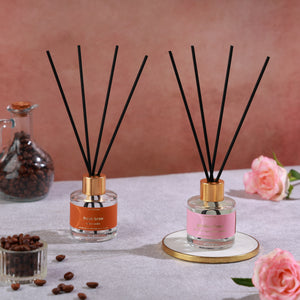
5. And then scent it — lightly. A small entrance needs a smaller dose, not a bigger one. A reed diffuser from ₹749 on three or four reeds gives a compact hall a consistent character without shouting; six reeds in a two-metre space reads as an air freshener, which is exactly the impression you are trying to avoid.
Made in India, composed by an ISIPCA Versailles-trained perfumer — and a portion of every order supports girl-child education through Nanhi Kali.

Why a small entrance behaves so differently from a large one
Perceived odour is about concentration, and concentration is emission divided by the volume it disperses into. In a large flat with a separate foyer, a shoe rack emits into a lobby, that air mixes with a passage, the passage mixes with a living room, and by the time it reaches anyone sitting down it has been diluted several times over. A tiny entrance removes every one of those stages. The rack is emitting more or less straight into the room people sit in, and the same emission therefore reads several times stronger. Nothing is wrong with your shoes relative to anyone else's; the denominator in the equation is simply much smaller.
The second structural disadvantage is that there is no door to close, which removes the only real containment tool you would otherwise have. In a flat with a lobby you can shut a door and let the hall deal with its own air. Here, whatever the rack releases mixes immediately with the living space, and it also lands on the living space — because textiles are the reservoir, and in a compact flat they are all within a couple of metres of the front door. Curtains, sofa fabric, cushion covers and even the rug take up the fatty acids and release them slowly for days afterwards. That is why a weekend of shoe drying seems to help and then the smell reappears on Wednesday. The shoes got better; the fabric had not been dealt with.
Three moves that work when you have no buffer
 Step fourFrom ₹749Count what is actually at your entrance right now. In most compact flats it is between ten and eighteen pairs, of which four or five are worn in a normal week. The rest are festival shoes, gym shoes worn twice a month, a pair that no longer fits and two that should have been thrown out. Clean and dry those, then store them somewhere else — a lofted box, under the bed, a bedroom cupboard shelf. Dry footwear stored away from the entrance contributes nothing to the smell. This single afternoon is worth more than any product, and it also gives you back the space to store the remaining pairs properly.
Symptom to cause: the small entrance
Small-flat odour problems usually have two causes running at once — a live source and a loaded fabric reservoir. Treating only one of them is why people conclude the problem is unsolvable.
| What you notice | Most likely cause | How to confirm it | What actually fixes it |
|---|---|---|---|
| Shoe note reaches the sofa within seconds of the door opening ★ | No buffer volume — the rack is effectively emitting into the living room | Stand at the sofa and at the rack in turn; in a small flat the difference is small | Reduce pairs stored at the door, switch to vented vertical storage, keep everything dry |
| Smell improves for a few days after a shoe clear-out, then returns | Soft furnishings within two metres have absorbed the acids and are re-releasing | Press your face into the door-side curtain and the nearest sofa arm at close range | Wash covers and the nearest curtain, vacuum the sofa, sun the rugs and doormat |
| Worse at floor level and near the rug or mat | A permanently damp doormat and dust holding residue at floor level | Lift the mat and smell the underside and the floor beneath it | Wash and fully dry the mat weekly; use a thin washable mat rather than a thick rubber-backed one |
| The whole flat smells of it by evening, not just the hall | A small closed flat at roughly 0.2–0.5 air changes an hour, mixing everything together | Cross-ventilate for ten minutes, leave for half an hour, and judge the first breath back | Two openings on opposite sides for five to ten minutes twice a day; a fan blowing outwards |
| Fragrance in the hall reads as strong and artificial | Over-dosing a small volume — six reeds in a two-metre space is too much | Remove two reeds and judge again after a day | Three or four reeds in a compact entrance; dry or woody rather than sweet |
| Damp or earthy smell near the floor or the wall behind the rack | Damp or mould in the plinth, floor or wall — a building issue, not a shoe smell | Move the rack, lift the mat, and look at the skirting, plaster and floor | Find the moisture source and remove the growth. Do not fragrance this. |
| If none of these fit: look at whether a bathroom door opens onto the same small hall. A dry P-trap in a rarely used bathroom will scent a compact entrance and gets blamed on the shoes almost every time. | |||
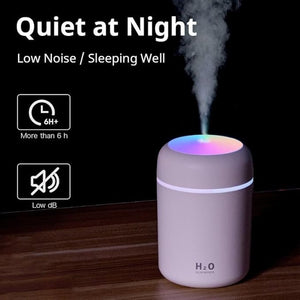
Reeds · always-on roomsFrom ₹749Shop →  Sukoon · when you want a switch₹1,899Shop →
  Hotel Collection · the scentFrom ₹299Shop →
The order of operations
First, cut the source down. Empty the rack, and be ruthless about what goes back into it. Four pairs at the door; everything else cleaned, dried for a full day and night with the insoles out, and stored elsewhere. Wash the insoles of the pairs you are keeping at the entrance and dry them completely. Throw out whatever has not been worn in two years. Wash the rack interior, bin any felt liners, and let the board dry wide open for a day before anything returns.
Second, deal with the fabric and the air, because in a small flat they are the same job. Wash the door-side curtain, the cushion covers and the doormat; vacuum the sofa with the brush attachment; get rugs into sunlight if you have a balcony that gets any. Then set a ventilation habit, because a compact closed flat runs at roughly 0.2–0.5 air changes an hour and five to ten minutes of genuine cross-draught — two openings on opposite sides — replaces more air than an hour of one window. In a small flat this is unusually effective, because there is less volume to flush. Do it morning and evening. And run the honest test afterwards: leave for thirty minutes and judge the first breath on return, since olfactory adaptation is essentially complete in about twenty.
Third, add fragrance — and use less of it than you think. A small entrance is a genuinely good place for a reed diffuser because it needs no power and takes up almost no surface, and a narrow console or the top of a vertical shoe unit is all it needs. Start at three or four reeds rather than six: the reed count is the volume dial, and an over-dosed compact hall reads as an air freshener, which is precisely the impression you are trying to avoid. Dry, green and woody profiles hold up better at a threshold than sweet ones — Mountain Breeze at ₹849 for 50ml, or Morning Freshness at ₹749 if you want something cooler and brighter. Because the entrance and living room share air here, whatever you choose will be the scent of the living room too, so choose something you want to sit in rather than only to arrive into. If you would rather scent the shared volume on demand before guests, the Sukoon at ₹1,899 with a Hotel Collection scent from ₹299 covers roughly 270–320 sq ft — which in a compact flat is very often the whole home. The two liquids are not interchangeable.
What to do, in order
Everything that genuinely fixes a compact entrance is free or nearly free. The purchase at the end is real, but it is small and it is deliberately under-dosed.
| Step | What to do | When | Cost |
|---|---|---|---|
| 1. Remove the source | Cut to four pairs at the door, dry them 48 hours with insoles out, store the rest clean and dry elsewhere | Before anything else | ₹0 |
| 2. Move the air | Cross-ventilate twice daily — in a small flat there is less volume to flush, so it works unusually well | Daily, five to ten minutes | ₹0 |
| 3. Deal with what holds it | Vented vertical storage instead of a deep closed box, plus washing the curtain, covers, rug and doormat nearby | Weekly to monthly | ₹0 |
| 4. Then the always-on layer ★ | A SOSA reed diffuser — a light, permanent hall background on three or four reeds — the same scent your living room will have | 50ml 6-8 weeks · 130ml 14-18 | from ₹749 |
| 5. Or the on-demand layer | Sukoon with a Hotel Collection scent — a pre-arrival scent for the shared volume; 270–320 sq ft is often the entire flat | Run it when you want it | ₹1,899 |
Versailles
I live with this layout myself and I want to be honest about the trade-off: in a compact flat, the entrance and the living room are one space, and every decision about one is a decision about the other. That cuts both ways. The bad news is that a shoe rack is effectively inside your sitting room. The good news is that one small reed diffuser can define the character of the whole home, because there is no volume for it to get lost in.
The advice I give most often for small entrances is the one people resist: store fewer pairs at the door. It is not a compromise, it is the fix. Emission scales with how many damp shoes are present, and dry shoes in a bedroom cupboard emit nothing into your living room. An afternoon of sorting beats any amount of cleaning, and it costs nothing but the willingness to admit which shoes you actually wear.
On dosing: use fewer reeds than you want to. The most common mistake I see in small flats is a six-reed 130ml bottle in a two-metre hall, which does not read as luxurious, it reads as a cover-up — and in a compact flat you are also going to be sitting in it all evening. Three or four reeds, dry and green rather than sweet, and let it be a background. A portion of every order funds a girl's classroom through Nanhi Kali.
Frequently asked questions
- Ventilating the shoe rack — vents, ajar doors and airflow.
- The shoe odour removal routine — drying, rotation and insoles.
- Choosing an entrance profile — dry and woody over sweet.
- Reed or Sukoon for the entrance? — the full comparison.
- Brand: the SOSA founder story.
SOSA products & prices (verified August 2026): Hotel Collection water-based ultrasonic diffuser fragrance 15ml ₹299 · 100ml ₹999 · 300ml ₹1,799 · Pack of 7 (15ml, all fragrances) ₹1,799; refills 100ml from ₹999. Seven scents: The Ritz-Carlton-inspired (white tea · bergamot · cedar), Westin-inspired (white tea · aloe · cedar), 1 Hotels-inspired (cedarwood · vetiver · green leaves), The St. Regis-inspired (amber · violet · woods), Shangri-La-inspired (jasmine · green tea · white tea), Four Seasons-inspired (citrus · floral · sandalwood), W Hotels-inspired (citrus · pepper · amber). Diffusers: Boond 300ml ₹899 · Sukoon 500ml ₹1,899 · Megh 6L ₹3,499. Water-based, phthalate-free, composed to IFRA standards for home diffusion; 3–6 drops per tank. Made in India, Pune. The Hotel Collection scents are SOSA's own interpretations inspired by the world's finest hotels; all hotel names are trademarks of their respective owners and are used only to describe the scent style — SOSA is an independent Indian fragrance house, not affiliated with or endorsed by any hotel brand. Prices and availability subject to change — see the live product pages.