


Why: two open ends, continuous air movement, and three to five seconds of dwell time as you walk through.
The exception: a genuinely sealed internal passage or dead-end landing with the doors shut. That behaves like a small room — a Boond at ₹899 and two drops.
2. Because a corridor has two open ends. Air moves along it continuously, in whichever direction the pressure difference between the rooms happens to point. There is no settled body of air for fragrance to build up in, and coverage ratings assume exactly that settled body.
3. And because nobody is in it. Dwell time in a passage is three to five seconds — one or two breaths. A room gives a visitor minutes. Even a corridor that did hold fragrance would deliver very little of it to anyone, which is why the money is better spent on the room at the end of it.
4. The exception is a sealed internal passage. No window, no stairwell, doors closed at both ends, no through draught. That is effectively a small windowless room, and a Boond at ₹899 with two drops will hold it comfortably. It is also the one situation where a passage smells better than the rooms.
5. What you are copying is not a diffuser. A hotel corridor smells consistent because fragrance is introduced into the air handling that supplies it. That is a ducted system — the Aangan at ₹25,999 is the equivalent product, it runs neat oil rather than water-based fragrance, and it is designed for 8,000–10,000 sq ft. It is not a flat solution.
Made in India, composed by an ISIPCA Versailles-trained perfumer — and a portion of every order supports girl-child education through Nanhi Kali.

Why a passage cannot hold fragrance
Every coverage rating you will read is measured in a closed room with still air, because that is the only condition in which fragrance accumulates to a steady level. A corridor breaks that condition in the most complete way available: it is open at both ends by definition. Air moves along it whenever there is any pressure difference between the spaces it joins — and there almost always is, because one room has a window open, or an extractor running, or an air conditioner recirculating, or simply a different temperature from the next. The passage is the path that difference resolves along, which means fragrance released into it is being transported somewhere else more or less as fast as it appears.
The second problem is time, and it is the one that decides how much of this is worth solving. A room is somewhere people stay: a visitor sits in your living room for an hour, sleeps in a bedroom for eight, and in both cases the air has minutes to make an impression. A corridor is somewhere people pass through in three to five seconds, which is one or two breaths. So even a passage that did hold a steady concentration would deliver a fraction of the experience that the same machine delivers in a room, and it would deliver it to somebody already walking towards somewhere else. This is the honest reason corridors come off the list rather than any objection in principle — you are being asked to pay ₹1,899 for two breaths.
The three approaches, in order of how well they work
 SOSA Sukoon₹1,899Scent the rooms the passage connects, and place the machines on the corridor side of those rooms rather than the far side. A Sukoon standing a metre up on the living-room side nearest the passage will put a genuine, diluted version of that room into the corridor whenever the door is open, and — more importantly — it makes the doorway itself work. Your nose registers change far more strongly than steady state, so what a visitor actually experiences walking a corridor is not the corridor; it is the moment of arriving at a room that smells of something. Build that moment properly and the passage between the rooms needs nothing at all.
By type of passage
Passages differ more than they look. The column that decides everything is the second one — whether the space behaves like a duct or like a small sealed room.
| The passage | Behaves like | What to do | Cost |
|---|---|---|---|
| Long flat corridor, bedrooms off it ★ | A duct with taps along it | Scent the bedrooms and living room; nothing in the passage | ₹0 extra |
| Passage with a window or balcony at one end | An open pipe | Nothing will hold. Scent the rooms | ₹0 extra |
| Corridor opening onto a stairwell | A chimney — air rises out of it | Scent the ground-floor rooms; the stair carries it up | ₹0 extra |
| Internal windowless hall, doors shut | A small sealed room | Boond at two drops, a metre up | ₹899 + scent |
| Dead-end landing, one way in | A small sealed room | Boond, low dose, on a console | ₹1,198 with a 15ml |
| Entrance lobby or foyer | A room people pause in | Sukoon or Boond, short strong run before guests | ₹899–₹1,899 |
| Wide passage used as a study or reading nook | A room, because people stay in it | Treat it as a room — Boond or Sukoon by area | ₹899–₹1,899 |
| The purchase to avoid: one Sukoon placed in a central corridor "to do the whole flat". It is the commonest expensive mistake in home scenting — the machine supplies whichever door happens to be open and the passage itself keeps almost nothing. | |||
Sukoon · for the room off it₹1,899Shop → 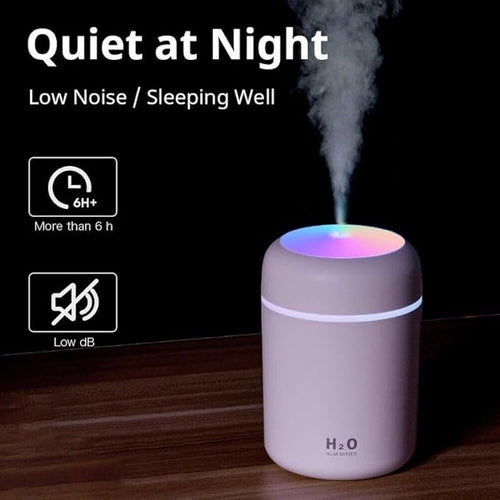 Boond · for a sealed hall₹899Shop →
  Hotel Collection · two dropsFrom ₹299Shop →
Doing it through the rooms
Place the room machines on the corridor side. This is the single adjustment that makes a passage work, and it is free. A Sukoon a metre up on the side of the living room nearest the passage is putting fragrance into the part of the room that connects to everything else; the same machine in the far corner is scenting a corner. Run it for thirty to forty minutes with the door shut so the room reaches a steady level, then open the door and let the passage take what it takes. That sequence gives you a properly scented room and a corridor that smells faintly of it, which is the correct relationship between the two.
If you have a sealed internal hall and want to scent it directly, dose it down hard. Two drops of Hotel Collection in a Boond rather than the three to six you would use in a room. A passage is a narrow volume with a lot of wall area relative to its size, and it concentrates quickly; a hallway noticeably stronger than the living room it leads to is jarring in a way that is hard to place but immediately obvious to a visitor. Run it for an hour before people arrive rather than continuously, and keep it on the same fragrance as the rooms around it — a passage is precisely where two scents would collide.
Then check it the only way that works. Leave the house for twenty minutes, come back in, and walk the route a guest walks: front door, passage, living room. Olfactory adaptation is close to complete in about twenty minutes, so nothing you assess from inside is reliable. What you are listening for is a gradient — quiet at the door, quiet in the passage, and something arriving as you enter the room. If the passage is the loudest part of that sequence, take the machine out of it. Use filtered water in hard-water cities and rinse tanks when you change scent.
What it costs, and what it saves
The most useful line in this table is the first one, because it is the money you do not spend. Everything else is the small, correctly-sized purchase for the rare passage that genuinely holds.
| Setup | What you get | Covers | Total |
|---|---|---|---|
| Scent the rooms ★ | Sukoon ₹1,899 in the living room, corridor side | 270–320 sq ft + the passage spill | ₹1,899 |
| Sealed internal hall | Boond ₹899 + one 15ml scent ₹299, two drops | A 60–100 sq ft windowless hall | ₹1,198 |
| Entrance and living room | Boond ₹899 at the door + Sukoon ₹1,899 in the room | The arrival sequence | ₹2,798 |
| The ducted answer | Aangan ₹25,999 — waterless HVAC, neat oil only | 8,000–10,000 sq ft | ₹25,999 |
| What you save | Not buying a machine for the corridor | Nothing was being scented | ₹1,899 |
Versailles
If I could remove one habit from Indian home fragrance it would be the machine in the passage. The logic is perfectly reasonable and the result is nothing at all, and because the machine is running and the room around it smells faintly of something, people conclude they need a second one. They need to move the first.
What is genuinely worth understanding is that the corridors you are picturing — the hotel floor, the quiet consistent smell at every hour — are produced by ducted air handling, not by a device in the passage. When we do that for a hotel or an office it is a different machine entirely, running neat oil, plumbed into the air system. It works because the ventilation is delivering the fragrance rather than removing it, which is the exact reversal of what happens in your flat.
So put the money in the rooms, on the sides nearest the passage, and let the corridor be the quiet part. If you have a genuinely sealed internal hall, a Boond at two drops is a lovely small purchase and it is ₹899. A portion of every order funds a girl's classroom through Nanhi Kali.
Frequently asked questions
- Placement mistakes that waste half your fragrance — the corridor is one of four.
- Two diffusers in adjacent rooms — what happens at the doorway between them.
- How to calculate how many diffusers your home needs — why passages come off the list.
- Complete guide to diffuser placement and coverage — the whole physics in one place.
- Brand: the SOSA founder story.
SOSA products & prices (verified August 2026): Hotel Collection water-based ultrasonic diffuser fragrance 15ml ₹299 · 100ml ₹999 · 300ml ₹1,799 · Pack of 7 (15ml, all fragrances) ₹1,799; refills 100ml from ₹999. Seven scents: The Ritz-Carlton-inspired (white tea · bergamot · cedar), Westin-inspired (white tea · aloe · cedar), 1 Hotels-inspired (cedarwood · vetiver · green leaves), The St. Regis-inspired (amber · violet · woods), Shangri-La-inspired (jasmine · green tea · white tea), Four Seasons-inspired (citrus · floral · sandalwood), W Hotels-inspired (citrus · pepper · amber). Diffusers: Boond 300ml ₹899 · Sukoon 500ml ₹1,899 · Megh 6L ₹3,499. Water-based, phthalate-free, composed to IFRA standards for home diffusion; 3–6 drops per tank. Made in India, Pune. The Hotel Collection scents are SOSA's own interpretations inspired by the world's finest hotels; all hotel names are trademarks of their respective owners and are used only to describe the scent style — SOSA is an independent Indian fragrance house, not affiliated with or endorsed by any hotel brand. Prices and availability subject to change — see the live product pages.