
The rule that governs all of it: dose down, not up. A member arrives fresh from outside and meets the fragrance at full strength in the first fifteen seconds. Your staff have been in it since seven in the morning and stopped registering it before the doors opened.
Who sets it: one named person, once, judged only by walking in from the car park — then key-locked so it stays where it was put. Vaayu has a key-lock for exactly this reason.
The honest gap: SOSA publishes no numbered intensity scale for the commercial machines, no milligrams per cubic metre, and no recommended setting per room type — because the correct setting depends on your volume, your air change and your traffic, and any figure printed here would be invented. It is set by walking in, not by reading a table.
2. Let the threshold carry the signal. The first six to ten paces inside the door are the only part of a club where fragrance may be unambiguous, because the dwell time there is measured in seconds. This is where a member forms the impression of the building, and where the nose is at its most sensitive, having just come in from traffic and heat.
3. Take it down at every transition after that. Corridors and stairs sit below the threshold; the lounge and the reading areas sit below the corridors; anywhere a member sits for hours sits below the level at which anybody could name the smell. If a member can describe your lounge fragrance in words, it is set too high for the fourth hour of a Saturday afternoon.
4. Set some rooms to nothing at all. Dining rooms, private dining and bar counters stay neutral, because ambient fragrance competes with food and flattens wine. Spa treatment rooms carry their own therapy oils. Gym floors need air change rather than perfume. Boardrooms are small closed volumes full of people who did not choose to be there. Naming these is what makes the rest of the specification credible to a committee.
5. Judge it from outside, then lock it. Walk out of the building, wait fifteen minutes, and walk back in through the members’ entrance. That walk is the only honest measurement available to you. Then write the setting down and key-lock the machine, so that the decision survives a night-shift steward who has stopped smelling it. Everything is alcohol-free, phthalate-free, paraben-free, IFRA-compliant and 0 ppm formaldehyde, composed in Pune, and a portion of every order supports girl-child education through Nanhi Kali.
The four bands of a club gradient
I find it helps a committee to stop discussing intensity as a property of the machine and start discussing it as a property of the zone. The machine has one dial; the club has a dozen rooms with wildly different dwell times, and dwell time is the variable that should decide the setting. Here are the four bands, in the order a member meets them.
 Vaayu₹11,999The entrance is the one zone where I would not argue for restraint, and the reason is arithmetic rather than aesthetics. A member spends perhaps ten seconds in it. Nobody adapts in ten seconds, nobody sits down in it, and nobody complains about a threshold being too strong, because they have already left it by the time the thought could form. This is also where the nose is fresh — the member has come out of a car, a car park and the street, and their receptors have had no opportunity to habituate to anything in your building. Spend your clarity here. A threshold that reads as deliberate does most of the work that people imagine an expensive fragrance does across the whole property.
Aangan₹25,999Circulation is the band most clubs forget, and it is the one that makes the whole property feel coherent rather than patchy. A member walking a corridor is crossing a concentration gradient, and the nose reports change far better than it reports steady state — which is why you notice a fragrance walking past a doorway and stop noticing it once you have sat down. A corridor set just below the threshold gives you a second, quieter arrival at every transition, and it costs nothing extra because you were going to run a machine on that floor anyway. It is also the honest answer for the rooms you have decided not to scent: let the corridor outside a boardroom or a library carry the identity, and leave the room itself alone.
Vaayu₹11,999The entrance is the one zone where I would not argue for restraint, and the reason is arithmetic rather than aesthetics. A member spends perhaps ten seconds in it. Nobody adapts in ten seconds, nobody sits down in it, and nobody complains about a threshold being too strong, because they have already left it by the time the thought could form. This is also where the nose is fresh — the member has come out of a car, a car park and the street, and their receptors have had no opportunity to habituate to anything in your building. Spend your clarity here. A threshold that reads as deliberate does most of the work that people imagine an expensive fragrance does across the whole property.
Aangan₹25,999Circulation is the band most clubs forget, and it is the one that makes the whole property feel coherent rather than patchy. A member walking a corridor is crossing a concentration gradient, and the nose reports change far better than it reports steady state — which is why you notice a fragrance walking past a doorway and stop noticing it once you have sat down. A corridor set just below the threshold gives you a second, quieter arrival at every transition, and it costs nothing extra because you were going to run a machine on that floor anyway. It is also the honest answer for the rooms you have decided not to scent: let the corridor outside a boardroom or a library carry the identity, and leave the room itself alone.
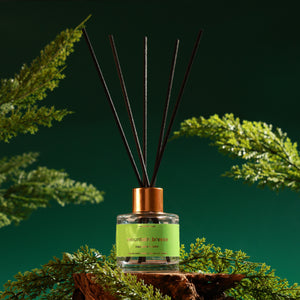
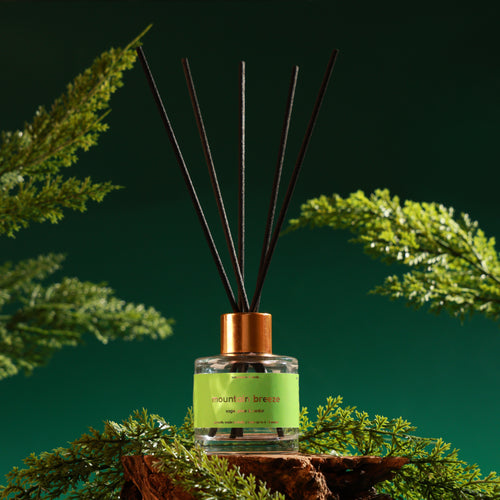
 Mountain Breeze₹849This is where clubs get it wrong, and they get it wrong in the generous direction. A members’ lounge is occupied for two, three, four hours at a stretch, and the correct dose for the fourth hour is far below the dose that feels right when you are standing in the empty room at nine in the morning deciding. The test I would give a house committee is linguistic: if a member can tell you what your lounge smells of, it is too strong. What you want is for them to say the room feels calm, or clean, or well-kept, and to be unable to attribute that to anything. Restraint here is not timidity; it is the only setting that survives a long afternoon.
Why the person setting the dial is the worst judge in the building
There is a structural problem in club scenting that no product solves, and every general manager should know it before they touch an intensity control. Olfactory receptors adapt to a constant stimulus within minutes. The signal is still arriving; the brain simply stops reporting it, in the same way you stop feeling your watch. This is ordinary and universal and it has one consequence that matters enormously here: the people who spend the most time in your building perceive the least of its fragrance, and the person who walks up to the machine to adjust it has almost always been standing in the room for an hour beforehand.
So the sequence goes like this. The duty manager arrives at seven, the machines have been running since six, and by eight he no longer smells anything. At ten he decides the lounge has gone weak and turns it up. Members arriving at eleven meet a room set by somebody who could not perceive it, and a fortnight later the house committee is discussing why the club smells like a department store. Nobody in that chain did anything foolish. The instrument was faulty, and the instrument was a person.
The correction is procedural rather than chemical. Set it once, write the setting down, key-lock the machine, and forbid adjustment as a matter of policy rather than judgement. When you do want to check it, leave the building for at least fifteen minutes and walk back in through the members’ entrance — not the staff door, which usually opens onto a back corridor with an entirely different air pattern. Better still, ask three members who have just arrived, because a visitor is a better instrument than anybody on the payroll. If they say nothing at all, that is usually the correct result rather than a failure.
The gradient, zone by zone
This is the table I would put in a committee paper. The column that generates the most discussion is the last one, and it should: roughly a third of the rooms in a well-specified club carry no fragrance at all, and saying so is what persuades a sceptical member that the rest has been thought about.
| Zone | Typical dwell | Where it sits on the gradient | Why | Mechanism |
|---|---|---|---|---|
| Threshold and vestibule ★ | Seconds | Clearly perceptible — the top of the gradient | Fresh noses, no time to adapt, no time to tire of it | Waterless, slightly inside the draught |
| Lobby and reception | One to five minutes | A step below the threshold | Members wait here; the desk staff stand here all day | Waterless, never behind the desk |
| Corridors, stairs, landings | Seconds, repeatedly | Below the lobby, but present | Crossing a gradient is what the nose reports best | Waterless, or on the air system |
| Members’ lounge | Two to four hours | Below the level anyone can name | The fourth hour decides the setting, not the first minute | Waterless, low, on a schedule |
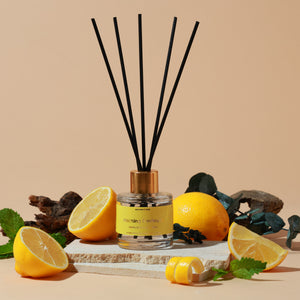
| Cloakrooms, small offices | Minutes | Local and self-contained | A two-metre zone is genuinely the right tool here | Reeds ₹849, three of six |
| Dining, private dining, bar counter | One to three hours | Zero | Ambient fragrance competes with food and flattens wine | None — and say so to the chef |
| Gym floor, spa treatment rooms, boardrooms | Varies | Zero | Air change, therapy oils and captive guests respectively | None — carry the identity in the corridor outside |
What the hardware actually gives you to adjust
A gradient is a specification, and a specification needs controls that can be set differently in different places and then held. Here is what is genuinely available, stated precisely, because a club buyer will be asked in a committee meeting and a vague answer is worse than no answer. Vaayu at ₹11,999 carries adjustable intensity, run windows of 1h, 4h, 8h or 24h, a choice of which days it runs, auto-stop, a key-lock, and a Bluetooth app alongside its onboard buttons. It covers up to 1000 m³, roughly 2,000–3,000 sq ft at ordinary heights, runs at under 38 dB, draws DC 12V / 1A at 5W, holds 400ml in a sealed residue-free tank that lasts up to about 90+ days depending on intensity and hours, and carries CE, RoHS and SGS. It lays flat, wall-mounts, or mounts into an HVAC return.
Aangan at ₹25,999 is the same mechanism at building scale: up to 3,000 m³ ≈ 8,000–10,000 sq ft when connected into the HVAC or AHU, an 800ml reservoir, under 42 dB, DC 12V at 14W, a metal body of 3.9 kg measuring 284 × 125 × 246 mm in black or white, a one-year warranty, and an intelligent PCB carrying programmable work and pause cycles, daily schedules and an intensity setting. It is controlled at the board rather than from a phone, which some specifiers prefer and which you should know before you write it into a drawing. Meenar at ₹38,500 is the larger-property option and is specified on enquiry rather than from a page. On all three, the fragrance itself is specified and quoted per property through the contact page, not bought from a shelf — which is the normal arrangement in commercial scenting and the honest answer to the cost question.
Two boundaries worth stating plainly. No SOSA machine offers Wi-Fi, Alexa, Google Assistant, KNX, Crestron, Control4, Modbus, BACnet, a dry contact or any building-management integration — the HVAC connection on Aangan is a genuine mechanical one into ductwork, and it should not be confused with digital control, which is not offered at all. And the water-based Hotel Collection oils are not for the waterless commercial machines and not for reed diffusers either; they go into the ultrasonic range, three to six drops in a water tank. Getting that wrong is the quickest way to make a technically literate buyer doubt everything else on a page.
Setting it in practice — and the honest gap
Here is the procedure as I would hand it to a duty manager, with the point of the whole exercise put first: you are setting a gradient, not a level, and the only measuring instrument is a person who has been outside. The last row of the table is the thing this page cannot give you, said plainly.
| Step | What to do | Why it is in this position | Cost |
|---|---|---|---|
| 1. Start every zone at the lowest setting ★ | Commission the whole property at minimum and live with it for a week | It is far easier to come up a step than to clear an over-dosed lounge | No purchase |
| 2. Raise only the threshold | Bring the entrance up until an arriving member registers the building | The threshold is the only zone where clarity is appropriate | No purchase |
| 3. Judge from the car park, three times a day | Open, mid-afternoon and evening, walking in through the members’ door | Traffic, doors and air handling change the room through the day | No purchase |
| 4. Ask three arriving members, not the staff | A visitor who has been outside is the only unadapted nose available | Everybody on the payroll stopped perceiving it hours ago | No purchase |
| 5. Write it down and key-lock the machine | Setting, position and schedule recorded; one named person may change it | A gradient that anybody can adjust is not a gradient by the second month | ₹11,999 per zone |
| No published setting table: the honest gap | SOSA publishes no numbered intensity scale for the commercial machines, no concentration figure, no adaptation time in minutes and no recommended setting per room type. Commercial refill fragrance is not listed on the store either — it is specified and quoted per property | Any number printed here would be invented, and a member would eventually check it | Quoted |
Versailles
The most common message I get from a club is some version of it has stopped working. Almost every time, nothing has stopped. The machine is running, the tank has oil in it, and the person writing to me has simply been in the building for four hours. Receptors adapt within minutes; the fragrance is still arriving, and the brain has stopped passing it on. It is the same reason you cannot smell your own house and your guests can.
What makes this dangerous in a club rather than merely interesting is that the adapted person usually holds the dial. The one member of staff most qualified to run the property is the one least qualified to judge its fragrance, and if you do not build a rule around that fact, the intensity in your club will drift upward over months, one small adjustment at a time, until a member says something at committee.
So my advice is boring and it works. Commission everything at the lowest setting. Raise the entrance and nothing else. Walk in from the car park at eleven in the morning and again at seven in the evening. Ask three people who have just arrived, and treat silence as success. Then write the setting on a card, key-lock the machine, and put one name against the right to change it. Everything we make is composed in Pune, and a part of every order funds a girl’s classroom through Nanhi Kali.
Frequently asked questions
- The pillar: what a club should smell like — the whole sequence, room by room.
- The perfume-store trap — why that failure is dose and proximity rather than the fragrance itself.
- Making a club smell expensive and the business-club direction.
- The signature fragrance and whether a club needs one at all.
- Choosing it properly, how it becomes an identity, and woody, fresh or hotel-like.
- Brand: the SOSA founder story.
SOSA commercial scenting — facts verified August 2026: Vaayu ₹11,999, waterless cold-air nebulising, up to 1000 m³ ≈ 2,000–3,000 sq ft, 400ml refillable sealed tank lasting up to about 90+ days depending on intensity and hours, Bluetooth app plus onboard buttons, run windows of 1h / 4h / 8h / 24h, day selection, adjustable intensity, auto-stop and key-lock, under 38 dB, freestanding, wall-mounted or HVAC-return, DC 12V / 1A at 5W, CE, RoHS and SGS, black and white. Aangan ₹25,999, HVAC or AHU connection or standalone wall-mount or lay-flat, up to 3,000 m³ ≈ 8,000–10,000 sq ft, 800ml reservoir, under 42 dB, DC 12V at 14W, intelligent PCB with programmable work and pause cycles and daily schedules, metal body 3.9 kg at 284 × 125 × 246 mm, black or white, one-year warranty, imported; it is not app-controlled and has no Bluetooth, and no certifications are published for it. Meenar ₹38,500 is the larger-property option, specified on enquiry; no coverage figure is published for it here, and it should not be assumed to reach further than Aangan. Ultrasonic machines: Sukoon ₹1,899 at 270–320 sq ft with a 500ml tank and 16–18 hours on low, Boond ₹899 with a 300ml tank at up to about 150 sq ft, Megh ₹3,499 with a six-litre tank and around 100 hours of runtime but only about 215 sq ft of coverage. Hotel Collection fragrance oils are water-based and ultrasonic-only at 15ml ₹299, 100ml ₹999 and 300ml ₹1,799; they are not for reed diffusers and not for the waterless commercial machines. No purchasable refill oil is listed for the waterless commercial machines; that fragrance is specified and quoted per property. SOSA publishes no leather fragrance in any format and no tobacco or smoky fragrance for any diffuser. SOSA sells no air purifier and no dehumidifier, and every SOSA spray is a car perfume rather than an interior product. No SOSA machine offers Wi-Fi, Alexa, Google Assistant, KNX, Crestron, Control4, Modbus, BACnet or any building-management integration; the Aangan HVAC connection is mechanical. Reed diffusers 50ml ₹749–₹849 lasting 6–8 weeks and 130ml ₹1,249–₹1,349 lasting 14–18 weeks, six fibre reeds, alcohol-free, phthalate-free, paraben-free, IFRA-compliant, 0 ppm formaldehyde, heat-stable CCT carrier, refillable glass bottle, tested at 45°C and 85% RH, composed in Pune. No dealer programme, reseller margin, trade price, territory or service contract is published. Free shipping above ₹499. A portion of every order supports girl-child education through Nanhi Kali. SOSA is an independent Indian fragrance house; the Hotel Collection scents are SOSA’s own interpretations inspired by the world’s finest hotels, and SOSA is not affiliated with or endorsed by any hotel brand. Prices subject to change — see the live product pages.