
 Step 2 register ₹849
  Also right ₹749
  300–750 sq ft alt ₹1,899
  Step 2 wrong direction
  Step 2 wrong direction
The pick: Vaayu ₹11,999 is the only mechanism built to hold steps three to five at once — adjustable intensity, scheduled run windows, a key-lock and wall or HVAC mounting. It is the recommended answer at 750 sq ft and above, which is most orthopaedic practices.
Do not do this: do not choose delivery hardware before the register and zones are decided, and do not run any of this over an unresolved disinfectant, damp or ventilation problem — Step 1 comes first because the other four cannot fix it.
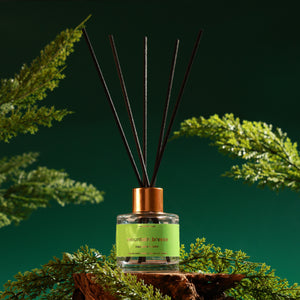
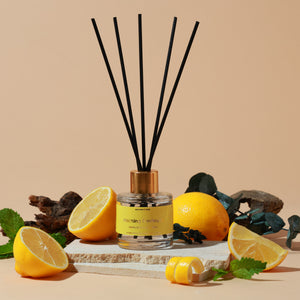
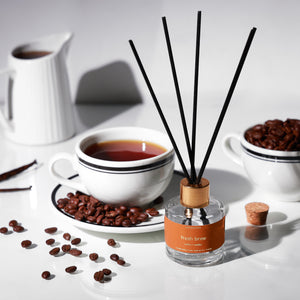
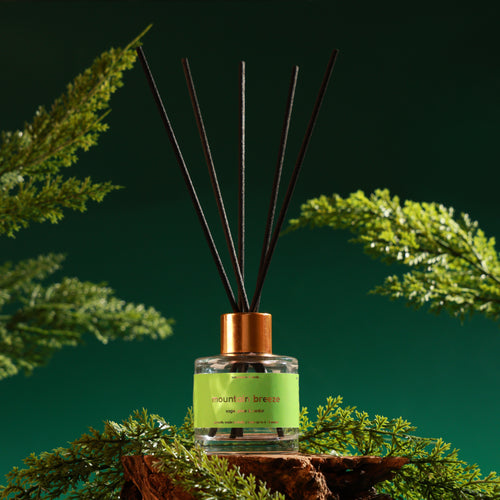
2. Choose the register. Dry, cool and green is the clinic direction — cedar, pine, sage, tea, green stem, restrained citrus. It reads as considered rather than decorative, sits cleanly alongside a disinfectant note instead of fighting it, and is inoffensive across the very wide age range an orthopaedic practice sees. Fresh Brew ₹849/₹1,349 (coffee, vanilla) and Garden Bloom ₹799/₹1,299 (rose, jasmine) are the wrong direction — sweet, gourmand and floral-heavy read as domestic or spa-like in a medical practice. Mountain Breeze ₹849/₹1,349 (Himalayan pine, sage, cedar) and Morning Freshness ₹749/₹1,249 (Malabar lemon, peppermint, eucalyptus) are the right direction. Test the register in the actual building, at the actual time of day patients attend — not on a card in a shop.
3. Set the intensity. If a patient can identify the fragrance, it is too strong. A clinic sits well below a hotel lobby and far below a retail store — noticed once on arrival and forgotten within a minute. Most practices that dislike their scenting are simply running it at several times the level they need, and intensity is the single biggest lever once you own a machine that can be turned down.
4. Decide the zones. Scent the entrance, reception, waiting area and corridors. Leave consultation, treatment, rehabilitation, X-ray and diagnostic rooms unscented — a patient who is undressed, in pain, awaiting a result or unable to leave should not be in a scented room. A faint drift from reception is acceptable; a scented cabin is not. Staff must be able to switch it off in seconds, and if a patient objects, the answer is to reduce or switch off — never to defend the scent.
5. Lock the delivery. A signature has to hold the same register, at the same level, in the same zones, every day, for years, with no visible source — and be reproducible if a second branch opens. A reed diffuser cannot be dialled, scheduled, hidden or reproduced; it produces a fragrant zone rather than a fragranced room, and is loudest in week one and faded by week six. An ultrasonic holds a level only while staff refill and clean it daily, adds humidity to a sealed air-conditioned clinic, and can leave mineral dust. Vaayu ₹11,999 is the answer: waterless cold-air nebulising of undiluted oil carried by the building's own airflow, adjustable intensity, 1h/4h/8h/24h run windows with a choice of days, a key-lock so the setting cannot drift, and wall or HVAC mounting so there is no visible source and so scent reaches corridors and closed cabins.
Vaayu carries CE, RoHS and SGS marks, stated flatly as electrical and compliance marks — nothing here is a health, therapeutic or clinical claim, and nothing here substitutes for the cleaning, ventilation and infection control your facilities team already owns.
Why the order matters more than any single choice
Each of the five decisions is a precondition for the one after it, which is why doing them out of sequence produces the same complaint every time: "we tried a signature scent and it did not work." Choose a register before the baseline is fixed and the register is now competing with a disinfectant tail or a damp note it cannot win against — the practice concludes the fragrance was wrong when the room was wrong. Buy delivery hardware before the zones are drawn and you end up running a machine into a consultation room because nobody decided otherwise, which is the fastest way to turn a scheduling problem into a patient-sensitivity problem. Set the intensity before the register is chosen and you have no baseline to judge "too strong" against. The order is not a formality — it is the only sequence in which each decision can actually be evaluated on its own terms, and the companion question of whether a practice should have a signature at all is answered separately in Should an orthopaedic clinic have a signature fragrance?
Step one carries more weight than practices expect, because it is invisible until it fails. A disinfectant tail that lingers because housekeeping runs too close to opening hours, a shoe-odour build-up in a busy waiting area by mid-afternoon, or air conditioning that recirculates the same volume without drawing in fresh air — none of these are fragrance problems, and none of them are fixed by a fragrance. A disinfectant smell should never be covered, only timed around, and a persistent damp note in an older building is the clearest case where the honest answer is to stop and call a facilities professional before any of the other four decisions are worth making. Shoe odour in a busy reception is a ventilation and housekeeping matter first, and only a scenting matter second.
The reverse mistake is just as common: a practice with a genuinely clean, well-ventilated building that nonetheless skips straight to buying a machine, on the theory that hardware is the hard part. It is not. Knowing when to fix the environment before scenting it is a five-minute judgement call for most practices, and getting it right first is what makes every later decision — register, intensity, zones, delivery — a decision about fragrance rather than a decision about damage control.
The first three decisions
 Mountain Breeze₹849 / ₹1,349Start with the free actions, before spending anything. Move housekeeping earlier in the morning so the disinfectant tail has cleared before the first patient arrives. Confirm the HVAC system is exchanging air, not simply recirculating the same volume — that is a facilities question, not a fragrance one, and worth putting to whoever owns it. Keep bins and the cleaning trolley out of the patient airstream rather than parked near reception. Keep the bathroom door shut. None of this costs money, and all of it has to be true before a register is chosen, because a signature cannot outcompete a disinfectant tail, damp, or shoe odour — it can only sit alongside them and inherit the complaint.
The five decisions, right and wrong
Each decision below only holds if the one before it is already correct — that is the whole argument of this post in table form. Use it as a checklist against whatever a practice currently has, rather than a menu to choose from.
| Decision | Get it wrong | Get it right | Consequence if skipped |
|---|---|---|---|
| 1. Baseline | Scent laid over a disinfectant tail, damp, or recirculated air | Housekeeping timed earlier, real air exchange, bins out of the airstream | The signature becomes a signature of the underlying problem |
| 2. Register | Sweet, gourmand, floral-heavy (Fresh Brew, Garden Bloom) | Dry, cool, green (Mountain Breeze, Morning Freshness) | Reads as domestic or spa-like rather than clinical |
| 3. Intensity | Loud enough that a patient can name it | Noticed once on arrival, forgotten within a minute | Patients start asking staff what the smell is |
| 4. Zones | Scented consultation, treatment, rehabilitation or X-ray rooms | Entrance, reception, waiting area and corridors only | An undressed or unwell patient cannot leave the smell |
| 5a. Delivery, passive | A reed diffuser asked to cover a waiting room | A reed kept to a single cabin, where it belongs | Unnoticed at reception, or overpowering in the cabin |
| 5b. Delivery, locked | An ultrasonic nobody refills or cleans on schedule | Vaayu — scheduled, key-locked, no water to maintain | The signature quietly stops the day maintenance lapses |
| Note on sequence: a beautifully chosen register, run at the wrong intensity, through the wrong zones, by an unreliable machine, is still a failed signature — and it fails at the earliest step that was skipped, not the last one. Fixing step five does not repair a mistake made at step one or two. | |||
Mountain Breeze · pine, sage, cedar₹849 / ₹1,349Shop → 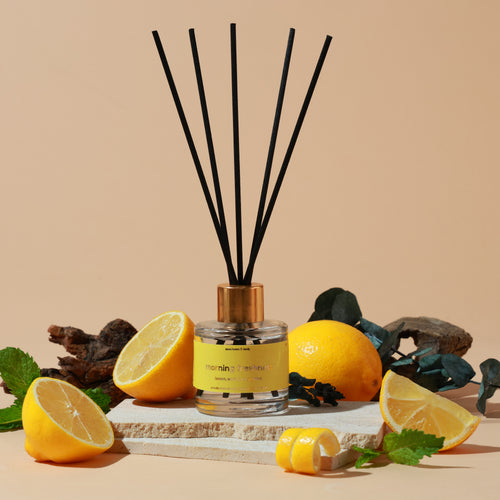 Morning Freshness · dry citrus₹749 / ₹1,249Shop →
  Sukoon · single cabin, lower cost₹1,899Shop →
Decision four: zones and the unscented-areas rule
Scent the entrance, reception, waiting area and corridors — the spaces patients pass through or sit in briefly, and where the practice's first impression is formed before a name is called. This is the entire footprint a signature needs, and drawing the line generously beyond it does not make the practice feel more considered; it makes the fragrance harder to keep at the low, forgettable level Decision Three asks for.
Leave consultation rooms, treatment and rehabilitation rooms, X-ray and diagnostic rooms, and any enclosed space where a patient is held for a long period completely unscented. A patient who is undressed, in pain, awaiting a result, or simply unable to leave the room should not also be managing an ambient fragrance decision they had no say in. A faint drift from reception into an adjoining corridor is acceptable; a scented cabin is not, and keeping consultation rooms fragrance-free while scenting reception only is the specific version of this rule most practices ask about first.
Fragrance sensitivity is real and must be taken seriously, never minimised. Staff must be able to switch the machine off in seconds, and if a single patient objects to the scent, the answer is to reduce the intensity or switch it off — never to defend the choice, and never to ask the patient to tolerate it. A signature that requires a patient to adjust to it has already failed Decision Three, not Decision Four.
Decision five: lock the delivery — and what it costs
This is where the recommendation lands, because delivery is the decision that has to hold the other four steady for years without anyone thinking about it. A signature has to keep the same register, at the same level, in the same zones, every day, with no visible source, and be reproducible if a second branch opens — and that is a specification, not a preference. A reed diffuser cannot be dialled, scheduled, hidden or reproduced: it produces a fragrant zone rather than a fragranced room, loudest in week one and faded by week six, which is the right and sufficient answer for a single doctor's cabin and the wrong answer for anything larger. An ultrasonic machine holds a level only while a member of staff refills and cleans it daily, adds humidity to a sealed, air-conditioned clinic, and can leave mineral dust in hard-water cities — real drawbacks in a medical space, worth stating plainly rather than glossing over.
| Clinic | What it gets you | Covers | What it costs |
|---|---|---|---|
| 750 sq ft and above ★ | Vaayu — adjustable intensity, 1h/4h/8h/24h windows, choice of days, key-lock, wall or HVAC mounted | Up to 1000 m³ (roughly 2,000–3,000 sq ft) | ₹11,999 |
| 300–750 sq ft | Vaayu, on control and no-water operation, with room to expand into an adjoining cabin as the practice grows | Reception plus one adjoining zone | ₹11,999 |
| 300–750 sq ft, lower cost | Sukoon, named once as the lower-cost alternative — chosen on price, not on coverage | 270–320 sq ft | ₹1,899 |
| A single cabin only | A reed diffuser is more than adequate for one small room, and is more machine than that room strictly needs to go further | To 150 sq ft (50ml) or above (130ml) | ₹749–₹1,349 |
| Above 3,000 sq ft | Aangan, HVAC-integrated, with Vaayu as the per-zone unit alongside it | 8,000–10,000 sq ft | ₹25,999 |
Versailles
Practice owners ask me this question as though it were one decision — which fragrance — and it is actually five, and the order they come in matters more than any single one of them. I have sat with clinic owners who could describe exactly the register they wanted within minutes, and then watched the whole plan fail because nobody had asked whether housekeeping ran early enough for the disinfectant tail to clear first. The fragrance was never the problem. The sequence was.
The step people most want to skip is the first one, because it feels like someone else's job — facilities, housekeeping, the AMC contract on the AC. It is someone else's job, and that is exactly why it has to come first: you cannot fragrance your way past it, and trying only teaches the practice that scenting does not work, when what actually happened is that scenting was asked to do a job it was never built for.
The step people most underrate is the last one, because by the time you reach it the fragrance is chosen and it feels like the hard part is over. It is not. Holding a register, at one level, in the right zones, for years, without anyone maintaining it daily, is a hardware specification — which is why I recommend Vaayu once there is more than one room to be consistent across, and a reed or a Sukoon happily when there is not. Every purchase funds a girl's education through Nanhi Kali — not a percentage, not a quarterly cheque. Every one.
Frequently asked questions
- Should an orthopaedic clinic have a signature fragrance? — the case for having one at all, before the method.
- How do I scent a 750 sq ft bone and joint clinic? — the sizing detail behind Decision Five.
- How do I standardise ambient fragrance across multiple clinic branches? — reproducing the signature exactly.
- I've spent ₹10 lakh on my clinic interior — is ambient scent worth adding? — the business case, at a fit-out budget.
- Brand: the SOSA founder story.
SOSA products & prices (verified August 2026): Reed diffusers 50ml ₹749–₹849 (to 150 sq ft, 6–8 weeks at six reeds) · 130ml ₹1,249–₹1,349 (above 150 sq ft, 14–18 weeks) · reed refill 300ml ₹2,399. Ultrasonic: Boond ₹899 (~150 sq ft) · Sukoon ₹1,899 (270–320 sq ft, ships with three 15ml Hotel Collection fragrances) · Megh ₹3,499 (6L tank, ~100 hrs runtime, ~215 sq ft — a runtime machine, not a coverage upgrade). Waterless cold-air: Safar ₹3,999 (no published coverage figure) · Vaayu ₹11,999 (up to 1000 m³, roughly 2,000–3,000 sq ft; 400ml tank lasting about 90+ days; app and onboard control, 1h/4h/8h/24h run windows, adjustable intensity, key-lock, under 38 dB, freestanding or wall/HVAC mount, 5W, CE/RoHS/SGS) · Aangan ₹25,999 (8,000–10,000 sq ft). Hotel Collection water-based fragrance 15ml ₹299 · 100ml ₹999 · 300ml ₹1,799 is for ultrasonic machines; reed oil and Hotel Collection are not interchangeable. Reed diffusers are alcohol-free, phthalate-free, paraben-free, IFRA-compliant and low VOC, handmade in small batches in Pune. Every purchase funds a girl's education through Nanhi Kali. Prices and availability subject to change — see the live product pages.