


- The direct answer
- Why the signature was never going to live in the dining room
- The three zones where a chain's signature actually lives
- The dining floor versus the three signature zones
- How to build the signature without it drifting
- The signature, costed
- A note from Sonal
- Questions about building a chain signature around coffee
2. The dining room's signature is the coffee, and it needs no addition. Brewed and ground coffee is already a complex, recognisable aroma that customers associate with the brand — an ambient fragrance layered over it doesn't strengthen that association, it muddies it.
3. The entrance is where the brand's own register gets its first, cleanest moment. A genuinely separated arrival zone, before the customer reaches the counter, is where a chain's chosen fragrance can be encountered on its own terms, with no coffee aroma to compete against.
4. The retail shelf carries the signature onto packaged goods with nothing to protect against. Beans, equipment and merchandise have no served-food aroma of their own, which makes the retail section a clean second stage for the same register.
5. Washrooms complete the signature as the third, most reliable zone. Consistently enclosed and consistently important to a chain's overall impression, washrooms carry the same considered register at a smaller, more modest scale.
The signature scent exists — it's just built across the entrance, the retail shelf and the washrooms, never inside the room where the coffee itself is doing that job.
Why the signature was never going to live in the dining room
A coffee chain's instinct to want a signature scent is a reasonable one — hotels have done this for years, and a recognisable ambient fragrance is a real, if modest, brand signal. The mistake isn't wanting a signature; it's assuming the dining room is where that signature has to be built, the way it might be in a hotel lobby with no competing aroma of its own. A café's dining room already has an aroma doing exactly that job — the coffee — and it's a stronger, more specific, more genuinely differentiating one than any ambient fragrance could add.
Layering a separate fragrance into that room doesn't create two signatures working together; it creates one aroma competing with another in the same air, and the customer's nose reads the conflict rather than either one cleanly. This is true regardless of how well-chosen the added fragrance is, or how subtly it's dosed — the coffee aroma is volatile and complex enough that almost anything placed alongside it reads as interference rather than enhancement.
None of this means a chain has to give up on a signature scent. It means the signature has to be built somewhere the coffee aroma isn't already doing the job — and a large or mid-size café chain almost always has exactly those zones available: an entrance the customer passes through before reaching the counter, a retail section selling packaged goods, and washrooms that are physically separate from the dining floor throughout. The signature lives there, completely, rather than being diluted into a room that already has one.
The three zones where a chain's signature actually lives
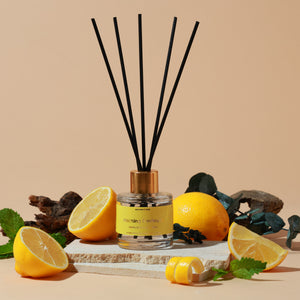
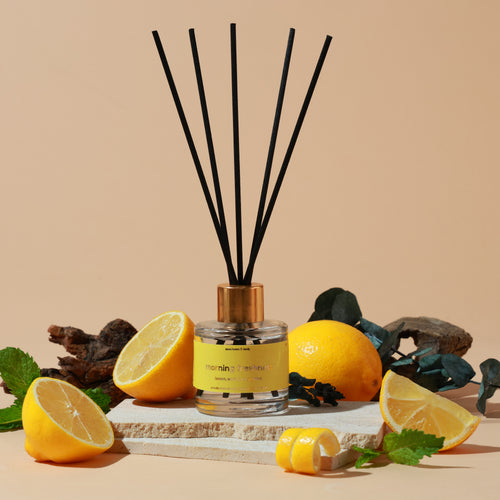
 Morning Freshness₹749This is the signature's strongest moment — no competing aroma, and a customer's attention genuinely available for it.
The dining floor versus the three signature zones
One row stays fixed regardless of branch size or ambition; the other three build the signature.
| Zone | Role | Signature scent here | Why |
| Dining floor and coffee counter | The product itself is served here | Never | Coffee aroma is already the signature this zone needs — nothing should be added to it |
| Tasting bar or cupping table, if one exists | Product assessment | Never | The same clean-air requirement as any specialty coffee floor in this cluster |
| Entrance, genuinely separated | First arrival moment | Yes — the signature's strongest zone | No competing aroma, and a real boundary from dining |
| Retail shelf selling beans, equipment or merchandise | Browsing, not eating | Yes | No served-food aroma to protect once genuinely separated from dining |
| Washrooms | The reliable third zone | Yes, at modest intensity | Consistently enclosed, consistently part of the overall brand impression |
| Any entrance or retail area that turns out not to be genuinely separated from dining — still sharing air with the coffee counter — drops out of the signature plan and joins the dining floor's never-scent row instead, whatever it was originally intended to be. | |||
Morning Freshness · washroom register₹749Shop →  Sukoon · larger washroom suite₹1,899Shop →
  Vaayu · entrance and retail shelf₹11,999Shop →
How to build the signature without it drifting
Never let the entrance register run strong enough to be detectable at the counter — if it drifts into the dining floor, it's no longer a separate signature, it's interference with the coffee, and the boundary has failed.
Sometimes the retail shelf and entrance can share one register for a stronger, more recognisable signature, provided both remain genuinely separated from dining and each is still scheduled to its own traffic pattern.
Usually, washrooms carry the same signature at a lower intensity than the entrance — the room is smaller and doesn't need to project as far, so a modest, correctly scaled dose is the entire job there.
The signature, costed
What it actually costs to build a complete, non-dining signature across the three zones that can genuinely carry one.
| Route | Premises | Why | What it costs |
| No fragrance at all | Dining floor, coffee counter, any tasting or cupping area | The coffee remains the signature here, uninterrupted | ₹0 |
| Vaayu, one unit, wall or HVAC mounted | Entrance, genuinely separated | The signature's strongest, cleanest moment, ahead of the counter | ₹11,999 |
| Vaayu, one unit, wall-mounted | Retail shelf selling beans, equipment or merchandise | A second stage for the same register, with no served-food aroma to compete against | ₹11,999 |
| Reed diffuser or Sukoon | Washroom block, sized to the actual room | The signature's third, most reliable zone, at a modest scale | ₹749–₹1,899 |
| Two Vaayu units combined | Entrance and retail shelf together | The complete signature-scent hardware plan for most branches at this shape | ₹23,998 |
Coffee chains come to me wanting what a hotel has — a scent people associate with the brand the moment they walk in. I understand the instinct completely, and I don't think it's wrong. What's wrong is where they usually assume it has to happen. A hotel lobby has no competing aroma of its own to protect; a café's dining room does, and it's the aroma the whole business is built around.
What I tell every chain in this position is that the signature doesn't disappear by staying out of the dining room — it just moves to where it can actually do its job. The entrance, the retail shelf and the washrooms are real zones, at real chain scale, and a customer moving through all three before reaching the counter absolutely does form an impression of the brand's scent, even though they never smelled it next to their coffee.
The chains I think get this right are the ones that stop treating the dining room's silence as a gap to fill and start treating it as part of the plan — the coffee owns that room, cleanly, and the brand's own register owns everywhere else. That's not a compromise. It's the complete signature, correctly placed.
Questions about building a chain signature around coffee
- Should Every Branch of a Premium Café Chain Smell the Same? — the consistency question this page's signature depends on.
- Should Café Chains Standardise Entrance and Washroom Fragrances? — standardising the two zones this signature is built from.
- How Do I Create a Scent SOP for a Premium Café Chain? — turning this signature into a documented, repeatable procedure.
- We're Building a National Premium Café Chain — Should We Scent Entrances and Non-Food Zones and Let Brewed Coffee Own the Dining Space? — this same answer, applied at national rollout scale.
- Brand: the SOSA founder story.
SOSA products & prices (verified September 2026): Reed diffusers 50ml ₹749–₹849 (to 150 sq ft, 6–8 weeks at six reeds) · 130ml ₹1,249–₹1,349 (above 150 sq ft, 14–18 weeks) · reed refill 300ml ₹2,399. Ultrasonic: Boond ₹899 (~150 sq ft) · Sukoon ₹1,899 (270–320 sq ft, ships with three 15ml Hotel Collection fragrances) · Megh ₹3,499 (6L tank, ~100 hrs runtime, ~215 sq ft — a runtime machine, not a coverage upgrade). Waterless cold-air: Safar ₹3,999 (no published coverage figure) · Vaayu ₹11,999 (up to 1000 m³, roughly 2,000–3,000 sq ft; 400ml tank lasting about 90+ days; app and onboard control, 1h/4h/8h/24h run windows, adjustable intensity, key-lock, under 38 dB, freestanding or wall/HVAC mount, 5W, CE/RoHS/SGS) · Aangan ₹25,999 (8,000–10,000 sq ft). Hotel Collection water-based fragrance 15ml ₹299 · 100ml ₹999 · 300ml ₹1,799 is for ultrasonic machines; reed oil and Hotel Collection are not interchangeable. Reed diffusers are alcohol-free, phthalate-free, paraben-free, IFRA-compliant and low VOC, handmade in small batches in Pune. Every purchase funds a girl's education through Nanhi Kali. Prices and availability subject to change — see the live product pages.