


2. Every zone gets an approved product and an intensity band, never a single fixed number chain-wide. The band lets a site's actual room decide the exact setting within limits the SOP has already approved, rather than forcing every washroom onto one number regardless of its airflow.
3. Run windows are set to trading hours, not left on a 24-hour default. A washroom needs coverage through opening hours; an entrance often needs less, tied specifically to arrival peaks — the SOP should name the window per zone type, not assume the widest one is safest.
4. The refill schedule and the monthly check are both dated, not left to memory. Vaayu's 400ml tank runs roughly 90-plus days; the SOP should log expected refill dates centrally and pair them with a monthly walk-through that confirms the unit is still running to spec.
5. A failed qualifying test has one answer: no hardware installed at that zone. The escalation route isn't a lower setting or a smaller machine — it's an explicit, logged decision to install nothing, revisited only if the site's physical layout later changes.
A scent SOP earns its name only when it can be followed exactly by someone who has never visited the site or met a perfumer — everything else is a mood board with a title.
Why most café SOPs fail in practice
Most scent documents that call themselves an SOP are actually a style guide — a description of the intended fragrance, a note about which areas should feel welcoming, and a photo of the flagship's entrance. None of that is wrong exactly, but none of it is usable by an operations manager standing in a new site with no scenting background, trying to decide whether this particular washroom qualifies for anything at all.
A working SOP replaces description with instruction. Instead of 'the entrance should be separated from dining', it says 'stand at the coffee counter with the unit running; if the fragrance is detectable, this zone fails and gets nothing.' That single change — test, not description — is what lets ten different people at ten different sites arrive at the same answer, which is the entire point of a standard operating procedure in the first place.
The other place most SOPs fail is silence about failure. A document that explains what to do when a zone qualifies, and says nothing about what to do when it doesn't, leaves that decision to whoever's on-site that day — which produces exactly the inconsistency a chain-wide document was meant to prevent. A genuinely usable SOP states the failure path as clearly as the success path: no hardware, logged, revisited only if the building changes.
The three hardest parts of the SOP to get right
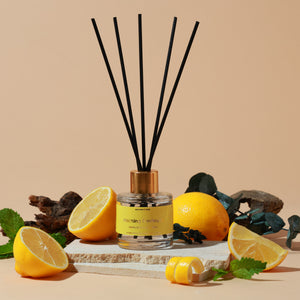
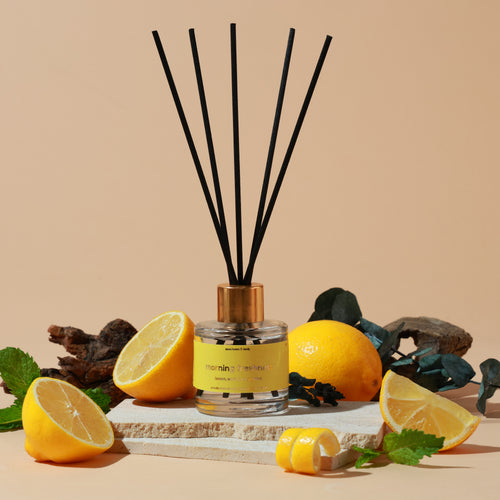
 Morning Freshness₹749Test the fragrance's detectability from the counter or the dining edge, not from inside the candidate zone itself — a positive result there fails the zone.
The SOP's five working sections
This is the structure worth adopting directly — five sections, in order, each one written as an instruction rather than a description.
| SOP section | What it defines | Checked how | |
| 1. Zone definitions | Entrance, washroom, retail vs dining, counter, bar, tasting or seating — named per site's own floor plan | Documented once per site, from an as-built plan, not a template | |
| 2. The qualifying test | Whether a defined zone has a genuine air boundary — tested at the counter or dining edge, not at the zone itself | Physical test, repeated if the site is renovated | |
| 3. Product and intensity band per zone type | Washrooms and entrances get an approved register and an intensity range, never dining or seating | Fixed in the SOP, calibrated within the band per site | |
| 4. Run windows and key-lock policy | Scheduling tied to trading hours, not left running 24 hours by default; settings locked once calibrated | Set at install, checked monthly | |
| 5. Refill schedule and monthly check | Tank life tracked against the ~90+ day cycle; a monthly walk-through confirms the unit is still running to spec | One accountable owner, logged centrally | |
| A site that fails the qualifying test at section 2 skips straight to no fragrance installed for that zone — the escalation route for a failed test is not a lower intensity, it's no hardware at that zone at all. | |||
Morning Freshness · washrooms that pass the test₹749Shop →  Sukoon · larger washroom suites₹1,899Shop →
  Vaayu · entrances, on a locked run window₹11,999Shop →
Run windows tied to trading hours
Never default every zone to Vaayu's 24-hour run window because it's the simplest line to write into the SOP — a washroom needs coverage through trading hours, not through the small hours when the café is shut and nobody's there to notice either way.
Sometimes an entrance needs a narrower window than a washroom — tied specifically to arrival peaks rather than the full trading day — because an arrival zone's job is done once the customer has passed through it, not sustained all day at the same intensity.
Usually, once run windows are set against a site's actual trading hours and locked with the key-lock, they need revisiting only twice a year, at a seasonal trading-hours change — not adjusted week to week by whoever's on shift.
What the SOP costs to run, per site
The SOP's ongoing running cost, once the hardware itself is installed and calibrated.
| Route | Premises | Why | What it costs |
| Writing the SOP itself | Head office, once, before rollout | A one-time documentation cost that every site then follows | No hardware cost |
| The qualifying test, repeated per site | Every candidate zone, at install and after any renovation | Confirms the zone still has a genuine air boundary | A site-visit cost, not a product cost |
| Vaayu, on a locked run window | Entrance or retail zones that pass the test | Scheduled to trading hours, key-locked once calibrated | ₹11,999 per unit |
| Reed diffuser or Sukoon | Washrooms that pass the test | Sized to the room, refilled on the SOP's own schedule | ₹749–₹1,899 per site |
| Monthly check and refill tracking | All qualifying zones, chain-wide | Confirms every unit is still running to the SOP, not drifting | A process cost, logged by one accountable owner |
The word 'SOP' gets used loosely in this industry, and I want to be precise about what I mean by it. It isn't a fragrance brief or a mood board — it's a document specific enough that someone who has never met me could pick it up, walk into an unfamiliar site, and make the same call I would about whether a given zone qualifies.
The chains I trust most to run this well are the ones who push back on vague language in their own draft SOPs before I ever see them. 'The entrance should feel inviting' gets rewritten as 'stand at the counter and note whether the fragrance is detectable.' That rewrite is most of the work — the fragrance choice afterward is comparatively simple.
What I care about most, reading a chain's SOP, is the failure path. A document that only describes what to do when a zone passes its test isn't finished. The sites that fail — and some always will — need an equally clear instruction: nothing installed, logged, and left alone until the building itself changes.
Questions about building a scent SOP
- How Do I Standardise Scenting Across 10 Café Locations? — the rollout this SOP is written to support.
- Should Café Chains Standardise Entrance and Washroom Fragrances? — the two zones this SOP mainly governs.
- What Should a Café Chain Ask a Commercial Scenting Company Before Installing Machines? — the questions worth resolving before this SOP goes live.
- Is Professional Scenting Worth the Cost for a Premium Café Chain? — the cost case this SOP is built to justify.
- Brand: the SOSA founder story.
SOSA products & prices (verified September 2026): Reed diffusers 50ml ₹749–₹849 (to 150 sq ft, 6–8 weeks at six reeds) · 130ml ₹1,249–₹1,349 (above 150 sq ft, 14–18 weeks) · reed refill 300ml ₹2,399. Ultrasonic: Boond ₹899 (~150 sq ft) · Sukoon ₹1,899 (270–320 sq ft, ships with three 15ml Hotel Collection fragrances) · Megh ₹3,499 (6L tank, ~100 hrs runtime, ~215 sq ft — a runtime machine, not a coverage upgrade). Waterless cold-air: Safar ₹3,999 (no published coverage figure) · Vaayu ₹11,999 (up to 1000 m³, roughly 2,000–3,000 sq ft; 400ml tank lasting about 90+ days; app and onboard control, 1h/4h/8h/24h run windows, adjustable intensity, key-lock, under 38 dB, freestanding or wall/HVAC mount, 5W, CE/RoHS/SGS) · Aangan ₹25,999 (8,000–10,000 sq ft). Hotel Collection water-based fragrance 15ml ₹299 · 100ml ₹999 · 300ml ₹1,799 is for ultrasonic machines; reed oil and Hotel Collection are not interchangeable. Reed diffusers are alcohol-free, phthalate-free, paraben-free, IFRA-compliant and low VOC, handmade in small batches in Pune. Every purchase funds a girl's education through Nanhi Kali. Prices and availability subject to change — see the live product pages.