


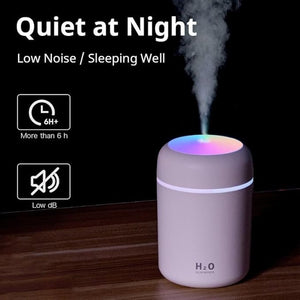
The rule: run the same scent as the adjoining bedroom, at half the dose.
How much? One drop on a Boond at ₹899, twenty minutes with the door open.
The mistake: giving the dressing area a signature of its own.
2. The intensity rule: lower than any other room. The defining property of a good hotel dressing area is how little it smells of anything. One drop, not three. If a guest can identify a fragrance in there, the effect you were copying has already been lost.
3. The continuity rule: match the bedroom. Run the same scent in the dressing area as in the bedroom it opens onto, at a lower dose. Two different fragrances in adjoining rooms produce a seam you cross every morning, and seams are the thing hotels are most careful to avoid.
4. The alternative: Westin-inspired White Tea Serenity. White tea, aloe and cedar. Cooler and softer, and the correct pick if the bedroom already runs it — continuity outranks which of the two you personally prefer.
5. What to avoid. A signature scent for the dressing area alone. Also anything loud: W Hotels-inspired Lobby Bar is a superb citrus-pepper-amber for a living room and completely wrong at close quarters in a room you spend ten minutes in while half-dressed.
Made in India, composed by an ISIPCA Versailles-trained perfumer — and a portion of every order supports girl-child education through Nanhi Kali.

What a hotel dressing area actually smells of, which is almost nothing
The hotel-scent business has trained everyone to think about lobbies, and lobbies deserve the attention — that is where the money is spent and where the signature is meant to register. But the room this article is about is a different proposition, and if you have stayed in good suites you already know it without having articulated it. Walk into the dressing area of a well-run suite and the honest inventory is: clean cotton, a little warm air off the lights, faint soap from the bathroom door, and a thin drift of the public scent that has followed you in from the corridor. That is the whole composition. Nobody has scented that room. It is downstream of a room that was scented, and the distance is what makes it feel expensive — because a space that smells faintly of somewhere else reads as part of a larger, coherent building rather than as a cubicle someone has sprayed.
Which produces two instructions that most home fragrance advice gets backwards. The first is intensity. Almost every failure I see in a domestic dressing area is a dose failure rather than a scent failure — the room is small, enclosed and usually windowless, so the same three drops that read as elegant in a bedroom read as a perfume counter here, and the effect immediately stops being hotel-like and starts being retail. The second is continuity. Hotels do not give a dressing area its own signature, and the reason is architectural rather than aesthetic: you are meant to move through the suite without noticing boundaries. Put one scent in your bedroom and a different one three metres away behind a door and you have installed a seam. You cross it twice a day, and every crossing reads very slightly as two rooms rather than one home. Run the same bottle in both, quieter in the smaller room, and the dressing area becomes what it is in a hotel — an extension rather than a separate address.
The three hotel routes, and how to choose between them
 Quiet LuxuryFrom ₹299White tea · bergamot · cedar. Of the seven, this is the one that sits most convincingly in the register of a hotel's shared spaces — bright without being citrus-led, structured by cedar so it does not evaporate into nothing, and entirely free of anything that could be described as a mood. That neutrality is the point. A public scent has to work for several hundred people who did not choose it, which is exactly the discipline you want in a room where a trace will end up on your clothes. At one drop in a dressing area it behaves like drift rather than like fragrance, and drift is the effect.
The hotel scent matrix
All seven are hotel-inspired, but they refer to different parts of a hotel, and a dressing area only has business with two or three of them. Read across to the room next door as much as to the room itself — the pack of seven 15ml at ₹1,799 settles it if you want to compare properly.
| Scent | Notes | Character | Best for |
|---|---|---|---|
|
The Ritz-Carlton-inspired ★ Quiet Luxury |
White tea · bergamot · cedar | The lobby and corridor register — bright, structured, deliberately neutral | A dressing area that should feel downstream of a scented suite |
|
Westin-inspired White Tea Serenity |
White tea · aloe · cedar | The spa-wing register — cool, watery, the lightest trace of all | Dressing areas that open onto a bathroom; the most literal "smells of nothing" |
|
The St. Regis-inspired Old-World Glamour |
Amber · violet · woods | The grand-hotel register — amber, violet and polished woods | Only if the bedroom runs it too. One drop, never two |
|
1 Hotels-inspired Forest Suite |
Cedarwood · vetiver · green leaves | The timber-and-glass register — dry cedar, vetiver, green leaves | A dressing area attached to a bedroom already running the same wood |
| Not in this family, for reference: Shangri-La-inspired Tea Garden is the tea-garden register and more of a statement than this room wants; Four Seasons-inspired Warm Welcome is the arrival-lounge welcome; W Hotels-inspired Lobby Bar is the bar at eight in the evening and the loudest of the seven. See all seven. | |||
Hotel Collection · the lobby pickFrom ₹299Shop →  Sukoon · the adjoining bedroom₹1,899Shop →
 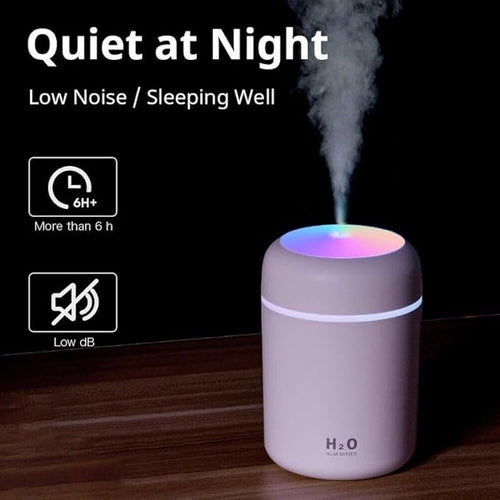 Boond · the dressing area₹899Shop →
One drop, and the continuity that matters more than the drop
The general guidance for the Hotel Collection is three to six drops per tank. A dressing area takes one — the lowest recommendation anywhere in this series, and it is deliberate. The room is the smallest enclosed volume in the house, it is frequently windowless, and nothing in it is designed to move air, so concentration builds instead of dispersing. But the deeper reason is that intensity is the thing you are copying. A hotel dressing area is characterised by its restraint; a version of it that announces itself has already stopped being the thing. If you find one drop imperceptible while standing at the machine, that is the correct result — judge it from the bedroom doorway ten minutes after switching off.
Continuity is the other half, and it costs nothing but a decision. Run the same fragrance in the dressing area as in the bedroom it opens onto, at roughly half the dose — three drops on a Sukoon in the bedroom, one drop on a Boond in the dressing area. What you are engineering is a gradient rather than a boundary: the smaller room reads as the quiet end of the larger one, exactly as a hotel corridor reads as the quiet end of a lobby. It also solves the fabric problem for free, since a trace on your shirt from a scent that already surrounds you at night is one you have effectively chosen twice.
The humidity caution applies here as everywhere in this room, and I would rather repeat it than assume it. An ultrasonic diffuser puts water vapour into the air along with the fragrance. In a small enclosed dressing area full of natural fibres that is a genuine risk, and in an Indian monsoon it is the risk — moisture plus still air plus densely hung wool, silk and leather is how mildew starts. Run it for twenty minutes with the door propped open while you get ready, switch it off before you close the room, never leave it misting inside a sealed wardrobe, and in a humid month keep it well away from leather. Housekeeping: rinse the tank between scents, use filtered water in hard-water cities, and never put raw essential oils into an ultrasonic — too viscous to atomise, and they will foul the plate.
Which diffuser belongs in a dressing area
This is a two-machine argument, and the smaller machine goes in the smaller room. Moving one diffuser between rooms defeats the point, which is that the two spaces should run at different intensities at the same time.
| Diffuser | Best for | Drops | Price |
|---|---|---|---|
|
Boond 300ml, USB, night light |
The dressing area itself — one drop, twenty minutes, door open | 1–2 drops | ₹899 |
|
Sukoon ★ 500ml, remote, mood light |
The bedroom it opens onto, running the same scent at a higher dose | 2 drops | ₹1,899 |
|
Megh 6 litre, large tank |
Not for an enclosed dressing area — a six-litre tank near hanging wool and leather is a moisture problem | 3 drops | ₹3,499 |
| Hotel Collection 15ml | Testing the pairing before you commit to a 100ml for two rooms | Many fills | ₹299 |
| Refills · 100ml & 300ml | The scent that won — one 100ml at ₹999 supplies both rooms for months | Months of use | from ₹999 |
Versailles
I spent a period of my training paying close attention to hotel scenting, and the thing that surprised me was how little of it happens where guests actually sleep and dress. The systems are in lobbies, lifts, corridors and spa entrances. The guest rooms are mostly left alone, and the dressing areas entirely so. What reaches them is residue — and residue, it turns out, is what people remember and describe as the smell of the hotel.
That inverted my thinking about the room at home. A dressing area does not need its own idea; it needs to be downstream of one. The whole trick is a gradient, and a gradient is easy and cheap to build with two machines and one bottle. The mistake I see constantly is people treating each room as a separate creative decision and ending up with a flat that feels like four small shops next to each other.
Buy the 15ml at ₹299 and try it in both rooms at two doses for a week before you buy anything larger. If the dressing area feels like the quiet end of the bedroom rather than a different place, you have it right. A portion of what you spend funds a girl's classroom through Nanhi Kali.
Frequently asked questions
- Best sophisticated fragrance for a luxury dressing room — choosing against the rail, not the room.
- Best fresh fragrance for a dressing room — the case for clothes that smell of nothing.
- Which fragrance family is best for a walk-in wardrobe? — fabric retention, family by family.
- Which Hotel Collection fragrance should you buy for a dressing room? — the full selector.
- Brand: the SOSA founder story.
SOSA products & prices (verified August 2026): Hotel Collection water-based ultrasonic diffuser fragrance 15ml ₹299 · 100ml ₹999 · 300ml ₹1,799 · Pack of 7 (15ml, all fragrances) ₹1,799; refills 100ml from ₹999. Seven scents: The Ritz-Carlton-inspired (white tea · bergamot · cedar), Westin-inspired (white tea · aloe · cedar), 1 Hotels-inspired (cedarwood · vetiver · green leaves), The St. Regis-inspired (amber · violet · woods), Shangri-La-inspired (jasmine · green tea · white tea), Four Seasons-inspired (citrus · floral · sandalwood), W Hotels-inspired (citrus · pepper · amber). Diffusers: Boond 300ml ₹899 · Sukoon 500ml ₹1,899 · Megh 6L ₹3,499. Water-based, phthalate-free, composed to IFRA standards for home diffusion; 3–6 drops per tank. Made in India, Pune. The Hotel Collection scents are SOSA's own interpretations inspired by the world's finest hotels; all hotel names are trademarks of their respective owners and are used only to describe the scent style — SOSA is an independent Indian fragrance house, not affiliated with or endorsed by any hotel brand. Prices and availability subject to change — see the live product pages.