
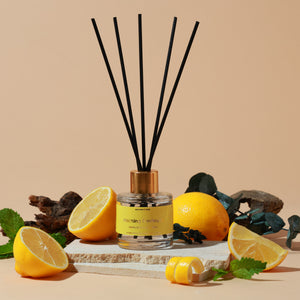
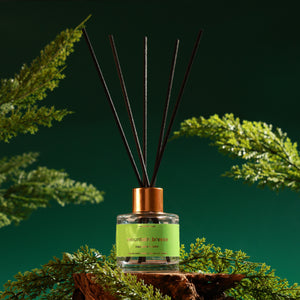


Under about 150 sq ft, one reed diffuser is the sized answer. ₹749–₹1,349, run at two or three of the six reeds supplied, standing at the far end of the zone from the corridor.
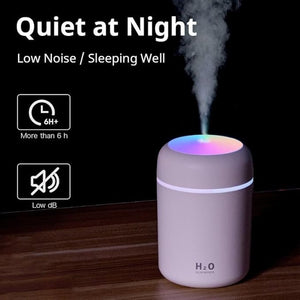
Choose a Sukoon ₹1,899 instead if you want control rather than reach. Rated 270–320 sq ft, so it has headroom at this size and must be run low — but it gives you a remote, 2H and 4H timers and an instant off, none of which a bottle has.
A Vaayu is oversized here and a Megh is not an upgrade. Megh ₹3,499 covers about 215 sq ft, which is less than a Sukoon's 270–320; it is a runtime and humidity machine, never a coverage upgrade.
2. Measure it, do not estimate it. Two dimensions and a multiplication. In a 300–400 sq ft practice the answer almost always lands between 100 and 160 sq ft, which is a fifth to a half of the number you were about to buy against.
3. Do not count the corridor. The corridor to consultation is not extra waiting-room area you get to scent; it is the path into the clinical pathway, and it is the one part of the plan where fragrance most easily ends up where it should not be. Subtract it, and then place your source at the other end of the zone from it.
4. Under about 150 sq ft, one reed diffuser is the sized product. ₹749–₹1,349 for a 50ml or 130ml, run at two or three of the six reeds supplied rather than all six. One source, not two — two bottles in a small room double the output rather than spreading it.
5. Choose a Sukoon at ₹1,899 instead if what you want is control. It is rated 270–320 sq ft, so at this size it is running with headroom and must be dosed light and kept on its lowest mode. What you are paying for is the remote, the 2H and 4H timers and an instant off from the desk.
6. A Vaayu at ₹11,999 is the wrong machine for this building. It is rated up to 1000 m³, roughly 2,000–3,000 sq ft; against a 150 sq ft zone that is 2,000 ÷ 150 ≈ 13 times more than you need. It has real clinic merits — under 38 dB, key-lock, scheduled run windows — but they belong to a much larger arrival zone. And it must never be mounted into shared HVAC in a clinical building, because that is precisely how fragrance reaches the rooms it must not reach.
7. Megh at ₹3,499 is not a step up. It covers about 215 sq ft, less than a Sukoon's 270–320. It is a 6-litre runtime and humidity machine at roughly 100 hours a fill, and it is never a coverage upgrade.
8. Keep a seat the fragrance does not reach, and keep the level low. Some people are sensitive to airborne fragrance, and a practice that scents its reception should be able to seat somebody away from it without making a performance of it. Nothing on this page is medical, clinical, ventilation or regulatory advice, and no product or setting is described as safe or unsafe for anybody. Composed and made in small batches in Pune, and a portion of every order supports girl-child education through Nanhi Kali.
Part one — the subtraction nobody does
This family of pages exists because of one recurring error, and it is worth naming precisely before anything else. Practices size fragrance to the building they lease rather than to the room they are actually scenting, and every supplier they speak to is happy to let them, because the larger number sells the larger machine. Three consequences follow.
 Boond 300ml₹899 · ~150 sq ftIn a 300–400 sq ft plan the corridor is often only three or four metres long, and because it is small it gets counted as part of the waiting area. It is not. It is the path every patient takes into diagnostics and consultation, which means anything you put into it goes with them — and the entire argument for scenting the front of an eye clinic rests on the clinical pathway staying fragrance-free. Two practical consequences at this size. First, subtract the corridor from your square footage even though it feels like cheating. Second, place your source at the opposite end of the arrival zone from the corridor mouth, which in a small room may mean the far side of the seating rather than the reception counter everybody instinctively chooses. If the counter is beside the corridor — and in compact plans it usually is — then the counter is the worst position in the room, however convenient it looks. Where the doors are held open by workflow, treat the boundary as weaker still and drop the level rather than moving the source closer.
Part two — a 350 sq ft plan, room by room
A representative single-doctor eye clinic, drawn at 350 sq ft, with what each room does to the sizing sum. The figures are illustrative and your plan will differ, but the shape almost never does: two-thirds of the floor leaves the sum before you choose anything.
| Room | Typical area | Hospitality or clinical | Scented? | Contribution to the sizing sum |
|---|---|---|---|---|
| Reception desk and waiting seating ★ | 100–160 sq ft | Hospitality | Yes, at a low level, one source | All of it — and this is the only room that contributes anything |
| Consultation cabin | 100–120 sq ft | Clinical | No | Zero |
| Refraction lane or diagnostics room | 80–100 sq ft | Clinical | No | Zero |
| Corridor from waiting to consultation | 20–35 sq ft | Clinical pathway, not waiting area | No — and the source goes at the far end from its mouth | Zero, and it sets your placement |
| Optical or spectacle display, where one exists | 25–50 sq ft | Retail, if the air does not carry into the corridor | Only if it is genuinely on the reception side of the plan | Add it only if it opens off the waiting area rather than off the corridor |
| Toilet | 15–25 sq ft | Service | No — this is an extract-fan question, not a fragrance one | Zero |
| Records store and staff corner | 15–30 sq ft | Service | No | Zero |
| The honest caveat: on these figures a 350 sq ft clinic sizes as 350 − 110 − 90 − 25 − 25 = 100 sq ft of arrival zone, or about 29% of the floor. Examination rooms, diagnostics, consultation cabins, the procedure suite and any post-operative area take nothing in any format at any level, and that boundary is the practice's own clinical judgement rather than a supplier's recommendation. Nothing on this page is medical, clinical, ventilation, infection-control or regulatory advice. No claim is made in either direction about how any patient or member of staff perceives, tolerates or responds to fragrance, and no SOSA product or setting is described as safe, unsafe or suitable for any group. Some people are sensitive to airborne fragrance, which is exactly why the clinical pathway stays fragrance-free and why a fragrance-free seat must genuinely exist somewhere a person would ordinarily sit. A diffuser adds a scent alongside what is already in the air; it does not clean, purify, filter, neutralise or freshen it, and it removes nothing. | ||||
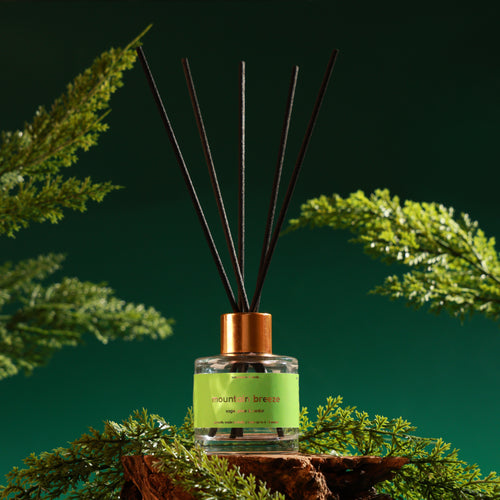
Mountain Breeze · two or three reeds₹849Shop → 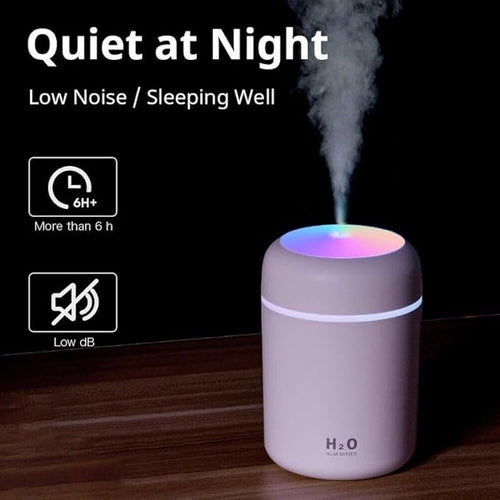 Boond · ~150 sq ft, ends by itself₹899Shop →
  Sukoon · remote, 2H and 4H timers₹1,899Shop →
Part three — when a clinic this size should not do this at all
There are three configurations at 300–400 sq ft where I would tell a practice to spend nothing, and they are common enough to belong in the body of the page rather than in a footnote. The first is a small arrival zone that is sealed and under-ventilated. If your waiting area is under about 150 sq ft, air-conditioned on a split unit, with the front door as the only real opening and no window that is ever used, then anything you add accumulates rather than dissipating — a continuous source in a room with no exchange gets heavier through the day rather than staying where you set it. The honest sequence there is to get air moving first, live with it for a fortnight, and then decide. That order costs nothing and it protects you from setting a level against the wrong baseline. There is a whole family of pages on that question, and several of them end at "buy nothing".
The second is a caseload consideration rather than a building one. A practice whose waiting room regularly holds a paediatric list, or one with a large elderly caseload, or one where a substantial part of the book is post-operative review, has more reason than most to leave the arrival zone unscented — not because of any claim I am making about how anybody responds to fragrance, which is not mine to make, but because the room is harder to design for and the gain is small. And a compact clinic often has nowhere to put a fragrance-free seat. That test is worth applying literally: is there a chair, somewhere a person would ordinarily sit, far enough from the source that the difference is real, reachable without crossing the room or being singled out? In a 120 sq ft waiting area the answer is frequently no, because the room is one air volume and four feet is not meaningfully different from eight. If you cannot produce that seat, you do not yet have a design.
The third is simply that the room may not need it. A small, well-kept, well-lit reception with hard flooring, clear surfaces and a queue that moves already reads as considered, and adding a scent to it buys very little. The target in a clinic is considered, never scented: a practice is judged on competence, and any ambience signal that competes with that one is working against you. The correct intensity in a clinic is lower than in a salon, a showroom or a hotel lobby — a patient should be able to notice the room is pleasant without being able to name a fragrance, and if they can name it, it is too strong. At this size that usually means two reeds rather than three, and one source rather than two. Ask the person who sits at your desk for eight hours before you ask anybody else; they are the only person in the building with continuous exposure, and if they would rather have nothing, that is a complete answer.
Part four — every option against a 100–160 sq ft zone
Eight options, their published coverage, how that compares with the zone you actually have, and what you would genuinely be buying. The fourth column is where the sizing correction becomes a number.
| Option | Price | Published coverage | Fit against your zone | What you would actually be buying |
|---|---|---|---|---|
| One 50ml reed diffuser at two or three of six reeds ★ | ₹749–₹849 | A fragrant zone, not a room — no square-foot figure is published | Correct. In a room this size the fragrant zone is most of the room | The sized answer. Cheapest to start, nothing to install, no schedule and no off switch |
| One 130ml reed diffuser | ₹1,249–₹1,349 | Identical at the same reed count | Same reach, longer life: 14–18 weeks against 6–8 | A reorder interval, not a bigger room. Size buys duration, never reach |
| Two bottles at opposite ends | ₹1,498–₹1,598 as a duo set | Two fragrant zones | More than this room needs unless it is L-shaped with a blind corner | Double the output. In one open 120 sq ft room this is how a clinic becomes noticeable |
| Boond ₹899 | ₹899, plus a 15ml Hotel Collection at ₹299 = ₹1,198 | ~150 sq ft, ~6 hrs a fill | The closest published figure to this zone in the whole range | Dosing by drops and a machine that ends by itself. No remote. Adds humidity |
| Sukoon ₹1,899 | ₹1,899, three 15ml scents in the box | 270–320 sq ft, 16–18 hrs on low | Headroom of roughly double — so run it low and dose it light | A remote, 2H and 4H timers and an instant off from the desk. Adds humidity |
| Megh ₹3,499 | ₹3,499 | ~215 sq ft, 6L, ~100 hrs runtime | Covers less than a Sukoon costing ₹1,600 less | Runtime and humidity, never coverage. Not an upgrade at any clinic size |
| Safar ₹3,999 | ₹3,999 | No published coverage figure at all | Personal scale — 20ml, 6.9cm, cordless, waterless | A cordless personal-scale object, not a room product. I would not size a reception with it |
| Vaayu ₹11,999 | ₹11,999, 400ml of oil in the box | Up to 1000 m³ ≈ 2,000–3,000 sq ft | 2,000 ÷ 150 ≈ 13 times the zone. Oversized here by any measure | Under 38 dB, key-lock and scheduled run windows — genuine clinic features that belong to a 320–800 sq ft reception, not this one |
Versailles
An ophthalmologist in a single-doctor practice wrote to ask which machine suited "a 340 square foot clinic". He had a quotation from somebody else for a unit rated in the thousands of square feet, and he wanted a second opinion on the price rather than on the specification. The specification was the problem.
I asked him for one number instead: the waiting area on its own, measured rather than estimated. He sent it back the next morning — 14 feet by 9, so 126 square feet, with the reception counter inside that and the corridor to his consultation room opening off the near corner. That is not a machine problem. It is one bottle at the far end of the seating, three reeds, and about nine hundred rupees.
He bought a 50ml Mountain Breeze and moved it twice in the first fortnight — first off the counter, because the counter was beside the corridor, and then a little further along the wall away from the door swing. A year on he has replaced the oil twice and never thought about it again, which is exactly the outcome I want in a clinic: a decision made once, at the right size, that then disappears. The quotation he did not accept would have bought him thirteen times the machine and a corridor problem to go with it. Composed and made in small batches in Pune, and a part of every order funds a girl's classroom through Nanhi Kali.
Frequently asked questions
- The best setup for a 500 sq ft ophthalmologist's clinic — where the Sukoon becomes the sized product.
- A 750 sq ft clinic with separate testing areas — why more rooms is a reason not to scale up.
- What makes sense at 1,000 sq ft and when a clinic genuinely needs a Vaayu.
- Why a reed diffuser is noticeable at reception and nowhere else — the fragrant zone, explained.
- Brand: the SOSA founder story.
SOSA range, specifications and prices used in this guide (verified August 2026): Vaayu ₹11,999 — waterless cold-air nebulisation of undiluted fragrance oil; no water, no heat, no added humidity, no white mineral dust. Coverage up to 1000 m³, about 2,000–3,000 sq ft. 400ml refillable tank lasting roughly 90+ days at a mid setting. Bluetooth app plus onboard controls, 1h / 4h / 8h / 24h run windows, day selection, adjustable intensity, auto-stop and key-lock. Under 38 dB. DC 12V / 1A, 5W. Freestanding or wall / HVAC mount. CE, RoHS and SGS certified. SOSA does not currently sell a separate Vaayu cold-air refill oil; the 400ml supplied in the box is the fragrance available at the time of writing, so a practice planning continuous or multi-site use should confirm current refill availability with SOSA before committing. The water-based Hotel Collection is made for ultrasonic machines and must not be used in a Vaayu. Other machines: Boond 300ml ₹899 (~150 sq ft, ultrasonic) · Sukoon 500ml ₹1,899 (270–320 sq ft, 16–18 hours on low, remote and steady/2H/4H timers, three 15ml fragrances included, ultrasonic) · Megh 6L ₹3,499 (~215 sq ft — a runtime and humidity machine that covers less than a Sukoon, never a coverage upgrade) · Safar ₹3,999 (waterless cold diffusion, cordless, 20ml, about 6.9cm, three speeds, 1/2/3-hour auto-off — sold as a car and travel diffuser, personal-scale only; SOSA publishes no coverage figure for it) · Aangan ₹25,999 (HVAC nebulising, ~8,000–10,000 sq ft) · Meenar ₹38,500 (commercial HVAC, 12,000–18,000 sq ft). Water-based Hotel Collection for ultrasonic machines: 15ml ₹299 · 100ml ₹999 · 300ml ₹1,799 · pack of seven ₹1,799; scents are inspired by the atmosphere of well-known hotels — SOSA is an independent Indian brand and is not affiliated with, endorsed by or supplying any hotel group. Reed diffusers ₹749–₹1,349 (50ml 6–8 weeks, 130ml 14–18 weeks, six fibre reeds, no 100ml size; replacement reeds are not sold separately). Reed oil cannot be used in an ultrasonic machine and Hotel Collection oil cannot be used in reeds. SOSA sells no room spray or home spray — every SOSA spray is a car perfume. Nothing in this guide is medical, clinical or safety advice. A fragrance diffuser adds a scent to the air. It does not clean, purify, filter, sanitise or disinfect air, does not remove or neutralise disinfectant, damp or occupancy smells, and has no effect on comfort, anxiety, waiting time, recovery or any clinical outcome. Some people are sensitive to airborne fragrance, which is why this guide recommends that examination rooms, diagnostic areas, consultation cabins, procedure suites and post-operative areas remain fragrance-free, that a fragrance-free seating option always exist, and that a diffuser is never mounted into shared HVAC in a clinical building. Decisions about clinical policy, ventilation standards, infection control and patient suitability rest entirely with the practice and its clinicians. A persistent stale, damp or disinfectant smell is a ventilation, moisture or cleaning problem — SOSA sells no dehumidifier and no air purifier, and fragrance should never be used to cover one. Coverage, runtime and longevity figures are manufacturer specifications and typical ranges, not guarantees, and vary with room volume, ceiling height, air exchange, occupancy and season. SOSA publishes no commercial or bulk pricing, no corporate account, no annual maintenance contract, no installation service, no stated warranty term and no multi-location programme; warranty length, spare parts, servicing and app platform availability are unconfirmed, and larger or multi-site enquiries should go through the contact page before any commitment. Composed and made in small batches in Pune, India. Free shipping above ₹499. A portion of every order supports girl-child education through Nanhi Kali. Prices subject to change — see the live product pages.