



The order of work: fix the laundry chain first — machine, drying, nothing put away damp — then dry and air the cupboard, then reduce the density on the rail, then keep a weekly habit.
Nine places to look: the cupboard interior, the back panel against an external wall, the clothes themselves, the washing machine, the drying method, stored garments, towels, shoes at the bottom, and mothballs.
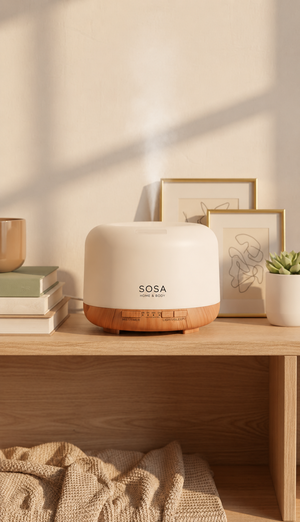
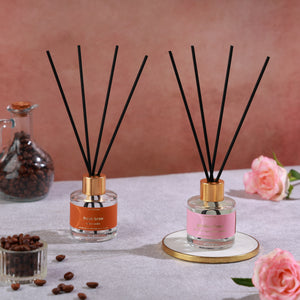
Then fragrance, fifth and outside: a reed on the dresser from ₹749, or a diffuser in the room from ₹899. Never inside the doors.
2. Then dry and air the box itself. Both doors fully open for an hour on a dry day, weekly, with the bedroom window open and a fan pointed into the opening for twenty minutes of it. That is the only step that exchanges the cupboard's air, and no air exchange is the property that caused all of this.
3. Then reduce the density. Take out what you do not wear until there is a hand's width of visible gap along the rail, and pull the unit two or three inches clear of the wall behind it, particularly if that wall is external or backs onto a bathroom.
4. Then keep a weekly habit, because this is a maintenance problem rather than a project. An hour of open doors, a look at the floor of the cupboard, and one absolute rule: nothing goes in that is not dry and cold to the back of the hand.
5. Only then, fragrance — and outside the doors. A reed on the dresser beside the wardrobe from ₹749, or a diffuser in the bedroom from ₹899. Anything with an open oil base inside a cupboard saturates it and lands on every garment, and fine natural fibres hold it longest.
A portion of every order supports girl-child education through Nanhi Kali.
Part one — a sealed micro-room, restocked weekly
Nine articles come before this one and between them they cover every cause I have ever found in this category. What they have in common is a single structural fact: a wardrobe is not a piece of furniture with a smell in it, it is a small room with the two properties that make any room smell — a very high ratio of fabric to air, and almost no exchange between its air and anybody else's. Add the second fact, which is the one this pillar exists to insist on, and the whole thing becomes tractable: that little room is restocked every week from a process happening in a different part of the flat, and if the process is wrong the room cannot be right.
Part two — the nine sources, and the symptom for each
This is the centre of the guide. Nine places a wardrobe smell actually comes from, each with the symptom that identifies it and the fix that deals with it, arranged so you can work down the column on the left with the cupboard doors open. Most households find two or three of these rather than one. Every fix is free except two, and neither of the two is a SOSA product.
| Source | The symptom that identifies it | What is happening | The fix | Cost |
|---|---|---|---|---|
| The washing machine ★ | The empty drum smells twelve hours after a load; the note is on every garment equally rather than on some | Cold cycles leave a film in the bellows fold, the drawer cavity and the sump, and every rinse passes over it on the way out | Gasket fold wiped dry after each wash, door and drawer left open, drawer scrubbed monthly, an empty hot cycle monthly, drain filter opened quarterly | ₹0 |
| The drying method | Worst in monsoon, strongest in thick seams and towels, and absent on anything dried outdoors | A garment at 85% RH in a closed room stays wet for hours rather than drying, and organisms establish on the fibre while it hangs | Highest spin the fabric allows, garments spaced apart, a fan on the airer rather than a window onto rain, and out of the drum within the hour | ₹0 |
| Clothes put away damp | One or two items smell far worse than the rest, often at the collar or the waistband, and the cupboard worsened suddenly | A slightly warm garment finishes drying inside a sealed box, raising the humidity of the whole enclosure and feeding what is in there | Nothing goes in unless it is dry and cold to the back of the hand. This single rule prevents more relapses than any other | ₹0 |
| The cupboard interior | A flat, closed, faintly dusty note that clears within minutes of opening both doors and returns within a day | Under a cubic metre of air, exchanged for about thirty seconds a day, with hundreds of square metres of fabric standing in it | Both doors fully open for an hour on a dry day weekly, bedroom window open, a fan pointed into the opening for twenty minutes | ₹0 |
| The back panel and the wall | Musty rather than stale; strongest at the back of the cupboard and low down; worse if the wall is external or backs onto a bathroom | The thin rear panel pressed against the coldest surface in the room reaches dew point first, and condensation collects where no air moves | Pull the unit two or three inches clear of the wall so air can pass behind it, and check the wall itself for damp | ₹0 |
| Stored and packed garments | A distinctly different smell from the rest — of the box rather than of dirt — noticed only when something is taken out after months | A sealed container reaches equilibrium with whatever is inside it, and sebum and residues oxidise slowly over a season | Wash before storing rather than after; store in cotton rather than sealed plastic; a day on a hanger in moving air before wearing | ₹0 |
| Towels in the cupboard | Sour rather than stale, and it switches on the moment the towel is wet | Bacteria in the pile are dormant while dry and active within seconds of rewetting; conditioner film slows the drying that would prevent it | 60°C, no fabric conditioner, one strip wash with vinegar or soda, and hung fully spread out rather than folded | ₹0 |
| Shoes at the bottom | Strongest low down and near the floor of the unit, and worse in the evening or after rain | Warm damp leather and lining in the least ventilated part of an unventilated box, directly under everything that hangs | Shoes out of the wardrobe entirely, or at minimum aired for a day before they go back. Never put away worn the same day | ₹0 |
| Mothballs, past or present | Unmistakable, and it persists for months after the last ball has gone | Naphthalene sublimes from solid to vapour, saturates the enclosure and is absorbed into the timber, the lining paper and every garment | Every ball and residue out, cupboard emptied, garments washed or aired, interior wiped and relined, doors open for days. It takes weeks | ₹0 |
| If it is musty rather than stale: a desiccant | Earthy and sharper, and still there after an hour with the doors open | Above about 60% relative humidity things grow; monsoon indoor RH runs 80–95% | Silica gel recharged in the sun, or a calcium-chloride absorber tub. SOSA makes neither of them | ₹100–₹400 |


Part three — the order of work, and why the order matters
Step one is the laundry chain, and it comes first for a reason that is arithmetic rather than principle: a wardrobe is refilled weekly, so any fault upstream of it is reinstalled faster than you can clear it. Start with the machine. Smell the empty drum twelve hours after a load and peel back the rubber bellows fold at the bottom of the door; if either is wrong, the appliance is the source and no amount of rewashing changes that. The reset is a monthly empty cycle at the highest temperature the machine offers with washing soda or a machine cleaner, a detergent drawer taken out and scrubbed along with the roof of its cavity, and the drain filter behind the hatch at the bottom front opened over a tray. The upkeep is three habits that cost nothing: wipe the gasket fold dry after the last wash, leave the door and the drawer standing open, and take the load out within the hour. Then the dose and the load: measure with the cap at the lower line rather than pouring, fill the drum to about two-thirds, and use no fabric conditioner on towels at all. Then the drying, which decides the outcome for four months of the year: the highest spin the fabric allows, garments spaced with air on both faces rather than doubled over a line, a pedestal fan on the airer indoors in monsoon rather than a window opened onto rain. And then the rule that closes the chain: nothing goes into the cupboard unless it is dry and cold to the back of the hand. Not warm off an airer, not damp at the seams, not shoes worn that day. If you do nothing else on this page, do that one, because a single garment put away slightly damp raises the humidity of a sealed box and sets the level for everything in it.
Steps two and three are the cupboard itself, and they are an hour of work followed by ten minutes a week. Step two is air. Both doors fully open for an hour on a dry day, once a week, with the bedroom window open at the same time and a fan pointed into the opening for twenty minutes of that hour. One opening is ventilation and two is exchange, and the fan matters more than the hour does, because absorbed material leaves fabric into moving air far faster than into still air. In monsoon, do it during the driest hours rather than into a wet afternoon, and if the note is musty rather than stale — earthy, and still present after an hour of open doors — stop ventilating and buy a desiccant instead, because you are dealing with water rather than with airflow. Step three is density, and it is the one people skip because it involves decisions about clothes rather than about cleaning. Take out what you do not wear until there is a hand's width of visible gap along the rail; garments compressed against one another have no air between them and cannot dry, exchange or recover from anything. Pull the unit two or three inches clear of the wall behind it, especially where that wall is external or shares a face with a bathroom, so the thin rear panel is not the coldest surface in the room. Take the shoes out. Bin the lining paper if it has been down for years and put down fresh. Step four is simply keeping it up: an hour of open doors a week, a look at the floor of the cupboard, and the damp rule applied without exceptions. This is a maintenance problem rather than a project, and the households that never have this trouble are not the ones that did a deep clean — they are the ones with a Sunday habit.
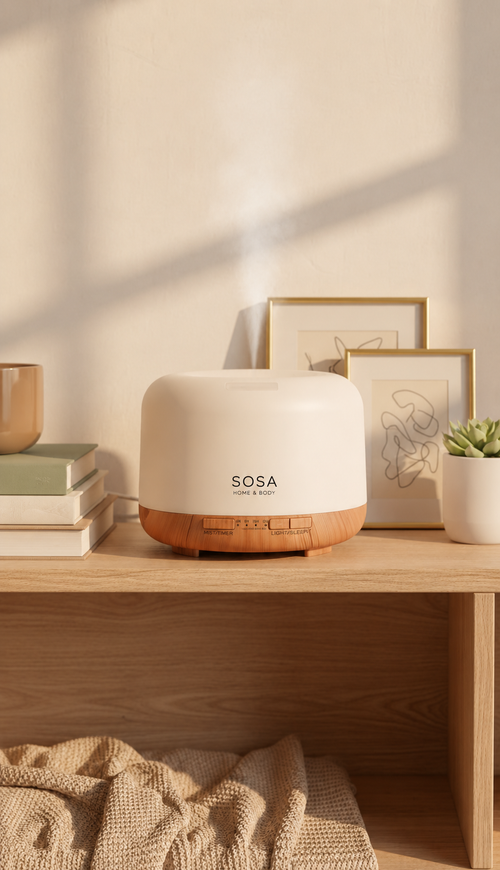
Step five, and only step five, is fragrance. It goes outside the doors, and the reason is worth stating once and clearly: an enclosure with no air exchange does not disperse what you put into it, it concentrates it, and from saturated air fragrance materials partition into fabric. Every garment you own is then carrying a scent you chose for a room, composed against twenty-five cubic metres of exchanging air and judged from across that room, now being smelled from eight inches by everybody you stand near — and by you, underneath whatever perfume you have chosen deliberately. Fine natural fibres take up the most and release the most slowly, and a great many of them cannot be washed. So the bottle goes on the chest of drawers, the dresser or the shelf beside the wardrobe, at waist height or above. From there it scents the room the cupboard opens into, which means the pulse of air that leaves when you open the door arrives into scented rather than dead air — which is the actual experience people were trying to buy in the first place. For that corner I would use an alcohol-free reed diffuser: no socket, no switching on, one level held for months, and 24 to 72 hours to establish before it is worth judging. Morning Freshness at ₹749 is Malabar lemon, peppermint and eucalyptus and reads as air and clean laundry; Mountain Breeze at ₹849 is Himalayan pine, sage and cedar for a drier, more resinous corner; Evening Calm at ₹799 is lavender and chamomile for the far side of the room. All are 130ml from ₹1,249 with 300ml refills at ₹2,399. To scent the whole bedroom instead, a Boond at ₹899 or a Sukoon at ₹1,899 runs the water-based Hotel Collection at three to six drops per tank — the dose is per tank rather than per litre, since you are scenting the mist and not the water — reaching a steady level in about twenty minutes, with three 15ml scents of your choice included with the Sukoon and a Megh at ₹3,499 for a very large room. Keep the machine at waist height or above, out of the path of a fan or a vent, and well clear of open wardrobe doors, because a cool mist falls rather than rises. In a damp month leave it off and burn a Bookshop candle at ₹379, which puts scent into a room in fifteen to twenty minutes and must be attended and put out. Two constraints and a principle to close on: the Hotel Collection is water-based and runs in ultrasonic machines only, never in a reed and never in the waterless Vaayu; reed oil is undiluted and clogs a 2.4MHz misting plate, so the two lines do not cross in either direction; and you will stop being able to smell your own bedroom within a fortnight, which is ordinary adaptation and is answered by one honest guest rather than by more drops. Fragrance is the finish on air that is already clean and moving. On this page it is step five of five, and the first four are free.
Part four — the complete edit, and where fragrance sits
The whole group in one table, in the order I would actually work through it. Steps one to four are free and they are the ones that remove the smell; step five is the only row with a SOSA product in it and it is a finish rather than a fix — which is the honest shape of this category and the reason the last row prints what does not exist.
| Step | What it is | Why it is in this position | Cost |
|---|---|---|---|
| 1. The laundry chain ★ | Machine reset and three daily habits, measured detergent, a two-thirds load, the highest spin, spaced drying, and nothing put away damp | First, always. A wardrobe is restocked weekly, so a fault upstream of it is reinstalled faster than you can clear it | ₹0 |
| 2. Air the cupboard | Both doors fully open for an hour on a dry day, weekly, bedroom window open, a fan into the opening for twenty minutes of it | It is the only step that exchanges the cupboard's air, and no exchange is the structural property behind the whole problem | ₹0 |
| 3. Reduce the density and free the back | A hand's width of visible gap on the rail, the unit two or three inches off the wall, shoes out, old lining paper binned and replaced | Compressed garments have no air between them; the rear panel against a cold external wall is where condensation forms | ₹0–₹200 |
| 4. Keep it weekly | An hour of open doors, a look at the floor of the cupboard, and one absolute rule: nothing goes in that is not dry and cold to the back of the hand | This is a maintenance problem rather than a project. The homes that never have it are the ones with a Sunday habit, not the ones that deep-cleaned | ₹0 |
| A desiccant, if it is musty rather than stale | Silica gel recharged in two hours of sun, or a calcium-chloride absorber tub. SOSA makes neither | Musty is a water problem. Above about 60% RH things grow, and monsoon indoor humidity runs 80–95% | ₹100–₹400 |
| 5. A reed on the dresser beside it ★ | Morning Freshness at ₹749, Mountain Breeze at ₹849 or Evening Calm at ₹799, at waist height or above, outside the doors. 24 to 72 hours to establish | Fifth, and outside. The pulse of air leaving the cupboard then arrives into scented air, and no garment is scented at all | from ₹749 |
| 5b. Boond, Sukoon or a candle | 300ml or 500ml ultrasonic running the Hotel Collection at three to six drops per tank, or the Bookshop candle at ₹379 for 15 to 20 minutes | If you would rather scent the bedroom on a schedule. In a damp month use the candle or the reed — a cool mist adds 30–50 ml of water an hour | ₹379 / ₹899 / ₹1,899 |
| Never: anything scented inside the cupboard | No reed, no open bottle, no oil-soaked sachet, no perfume on cotton wool, and no fresh set of mothballs | An enclosure concentrates rather than disperses, and fine natural fibres hold oily materials longest and cannot usually be washed | — |
Versailles
Of all the smells people write to me about, this is the one where the advice on the internet is furthest from the advice that works, and the gap is almost entirely about sequence. Nearly everything published on wardrobe smells treats the cupboard as a container to be treated. It is not a container. It is the last stop on a weekly production line that starts at a washing machine. I have watched people empty a wardrobe, wipe it, air it for a weekend and refill it with clothes from a drum that has been growing something for four years, and then conclude in March that wardrobes simply smell. They do not. That one did, because it was being reloaded every Sunday.
So the order is the whole of my advice, and the first four steps of it are free. Machine, drying, nothing put away damp, then an hour of open doors a week, then space on the rail — and only then a bottle. When you get to the bottle, put it on the dresser rather than the shelf. I have said this in five different articles now and I will say it once more here, because it is the piece of advice I am surest of: a scent inside a wardrobe is not a decision about your house, it is a decision about your body, and it is one you will have made by accident on a Sunday afternoon. Eighteen inches to the left, on the chest of drawers, and everything you liked about the idea survives while nothing you would have regretted does. Morning Freshness at ₹749 is what I would use there, and the four steps before it are what I would actually spend my weekend on.
Everything is made and supported from Pune, and a part of every order funds girl-child education through Nanhi Kali. You get a home that smells like somewhere you chose; a girl gets a classroom. That equation has always felt right to me.
Frequently asked questions
- Why the area around your wardrobe smells stale, why the cupboard turns musty in monsoon and why stored clothes come out smelling of the box — the three structural causes.
- Clothes that smell odd after washing, the washing machine as the source and towels that smell sour when they get wet — the laundry chain that refills the cupboard every week.
- Naphthalene, and how long it really takes to clear — the smell most people inherited rather than chose.
- Whether a reed diffuser belongs inside a wardrobe and how to make a wardrobe smell good without perfuming your clothes — the refusal, and the constructive version of it.
- Brand: the SOSA founder story.
Facts verified August 2026: Diagnostic facts used in this guide: a closed room accumulates what it cannot exchange, so cross-ventilation needs two openings rather than one; a drain's U-bend water seal evaporates in roughly two to four weeks of disuse and then admits sewer gas, which is corrected by pouring water down the drain; microbial growth in fabric and on surfaces accelerates above about 60% relative humidity, and Indian monsoon indoor humidity commonly runs 80–95%, which is the one situation where ventilating on a wet day can import moisture rather than remove it; an air-conditioner's cold, wet evaporator coil and filter grow biofilm that is blown into the room on start-up; textiles adsorb cooking aerosol and body oils and re-release them for weeks; and olfactory adaptation makes a constant household smell undetectable to its residents within about a fortnight while visitors still perceive it. Timings: a scented candle scents a normal room in roughly 15–20 minutes, a Sukoon ultrasonic diffuser reaches a steady level in about 20 minutes from cold, and a reed diffuser needs roughly 24–72 hours. SOSA products and prices: Sukoon 500ml ₹1,899 (270–320 sq ft, 16–18h on low, 9–12h high, 30–50 ml/h, 2.4MHz cool mist, remote, steady/2H/4H timers, BPA-free, auto shut-off, includes three 15ml Hotel Collection scents of your choice); Boond 300ml ₹899; Megh 6-litre ₹3,499; waterless Vaayu ₹11,999 (up to 1000m³); Aangan ₹25,999. Hotel Collection water-based fragrance 15ml ₹299, 100ml ₹999, 300ml ₹1,799, Pack of 7 at 15ml ₹1,799; dose 3–6 drops per tank. Reed diffusers (separate alcohol-free line): Morning Freshness from ₹749, Garden Bloom and Evening Calm from ₹799, Fresh Brew and Mountain Breeze from ₹849; 130ml from ₹1,249; duos from ₹1,498; 300ml refills ₹2,399. Scented candles: Bookshop 80g ₹379, Amber Rose 130g ₹599 and 220g ₹799, Smoked Oudh 130g ₹449, ceramic jar candles ₹949, Pure Calm wax melt set ₹854. Free shipping above ₹499. SOSA does not make a room or linen spray for the home. The Hotel Collection scents are SOSA's own interpretations; SOSA is not affiliated with or endorsed by any hotel brand. Prices subject to change — see the live product pages.