



The mechanism: sorption. Porous textiles take odour molecules into the fibre and re-release them slowly over days, which is why the room resets to the same smell a couple of hours after mopping.
The test: press your nose into the sofa back, then the seat cushion, then the curtain hem. One of them will smell like the room, only stronger.
2. The surface area is not close. Measure it once and the intuition changes permanently. A standard three-seater gives you roughly 70–80 sq ft of fabric across the seat, back, arms, outer sides and the hidden faces under the cushions. Floor-length curtains on one 7 ft window are another 50–60 sq ft counting both faces. A 6 × 4 ft rug is 24 sq ft on top and the same again underneath. That is more absorbent material than the floor of the room, and none of it is touched by a mop.
3. Sorption is slow in both directions. Fabric does not take odour on in an evening and it does not let it go in an evening either. Molecules diffuse into the fibre over weeks of ordinary living and diffuse back out over days. That two-way slowness is the whole explanation for the timing you are noticing: the room smells briefly better while the floor is wet, then returns to its baseline as the reservoir keeps releasing.
4. Sunlight is the tool nobody uses. Heat and UV drive absorbed volatiles out of fibre far faster than shade and still air. Two hours of Indian afternoon sun on a balcony does more for a cushion than a week propped against a wall indoors. This is free, it needs no product, and it is the single highest-yield thing on the list.
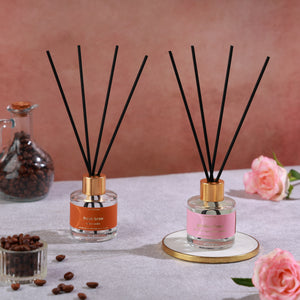
5. Fragrance is the fourth step, not the first. Scent is additive — it puts molecules into the air and removes none. Add it to a loaded sofa and the fabric absorbs the fragrance too, so you end up storing both smells and releasing both. Clean the reservoir first; then a reed diffuser or a Sukoon gives the room a character worth having.
Made in India, composed by an ISIPCA Versailles-trained perfumer — and a portion of every order supports girl-child education through Nanhi Kali.
Why the floor is the wrong target
There is a reason mopping feels like it should fix a smell: it is the cleaning task with the most visible result. The floor changes colour, the room looks finished, and for about twenty minutes the air genuinely does smell of wet phenyl. But the material you just cleaned is the one material in the room incapable of holding odour. Sealed tile, granite, vitrified flooring, laminate and finished wood are non-porous — there is nowhere for a volatile molecule to lodge. What lands on them sits on the surface until it evaporates or you wipe it away. A floor is a display surface for dirt, not a store for smell. Meanwhile the fabric in the room is doing the exact opposite job, all day, unsupervised.
Mopping also makes the room briefly worse in a way people misread. You have just added a film of water to a closed space, so humidity rises for half an hour. Higher humidity does two things at once: it slows the evaporation of everything already in the air, and it makes odour molecules easier for your nose to perceive. That is why the stale note often seems to return exactly as the floor finishes drying — it did not return, it was simply drowned out by the cleaning product for twenty minutes and became audible again as that faded. If you want the mop to help, open two windows on opposite sides while the floor dries. Five to ten minutes of genuine cross-ventilation moves more air out of a flat than an hour with one window ajar, and a closed flat only exchanges around 0.2 to 0.5 of its air an hour on its own.
The three fabric reservoirs in an ordinary living room
 Step fourFrom ₹749Count the fabric honestly: seat cushions top and bottom, back cushions front and back, two arms, two outer sides, the front skirt and the deck beneath the cushions. On a three-seater that is roughly 70–80 sq ft of woven material — and woven material has an internal fibre surface area orders of magnitude greater than its flat dimensions. Under it sits open-cell foam, which is essentially a sponge for air. The sofa is where a living-room smell lives, and the standard cleaning routine touches none of it. Vacuum with the brush head, do the crevices, lift every cushion, and wash whatever unzips.
Symptom to cause: reading a living room
Work down until a row matches what you actually notice. The confirmation column is the part people skip, and skipping it is how you end up shampooing a sofa that was never the problem.
| What you notice | Most likely cause | How to confirm it | What actually fixes it |
|---|---|---|---|
| Room smells closed within an hour of mopping ★ | Fabric reservoir re-releasing — the floor was never the source | Press your nose into the sofa back and a cushion at close range | Vacuum upholstery thoroughly, wash covers, sun the cushions |
| Smell is strongest when you sit down | Sitting compresses the foam and pumps stored air out of the cushion | Press a cushion hard with both hands and smell what comes out | Wash covers; sun the cushion cores; vacuum the deck underneath |
| Stronger near the window than the middle of the room | Curtains — large area, in the airflow path, rarely washed | Lift the hem to your face; compare against the sofa arm | Wash or dry-clean curtains seasonally; air them on a dry sunny day |
| Faint cooking note in a room with no kitchen in it | Aerosolised oil droplets that travelled and bonded to soft surfaces | Smell the curtain nearest the kitchen against the one furthest away | Wash the near curtain first; ventilate during and after cooking |
| A sour or sharp note that comes and goes on a schedule | A wet trap, not the fabric — dry P-trap, bin, damp mop head | Follow it at floor and drain level; run water down unused drains | Pour a mug of water down unused drains weekly; dry every cloth flat |
| Musty earth smell, or dark patches on a wall behind the sofa | Damp or mould — a health issue, not an odour problem | Pull the sofa off the wall and look at the plaster and the sofa back | Find the moisture source and remove the growth. Do not fragrance this. |
| If none of these fit: move the sofa a foot away from the wall and leave it there for two days. If the room improves, the problem was stagnant air trapped between upholstery and plaster, and the fix is permanent spacing. | |||
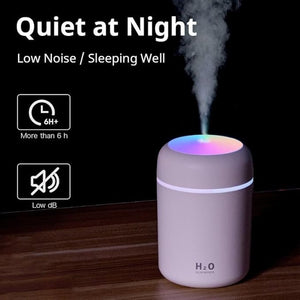
Reeds · always-on roomsFrom ₹749Shop →  Sukoon · when you want a switch₹1,899Shop →
  Hotel Collection · the scentFrom ₹299Shop →
What to actually do this weekend
Start with the vacuum, not the shampoo. Take every loose cushion off, vacuum the deck underneath with the crevice tool, then work the brush attachment over the seat, back, arms and both outer sides. Do the piping and the seams — that is where dust and residue collect and dust is itself an odour carrier. Most people have never vacuumed the outer sides or the back of their sofa in the life of the sofa. This one pass, done properly, removes a surprising amount of what you have been smelling and it takes about fifteen minutes.
Then use the sun. Anything that will fit on a balcony or a sunny windowsill goes out for two hours: loose cushions, throws, cushion covers, small rugs. Heat and UV drive absorbed volatiles out of fibre considerably faster than shaded airing, and the effect on a heavily used cushion is obvious on the same day. If you have no balcony, put things in the brightest window with the pane open and turn them halfway through. Wash what unzips at the hottest temperature the label allows and dry it fully — a cover that goes back on the foam even slightly damp will smell worse in a week than it did before you washed it, particularly in monsoon.
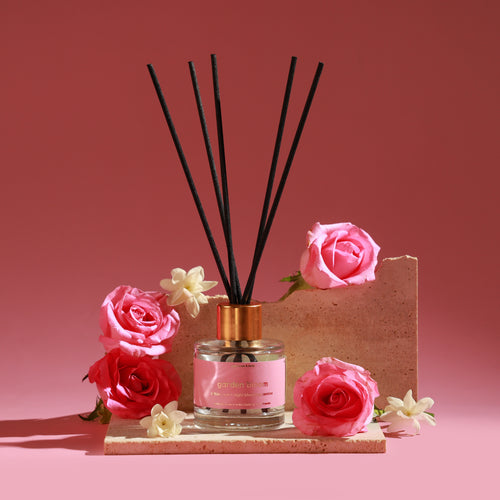
Then move the air, and only then think about fragrance. Cross-ventilate for ten minutes while you work and again in the evening; two openings on opposite sides, not one window ajar. Pull the sofa a hand's width off the wall permanently so air can move behind it. When the room is genuinely neutral — test it by leaving for half an hour and judging your first breath back — then add the ambient layer. A reed diffuser from ₹749 is the right tool for a living room you want to smell settled all the time with nothing to operate; six reeds for full strength, four if it reads too loud. The Sukoon at ₹1,899 with 3–6 drops of a water-based Hotel Collection scent from ₹299 is the right tool if you would rather run scent for an hour before people arrive and have none at midnight. Neither of them removes anything, and neither is a substitute for the vacuum.
The order that works
The first three steps cost nothing but a Saturday afternoon and they do the actual work. The fourth is the one you buy, and it is worth buying — after the other three.
| Step | What to do | When | Cost |
|---|---|---|---|
| 1. Remove the source | Check the wet list first — unused drains, the bin lid, damp mop heads, the cabinet under the sink | Before anything else | ₹0 |
| 2. Move the air | Cross-ventilate ten minutes twice daily; pull the sofa a hand's width off the wall for good | Daily, five to ten minutes | ₹0 |
| 3. Deal with what holds it | Vacuum upholstery including sides and deck, wash every removable cover, put cushions in direct sun | Weekly to monthly | ₹0 |
| 4. Then the always-on layer ★ | A SOSA reed diffuser — a living room that smells settled all day with nothing to switch on; six reeds full, four if it reads loud | 50ml 6-8 weeks · 130ml 14-18 | from ₹749 |
| 5. Or the on-demand layer | Sukoon with a Hotel Collection scent — scent on demand before guests and silence the rest of the time; covers roughly 270–320 sq ft | Run it when you want it | ₹1,899 |
Versailles
I have watched people shampoo a sofa, dry it badly, and end up with a living room that smelled distinctly worse a fortnight later. The instinct is right — the sofa is where the smell is — but the method matters. Nine times out of ten the honest answer is a thorough vacuum, every cover through the washing machine, and the cushions in the sun for an afternoon. That is a free fix, and I would rather tell you that than sell you a bottle.
The thing that changed how I think about living rooms was doing the arithmetic once. I had assumed the floor was the dominant surface because it is the biggest single thing you look at. It is not the biggest absorbent surface, and it is not even close. Once you have counted the sofa, the curtains and the rug, the idea that mopping should fix a smell stops making sense.
Fragrance goes last for a physical reason, not a moral one. Fabric absorbs whatever is in the air — including the fragrance you add. If you scent a loaded sofa, you have not covered anything; you have given the reservoir a second thing to store and release. Clean it first and the same fabric becomes an advantage, holding your chosen scent gently and giving it back all day. A portion of every order funds a girl's classroom through Nanhi Kali.
Frequently asked questions
- Can curtains make a room smell stale? — the largest fabric plane in the room.
- Sofa or curtains — how to tell — isolating one reservoir at a time.
- The smell came back after cleaning the sofa — why covers are not the whole story.
- How often soft furnishings actually need cleaning — a cadence you will keep.
- Brand: the SOSA founder story.
SOSA products & prices (verified August 2026): Hotel Collection water-based ultrasonic diffuser fragrance 15ml ₹299 · 100ml ₹999 · 300ml ₹1,799 · Pack of 7 (15ml, all fragrances) ₹1,799; refills 100ml from ₹999. Seven scents: The Ritz-Carlton-inspired (white tea · bergamot · cedar), Westin-inspired (white tea · aloe · cedar), 1 Hotels-inspired (cedarwood · vetiver · green leaves), The St. Regis-inspired (amber · violet · woods), Shangri-La-inspired (jasmine · green tea · white tea), Four Seasons-inspired (citrus · floral · sandalwood), W Hotels-inspired (citrus · pepper · amber). Diffusers: Boond 300ml ₹899 · Sukoon 500ml ₹1,899 · Megh 6L ₹3,499. Water-based, phthalate-free, composed to IFRA standards for home diffusion; 3–6 drops per tank. Made in India, Pune. The Hotel Collection scents are SOSA's own interpretations inspired by the world's finest hotels; all hotel names are trademarks of their respective owners and are used only to describe the scent style — SOSA is an independent Indian fragrance house, not affiliated with or endorsed by any hotel brand. Prices and availability subject to change — see the live product pages.