



The position: curtains hang in the airflow. Every air change in the room — 0.2–0.5 an hour closed, 3–8 cross-ventilated — moves past or through them, so they see more passing odour than any other textile you own.
The test: lift the hem to your face and breathe in through it, then compare with the top third of the same panel. If the hem is markedly stronger, the curtain is your reservoir.
2. The area is larger than you think. People picture a curtain as a thin strip. Measure it properly: a floor-length pair on a 7 ft wide window, allowing for the fullness that makes them hang nicely, is roughly 25–30 sq ft of cloth per face and therefore 50–60 sq ft in total. Two windows in a living room and you have more absorbent textile in curtains alone than in a three-seater sofa.
3. Position is what makes them different. Everything else in the room sits in still air. Curtains stand in the aperture — in front of the window, beside the balcony door, along the wall of an open-plan kitchen. Every draught, every cooking plume drifting out of the kitchen, every gust of street air and every bit of monsoon humidity that enters the room passes them first. They function as a filter that is never changed.
4. And they are washed less often than anything else. Bedding weekly, towels twice a week, cushion covers when someone notices, curtains when they look visibly grubby. A dark or patterned panel can hide soiling for years while it keeps absorbing perfectly well. The visual cue and the odour cue are completely disconnected.
5. Fragrance does not fix a loaded curtain. Scent is additive. Sprayed onto or near a curtain, it is absorbed by the same fibre that is holding the stale note, and the panel then releases both. Wash the fabric, dry it thoroughly, and afterwards let a reed diffuser or a Sukoon give the clean room its character.
Made in India, composed by an ISIPCA Versailles-trained perfumer — and a portion of every order supports girl-child education through Nanhi Kali.

Why curtains hold more than anything else in the room
Three properties decide whether a material becomes an odour reservoir: how porous it is, how much of it there is, and whether air moves past it. Curtains score high on all three, which is unusual. A rug is porous and reasonably large but lies in the dead air at floor level. A sofa is porous and large but sits in the middle of the room where air is comparatively still. A curtain is porous, large, and hangs across the aperture through which every single air change in the room arrives or leaves. The molecules do not have to find the curtain; the curtain is standing in the doorway. In an open-plan Indian flat where the kitchen shares air with the living room, the curtain nearest the kitchen is doing quiet duty as an extractor filter for every tadka you have ever made.
The second half of the explanation is scheduling. Sorption is a slow, two-way process — molecules diffuse into fibre over weeks and diffuse back out over days — so what matters is the balance between how much a textile takes in and how often you reset it. Bedding gets reset weekly, so it never accumulates much. Cushion covers get reset every month or two. Curtains, in most homes, get reset when they look dirty, and a mid-tone or patterned fabric can go three or four years without looking dirty while absorbing continuously. The result is a panel that has reached something close to saturation and is now releasing at a steady rate all day, every day. That steady, unchanging release is precisely what your nose registers as a room that "smells closed" without smelling of anything specific.
Three things your curtains have been collecting
 Step fourFrom ₹749Most of what you smell after cooking Indian food is not a simple vapour — it is aerosolised oil droplets carrying flavour compounds. Droplets land on things and bond to them, which is why a tadka outlives the tadka by two days. A curtain hanging in an open-plan room, or in a living room whose door to the kitchen stays open, catches a meaningful share of that plume every time you cook. Compare the panel nearest the kitchen with the one furthest away — if there is a clear difference, you have both confirmed the mechanism and identified which panel to wash first.
Symptom to cause: reading a curtain
Match the row to what you actually notice at the window. The confirmation column is what separates a curtain problem from a wall problem, and those need completely different responses.
| What you notice | Most likely cause | How to confirm it | What actually fixes it |
|---|---|---|---|
| Room smells stale, floor and surfaces are clean ★ | Curtains — large area, porous, rarely washed, in the airflow | Breathe in through the hem, then through the top third of the same panel | Wash or dry-clean per the label; dry fully before rehanging |
| The window-side of the room reads stronger than the middle | A saturated panel releasing steadily into the draught | Stand at the window with your eyes shut, then in the room centre | Wash the panels; air them in sun and moving air between washes |
| Faint fried-food note days after cooking | Aerosolised oil droplets bonded to fabric near the kitchen | Compare the panel nearest the kitchen with the furthest one | Wash the near panel; run the chimney longer; ventilate while cooking |
| Worse in monsoon, better in dry weather | Moisture in the fibre raising release rate and perceived intensity | Feel the hem — genuinely damp cloth confirms it | Dry the panels indoors with a fan; ventilate in dry spells |
| Sharp sewer-like note near the window, not a fabric smell | Outside air from a soil vent or a neighbour — not the curtain | Close the window for two hours and see whether it stops | A building or plumbing matter for the society, not a fragrance one |
| Musty earth smell and dark speckles on panel or reveal | Mould from a damp window reveal — a health issue | Pull the curtain aside and inspect the plaster and the sill | Find the moisture source and remove the growth. Do not fragrance this. |
| If none of these fit: take the curtains down entirely for three days and live without them. If the room noticeably improves, you have your answer with no ambiguity at all — and the panels are already off the rail for washing. | |||
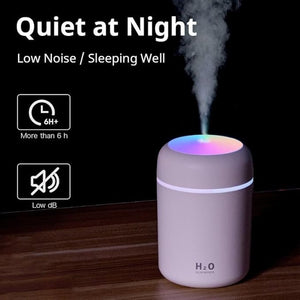
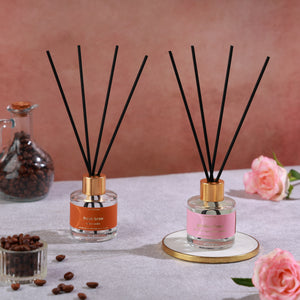
Reeds · always-on roomsFrom ₹749Shop →  Sukoon · when you want a switch₹1,899Shop →
  Hotel Collection · the scentFrom ₹299Shop →
Washing, drying and rehanging without making it worse
Read the label before you do anything ambitious. Most cotton and polyester-blend panels wash at home; linen usually does but shrinks; heavy lined or interlined curtains, silk, and anything with a stiffened header tape are dry-clean jobs and will hang badly forever if you get this wrong. Remove hooks and rings, shake the panel outdoors first — a genuinely surprising amount comes off dry — and wash on a gentle cycle with a normal detergent and no fabric softener. Softener leaves a coating on fibre that reduces how well the fabric releases what it is holding, which is exactly the wrong direction.
Drying is the step that decides the outcome. A curtain rehung even slightly damp will smell worse within a week than it did before you washed it, and in monsoon it will smell musty within three days. Dry the panels flat or on a line in moving air until they are completely dry to the touch at the hem and along the header, which is the last part to dry. If the weather is against you, dry them indoors with a fan pointed at them and a window open — never in a closed room, which simply moves the moisture into the room. Sun is ideal where the fabric will take it: UV and heat drive out absorbed volatiles far faster than shaded airing. Check for fading risk on dark dyes and turn the panel halfway.
Then build a maintenance habit and add the ambient layer. Between washes, open the window on dry days and let the panels move in a draught for half an hour; a curtain in a breeze sheds far more than a curtain hanging still. Vacuum the hems with the brush attachment monthly. Aim for a proper wash at each season change — roughly three times a year in most Indian cities, and certainly once before and once after monsoon. Once the panels are clean and the room is neutral, the ambient layer is worth having: a reed diffuser from ₹749 sits quietly in a living room and runs on capillary action with no electricity, and reed count is the volume dial — six for full strength, four in a smaller room. The Sukoon at ₹1,899 with 3–6 drops of a Hotel Collection scent from ₹299 is the choice if you would rather run scent for an hour and switch it off. Neither of them removes anything from a curtain.
The order that works
The washing machine does the work here. The product is genuinely optional, and it is fourth for a reason — a clean curtain and a scented curtain are not the same thing.
| Step | What to do | When | Cost |
|---|---|---|---|
| 1. Remove the source | Shake the panels outdoors, check the window reveal and sill for damp, look behind the curtain at the plaster | Before anything else | ₹0 |
| 2. Move the air | Cross-ventilate ten minutes twice daily and let the panels move in the draught while you do it | Daily, five to ten minutes | ₹0 |
| 3. Deal with what holds it | Wash or dry-clean curtains at each season change, dry them completely, vacuum hems monthly | Weekly to monthly | ₹0 |
| 4. Then the always-on layer ★ | A SOSA reed diffuser — a living room that keeps a steady background without anything to switch on or refill | 50ml 6-8 weeks · 130ml 14-18 | from ₹749 |
| 5. Or the on-demand layer | Sukoon with a Hotel Collection scent — scent you can run before people arrive and switch off afterwards; covers roughly 270–320 sq ft | Run it when you want it | ₹1,899 |
Versailles
The first time someone asked me to recommend a fragrance for a living room that "just smells old", I asked when they had last washed the curtains. There was a long silence and then a guess of about four years. We washed them instead. The room did not need a product; it needed a Sunday and a washing machine. I would rather lose that sale than sell something that would have made the room smell of two things.
What I find genuinely interesting about curtains is the position. Everything else in a room sits in still air, waiting for molecules to find it. A curtain stands in the aperture and the air comes to it. If you cook Indian food in an open-plan flat, the panel closest to the kitchen has been catching aerosol from every meal since you moved in. You can smell the difference between that panel and the far one, and once you have, you never think about curtains the same way.
Do the wash, dry them properly, rehang them. Then the ambient layer is worth having, because a clean curtain stops fighting your fragrance and starts helping it — porous fabric holds a pleasant scent as readily as it held the stale one, and gives it back gently all day. That is free consistency, and it only works in that order. A portion of every order funds a girl's classroom through Nanhi Kali.
Frequently asked questions
- The living room smells closed after mopping — why the floor is the wrong target.
- Sofa or curtains — how to tell — isolating one reservoir at a time.
- Why fabric smells different in humid weather — moisture in the fibre.
- Fragrance before or after cleaning? — the order, and why it matters.
- Brand: the SOSA founder story.
SOSA products & prices (verified August 2026): Hotel Collection water-based ultrasonic diffuser fragrance 15ml ₹299 · 100ml ₹999 · 300ml ₹1,799 · Pack of 7 (15ml, all fragrances) ₹1,799; refills 100ml from ₹999. Seven scents: The Ritz-Carlton-inspired (white tea · bergamot · cedar), Westin-inspired (white tea · aloe · cedar), 1 Hotels-inspired (cedarwood · vetiver · green leaves), The St. Regis-inspired (amber · violet · woods), Shangri-La-inspired (jasmine · green tea · white tea), Four Seasons-inspired (citrus · floral · sandalwood), W Hotels-inspired (citrus · pepper · amber). Diffusers: Boond 300ml ₹899 · Sukoon 500ml ₹1,899 · Megh 6L ₹3,499. Water-based, phthalate-free, composed to IFRA standards for home diffusion; 3–6 drops per tank. Made in India, Pune. The Hotel Collection scents are SOSA's own interpretations inspired by the world's finest hotels; all hotel names are trademarks of their respective owners and are used only to describe the scent style — SOSA is an independent Indian fragrance house, not affiliated with or endorsed by any hotel brand. Prices and availability subject to change — see the live product pages.