



A living room should smell the same at eight in the morning and eight at night. When the scent vanishes by lunch, the answer is almost never a weaker fragrance — it is the wrong delivery. Consistent coverage beats a strong burst every time.
Why it fades: sprays and small diffusers give a burst that evaporates in an hour or two — and your nose adapts to a steady scent within minutes.
The real fix: continuous, low-level delivery, not a bigger dose. A reed for a small room; Megh or the waterless SOSA Vaayu for a larger one.
Test it: step outside for ten minutes and walk back in — if it is there, your nose had simply adjusted.
This is the most common message I get about living rooms: "I spray in the morning and by the time everyone's home from work, it's gone." It is a genuinely reasonable complaint, and the instinct that follows it — buy something stronger — is the wrong one. To fix a fragrance that disappears, you first have to know whether it has actually gone, or whether you have simply stopped smelling it. Usually it is a bit of both, and each half has a different cure.
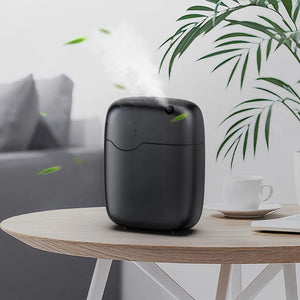
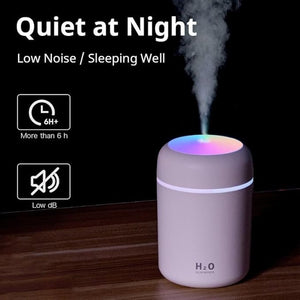
A room spray is a one-off event. You release a cloud of fragrance, it hangs for twenty minutes to an hour, and then it evaporates and settles onto surfaces. There is no ongoing source, so of course the room is unscented by afternoon — nothing is replenishing the air. A small water-based diffuser is better because it runs, but a 300ml tank in a large living room empties or gets outpaced by the sheer volume of air moving through the space, especially with a fan or AC on. The delivery simply cannot keep up with the room.
The living-room principle I come back to again and again is this: a room does not smell "strong" because the fragrance is powerful — it smells good because the fragrance is always there. A hotel lobby is never overpowering, yet you notice it the moment you walk in and again every time you cross it. That is continuous delivery, tuned low, not a strong hit.
The other half is happening inside you. Olfactory habituation is the normal way the nose stops reporting a constant, unchanging smell after a few minutes — it is why you cannot smell your own home when you walk in, but a visitor can. So even a perfectly good diffuser can seem to "disappear" when it is working exactly as intended. The honest test costs nothing: step outside for ten minutes, or ask someone arriving from outside. If they notice it and you do not, the fragrance is there and your nose has moved on.
| Living room | The continuous source | Why it holds |
|---|---|---|
| Small / compact, low-maintenance | Reed diffuser · from ₹749 | Passive, no power, evaporates slowly over weeks — a steady low note that never spikes or vanishes |
| Mid-size room, want scheduling | Megh 6L · ₹3,499 + Hotel Collection ₹299 | 6-litre tank runs for hours on one fill, so it does not empty by afternoon |
| Large / open-plan / AC all day / humid coastal | SOSA Vaayu · ₹11,999 | Waterless, app-scheduled pulses across the day, coverage to ~1000 m³, no humidity |
Ultrasonic systems (Megh) run the water-based Hotel Collection and add mild humidity; Vaayu runs a waterless nebulising oil and adds none. In a humid Mumbai or Chennai flat running scent all day, prefer waterless.

 SOSA Vaayu ₹11,999
If your fragrance keeps vanishing in a living room of any real size, the Vaayu is the honest fix. It nebulises waterless oil into a very fine dry mist and, crucially, you schedule it through the app to run in short cycles — a few minutes on, a gap, on again. That gentle pulsing is exactly what keeps a room smelling alive all day: a fresh trace keeps arriving before the last one has faded, and the intermittent pattern gives your nose a small new cue each time. Set the intensity low and let it build; you are aiming for "there," not "loud."
One honest caveat before you buy anything: fragrance crowns clean, aired space — it does not replace it. If your living room turns stale within hours, check first for the real cause — a shut-up room, a sofa holding food and body odour, damp during the monsoon. Air the room, deal with the source, then let a continuous scent do its quiet work on top. That order is what makes the fragrance read as "this home smells lovely" rather than "something has been sprayed."