




Why it lasts: the release is over in half a minute but the room's air has not moved, and hing's sulphur compounds and chilli's irritants both hang about far longer than the cumin does.
The five free fixes: extraction on high before the seeds go in; the tadka pan on a back burner; a lid within reach; a window open on the far side for make-up air; and ten minutes of run-on after the hob is off.
Then: a dry scent, afterwards. Black pepper is the only spice material in the Hotel Collection, which in this house is the point.
2. So extraction has to be running before the seeds go in, not after you hear them. By the time mustard seeds are popping, the release is already half over. A hood switched on at that moment is clearing the tail of an event whose head is now in the sitting room.
3. The pan is small and is almost always on a front burner, which is where a hood is weakest. You stand over a tadka because it takes seconds and burns in one. Move it back one ring and you have moved it into the strongest part of the capture zone, which costs nothing and is the largest single improvement available.
4. Two of the ingredients outlast the rest. Hing is a sulphur-bearing resin and its compounds are detectable at very low concentrations for a long time; dried chilli in hot oil aerosolises an irritant that makes people cough in the next room and settles slowly. Cumin is the smell you notice and hing is the smell that is still there.
5. Then ten minutes of run-on and twenty of cross-ventilation, and it is done. After which a scent is a pleasure rather than an argument — and a home that smells faintly of good food was never the problem in the first place.
A portion of every order supports girl-child education through Nanhi Kali.

What a tadka actually is, in thirty seconds
It is worth describing the process properly, because once you can see it as a piece of equipment the corrections become obvious. Whole spices hold their aromatic compounds locked inside cell structures, largely unavailable at room temperature — which is why a jar of cumin seeds smells of very little until you disturb it. Fat at tempering temperature does two things at once: it is an excellent solvent for exactly those compounds, so it strips them out of the seed within seconds, and it is hot enough to drive a large share of them straight off the surface as vapour and fine aerosol. Extract and release, in one operation, in about half a minute. There is no other step in Indian cooking with that profile, and there is no other step that so completely fills a building.
The five free corrections, and what each is worth
Everything in this table costs nothing. The second column is what the correction physically does, the third is the mistake it replaces, and the fourth is my honest estimate of how much of the problem it removes on a normal tempering in a normal Indian kitchen. Nothing here needs a new appliance.
| The correction | What it does | The mistake it replaces | Roughly what it is worth |
|---|---|---|---|
| 1. Hood on high before the seeds go in ★ | Puts the capture in place before the release rather than after it | Switching the hood on when you hear the mustard popping, by which point half the event is already in the flat | The largest single item on the list. More than the other four together |
| 2. The tadka pan on a back burner | Moves a thirty-second release into the strongest part of the hood's reach | Tempering on the front ring because you are standing over it, which is the weakest part of the capture zone | Most of what is left after the timing is corrected |
| 3. A lid within arm's reach | Keeps the tail of the release in the pan, where you wanted it, until it goes into the dish | Leaving the pan open on the hob while you fetch the dal, releasing the last minute into the room | Noticeable, and it improves the food as well |
| 4. A window open on the far side | Gives the extractor make-up air, so the fan moves something close to its rated volume | A sealed flat with every window shut, quietly throttling its own extraction while the fan sounds busy | Larger than people expect, and it costs one hand's width of opening |
| 5. Ten minutes of run-on | Removes the tail released by the hot pan, the hot oil film and the warm canopy after the flame is out | Switching the hood off with the burner, leaving the entire post-cooking release in the kitchen | The difference between a smell at nine and no smell at nine |
| Then: two openings, twenty minutes | Turns the flat's air over several times before any of it has settled onto fabric | Airing at bedtime, by which point most of the depositing has already happened | Finishes the job the five above started |
Quiet Luxury · three drops₹299Shop →  Sukoon · after the run-on₹1,899Shop →
  Candle · tonight₹379Shop →
The evening, the run-on, and where a scent belongs
Put the whole evening in order and it takes no extra effort at all, only a different sequence. Hood on high before the pan goes down; tadka pan on a back ring; lid in reach; a window a hand's width open somewhere far from the kitchen; cook; hood running for ten minutes after the hob goes off; then two openings on opposite or adjacent walls for twenty minutes. Serve and eat during that twenty minutes rather than waiting for it, because food is at its best straight away and the flat is airing perfectly well without supervision. Then shut the windows. That is the entire free method, and in most flats it is the difference between a tempering you can still smell at bedtime and one you cannot. Two additional habits are worth adopting in a household where a tadka happens several times a week. The first is to shut the bedroom and wardrobe doors before you start — a wardrobe is a small unventilated room full of fabric, and anything that gets in comes back out onto you for a fortnight; the bedroom page in this group covers the paths in detail. The second is to change out of what you cooked in and put it in the wash rather than back on a hook. Cotton holds a tempering exceptionally well, and a great many people who believe their sitting room smells of dinner are actually smelling the kurta hanging on the back of the door.
Then the extraction itself, because a tadka is the test that finds out whether yours is doing anything. If you can run a full tempering with the hood on high and smell almost nothing at the far end of the flat, your extraction is working. If you can smell it clearly in the next room within seconds, something in the installation is wrong and no amount of fragrance will compensate for it. The usual causes are a recirculating unit whose carbon cartridge has never been replaced, a grease filter that has not been degreased in a year, a hood mounted too high or narrower than the hob, or a duct that terminates inside a false ceiling rather than outside the building; the chimney page in this group goes through how to identify each of those, and the 1BHK page covers what even a good hood cannot physically catch. I would rather send you to check a filter than sell you a bottle, because the filter is the thing standing between your flat and the outside air and the bottle is not. One honest limit: even a perfect installation does not catch everything from a tempering, because some of that release goes sideways and outward rather than upward, at speed, from a shallow pan. That is not a fault in the machine and it is not a fault in you. It is what the technique is.
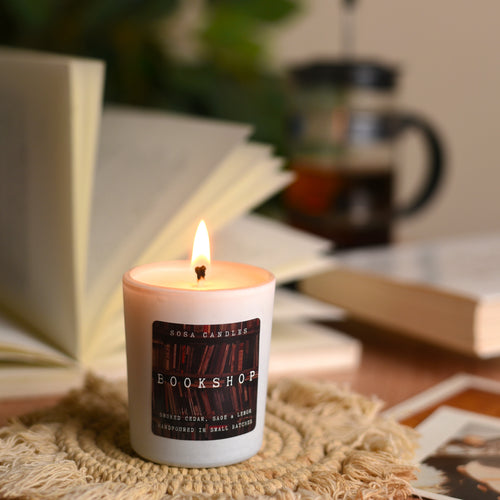
Then fragrance, which on this page belongs at the end and in a specific register. Once the run-on and the cross-draught are done, the air in the flat is genuinely clean, and a scent put into clean air is a character rather than a cover. The Sukoon at ₹1,899 reaches a steady level in about twenty minutes from cold, gives 16–18 hours per fill on low at 30–50 ml/h against 9–12 on high, and has steady, 2H and 4H timers, a 2.4MHz cool-mist plate, a remote, auto shut-off and three 15ml Hotel Collection scents of your choice included; set the 2H timer to start when the windows are shut again rather than while the tadka is in progress. The Hotel Collection is water-based, ultrasonic only, and dosed at three to six drops per tank — per tank rather than per litre, so a Boond at ₹899 takes the same drops as the larger machine. If you want scent in a room tonight with nothing to install, the Bookshop candle at ₹379 does it in fifteen to twenty minutes and must be attended and put out; a reed diffuser is the wrong purchase for tonight because it needs twenty-four to seventy-two hours to establish, and the right one for a hall you want holding a level for months. On what to choose: nothing warm and nothing spiced. There is no cumin, cinnamon, clove, cardamom or saffron anywhere in the Hotel Collection or the alcohol-free reed line, and black pepper is the only spice material in the seven — which in a house where a tadka happens four evenings a week is precisely why a diffuser can run at all. And expect to stop noticing your own flat within a fortnight; ask one honest guest rather than adding drops.
The SOSA edit
In working order for a household that tempers several times a week. Five free corrections first, because they are worth more than anything below them, and the last row states what the range does not contain — which on this particular page is the reason it works.
| Do this | What it is | Why it matters here | Cost |
|---|---|---|---|
| 1. Extraction on high, first ★ | Hood running before the pan is hot and for ten minutes after the hob goes off | The release lasts thirty seconds. Capture has to be in place before it, because nothing catches it afterwards | ₹0 |
| 2. Back burner, lid, far window | The tadka pan moved one ring back, a lid in reach, and a hand's width of opening across the flat for make-up air | The front of the hob is the weakest part of the capture zone, and a fan with no replacement air moves a fraction of its rating | ₹0 |
| 3. Two openings, twenty minutes | Cross-ventilation immediately after the hob goes off, while you eat | It removes the load before it deposits on fabric. Airing at bedtime is too late to prevent anything | ₹0 |
| 4. Doors shut, and the kurta into the wash | Bedroom and wardrobe doors closed before you start; what you cooked in goes to the laundry rather than back on a hook | Cotton holds a tempering for a fortnight, and a wardrobe is a small unventilated room full of fabric | ₹0 |
| 5. Hotel Collection 15ml on the Sukoon | Three to six drops per tank on cleared air, 2H timer, twenty minutes from cold to a steady level | A scent on clean air is a character. The same scent during a tempering is an argument with dinner | ₹299 / ₹1,899 |
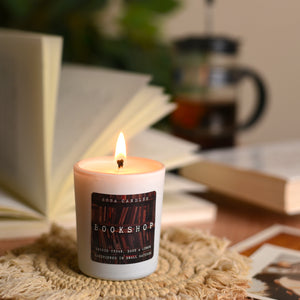
| 6. Bookshop candle if it has to be tonight | 80g, roughly 15–18 hours of burn, scent in a room in fifteen to twenty minutes, attended and put out | The fastest thing SOSA makes, for the evening you have already aired and simply want to finish well | ₹379 |
| Not in the seven: cumin, cinnamon, clove, cardamom or saffron | Black pepper is the only spice material in the Hotel Collection, and there is none of the above in the reed line either | Printed rather than implied. In a house that tempers four nights a week, that absence is the whole reason a diffuser works | — |
Versailles
I want to be careful about the tone of this page, because a great many people arrive at it slightly embarrassed, and they should not be. A tadka is not a mistake to be managed. It is the single most effective piece of aroma engineering in domestic cooking anywhere in the world, and it works by doing exactly the thing this article is describing as a problem. Hot fat, whole spices, thirty seconds, and a building that knows what is for dinner. I make fragrance for a living and I have never designed anything that fills a space that efficiently.
So the goal is not a flat that never smells of cooking. That flat would tell you something rather sad about the people in it. The goal is a flat that smells of cooking while you are cooking and of itself an hour later, and the distance between those two states is a fan switched on early, a pan moved one ring back, a lid, an open window somewhere far away and ten minutes of patience. All of it free. Then, when the air has genuinely turned over, put something dry and quiet into the room and let the evening finish properly. That is the whole recommendation, and the bottle at ₹299 is the smallest part of it.
Everything is made and supported from Pune, and a part of every order funds girl-child education through Nanhi Kali. You get a home that smells like somewhere you chose; a girl gets a classroom. That equation has always felt right to me.
Frequently asked questions
- Why a 1BHK still smells of food despite a chimney — what a hood can and cannot physically catch.
- Does a kitchen chimney actually remove cooking smells — the filter, the duct and the maintenance nobody does.
- How long Indian cooking smells actually stay in a flat — the two clocks, with real durations.
- Why your home smells of cooking, and the exact order in which to fix it — the pillar guide for this group.
- Brand: the SOSA founder story.
Facts verified August 2026: Diagnostic facts used in this guide: a closed room accumulates what it cannot exchange, so cross-ventilation needs two openings rather than one; a drain's U-bend water seal evaporates in roughly two to four weeks of disuse and then admits sewer gas, which is corrected by pouring water down the drain; microbial growth in fabric and on surfaces accelerates above about 60% relative humidity, and Indian monsoon indoor humidity commonly runs 80–95%, which is the one situation where ventilating on a wet day can import moisture rather than remove it; an air-conditioner's cold, wet evaporator coil and filter grow biofilm that is blown into the room on start-up; textiles adsorb cooking aerosol and body oils and re-release them for weeks; and olfactory adaptation makes a constant household smell undetectable to its residents within about a fortnight while visitors still perceive it. Timings: a scented candle scents a normal room in roughly 15–20 minutes, a Sukoon ultrasonic diffuser reaches a steady level in about 20 minutes from cold, and a reed diffuser needs roughly 24–72 hours. SOSA products and prices: Sukoon 500ml ₹1,899 (270–320 sq ft, 16–18h on low, 9–12h high, 30–50 ml/h, 2.4MHz cool mist, remote, steady/2H/4H timers, BPA-free, auto shut-off, includes three 15ml Hotel Collection scents of your choice); Boond 300ml ₹899; Megh 6-litre ₹3,499; waterless Vaayu ₹11,999 (up to 1000m³); Aangan ₹25,999. Hotel Collection water-based fragrance 15ml ₹299, 100ml ₹999, 300ml ₹1,799, Pack of 7 at 15ml ₹1,799; dose 3–6 drops per tank. Reed diffusers (separate alcohol-free line): Morning Freshness from ₹749, Garden Bloom and Evening Calm from ₹799, Fresh Brew and Mountain Breeze from ₹849; 130ml from ₹1,249; duos from ₹1,498; 300ml refills ₹2,399. Scented candles: Bookshop 80g ₹379, Amber Rose 130g ₹599 and 220g ₹799, Smoked Oudh 130g ₹449, ceramic jar candles ₹949, Pure Calm wax melt set ₹854. Free shipping above ₹499. SOSA does not make a room or linen spray for the home. The Hotel Collection scents are SOSA's own interpretations; SOSA is not affiliated with or endorsed by any hotel brand. Prices subject to change — see the live product pages.