



The runner-up? The The St. Regis-inspired Old-World Glamour — amber, violet, woods. Expensive in the opulent register rather than the restrained one.
The one you will be tempted by: the Four Seasons-inspired Warm Welcome. It is the most likeable scent here and likeable is not the same signal.
The free half of the answer: air the room first. Three drops over stale air reads cheap whatever is in the bottle.
2. The runner-up: The St. Regis-inspired Old-World Glamour. Amber, violet and polished woods. The other legitimate luxury register — opulent rather than restrained, closer to a grand hotel drawing room than to a marble lobby. Right for period apartments and evening rooms; slightly much for daily use.
3. The one to avoid — and you will be tempted. The Four Seasons-inspired Warm Welcome. It is the most immediately likeable scent in the range, which is precisely the problem: likeable and expensive are different signals. Citrus over floral over creamy sandalwood reads as generous and welcoming, and generous is what a good hotel spends money on, not what it smells of.
4. Do the free half first. Open the windows for ten minutes. The fastest route to a cheap-smelling home is a strong sweet scent laid over an unaired room, and no fragrance corrects it. The fastest route to an expensive one is an aired room plus three drops of something quiet.
5. Then be boring about it. One scent, one dose, every day, for months. Consistency is the signal people cannot articulate but always notice — a house that smells the same each time reads as designed. Buy the 100ml at ₹999 once you have chosen, so you are not tempted to keep switching.
Made in India, composed by an ISIPCA Versailles-trained perfumer — and a portion of every order supports girl-child education through Nanhi Kali.

What "expensive" is actually made of
Nobody can smell a price, so what people are recognising is a set of learned associations, and they are more specific than they look. The first is restraint. Costly interiors are under-scented, not over-scented: a good hotel lobby is barely fragranced, and what you notice is the absence of anything wrong rather than the presence of a perfume. Anything you can identify from across the room has already failed the test. The second is consistency. Expensive places smell the same on every visit, which reads as intention; a house that smells of jasmine on Monday and vanilla on Thursday reads as a set of purchases. The third is clean air underneath, and it is the one people skip. Fragrance does not replace a smell, it sits on top of it, so a scent laid over a closed, cooked-in, damp-cornered room produces a compound nobody wants — and that compound, not the fragrance, is what reads as cheap.
Then there are the materials themselves, and here the associations are cultural rather than chemical. White tea, bergamot, cedar, amber, violet and iris turn up repeatedly in expensive contexts — hotel lobbies, couture houses, the perfume halls of good department stores — so the nose files them under costly. Vanilla, fruit, heavy florals and anything sold as "fresh linen" turn up in mass-market products, so the nose files them under ordinary. That is not a judgement about quality; some of the finest materials in perfumery are sweet. It is about context. The two signals that reliably read cheap are sweetness and volume, and they compound — which is why a strong sweet scent is the fastest way to make a well-furnished room feel less expensive than it is. It also explains why the translation from what you wear to what you diffuse trips people up. A sweet perfume at a few centimetres for two hours is charming. The same idea at three metres, held at a constant level by a machine that never fades, becomes the thing guests smell before they see the room.
The three expensive registers, and which is yours
 Quiet LuxuryFrom ₹299White tea · bergamot · cedar. Three materials that each carry the association on their own, assembled so that none dominates. Bergamot gives a bright, faintly bitter lift — cologne rather than squash — white tea a papery calm, and cedar underneath supplies structure without weight or sweetness. The result is polished rather than pretty: the register of a marble lobby, where you notice the room and then notice that nothing in it smells wrong.
The luxury shortlist
Four of the seven can carry an expensive signal, and they do it in different dialects. The other three are good scents doing a different job — warmth, welcome, brightness — and none of those is the same thing as costly.
| Scent | Notes | Character | Best for |
|---|---|---|---|
|
The Ritz-Carlton-inspired ★ Quiet Luxury |
White tea · bergamot · cedar | Restrained and polished — bright, dry, noticed once and then forgotten | The default answer. Modern interiors, daily use, guests you want to impress quietly |
|
The St. Regis-inspired Old-World Glamour |
Amber · violet · woods | Opulent and powdery — amber warmth over violet and polished woods | Period rooms and evening entertaining; heavy at more than two or three drops |
|
1 Hotels-inspired Forest Suite |
Cedarwood · vetiver · green leaves | Architectural and dry — timber, roots, rain on stone, nothing sweetened | Minimal, material-led interiors; people who find polish a little soft |
|
Westin-inspired White Tea Serenity |
White tea · aloe · cedar | Spa-clean and weightless — the cleanliness signal without the polish | Bedrooms and bathrooms; the quiet supporting scent in a multi-room home |
| Not in this family, for reference: Shangri-La-inspired Tea Garden is a green-tea floral — lovely, but florals read as decorative rather than costly; W Hotels-inspired Lobby Bar is bright and peppery and reads as energetic; Four Seasons-inspired Warm Welcome is the most likeable scent in the range and the sweetest, which is the one combination that consistently reads generous rather than expensive. See all seven. | |||
Hotel Collection · the expensive pickFrom ₹299Shop →  Sukoon · the full room₹1,899Shop →
  Boond · small spaces₹899Shop →
Three drops, an open window, and the same thing every day
Three drops per tank. Not five, not six — three. Under-scenting is the single most reliable luxury signal available to you, and it is the one instruction people ignore, because standing next to a diffuser at three drops feels like underdoing it. It is not. Switch on, leave the room, come back after fifteen minutes and read it from the doorway. If the fragrance is the first thing you notice, you have used too much. If you notice the room and then, a beat later, the fragrance, that is the effect you were paying for.
Air the room first, every time. This is the free half of the answer and it is worth more than the bottle. Ten minutes of cross-ventilation clears the cooking, damp and closed-room notes that fragrance would otherwise sit on top of — a good scent over stale air smells worse than no scent, because the two combine into something the nose cannot resolve. In a monsoon city, deal with damp first; nothing in a bottle covers it. Then run the diffuser for thirty to forty minutes on a Sukoon at ₹1,899 and switch it off. Scent that arrives before guests do reads as the house; scent still being produced while they are there reads as an air freshener.
Then commit. Same scent, same dose, same rooms, for months — that is what makes a house read as designed rather than decorated in instalments. If you scent more than one room, either run one blend throughout or pair a restrained daily scent with one richer evening scent, and no more. Housekeeping supports the signal: rinse the tank between scents, use filtered water in hard-water cities so scale does not dull the bright top notes, and never put raw essential oils in an ultrasonic — they are too viscous to atomise and will foul the plate. The waterless machines are a separate system: the Vaayu at ₹11,999 and the Aangan at ₹25,999 run neat oil and cannot take the water-based Hotel Collection.
Which diffuser to run it in
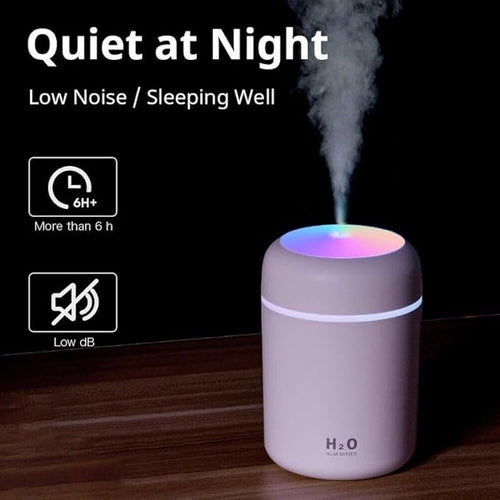
Consistency is the signal, so the machine matters mostly for its reliability: a timer you can set and forget beats any amount of enthusiasm. Match the tank to the room so that three drops is genuinely enough.
| Diffuser | Best for | Drops | Price |
|---|---|---|---|
|
Boond 300ml, USB, night light |
A study, a guest bathroom or a bedside — where three drops is plenty | 2–3 drops | ₹899 |
|
Sukoon ★ 500ml, remote, mood light |
The living room or main bedroom — the default machine for this brief | 3–4 drops | ₹1,899 |
|
Megh 6 litre, large tank |
An open-plan floor or a double-height room — reach, not dose | 5–6 drops | ₹3,499 |
| Hotel Collection 15ml | Testing Quiet Luxury against Old-World Glamour before you commit | Many fills | ₹299 |
| Refills · 100ml & 300ml | The one you settle on — 300ml at ₹1,799, about ₹6 a millilitre | Months of use | from ₹999 |
Versailles
The most expensive-smelling rooms I have worked in were barely scented at all. That is a technical observation, not a modest one: at low concentration a good composition reads as an atmosphere, and at high concentration the same composition reads as a product. Once people identify a product they price it — and they price it low, because obvious fragrance is cheap fragrance in almost everyone's filing system.
Quiet Luxury is named for the argument rather than for the hotel. Bergamot and white tea are not expensive materials in any absolute sense; what makes the blend read as costly is that it is composed to be under-noticed. There is no sweetener in it to make it likeable on the first sniff, and I lost that argument twice before it went into production. It is a slower sell and it is the one people keep on repeat for years, which is the only measure I trust.
Do the free step before you buy anything from me. Open your windows for ten minutes and walk back in. If the room already smells better, you have learned something no bottle teaches. Then take a 15ml at ₹299 — or the pack of seven at ₹1,799 if you want to settle restraint against opulence in your own rooms — and use three drops, every day, for a month. A portion of every order funds a girl's schooling through Nanhi Kali.
Frequently asked questions
- Best fragrance if you prefer subtle scents — restraint argued as a dose problem.
- Best Hotel Collection fragrance if you love musky scents — where the opulent register belongs.
- Best luxury fragrance for everyday home scenting — the same idea, applied room by room.
- Which Hotel Collection fragrance should you buy? — the complete selection guide.
- Brand: the SOSA founder story.
SOSA products & prices (verified August 2026): Hotel Collection water-based ultrasonic diffuser fragrance 15ml ₹299 · 100ml ₹999 · 300ml ₹1,799 · Pack of 7 (15ml, all fragrances) ₹1,799; refills 100ml from ₹999. Seven scents: The Ritz-Carlton-inspired (white tea · bergamot · cedar), Westin-inspired (white tea · aloe · cedar), 1 Hotels-inspired (cedarwood · vetiver · green leaves), The St. Regis-inspired (amber · violet · woods), Shangri-La-inspired (jasmine · green tea · white tea), Four Seasons-inspired (citrus · floral · sandalwood), W Hotels-inspired (citrus · pepper · amber). Diffusers: Boond 300ml ₹899 · Sukoon 500ml ₹1,899 · Megh 6L ₹3,499. Water-based, phthalate-free, composed to IFRA standards for home diffusion; 3–6 drops per tank. Made in India, Pune. The Hotel Collection scents are SOSA's own interpretations inspired by the world's finest hotels; all hotel names are trademarks of their respective owners and are used only to describe the scent style — SOSA is an independent Indian fragrance house, not affiliated with or endorsed by any hotel brand. Prices and availability subject to change — see the live product pages.