



Where scent may go: entrance, reception desk, admin areas — nowhere else.
Where it never goes: consultation, examination, vaccination and injection, nebulisation and asthma areas, neonatal follow-up, procedure and sample-collection rooms.
Before any of it: housekeeping, ventilation and bin discipline. Fragrance over a live odour gives parents both smells at once.
2. Not of vanilla, bubblegum or anything sweet. Two reasons. Sweet gourmand notes read as commercial rather than clinical, which undercuts exactly the impression you are buying. More importantly, a clinic is a place where children experience injections and unpleasant procedures, and a distinctive scent paired repeatedly with that experience becomes associated with it. A neutral, dry profile is far less likely to be learned as a cue for something unpleasant.
3. Reception only, and nowhere clinical. Seven areas should stay fragrance-free as a standing rule: consultation, examination, vaccination and injection, nebulisation and asthma, neonatal follow-up, procedure and sample collection, and any isolation waiting area. This is not caution for its own sake — your patient list includes asthmatic and scent-sensitive children, and clinical staff need to be able to smell what they are supposed to smell.
4. At a level nobody consciously notices. The test is simple and most clinics fail it. If a parent remarks on the fragrance, it is too strong. A children’s waiting area is occupied for thirty to sixty minutes at a stretch; a hotel lobby is crossed in twenty seconds. Those two rooms cannot run at the same intensity, and the trade’s default settings are written for the lobby.
5. And only once housekeeping is right. Fragrance is additive — it adds molecules and removes none. If the clinic smells of disinfectant after the morning clean, that is a product-choice, dilution and ventilation question. Scenting over it produces disinfectant and fragrance, which parents like considerably less than either on its own.
Made in India, composed by an ISIPCA Versailles-trained perfumer — and a portion of every order supports girl-child education through Nanhi Kali.
Why absence reads as premium, and presence often does not
Every parent arrives at a paediatric clinic carrying an expectation of how it will smell, assembled from every government hospital corridor and crowded OPD they have ever stood in. That expectation is phenolic disinfectant over something organic. When the room does not smell of that, the expectation fails in the pleasant direction, and the parent reads the gap as evidence of a well-run place. You are being credited for an absence. Adding a noticeable fragrance replaces that absence with a presence, and a presence invites judgement — is it pleasant, is it too much, what is it covering? Nobody interrogates clean air.
The second reason is dwell time, and it is the variable the scenting trade most consistently ignores when it sells into healthcare. A hotel lobby is a transit space: a guest crosses it in twenty seconds with a fresh nose, so it can carry a fragrance level that registers immediately, and that is exactly what lobby scenting is calibrated for. A paediatric waiting area is the opposite. A child sits in it for thirty to sixty minutes, often unwell, sometimes nauseated, occasionally asthmatic. The intensity that reads as luxurious in twenty seconds reads as oppressive in forty minutes, and the person least able to leave or complain about it is the child. Design for the longest exposure in the room, and the correct answer comes out much lower than any equipment default.
The three decisions, in the order they matter
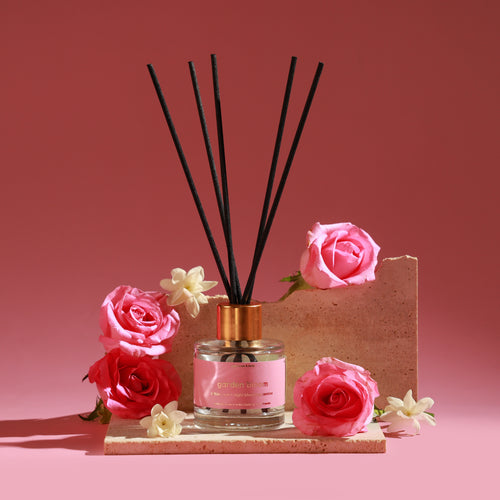
 Reception onlyFrom ₹749Before equipment, work through the list that actually produces clinic smell: the disinfectant in use and its dilution, whether the morning clean happens with windows open or shut, bin type and emptying frequency in the nappy-change and injection areas, the AC filter and drain pan, damp under the washbasin, and whether the space is aired before opening. If any of those is live, fragrance will make the room worse rather than better, because parents will smell both. A clinic that gets all of them right and still wants a signature at the door is a candidate for scenting. A clinic that has not is not.
Zone by zone, for a typical paediatric clinic
The line between the two halves of this table is the whole method. Note how many rows say no — in a well-designed children’s clinic, most of the floor plan is deliberately left alone.
| Area of the clinic | Scented? | Why | What we would use |
|---|---|---|---|
| Entrance and reception desk ★ | Yes, low | Short dwell, fresh noses arriving, and the only place a signature genuinely registers | Reed from ₹749, or Sukoon ₹1,899 |
| Parent waiting seating | Only at minimum | Thirty to sixty minutes of exposure, often for an unwell child — the longest dwell in the clinic | Same source as reception, no separate unit |
| Administrative and billing | Yes | Staff-facing, no patients seated for long periods, no clinical function | Whatever reception uses |
| Consultation and examination rooms | No | Clinicians use their own sense of smell, and a seated child cannot move away | Nothing |
| Vaccination, injection and procedure rooms | No | A distinctive scent repeatedly paired with a painful procedure becomes associated with it | Nothing |
| Nebulisation, asthma and neonatal follow-up | Never | Respiratory patients and newborns — the two groups with the least tolerance for added airborne load | Nothing |
| Before any of this: run the housekeeping list first — disinfectant choice and dilution, bin type and emptying frequency, AC filter and drain pan, damp under basins, and airing the space before opening. If any of those is unresolved, none of the rows above apply yet. | |||
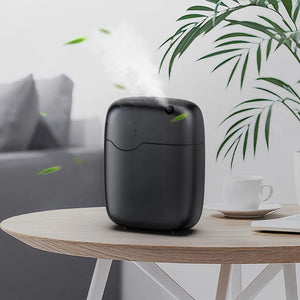
Small reception · no power neededFrom ₹749Shop →  Mid reception · has an off switch₹1,899Shop →
 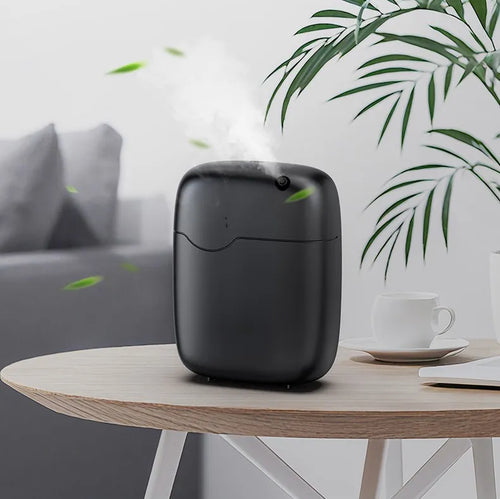 Large lobby · timed, dialable₹11,999Shop →
Setting the level, and keeping it there
Start at the equipment minimum and go up only if you must. Every commercial scent machine ships with defaults written for retail and hospitality, where the design brief is to be noticed. Your brief is the opposite. On a Vaayu, that means the shortest on-time and the longest off-time the unit offers, scheduled to clinic hours only — there is no reason to scent an empty building overnight, and running it only when occupied roughly halves consumption. On a Sukoon, it means three drops rather than six and intermittent rather than continuous mode.
Calibrate with a nose that has been outside. Olfactory adaptation is essentially complete within about twenty minutes, so by mid-morning nobody working in the clinic can judge the level — and because they cannot smell it, they ask for more. Give the job to someone arriving from outside, or step out for half an hour and judge your own first breath on returning. Do it again a fortnight later, because the second week is when most clinics quietly creep upward. If a parent ever comments on the fragrance, that is not a compliment to act on; it is the signal to reduce.
Then make it possible to switch off, and say so. Any clinic scenting its reception should be able to turn it off within seconds, and should be willing to, on request, for a family with a scent-sensitive or asthmatic child. A small, plainly worded line at the desk — that the reception carries a light fragrance and staff will switch it off on request — costs nothing and turns a potential complaint into evidence that the clinic thinks carefully. Choose the direction with the same restraint: dry and low-sweetness, such as Westin-inspired White Tea Serenity or Ritz-Carlton-inspired Quiet Luxury, rather than florals or anything gourmand.
What we would actually install
Matched to reception size, not to clinic prestige. The last row is on this table because it is frequently the right answer and no supplier ever prints it.
| Option | Suits | Control you get | Price |
|---|---|---|---|
| Reed diffuser ★ | A small reception desk — up to about 150 sq ft, on three reeds not six; nothing to switch, nothing for a child to reach | Reed count only — no switch, no timer | from ₹749 |
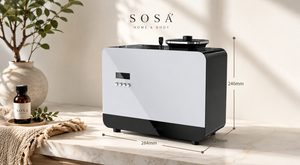
| Sukoon 500ml | A reception up to ~320 sq ft — up to about 320 sq ft, in intermittent mode on three drops; the cheapest option with a genuine off switch | On/off, intermittent mode, you control the drops | ₹1,899 |
| Vaayu | A large lobby or a zoned duct — a large lobby, or a reception on its own duct zone; the duty cycle is why it can run low enough for a clinic | Duty cycle in seconds, timer, app scheduling | ₹11,999 |
| Aangan | Whole-facility HVAC — a facility of 8,000–10,000 sq ft with zoned ducting — and only if the clinical zones are separately zoned | Zone-level control, but only if the ducting is zoned | ₹25,999 |
| Nothing at all | A clinic where housekeeping and ventilation are already right, or any facility centred on newborn, respiratory or oncology care | Complete — and the correct answer more often than the trade admits | ₹0 |
Versailles
I sell scent machines, and I will still tell a paediatrician that the correct answer is often none. A children’s clinic is not a hotel lobby. The people in it are unwell, anxious, small, and sitting there for the better part of an hour. An intensity that reads as luxurious in a lobby reads as inescapable in a waiting room, and the person who suffers it most is the one least able to say so.
When clinics ask me what fragrance to choose, my first question is what their reception currently smells of. Nine times out of ten the honest answer involves phenyl, a bin, or an AC that has not had its filter washed since summer. Fragrance does nothing to any of those except join them. Solve the smell you have before buying the smell you want.
And if the clinic is genuinely clean, aired and well kept, and the owner still wants something at the door — then yes, a very light dry note at reception is a real and worthwhile detail. Keep it out of every clinical room, keep it below the level anyone remarks on, be able to switch it off for a family who asks, and put the decision through your own infection-control and clinical governance people rather than through me. A portion of every order funds a girl’s classroom through Nanhi Kali.
Frequently asked questions
- Is ambient fragrance appropriate for a paediatric clinic? — the case for and against.
- Which areas should stay fragrance-free? — the seven zones, and why.
- Should fragrance cover disinfectant smell? — no — and what to do instead.
- When is the Vaayu too much for a clinic? — the size threshold, honestly.
- Brand: the SOSA founder story.
SOSA products & prices (verified August 2026): Hotel Collection water-based ultrasonic diffuser fragrance 15ml ₹299 · 100ml ₹999 · 300ml ₹1,799 · Pack of 7 (15ml, all fragrances) ₹1,799; refills 100ml from ₹999. Seven scents: The Ritz-Carlton-inspired (white tea · bergamot · cedar), Westin-inspired (white tea · aloe · cedar), 1 Hotels-inspired (cedarwood · vetiver · green leaves), The St. Regis-inspired (amber · violet · woods), Shangri-La-inspired (jasmine · green tea · white tea), Four Seasons-inspired (citrus · floral · sandalwood), W Hotels-inspired (citrus · pepper · amber). Diffusers: Boond 300ml ₹899 · Sukoon 500ml ₹1,899 · Megh 6L ₹3,499. Water-based, phthalate-free, composed to IFRA standards for home diffusion; 3–6 drops per tank. Made in India, Pune. The Hotel Collection scents are SOSA's own interpretations inspired by the world's finest hotels; all hotel names are trademarks of their respective owners and are used only to describe the scent style — SOSA is an independent Indian fragrance house, not affiliated with or endorsed by any hotel brand. Prices and availability subject to change — see the live product pages.