

Why categories go unclaimed: people do not buy things they cannot perceive in their own home, things nobody has ever bought them, and things they cannot justify spending on twice.
Categories that honestly work for a full house: a specific book rather than a good one, a mature plant in a pot they would not have chosen, hand-thrown ceramics from a named studio, a booked table, a subscription — and home fragrance, which is the most reliably empty column of the lot.
Do not give this if: they have told you they dislike scented things, there is a newborn in the house, someone in the home is scent-sensitive, or you already know they own two or three diffusers.
2. Inventory categories, not objects. Books. Kitchen tools. Glassware and barware. Table linen and textiles. Plants. Stationery. Grooming. Art and framed things. Music. Tools. Food. Air. Go room by room and mark each column full, part-full or empty. Full houses are full unevenly, and the empty columns are always the same three or four.
3. Look for the categories people cannot buy for themselves. A category goes unclaimed for one of three reasons: they cannot perceive the gap, nobody has ever bought them one, or they cannot justify the second purchase. Home fragrance fails all three tests at once, which is why it sits empty in so many otherwise complete homes.
4. Some genuinely good non-fragrance answers. A specific book — the monograph on the architect they admire, not a bestseller. A mature plant in a heavy pot, already established, so there is no project attached. Hand-thrown ceramics from a workshop you can name. A booked table, dated, so it is an appointment rather than a voucher. A subscription to something that arrives every month and then stops. All of these clear the same bar: they cannot be compared to a better version already in the house.
5. Prefer a gift with an end date. Somebody with a full house does not have shelf space for your sentiment. A consumable is received, used and finished — and finishing is a feature, not a flaw. A 50ml reed diffuser runs six to eight weeks; a 130ml runs fourteen to eighteen. When it is done, nobody owes anybody a display.
6. Buy from the room, not from the person. You almost never know this person's taste well enough to bet on it. You usually do know something about their home — small or large, minimal or layered, hosted-in or worked-in. That is enough information to choose well.
7. And say no when it is a no. If they have told you they dislike fragrance, if there is a newborn in the flat, if anyone in the household is scent-sensitive, or if you have already seen two diffusers on their console, this is not the answer for them. Go back to the category list.
Everything we make is composed and handmade in small batches in Pune, and a portion of every order supports girl-child education through Nanhi Kali.

Part one — how to find the empty category in a full house
The mistake almost everybody makes with this recipient is to shop upward. If they have a good pen, find a better pen. If they have nice glasses, find nicer glasses. It never works, for a reason that is obvious once stated: in any category they already care about, they have out-shopped you. They have thought about it longer, they know the brands, and they have bought at the ceiling of their own taste. Your better pen is their fourth-best pen. The only way to win is to leave the categories they have already played and find one they have not entered — and that requires an audit rather than an inspiration. Here is how I run it before I buy anything for the two or three people in my life who are genuinely hard.
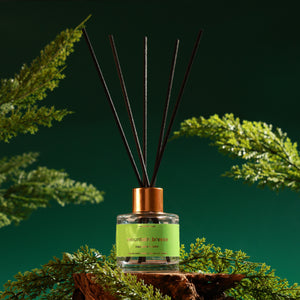
 Mountain Breeze₹849 · anti-floralNot every gap is an opportunity. Some columns are empty because the person has actively rejected them — no plants because they travel, no candles because of a cat, no art because they are still deciding. Those are closed, not open, and giving into them is how you produce the polite thank-you that means nothing. An open column is one that is empty by accident. Three accidents produce most of them. The first is invisibility: you cannot buy a solution to a problem you cannot perceive, and after about ninety seconds in your own home your nose stops reporting it entirely, which is why people with beautifully finished flats often have no idea theirs smells of last night's tadka. The second is precedent: some things simply never occur to anybody as a purchase for oneself. The third is the second-purchase problem — plenty of people will buy one good thing and never buy the second, because the first still works and the second feels indulgent.
Part two — the category map of an already-full house
This is the working version of the audit above, with the categories most likely to be claimed at the top and the ones most likely to be genuinely open at the bottom. It is deliberately unflattering to my own category in places — there are several rows here where the honest recommendation is not a diffuser. Use the last column as your shopping list.
| Category | Claimed in a full house? | Why | What to give if it is open |
|---|---|---|---|
| Air · how the home smells ★ | Almost always open | They cannot perceive their own home's smell, and nobody buys it for themselves | A reed diffuser, ₹749–₹1,349, or a duo from ₹1,498 |
| Books | Claimed, but specifically | They own many; they do not own the exact one about their obsession | A monograph or out-of-print title, not a bestseller |
| Plants | Often open, sometimes closed | Open if they have none by accident; closed if they travel constantly | Something mature in a heavy pot — no project attached |
| Glassware and barware | Claimed | Anyone who entertains has already chosen these carefully | Nothing. Do not shop upward here |
| Ceramics and tableware | Claimed but extendable | They have a set; they rarely have one beautiful odd piece | A single hand-thrown piece from a studio you can name |
| Food, sweets, dry fruit | Claimed and oversupplied | At festivals they will receive several; it also assumes an appetite | Skip, unless you know exactly what they eat |
| Experiences and tables | Genuinely open | Time is the one thing a full house does not contain | A dated, booked reservation — not an open voucher |
| Clothing, jewellery, decor | Closed | Requires their size, their palette and their taste all at once | Avoid entirely for anyone whose taste you cannot recite |
| The honest caveat: the top row is not automatically right. It is open for most people and firmly closed for some — anyone who has said they dislike scented things, any home with a newborn or a scent-sensitive resident, and anyone who already has two or three diffusers on the go. In those houses the correct answer is further down this table, and Part three explains how to tell. | |||
Garden Bloom · the safe defaultfrom ₹799Shop → 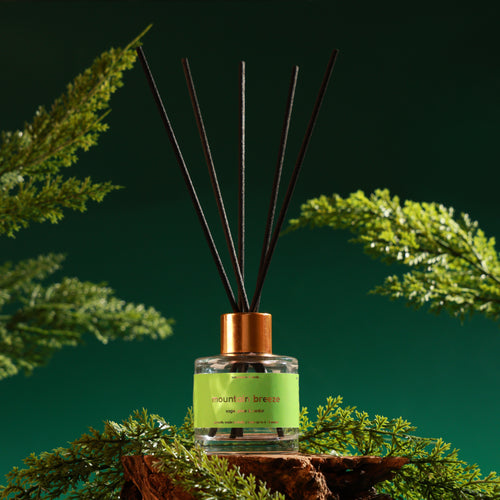 Mountain Breeze · nothing sweetfrom ₹849Shop →
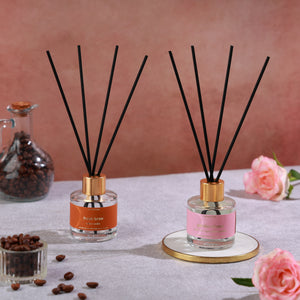
 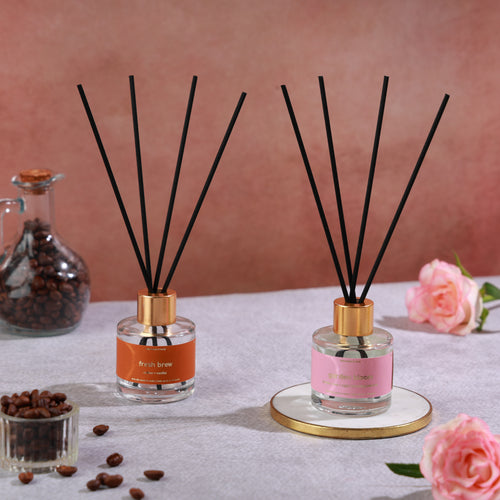 Warmth and Bloom duo · two rooms₹1,598Shop →
Part three — when this is the wrong gift, said plainly
A gift guide that never says no is an advertisement, so here is the no. Do not buy anybody home fragrance if they have told you they dislike scented things. Not "hinted" — told. People say it because it is true, and the number of times I have watched somebody buy a diffuser for a person who has openly complained about their office air freshener is depressing. The polite version of that gift is a gift that gets moved to a cupboard within a week, and you will both know. Equally: do not send fragrance into a home with a newborn, or into a household where somebody has asthma, migraine triggers or any diagnosed sensitivity to scent. It is not a safety scandal — our compositions are alcohol-free, phthalate-free, paraben-free, low-VOC and IFRA-compliant — it is simply an unwelcome decision to make on somebody else's behalf during a period when they are already managing a hundred variables.
Three more nos, less obvious. A very small, sealed room is the wrong destination — a studio flat with one window, or a home where the only spare surface is in a two-metre passage, will read any fragrance as too much, and the recipient will conclude the gift is aggressive when it is simply misplaced. A recipient who already owns two or three diffusers does not have an empty column; they have a claimed one, and you are back to shopping upward, which is the trap this whole article exists to keep you out of. And a relationship that cannot survive a wrong guess — a first meeting with a prospective father-in-law, a client you have never visited — is a bad place to spend a fragrance decision, not because the risk is high but because the safer options in that situation are genuinely fine. A good box of tea, a plant, a dated restaurant booking. None of them presume anything.
What is left after those exclusions is still most people, and for them the case is strong for one specific reason. A worn perfume presumes; a room does not. Giving somebody a fragrance to wear implies you have an opinion about how their body should smell, which is an intimacy that is right for a spouse and wrong for a boss, an in-law, a colleague or a friend of ten years you have never once discussed scent with. Giving a fragrance for a room implies only that you think their home deserves something good. That single distinction is why this category travels so much further than perfume in exactly the situations where gifting is hardest — and it is why I would give a diffuser to my husband's mother and would never, under any circumstances, give her an eau de parfum.
Part four — the gift edit, by what you actually want to spend
Assuming the column is open and none of the exclusions apply, this is how I would choose. The variable that matters is not budget — it is how much you know about their home, and how considered you want the gift to look.
| Budget | What to give | Best when | What it says |
|---|---|---|---|
| ₹749–₹849 ★ | One 50ml bottle — Garden Bloom, or Mountain Breeze if they reject sweetness | A colleague, a host, a thank-you — six to eight weeks of use | Considered, unfussy, no obligation attached |
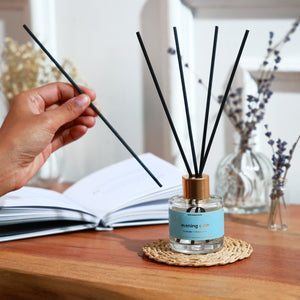
| ₹749 | Morning Freshness 50ml | The gift is really for a kitchen, bathroom or working room | Practical and cold rather than pretty — reads as useful |
| ₹799 | Evening Calm 50ml | A small flat, a nervous recipient, someone who dislikes strong smells | Quiet. The softest thing we make, deliberately |
| ₹1,249–₹1,349 | One 130ml bottle in any of the five | You want the gift to last a season rather than a month | Generous through duration — 14–18 weeks, not a louder room |
| ₹1,498–₹1,598 | A duo set — Day and Night, Warmth and Bloom or Fresh and Grounded | You want it to look like you thought about their house | Two scents for two rooms — the format that reads as planned |
| ₹2,498–₹2,598 | A duo in 130ml | A significant occasion — a wedding, a milestone, a landmark thank-you | Substantial without being showy; roughly four months of both |
| Not a gift | An oil refill at ₹2,399 | Only for someone you know already owns and likes a SOSA bottle | Thoughtful to an owner; baffling to anyone else |
Versailles
The hardest person on my own list is my father. He is seventy-three, he has bought himself everything he wants for forty years, and he returns anything he considers excessive, which is most things. For a decade I gave him books he had already read and shirts he never wore. The year I stopped asking what he would like and started asking what nobody had ever bought him, the answer took about ninety seconds. Nobody had ever bought him anything for the room he sits in for six hours a day.
I want to be careful here, because I make this product and I am aware of how convenient that story is. So let me put the honest version: the method in this article is the valuable part, and home fragrance is only one of the answers it produces. Sometimes the audit lands on a plant. Sometimes it lands on a table booked for a Tuesday. My father's flat is small and he has firm opinions about smells, so what I actually gave him was the quietest thing we make, in the biggest size, and I told him where to stand it and that it would be finished by April.
That last part matters more than people expect. A gift that ends is a gift that asks nothing of the person receiving it, and for somebody whose house is already full, asking nothing is close to the whole point. Everything is composed and handmade in small batches in Pune, and a part of every order funds a girl's classroom through Nanhi Kali.
Frequently asked questions
- The four gift types that survive a full house — consumable, replacement, room-not-person, life-stage.
- What do you buy someone who doesn't need anything? — why need is the wrong axis entirely.
- Are reed diffusers a good gift for this person? — including the four recipients it is wrong for.
- The complete guide — this article and the eight around it, in one place.
- Brand: the SOSA founder story.
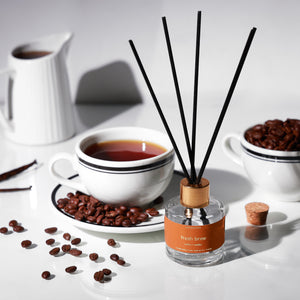
SOSA reed diffuser range & prices (verified August 2026): alcohol-free, phthalate-free, paraben-free and IFRA-compliant compositions on a heat-stable coconut-derived (CCT) carrier, low-VOC, supplied in a refillable glass bottle with six fibre reeds; 50ml lasts 6–8 weeks and 130ml lasts 14–18 weeks. Morning Freshness (Malabar lemon · peppermint · Nilgiri eucalyptus) 50ml ₹749 · 130ml ₹1,249 · 9.0/10; Garden Bloom (British rose · night-blooming jasmine) 50ml ₹799 · 130ml ₹1,299 · 8.9/10; Evening Calm (Kashmir lavender · chamomile) 50ml ₹799 · 130ml ₹1,299 · 8.9/10; Fresh Brew (Coorg coffee · Kerala vanilla) 50ml ₹849 · 130ml ₹1,349 · 9.5/10; Mountain Breeze (Himalayan pine · sage · Indian cedar) 50ml ₹849 · 130ml ₹1,349 · 9.4/10. Reed diffuser refills are oil only — you reuse your own vessel and reeds: 300ml ₹2,399 (roughly 8–11 months) · 500ml ₹3,499 (roughly 14–18 months), about ₹7–8 per ml against ₹15–17 per ml for a 50ml bottle. Duo sets ₹1,498–₹1,598 for 2 × 50ml and ₹2,498–₹2,598 for 2 × 130ml. Strength figures are positions on SOSA’s own internal strength scale, not an industry standard. Replacement reeds are not sold as a separate SKU; SOSA guidance is to refresh reeds every few months. The reed line is separate from the water-based Hotel Collection for ultrasonic machines (15ml ₹299 · 100ml ₹999 · 300ml ₹1,799) and the two are not interchangeable. Diffusers: Boond 300ml ₹899 · Sukoon 500ml ₹1,899 · Megh 6L ₹3,499 · waterless Vaayu ₹11,999. Composed and handmade in small batches in Pune, India; tested through 45°C summer heat and 85% monsoon humidity. Free shipping above ₹499. A portion of every order supports girl-child education through Nanhi Kali. Prices subject to change — see the live product pages.