
 Sukoon ₹1,899
 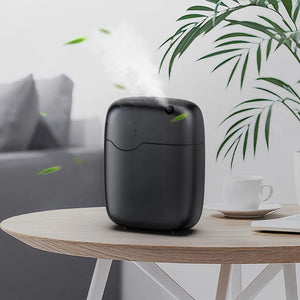 Vaayu ₹11,999
  Mountain Breeze ₹849
  Hotel Collection 300ml ₹1,799
 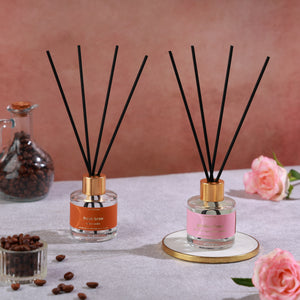 Reed oil refill 500ml ₹3,499
Measure each arrival zone separately. Under 150 sq ft: a reed diffuser ₹749–₹1,349. 150–320 sq ft: Sukoon ₹1,899. Past 320 sq ft on one connected path: Vaayu ₹11,999, freestanding.
Settle supply before you standardise. There is no separate Vaayu cold-air refill oil on sale at the time of writing; the 400ml in the box lasts roughly 90+ days and is the whole supply. The water-based Hotel Collection is never a substitute.
Expect no commercial framework, because none is published. No bulk pricing, no slab, no corporate account, no AMC, no installation, no stated warranty term, no lead time, no multi-site programme. Ask, in writing, and assume none of it exists until told otherwise.
2. Standardise one composition, and only one. Two compositions across a group is not an identity, it is two identities; and two in one building meet somewhere and produce a third that neither of them is. Choose a dry, low-sweetness composition, because dryness is what lets a scent sit at a clinic-appropriate level without becoming nameable.
3. Standardise the intensity target, not the setting number. "Lowest setting" means different things on different machines. What travels is the outcome: a colleague who has been outside for fifteen minutes, entering through the patient door at four in the afternoon, should notice the room is pleasant and be unable to name a fragrance. If they can name it, it is too strong — in every branch.
4. Let the hardware differ, deliberately. Measure each arrival zone — reception plus waiting plus any bay sharing unbroken air, with the doors as they sit at eleven on a clinic morning. Under 150 sq ft: a reed diffuser. 150–320: Sukoon ₹1,899. Past 320 on one path: Vaayu ₹11,999. 3,000+ sq ft of connected public area: Aangan ₹25,999, above that Meenar ₹38,500. And a Megh at ₹3,499 covers about 215 sq ft — less than a Sukoon — so it is never the coverage step up between branches.
5. Standardise the placement rule, which costs nothing and travels perfectly. One source, at the end of the arrival zone furthest from the corridor to consultation, at waist to chest height, clear of every air-conditioning return grille, out of the direct throw of a supply diffuser, never in a corridor and never in a clinical room.
6. Standardise the governance. One named person per site who owns the level; unconditional authority for anyone on that desk to switch it off; run windows covering clinic hours only, so nothing runs overnight or during cleaning; and a quarterly cold-nose check written down. Across three sites, governance is what stops three different rooms emerging from one specification.
7. Accept that the AC systems will differ, and that this changes placement rather than product. A branch on individual split units is a doors-and-distance problem. A branch on a ducted central system is a returns-and-distance problem — and in that branch above all, nothing goes into the ductwork, because a central system serves consultation and testing rooms in the same breath as reception.
8. And the conditions that hold in all three buildings. The clinical pathway stays fragrance-free — examination rooms, diagnostics, consultation cabins, procedure suites and post-operative areas take nothing in any format at any level at any hour. A genuine fragrance-free seat exists in each reception. Nothing here is medical, clinical, ventilation, air-handling, infection-control, accreditation or regulatory advice; all of that belongs to your own clinicians and licensed contractors. Composed and made in small batches in Pune, and a portion of every order supports girl-child education through Nanhi Kali.

Part one — what travels between sites and what does not
A multi-site scent programme fails in a predictable way: the group standardises the thing that is easy to specify — the equipment — and lets the thing that actually creates identity drift. Three properties travel perfectly, three do not travel at all, and knowing which is which is most of the job.
 Mountain Breeze 50ml₹849 · the compact branchTwo failure modes, both expensive, and I see each about equally often. The first is standardising upward: buying the machine that suits the largest branch and installing it in all three. In the small branch that means running an ₹11,999 unit at the bottom of its range to avoid overdosing a room a fraction of its rated size, which is a poor use of roughly ₹10,100 and no better a result than a ₹1,899 machine would give. The second is standardising downward: buying what suits the smallest branch and finding the large one uneven, then adding a second and a third source and producing pockets and overlaps instead of a held volume. Both come from treating the appliance as the standard. Setting numbers do not travel either: "level two" on one machine is not "level two" on another, and even the same model behaves differently in a room with a fresh-air intake than in a sealed one. And the air systems will differ — split units in one branch, a ducted system in another — which changes where the source stands rather than what it is. In the ducted branch specifically, walk the return grilles with a tissue before choosing a position, and put nothing whatever into the ductwork.
Part two — the site standard, item by item
Twelve items in a group specification, which must be identical everywhere, which may vary by building, and the reason. Only three of the twelve are genuinely fixed, and they are the three that create the identity.
| Item | Identical everywhere? | May differ by building? | Why |
|---|---|---|---|
| The composition ★ | Yes — one, absolutely | No | This is the identity. Two compositions across a group is two identities |
| The intensity target | Yes, expressed as the four-o'clock outcome test | No | An outcome travels between buildings; a dial number does not |
| The placement rule | Yes, expressed relative to the corridor and the grilles | No | A relative rule applies to any floor plan without translation |
| The machine or format | No | Yes — reed, Sukoon or Vaayu by measured arrival zone | Standardising hardware means overbuying in the small site or underholding the large one |
| The dial setting | No | Yes, whatever achieves the target in that room | Rooms differ in volume, exchange, ceiling height and occupancy |
| The dose in the tank | Start identical, then let it vary | Yes, if the target requires it | A common starting dose gives the group one number to audit from |
| Run hours | Yes in principle — clinic hours only | Yes in detail, since branch hours differ | Nothing should run overnight or during any cleaning shift |
| Who may raise the level | Yes — one named person per site | No | Without an owner, three sites drift upward independently |
| Who may switch it off | Yes — anyone on that desk, immediately | No | Staff are in that air nine hours a day; a control needing permission is not a control |
| The fragrance-free seat | Yes — one must exist in every reception | Yes in where it is | Somewhere a person was going to sit anyway, far enough for the difference to be real |
| The clinical boundary | Yes, and it is absolute | No | Examination, diagnostics, cabins, procedure and post-operative areas take nothing |
| Ductwork | Yes — nothing goes in it, in any branch | No | A central system serves clinical rooms in the same breath as reception |
| The honest caveat: this is a way of writing your own internal standard, not a programme SOSA operates. SOSA publishes no bulk or commercial pricing, no corporate or B2B account, no annual maintenance contract, no installation service, no stated warranty term, no lead time and no multi-location programme, and whether the Vaayu's Bluetooth app is iOS or Android is not published either — nothing on this page states or implies a discount, a slab, an invoice arrangement, an installation visit, a service contract, a warranty period or a delivery window, because none is published. Ask through the contact page and assume none of it exists until told otherwise in writing. Nothing here is medical, clinical, ventilation, air-handling, infection-control, accreditation or regulatory advice; no clinical outcome, patient response, safety property or business result — including any effect on ratings, footfall, patient numbers or revenue — is claimed. Some people are sensitive to airborne fragrance, which is why the clinical pathway stays fragrance-free in every branch and why a fragrance-free seat must genuinely exist in each. Fragrance adds a scent alongside what is already in the air; it removes nothing. | |||
 Mountain Breeze · under 150 sq ft₹849Shop → Sukoon · 150–320 sq ft₹1,899Shop →
 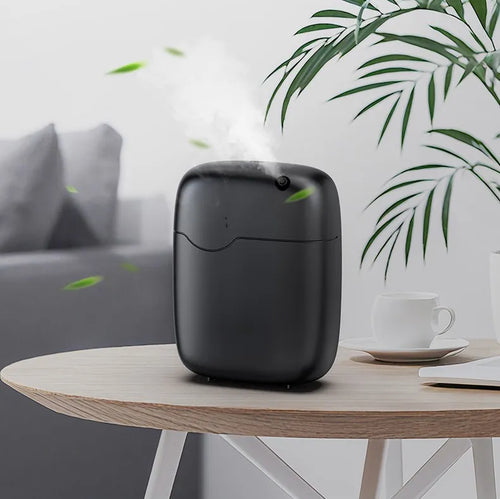 Vaayu · past 320 sq ft, freestanding₹11,999Shop →
Part three — the commercial gap, stated plainly
There is a part of this question that has nothing to do with fragrance, and I would rather set it out at length than have a group discover it in month four. SOSA does not currently sell a separate Vaayu cold-air refill oil. The machine ships with four cold-air fragrances at 100ml each — 4 × 100ml = 400ml — which lasts roughly 90+ days at a mid intensity, or 400 ÷ 90 = 4.4ml a day, and that is the whole supply available at the time of writing. For a household this is an inconvenience to be dealt with in three months. For a group standardising an identity it is structurally different, because you are not buying a consumable; you are adopting a standard that your receptions will learn, your returning patients will associate with your name, and — if you put it in your brand language — you will have committed to publicly. If the supply line behind that has not been confirmed, you have built an operational dependency on something you have not verified, which is exactly the sort of exposure a practice would never accept in any other part of its purchasing. So: ask through the contact page what cold-air fragrance supply is currently available and on what basis, and get the answer before committing. And the water-based Hotel Collection sold for ultrasonic machines is never a substitute for it — it is a different product that must not be used in a Vaayu despite sharing scent names.
The second half of the gap is broader and equally worth stating. SOSA publishes no bulk or commercial pricing, no B2B or corporate account, no annual maintenance contract, no installation service, no stated warranty term, no lead time and no multi-location programme. Spare parts, servicing arrangements and whether the Bluetooth app is iOS or Android are unverified. I am not going to imply that a discount exists because a group is buying three machines, or that an invoice arrangement can be organised, or that somebody will come and install it, or that a delivery window can be promised — none of that is published, and inventing it would be the sort of thing that costs a supplier a clinical customer permanently. What I will say is that this is a purchase you can make perfectly well without any of those things, provided you go in knowing they are absent. Three Sukoons at ₹1,899 each is 3 × ₹1,899 = ₹5,697, ordered like any other retail purchase with free shipping above ₹499; there is nothing complicated about it. It only becomes complicated if you have assumed a framework that does not exist, and then built a rollout schedule on it.
The third thing is a caution about what a signature scent should be allowed to carry. I would not build brand language around a fragrance in a healthcare group, and I say that as the person selling the fragrance. A scent in a clinic reception should be quiet enough that a patient notices the room is pleasant and cannot name what is in it — which means it is not a strong enough signal to hang a brand on, and trying to make it one pushes the level past where it belongs in a clinical building. There is also a claims problem: everything a marketing team would naturally want to say about a signature scent — that it calms, that it reassures, that it makes patients more comfortable, that it improves the experience — is a claim I will not support and you should not make. What a consistent low scent honestly gives you is a building that reads as looked-after and does not vary between branches. That is a real and unglamorous benefit, and it is the whole of what I am prepared to claim for it. Keep the marketing quiet and the level quieter, and the programme will hold up under any scrutiny a clinically trained patient applies to it.
Part four — the arithmetic and the unanswered questions
Nine lines of a three-site plan, what each costs at published retail, what SOSA publishes about it, and the exact question to ask before committing. The third column is short on purpose, and the fourth is the useful one.
| Line | At published retail, for three sites | What SOSA publishes | The question to ask first |
|---|---|---|---|
| Machines, mixed by size ★ | e.g. ₹849 + ₹1,899 + ₹11,999 = ₹14,747 | Retail prices only | None needed — but size each branch before ordering, not after |
| Three identical Sukoons instead | 3 × ₹1,899 = ₹5,697 | Retail prices only | Does the largest branch's public volume actually stay under 320 sq ft? |
| Ultrasonic fragrance, 300ml per site | 3 × ₹1,799 = ₹5,397, at ₹1,799 ÷ 300 = ₹6.00 a millilitre | 15ml ₹299 · 100ml ₹999 · 300ml ₹1,799 · seven 15ml ₹1,799 | Nothing — but note the seven-pack is 7 × 15 = 105ml at ₹17.13/ml: variety, not value |
| Reed oil refills, if any branch runs bottles | 500ml ₹3,499 = ₹3,499 ÷ 500 = ₹7.00 a millilitre | 300ml ₹2,399 (₹8.00/ml) · 500ml ₹3,499 (₹7.00/ml) | Reeds are not sold separately — how will you refresh them? |
| Vaayu cold-air fragrance, ongoing | 400ml in the box, roughly 90+ days, then unresolved | No separate cold-air refill oil is currently sold | What supply is available now, and on what basis? Get it in writing |
| Bulk or group pricing | Not applicable at published prices | Nothing — no bulk pricing, slab or corporate account | Is there any commercial arrangement at all? Assume not until told otherwise |
| Installation across three sites | Nil — these are freestanding devices you place yourself | No installation service is published | Nothing to ask, but do not plan around a visit |
| Warranty and servicing | Unknown | No stated warranty term; spare parts and servicing unverified | What is the warranty position, and what happens if a unit fails in month seven? |
| Lead time for a rollout | Unknown | No published lead time or delivery window | Can three units ship together, and by when? Do not commit an opening date to it |
Versailles
A group opening its third eye clinic asked me for a proposal covering all three buildings, and specified in the brief that the solution should be identical across sites so that the experience would be consistent. It is a perfectly sensible instruction, and it is the one part of the brief I had to argue with, because the word "solution" was carrying two different things: what people would smell, and what would produce it.
Their first clinic had a 130 square foot reception on split units, their second a 250 square foot waiting area, and the new one an open public floor of a little over 380 with a ducted system. An identical machine in all three would have been either three times too much in the first or not enough in the third. What we did instead was write one card — one composition, one four-o'clock outcome test, one placement rule, one named owner per site — and then buy a bottle, a Sukoon and a Vaayu. Three receptions, one identity, and a total spend well below what a uniform rollout would have cost.
The part of that conversation I would repeat to anyone is the part they did not ask about. Before we agreed anything, I told them there is no separate Vaayu cold-air refill oil currently sold, and that SOSA publishes no bulk terms, no maintenance contract, no warranty period and no lead time. They asked why I was telling them that in a proposal. The honest answer is that a group discovers those things eventually, and the only question is whether they discover them from me at the start or from an empty tank in month four. I would rather lose a rollout than have a clinical customer find out I had let them assume. Composed and made in small batches in Pune, and a part of every order funds a girl's classroom through Nanhi Kali.
Frequently asked questions
- The complete plan for a premium eye centre — the pillar this family ends on.
- Zoning a new LASIK centre at layout stage — for the branch still on a drawing.
- 1,800 sq ft with central AC — the branch with ducted air.
- Reception, cabins, diagnostics and optical — how many zones each branch really has.
- Brand: the SOSA founder story.
SOSA range, specifications and prices used in this guide (verified August 2026): Vaayu ₹11,999 — waterless cold-air nebulisation of undiluted fragrance oil; no water, no heat, no added humidity, no white mineral dust. Coverage up to 1000 m³, about 2,000–3,000 sq ft. 400ml refillable tank lasting roughly 90+ days at a mid setting. Bluetooth app plus onboard controls, 1h / 4h / 8h / 24h run windows, day selection, adjustable intensity, auto-stop and key-lock. Under 38 dB. DC 12V / 1A, 5W. Freestanding or wall / HVAC mount. CE, RoHS and SGS certified. SOSA does not currently sell a separate Vaayu cold-air refill oil; the 400ml supplied in the box is the fragrance available at the time of writing, so a practice planning continuous or multi-site use should confirm current refill availability with SOSA before committing. The water-based Hotel Collection is made for ultrasonic machines and must not be used in a Vaayu. Other machines: Boond 300ml ₹899 (~150 sq ft, ultrasonic) · Sukoon 500ml ₹1,899 (270–320 sq ft, 16–18 hours on low, remote and steady/2H/4H timers, three 15ml fragrances included, ultrasonic) · Megh 6L ₹3,499 (~215 sq ft — a runtime and humidity machine that covers less than a Sukoon, never a coverage upgrade) · Safar ₹3,999 (waterless cold diffusion, cordless, 20ml, about 6.9cm, three speeds, 1/2/3-hour auto-off — sold as a car and travel diffuser, personal-scale only; SOSA publishes no coverage figure for it) · Aangan ₹25,999 (HVAC nebulising, ~8,000–10,000 sq ft) · Meenar ₹38,500 (commercial HVAC, 12,000–18,000 sq ft). Water-based Hotel Collection for ultrasonic machines: 15ml ₹299 · 100ml ₹999 · 300ml ₹1,799 · pack of seven ₹1,799; scents are inspired by the atmosphere of well-known hotels — SOSA is an independent Indian brand and is not affiliated with, endorsed by or supplying any hotel group. Reed diffusers ₹749–₹1,349 (50ml 6–8 weeks, 130ml 14–18 weeks, six fibre reeds, no 100ml size; replacement reeds are not sold separately). Reed oil cannot be used in an ultrasonic machine and Hotel Collection oil cannot be used in reeds. SOSA sells no room spray or home spray — every SOSA spray is a car perfume. Nothing in this guide is medical, clinical or safety advice. A fragrance diffuser adds a scent to the air. It does not clean, purify, filter, sanitise or disinfect air, does not remove or neutralise disinfectant, damp or occupancy smells, and has no effect on comfort, anxiety, waiting time, recovery or any clinical outcome. Some people are sensitive to airborne fragrance, which is why this guide recommends that examination rooms, diagnostic areas, consultation cabins, procedure suites and post-operative areas remain fragrance-free, that a fragrance-free seating option always exist, and that a diffuser is never mounted into shared HVAC in a clinical building. Decisions about clinical policy, ventilation standards, infection control and patient suitability rest entirely with the practice and its clinicians. A persistent stale, damp or disinfectant smell is a ventilation, moisture or cleaning problem — SOSA sells no dehumidifier and no air purifier, and fragrance should never be used to cover one. Coverage, runtime and longevity figures are manufacturer specifications and typical ranges, not guarantees, and vary with room volume, ceiling height, air exchange, occupancy and season. SOSA publishes no commercial or bulk pricing, no corporate account, no annual maintenance contract, no installation service, no stated warranty term and no multi-location programme; warranty length, spare parts, servicing and app platform availability are unconfirmed, and larger or multi-site enquiries should go through the contact page before any commitment. Composed and made in small batches in Pune, India. Free shipping above ₹499. A portion of every order supports girl-child education through Nanhi Kali. Prices subject to change — see the live product pages.