


Cash flows downward and it is not rude. For anyone you or your building employs, cash is the convention and it is what most people would choose. An object alongside it is a courtesy. An object instead of it is a downgrade and everyone involved will read it as one.
Two SKUs cover almost any list. One thing for the people who receive an object, one thing for the group where you have no information. 5 × ₹749 = ₹3,745 for one group and 4 × ₹379 = ₹1,516 for another is ₹3,745 + ₹1,516 = ₹5,261 for nine people and two decisions.
Identical inside a group, never across groups. People who see each other's gifts must receive the same one. People in different groups will not compare, so the groups can differ freely.
- The straight answer
- Part one — the three moves that make the list finite
- Part two — the whole obligation list, tier by tier
- Part three — the direction rule
- Part four — where obligation lists go wrong
- Part five — what SOSA cannot do for this list
- Part six — the plan, by household shape
- A note from Sonal
- FAQs
2. Group the names by who pays whom. People you employ directly. People the building employs. People paid per job who come to your door. People around your child. Neighbours, where no money changes hands in either direction. That single sort determines whether cash is appropriate, where the ceiling sits, and whether an object should be given at all.
3. Give cash to every group where money already flows from you. For house help, a cook, a driver, a nanny, the building's guards and sweepers, cash is the convention and it is what most people would choose. It is flexible, it needs no storage, it assumes nothing about anybody's household, and it does not have to be carried home on a bus. This is not the cheap answer or the lazy one; it is the correct one.
4. Add an object only as a courtesy on top. The genuine argument for a physical thing is that cash alone can read as settling an account, and an object acknowledges a person rather than an arrangement. That argument holds only once the envelope has been given in full. Nothing here substitutes for pay, and nothing here substitutes for a Diwali bonus.
5. Buy one SKU per group and buy it as many times as the group has names. Five people at ₹749 is 5 × ₹749 = ₹3,745. Four at ₹379 is 4 × ₹379 = ₹1,516. Together, ₹3,745 + ₹1,516 = ₹5,261 for nine people and two decisions rather than nine.
6. Identical inside a group is fairness, not laziness. The four men on your gate will see each other's gifts within the hour. So will six teachers in a staff room. Where people will compare, uniformity is the only arrangement that costs nobody anything.
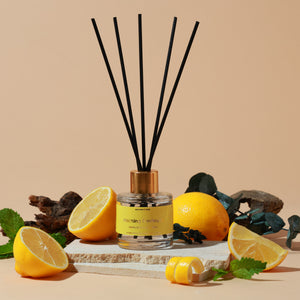
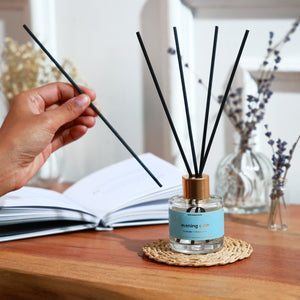
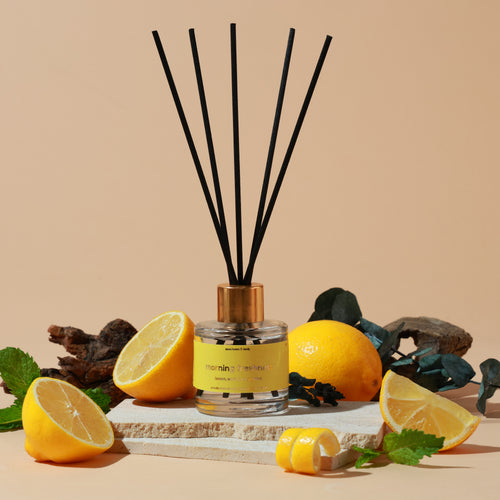
7. Match the object to the home, not to the person. A reed diffuser wants a flat surface at adult height, a tray under it, distance from any lamp and no small hands reaching it. Where you cannot confirm that, an Everyday Beautiful Mug at ₹474 has no requirements at all.
8. Take names off the list where the honest answer is that nobody would miss them. An obligation list that only ever grows is not a tradition; it is an unreviewed subscription. Removing two names is the cheapest improvement available to you and it costs nothing but a decision.
Everything is composed and handmade in small batches in Pune, and a portion of every order supports girl-child education through Nanhi Kali.
Part one — the three moves that make the list finite
An obligation list feels heavier than a list of friends not because it is longer, but because every name on it seems to require a separate judgement about a separate relationship, with no obvious stopping rule. Three moves, in order, convert it from a set of individual dilemmas into two or three purchases. None is about product, and all three can be done in a quarter of an hour before you open a single shop.
 Everyday Mug₹474 · ceramicThis is the move that does the real work. Take each name and ask one question: does money already flow between us, and in which direction? Where you or your building pays them, cash is expected — an envelope is not awkward, it is the normal form. Where nobody pays anybody, as with a neighbour, cash would be strange and an object is the only available shape. Where the person is paid per job by someone else, a small immediate gesture fits and a large object does not. Sorting by direction resolves the cash-or-object question for the whole list in about four minutes, and it beats closeness as a key, because closeness varies by person and direction does not. Where an object is the answer and you know nothing about the home, an Everyday Beautiful Mug at ₹474 requires no information at all.
Part two — the whole obligation list, tier by tier
Five tiers, defined by direction rather than by warmth. The column that decides everything is the third — whether money already moves between you — and the ceiling column describes what the relationship will carry without changing shape, not a budget. No price appears here for anything outside our own range.
| Tier | Who is in it | Does money already flow | Where the ceiling sits | What I would give |
|---|---|---|---|---|
| 1 · Paid by you, inside your home ★ | House help, cook, driver, nanny, gardener | Yes, directly from you | Cash sets it. The object is small and secondary | Envelope, then Morning Freshness ₹749 or a mug ₹474 |
| 2 · Paid by the building | Guards, sweepers, lift operator, maintenance team | Yes, but by the society, not by you | Modest, and identical across every person | Cash, coordinated with neighbours. Then mugs ₹474, all the same |
| 3 · Paid per job, at your door | Delivery riders, couriers, milk, newspaper, water cans, laundry | Yes, per drop, usually by a platform | Low, immediate, nothing to carry | Cash or something cold to drink. An object only for the regulars |
| 4 · Around your child | Class and subject teachers, class helper, van driver, coach | Through fees, not person to person | Deliberately low — this is an appropriateness ceiling | Check the school policy, then ₹379 candles, identical and unpersonalised |
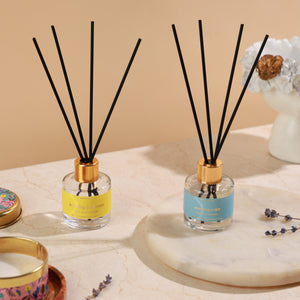
| 5 · Reciprocal, no money at all | Neighbours, the family who always sends something first | No, in either direction | Set by what arrives from them, and deliberately unmatched | An object, never cash. A ₹799 diffuser or a ₹379 candle |
| The honest caveat: tiers 1, 2 and 3 all describe working people receiving something from a household that benefits from their work. Nothing in this guide is a substitute for pay, for a Diwali bonus, or for settling an account in full and on time — and a gift given in place of any of those is not a gift, whatever it cost. Where the money and the object cannot both be afforded, the money is the one to give. I would rather write that on my own page than have somebody read this and buy a bottle with an envelope's worth of budget. | ||||
 Bookshop · the low tier, identical₹379Shop →
  Everyday Mug · no requirements at all₹474Shop →
 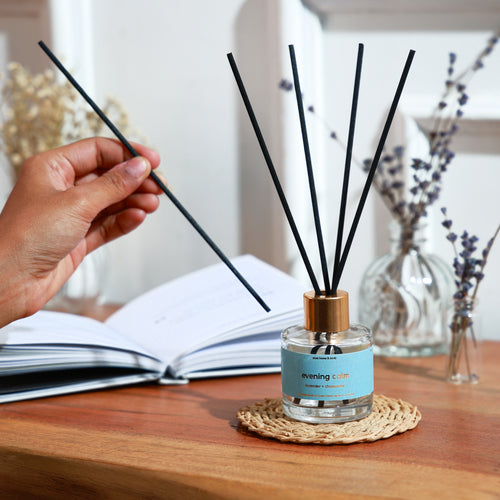 Evening Calm · the softest in the range₹799Shop →
Part three — the direction rule
The same gift means different things depending on which way the underlying relationship runs, and almost every Diwali gifting mistake I hear about is a gift that was correct in one direction being used in another. Cash to your driver is ordinary; cash to your neighbour is peculiar. A generous object to a teacher raises a question; the same object to a cook does not. Read down the last column, because the failure modes are more instructive than the recommendations.
| Direction | Typical names | What cash means here | What an object means here | The specific failure mode |
|---|---|---|---|---|
| Downward — you employ them ★ | House help, cook, driver, nanny | Normal, expected, preferred by most | A courtesy that says the person, not the job | Object given instead of cash. Everybody notices |
| Institutional — the building employs them | Guards, sweepers, maintenance | Normal, and better when coordinated across flats | Fine, if identical for every person on the shift | Nine flats giving nine different things to four men |
| Transactional — paid per job | Delivery riders, couriers, water cans | Immediate and useful, weighs nothing | A parcel added to a round they are already carrying | Holding someone at the door while you find it |
| Assessment — they judge your child | Teachers, coaches, examiners | Never. Cash here is not a gift, it is a problem | Only if low, identical and unpersonalised | Value creeping up until it reads as leverage |
| Lateral — nobody pays anybody | Neighbours, the family across the landing | Strange, and reads as a payment for something | The only available shape, and it should be modest | Matching an expensive gift and escalating next year |
| Upward — they hold something over you | A boss, a landlord, an office you need something from | Never appropriate in this direction | Small, or nothing. Often nothing is correct | Anything large enough to be remembered as a favour |
| The honest caveat: direction is a strong rule but it is not the only one, and it does not override a person telling you what they would prefer. If someone says plainly that they would rather have the money, or that they would rather you did not give them anything, that answer beats every row in this table. Asking is not rude; in my experience it is awkward for about four seconds and then it is simply useful, and the people most often guessed at are the people least often asked. | ||||
Part four — where obligation lists go wrong
The first failure is accretion. Obligation lists grow every year and are almost never pruned, because removing a name feels like a statement and adding one does not. After six or seven years you are buying for people whose connection to your household ended some time ago, and the budget you are complaining about is not a budget problem at all. The cheapest improvement available to most readers of this page is taking two names off. What people notice is not a quiet removal; it is being given something visibly perfunctory, which is what happens when a fixed amount of money and attention is spread across a list that keeps expanding.
The second failure is splitting a group that will compare. Four men work the gate in rotation and will see each other's gifts within the hour; six teachers share a staff room; two women work in the same flat. The instinct to give the one you like best something slightly better is entirely human and it is the most reliable way to make somebody feel worse than if you had given nothing at all. Uniformity inside a group is not a failure of thought; it is the only arrangement in which the comparison that is definitely going to happen costs nobody anything. Across groups it does not matter, because the groups do not meet — the teacher will never know what the driver received, and neither will care.
The third failure is the substitution, and it is the one this whole block of pages exists to prevent. It happens quietly: the budget is finite, an object is more satisfying to buy than an envelope is to fill, and somewhere in the process the object becomes the gift rather than the accompaniment. For anyone who works in your home that is a reduction, and it will be understood as one. An object earns its place only on top of the envelope, because the thing it does — acknowledging a person rather than an arrangement — is not something money is able to do, and the thing money does is not something a bottle can do either. They are not alternatives and treating them as alternatives is the mistake.
Part five — what SOSA cannot do for this list
A guide that is going to recommend buying eleven of something owes you a plain account of what we do and do not offer, because a great many gifting pages imply arrangements that do not exist. SOSA publishes no bulk pricing, no discount slab, no minimum order quantity, no GST-invoicing arrangement, no custom branding service and no lead time. There is no corporate gifting programme, no gift card, no gift hamper, no gift box and no curated reed gift set — the nearest thing to a set is a duo at ₹1,498 for two 50ml bottles, which is two products in one purchase and not a hamper. Gift wrapping, gift notes and shipping directly to a recipient's address are not things I can confirm; check at checkout rather than assuming them. And I cannot promise any delivery timing at all, which is why no page here names a date, a cut-off or a dispatch window. The only logistics fact that exists is free shipping above ₹499.
The other thing worth stating is the floor. The least expensive SOSA reed diffuser is ₹749, and there is nothing below it in any size. Below that price everything on our store is a different category: jar candles at ₹379, the Sandalwood jar at ₹449, wax melts at ₹474, mugs at ₹474, the Cloud trinket dish at ₹664. Two of those come with conditions I would flag before you multiply them across a list: wax melts need a burner that is not included and may not exist in the home they reach, and the 15ml Hotel Collection at ₹299 is a refill for an ultrasonic machine rather than a gift in itself. If you are buying for fifteen or twenty people, the sensible move is to ask through the contact page before committing — not because there are terms waiting to be negotiated, but because confirming that the quantity you want exists is worth a message.
Part six — the plan, by household shape
Six household shapes, the list each one tends to produce, and the total written out. The arithmetic is shown in every row because per-head figures always feel smaller than the multiplication does, and the multiplication is the number you are actually going to spend.
| Your household shape | The list it produces | What I would buy | The total, shown |
|---|---|---|---|
| Flat, one person helping twice a week ★ | One name, plus the building gate | Envelope, then a Morning Freshness 50ml | ₹749 on top of the cash |
| House with cook, help and driver | Three names, all of whom see each other | Three identical 50ml diffusers, envelopes first | 3 × ₹749 = ₹2,247 |
| Flat in a large society with a maintenance team | Six or more, employed by the building not by you | Coordinate with neighbours, then mugs, all identical | 6 × ₹474 = ₹2,844 |
| Children in school, full secondary timetable | Nine teachers, plus the van driver and attendant | Check the policy, then identical ₹379 candles | 9 × ₹379 = ₹3,411 |
| Joint family household, long combined list | Twelve or more across three tiers | Two SKUs: ₹749 diffusers for five, ₹379 candles for four, cash for the rest | ₹3,745 + ₹1,516 = ₹5,261 |
| Eleven names and no information about any home | Mixed, mostly people you see and do not know | Everyday Beautiful Mugs, the same one eleven times | 11 × ₹474 = ₹5,214 |
Versailles
The first year we sold anything at Diwali, most of what left the workshop went to people the buyer had never met. I had built a fragrance company imagining somebody choosing a scent for a room they loved, and what was actually happening was a woman in Nashik buying nine identical bottles for a list written on the back of a bill. She was not being careless. She was discharging nine obligations at once with a finite amount of money and a weekend.
What I learned from those orders is that the hard part is never the product; it is the sorting. People agonise over which scent and then hand a bottle to someone who has no shelf to put it on, or spend an evening finding a better price and give it to a person who would rather have had the envelope. The five tiers in this guide came out of reading a great many messages that all began "I have fourteen people and I do not know where to start" — and the answer, almost every time, was that the fourteen were really three groups with three answers.
I am aware of how this page reads commercially. It spends five sections telling you that cash beats my products for a large part of your list, and that the ₹474 mug beats the ₹749 bottle whenever you cannot picture the room. Both are true and I would rather have them written under my name than sell eleven bottles that end up in eleven cupboards. What our things are genuinely good at is the group in the middle: people whose homes you know a little, where an object that runs six to eight weeks and then finishes cleanly is a decent thing to be handed. Made in Pune in small batches, and a part of every order funds a girl's classroom through Nanhi Kali.
Frequently asked questions
- Cash or a gift? — the honest answer, at length, and why the envelope comes first.
- House help, security guards, your driver and society staff, one tier at a time.
- Your child's teachers — the appropriateness ceiling and the school policy to check first.
- The people who deliver all year, gifts that aren't sweets and the reed diffuser verdict.
- Brand: the SOSA founder story.
SOSA range & prices used in this guide (verified from the live store, 27 August 2026): Reed diffusers — alcohol-free, phthalate-free, paraben-free, IFRA-compliant compositions on a heat-stable coconut-derived (CCT) carrier, in a refillable glass bottle with six fibre reeds; 50ml lasts 6–8 weeks, 130ml lasts 14–18 weeks. Morning Freshness 50ml ₹749 · 130ml ₹1,249; Garden Bloom ₹799 · ₹1,299; Evening Calm ₹799 · ₹1,299; Fresh Brew ₹849 · ₹1,349; Mountain Breeze ₹849 · ₹1,349. Duo sets: Day & Night ₹1,498, Fresh & Grounded ₹1,548, Warmth & Bloom ₹1,598 (2 × 50ml); ₹2,498–₹2,598 (2 × 130ml). Oil-only refills 300ml ₹2,399 · 500ml ₹3,499 (vessel and reeds not included). The least expensive SOSA reed diffuser is ₹749 — no reed diffuser exists below that price in any size. Below it: scented jar candles from ₹379 (roughly 15–18 hours), Sandalwood or Smoked Oudh jar candle ₹449, wax melts ₹474 (a burner is needed and is not included), ceramic mugs ₹474, ribbed and face mugs and taper candles ₹569, Amber Rose candle ₹599, ceramic trinket dish ₹664, candle two-pack ₹664 (roughly 30–36 hours). Machines: Boond 300ml ₹899 · Sukoon 500ml ₹1,899 · Megh 6L ₹3,499 (~215 sq ft, a runtime and humidity machine rather than a coverage upgrade) · waterless Vaayu ₹11,999 · Safar car and travel diffuser ₹3,999. The water-based Hotel Collection (15ml ₹299 · 100ml ₹999 · 300ml ₹1,799) is a fragrance for an ultrasonic machine, not a standalone gift. SOSA publishes no bulk or corporate gifting terms — there is no discount slab, no minimum order quantity, no stated GST-invoicing arrangement, no custom branding service and no published lead time — and SOSA sells no gift card, gift hamper, gift box or curated gift set. Larger orders should be discussed with SOSA directly through the contact page before committing. Gift wrapping, gift notes, direct-to-recipient shipping and delivery timing are unconfirmed — check at checkout rather than assuming them; no delivery date is promised anywhere in this guide. Per-head and total costs shown are arithmetic on the listed prices, not quotations. Fragrance adds scent to a room; it does not clean air, remove cooking or smoke smells, or change how anyone feels. Fragrance oil is flammable — keep any diffuser away from diyas, candles and open flame. Composed and handmade in small batches in Pune, India; tested through 45°C summer heat and 85% monsoon humidity. Free shipping above ₹499. A portion of every order supports girl-child education through Nanhi Kali. Prices subject to change — see the live product pages.