


The mechanism: retronasal olfaction. When you chew and swallow, volatile compounds travel from the back of the mouth up into the nasal cavity and are read by the same receptors that read the air in the room. Flavour is mostly smell. An ambient fragrance is not a backdrop to the food; it is a competing ingredient.
Wine is worse: a wine’s character is almost entirely olfactory, and it is presented at low intensity in a glass. A sommelier cannot show a wine in a scented room, and will say so.
The bar counter too: a cocktail is an aromatic construction — citrus oil from a twist, bitters, aromatic garnishes — and the counter is where it is assembled and handed over.
What to do instead: carry the club identity right up to the dining-room threshold in the corridor and the approach, then nothing. The step from a lightly scented approach into a neutral dining room reads as cleanliness, not as an omission.
The honest gap: this page costs SOSA a machine. It is also the reason the rest of a club scheme is believed. No purchasable refill oil is listed for the waterless commercial machines either — that fragrance is specified and quoted per property through the contact page.
2. Which means the ambient scent becomes an uninvited ingredient. A chef has spent a considerable time deciding the aromatic balance of a dish — what is bright at the front, what is warm underneath, what the garnish is doing. Add a house fragrance running at even a modest level in the room and every plate leaves the kitchen correct and arrives at the table altered. The chef cannot compensate for it, because the alteration is not in the food.
3. Wine is the more serious casualty, and the sommelier will get there first. A wine presents itself almost entirely through smell, at a genuinely low intensity, from a small glass held near the face. A woody or citrus ambient at club level sits comfortably above that intensity. What happens is not that the wine smells wrong; it is that the wine flattens — its top and its lift disappear into the room and what is left reads as duller and simpler than the bottle deserves. Any club with a wine list and a person responsible for it should treat the dining room as an unscented zone on that ground alone.
4. Private dining and the bar counter go with it. Private dining is the worst case in the building: a small closed volume, a long meal, and guests who did not choose the smell and cannot move away from it. The bar counter is food-adjacent in a way clubs routinely overlook — a cocktail is an aromatic construction, with oil expressed from a citrus twist, bitters, herbs, and a garnish placed specifically to be smelled as the glass is raised. Scenting the counter interferes with a drink at the exact moment it is handed over. Bar seating set well away from the counter and the service area can be treated as lounge; the counter itself cannot.
5. Carry the identity to the threshold, then stop. The useful thing a club can do is scent the approach — the corridor, the stair hall, the cloakroom, the reception point outside the restaurant — and let the dining room be silent. Perceived character comes from the step between two spaces rather than from the level in either, so a member who walks from a lightly scented corridor into a neutral dining room does not perceive an absence. They perceive a room that smells clean, which is precisely what a dining room should smell of before the food arrives. Alcohol-free, phthalate-free, paraben-free, IFRA-compliant and 0 ppm formaldehyde, composed in Pune, with a portion of every order supporting girl-child education through Nanhi Kali.

Retronasal olfaction: why flavour is mostly smell
There are two routes by which odour reaches the olfactory receptors, and almost every conversation about scenting a restaurant goes wrong because only one of them is considered. The obvious route is the one through the nostrils: you breathe in, air arrives, you smell the room. The second route runs the other way. When food is chewed and warmed in the mouth, it releases volatile compounds which travel backwards and upwards through the passage behind the palate into the nasal cavity, where they meet the same receptor sheet. That second route is where most of flavour comes from. The tongue reports a small set of qualities — sweet, salt, sour, bitter, savoury — and everything else that a member would describe as the taste of a dish is smell arriving from inside their own head.
Once that is understood, the conclusion is not a preference, it is an inevitability. The receptors have no way of knowing which route an odour arrived by. They report what is present. So a dining room running a cedar-and-white-tea ambient at a level a member would describe as subtle is putting cedar and white tea into the same signal as the dish, continuously, for the ninety minutes of the meal. The member will not say “this room is scented”. They will say the food was pleasant but they cannot remember it, or that something about the kitchen has changed, or — most commonly and most damagingly — nothing at all, while the restaurant’s covers drift downward and nobody can say why.
There is a related trap for the club that wants a food-friendly scent rather than no scent. A gourmand or edible register — vanilla, caramel, bread, coffee, spice — sounds like the sympathetic choice near a restaurant, and it is the worst available. A room that smells of food does not read as hospitality; it reads as competition, and the kitchen always wins a competition it did not enter, because the kitchen’s smell is real, warm, moving and attached to a plate in front of the member. The ambient version is thin and static by comparison, and the comparison is made unconsciously and instantly. I have never seen a gourmand ambient near a dining room survive its first month.
 Vaayu₹11,999The compromise a committee usually proposes is the lowest setting rather than none, on the reasoning that something imperceptible cannot interfere. It does not work, because “imperceptible in the room” is not the relevant threshold — the relevant threshold is perceptibility alongside a dish, and a diner’s attention to smell while eating is far higher than their attention to smell while walking through a lobby. What a dining room should smell of is clean linen, the room’s own materials and, faintly and intermittently, the kitchen doing its job. That is an attractive smell. It is what people mean when they describe a restaurant as having a good atmosphere, and it requires no purchase at all.
Aangan₹25,999Every factor that makes ambient fragrance risky is concentrated here. The volume is small, so a given output produces a higher concentration than the same output does in the main room. The door is closed, so there is little air change and the fragrance accumulates rather than being carried away. The meal is long, often two or three hours with wine through it. And the guests are somebody’s guests: they did not choose the room, they cannot move to another table, and if the fragrance is wrong for them they will sit through it politely and mention it afterwards to the member who booked. A private dining room is also, frequently, the room a club uses for its most important lunches. It should be the most rigorously unscented volume on the plan.
Vaayu₹11,999The compromise a committee usually proposes is the lowest setting rather than none, on the reasoning that something imperceptible cannot interfere. It does not work, because “imperceptible in the room” is not the relevant threshold — the relevant threshold is perceptibility alongside a dish, and a diner’s attention to smell while eating is far higher than their attention to smell while walking through a lobby. What a dining room should smell of is clean linen, the room’s own materials and, faintly and intermittently, the kitchen doing its job. That is an attractive smell. It is what people mean when they describe a restaurant as having a good atmosphere, and it requires no purchase at all.
Aangan₹25,999Every factor that makes ambient fragrance risky is concentrated here. The volume is small, so a given output produces a higher concentration than the same output does in the main room. The door is closed, so there is little air change and the fragrance accumulates rather than being carried away. The meal is long, often two or three hours with wine through it. And the guests are somebody’s guests: they did not choose the room, they cannot move to another table, and if the fragrance is wrong for them they will sit through it politely and mention it afterwards to the member who booked. A private dining room is also, frequently, the room a club uses for its most important lunches. It should be the most rigorously unscented volume on the plan.
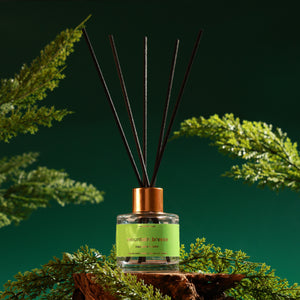
 Mountain Breeze₹849Clubs classify the bar as a lounge and scent it accordingly, and then wonder why the head bartender is unenthusiastic. A drink is assembled aromatically: oil expressed from a citrus peel over the surface, bitters measured in drops precisely because they work at the threshold, aromatic garnishes placed on the rim to be smelled rather than eaten, spirits whose whole character is volatile. All of that is presented to the guest at the counter, at close range, in the first ten seconds. An ambient fragrance at the counter is interference at exactly the wrong moment. Bar seating that is genuinely set apart — a separate bar lounge, armchairs, a different volume with the counter at a distance — can take the club identity at a low setting. The counter, the back bar and the service area cannot.
Wine, and the sommelier’s objection
I want to give wine its own section because it is the argument that ends the discussion fastest in a club that has a serious list, and because it is the argument most suppliers avoid. A wine is evaluated and enjoyed almost entirely by nose. What the palate contributes is structure — acid, tannin, weight, length — and everything a member would call the wine’s character is aroma, delivered at low concentration from a small volume of liquid in a glass held below the face. An ambient room fragrance at a level a club would consider tasteful is operating comfortably above the concentration at which a wine expresses itself. It does not clash. It floods.
The practical consequence is that a sommelier in a scented dining room cannot do the job they were hired for. They cannot present a wine and describe what the member should look for, because the member is receiving the room as well as the glass. They cannot check a bottle reliably. And they certainly cannot conduct a tasting or a members’ wine dinner, which is usually the event the club is proudest of and charges most for. A club that has spent years building a list and a cellar and then scents the room it pours in has spent the second budget to devalue the first one.
There is a piece of test discipline worth adopting here, because it prevents the mistake before it is made. Do not judge this decision from a blotter in an office. A fragrance assessed from a bottle at close range tells you almost nothing about how it will behave as a thin vapour across a large volume two hours later. And do not judge it as somebody who has been in the building since morning, because the nose reports change rather than constancy — the person holding the dial is the person who has stopped receiving the signal. The valid test is to sit at a table in the dining room as a member does, with a glass and a plate, having come in from outside, with somebody else having set the level. Most clubs that run that test decide the restaurant should be silent, and they decide it in under a minute.
The dining sequence, table by table
This is the table I would hand to a general manager together with the F&B manager, because both need to sign it. It is organised by proximity to food and wine rather than by room type, since that is the variable that decides the answer. The bold rows are the volumes I am asking you not to scent, and the rows above them are where the same budget does real work.
| Space | Proximity to food and wine | Register | Intensity | What serves it |
|---|---|---|---|---|
| Approach corridor and stair hall ★ | None — passing through, fresh nose | The club identity, dry and clean | Light but continuous | Vaayu in the airflow path, away from the dining doors |
| Restaurant reception and waiting point | Adjacent, but no plates | Same identity | One step below the corridor | Usually the corridor machine, positioned short of the doors |
| Cloakroom and washrooms serving the restaurant | None | Clean and bright rather than woody | Light | Reeds are genuinely right here — a two-metre zone is the brief |
| Bar lounge seating, set apart from the counter | Drinks only, at a distance | Same identity, quieter | Below the level anyone would name | A zone unit shared with the corridor, only if a boundary exists |
| Main dining room | Plated food and wine, ninety minutes | None | Unscented | Nothing. Clean linen, the room, and the kitchen |
| Private dining rooms | Long meals, small closed volume, captive guests | None | Unscented, most rigorously of all | Nothing, and check the AHU does not scent it for you |
| Bar counter, back bar and service area | Drinks assembled and handed over at close range | None | Unscented | Nothing. The citrus twist is the fragrance |
| Service corridor and pantry | Cooking carry-over, staff only | None | Unscented | Extraction and door discipline, not fragrance |
Zone · Vaayu₹11,999See it → Air system · Aangan₹25,999See it → Larger property · Meenar₹38,500See it →
The accidental scenting problem, and what to check on the drawing
Here is the failure I see most often, and it happens to clubs that have already made the right decision. The committee agrees the restaurant stays neutral. The scheme is then executed by connecting a machine into the building’s air handling, because that is the elegant way to scent a floor — and the air handling unit in question also serves the dining room. A mechanical connection does not respect a decision taken in a committee room. Six weeks later the chef raises it, nobody can work out how the fragrance is getting in, and the search begins for a machine that is not there.
So the drawing-stage check is specific and it takes one conversation with the mechanical engineer: which zones does each air handling unit actually serve? If one AHU feeds the lounge, the corridor and the restaurant, you cannot scent the first two through it without scenting the third. In that case the answer is a zone machine in the lounge and the corridor rather than an AHU connection — which is a cheaper specification, not a more expensive one. Vaayu at ₹11,999 is rated to up to 1000 m³ ≈ 2,000–3,000 sq ft and will lay flat, wall-mount or go into an HVAC return; it runs at under 38 dB on DC 12V / 1A at 5W, holds a sealed residue-free 400ml tank lasting up to about 90+ days depending on intensity and hours, and is controlled by a Bluetooth app or onboard buttons with 1h / 4h / 8h / 24h run windows, day selection, adjustable intensity, auto-stop and a key-lock. CE, RoHS and SGS. Aangan at ₹25,999 is the AHU machine, rated to up to 3,000 m³ ≈ 8,000–10,000 sq ft when connected, with an 800ml reservoir, under 42 dB, DC 12V at 14W, a metal body of 3.9 kg at 284 × 125 × 246 mm, a one-year warranty, and an intelligent PCB with programmable work and pause cycles and daily schedules rather than an app. Meenar at ₹38,500 is the larger-property option, specified on enquiry.
Two further clarifications for the services meeting. The AHU connection is a mechanical integration and a real one, and it is not a digital integration — there is no building-management interface, no automation protocol and no smart-home connection on any SOSA machine, so you cannot have the kitchen’s service times switch a machine off automatically. On this page that is less of a limitation than it sounds: the correct setting for a dining room is off permanently, which needs no logic at all. And on the smell that clubs most often try to solve in a restaurant with fragrance — cooking carry-over in the room after service — the honest answer is that this is a building and housekeeping problem. Cooking aerosols are oily, they settle onto upholstery and curtains during service and re-release for hours, which is why yesterday’s dinner is still faintly present at eleven the next morning. Extraction rates, kitchen door discipline, a textile cleaning cycle and an overnight fresh-air purge address it. Fragrance on top produces a mixture, and a mixture is judged more harshly than the original, because it reads as concealment. SOSA sells no air purifier, no dehumidifier and no room spray for interiors, and makes no air-quality claim of any kind.
What to do instead, in order — and the two gaps
Saying no to a room is only useful if it comes with the better answer, so here is the order I would work in around a club restaurant. Note that the first three lines are not purchases, and that the machine that does appear is not in the dining room. There are also two things this range does not contain that come up in every F&B conversation, and they belong in the table rather than in a footnote.
| Step | What it is | Why it comes here in the order | Cost |
|---|---|---|---|
| 1. Write the dining rooms into the unscented list ★ | Main dining, private dining, bar counter, back bar, service pantry — named in the specification and signed by the chef | Because flavour is mostly smell, and an ambient scent arrives on the same receptors as the dish | No purchase |
| 2. Check which zones each AHU serves | One conversation with the mechanical engineer at drawing stage | This is how clubs scent a restaurant by accident after correctly deciding not to | No purchase |
| 3. Fix the carry-over mechanically | Extraction rates, kitchen door discipline, textile cleaning cycle, overnight fresh-air purge | Cooking aerosol settles into soft furnishings and re-releases for hours; fragrance over it reads as a cover-up | No purchase |
| 4. Vaayu on the approach only | Up to 1000 m³, in the corridor airflow path short of the dining doors, key-locked after setting | The step from a scented approach into a neutral room reads as cleanliness rather than absence | ₹11,999 |
| 5. Reeds in the restaurant cloakroom | Mountain Breeze and the rest, 50ml or 130ml, six fibre reeds | A passive two-metre zone is exactly the brief in a washroom, and it moves no air towards the restaurant | ₹749–₹1,349 |
| No food-safe ambient claim, and no listed commercial refill: the honest gaps | SOSA publishes no dining-safe or food-compatible ambient fragrance, because we do not believe one exists, and no room spray for interiors — every SOSA spray is a car perfume. No purchasable refill oil is listed for the waterless machines either; that fragrance is specified and quoted per property | Said plainly, because this page costs us the largest machine in the building and because quoted fragrance is the norm in commercial scenting rather than an evasion | Quoted |
Versailles
I lost a sale over this once, properly, and I would lose it again. A club had decided on a scheme for the whole ground floor, including a very good restaurant with a list the general manager was rightly proud of. Everybody in the room wanted the restaurant scented, because it was the most beautiful space in the building and it seemed strange to leave it out. I said no, and explained the retronasal route, and the chef — who had been sitting quietly at the end of the table with the expression chefs reserve for meetings about fragrance — put down his pen and said that he had been trying to explain this for two years. The house committee bought two machines instead of four.
That is the part suppliers get wrong about saying no. It does not read as a lost opportunity; it reads as the first evidence that the advice is about the building rather than about the invoice. Every credible club scheme I have worked on has a list of rooms that get nothing, and the list is what makes the rest of it believable to the people who have to live with it daily — the chef, the sommelier, the spa manager, the librarian, the long-standing member who remembers the club before the refurbishment.
If you want to test this yourself, it costs nothing and takes an evening. Put a small diffuser on a side table in the dining room at a level you would describe as tasteful, and have dinner. Order something delicate rather than something robust, and have a glass of wine with it. Do not do this in your office and do not do it as somebody who has been in the building since morning, because a nose that has adapted to a fragrance is the worst instrument available for judging it. Sit down as a member, eat, and notice how much of the plate you can actually find. Most people need one course. Then walk out through the corridor, notice the fragrance there, walk back in, and notice that the dining room now smells clean rather than empty. That is the whole scheme, and the expensive part of it is a decision rather than a machine. Everything we make is composed in Pune, and a part of every order funds a girl’s classroom through Nanhi Kali.
Frequently asked questions
- Should every area smell the same — the pillar: one identity at several intensities, and the rooms that get nothing.
- Creating the zones in practice and lobby versus lounge — the survey method, and one composition at two levels.
- Corridors and private meeting rooms — the approach that carries the identity, and the other room that mostly stays quiet.
- The library, gym and wellness areas and banquet spaces — the other three deliberate silences.
- One identity, many intensities — the operating model that holds the whole property together.
- Brand: the SOSA founder story.
SOSA commercial scenting — facts verified August 2026: Vaayu ₹11,999, waterless cold-air nebulising, coverage up to 1000 m³ ≈ 2,000–3,000 sq ft, 400ml refillable sealed tank lasting up to about 90+ days depending on intensity and hours, Bluetooth app plus onboard buttons, run windows of 1h / 4h / 8h / 24h, day selection, adjustable intensity, auto-stop and key-lock, under 38 dB, freestanding, wall-mounted or HVAC-return mounting, DC 12V / 1A at 5W, CE, RoHS and SGS, black and white. Aangan ₹25,999, HVAC or AHU connection or standalone wall-mount or lay-flat, coverage up to 3,000 m³ ≈ 8,000–10,000 sq ft, 800ml reservoir, under 42 dB, DC 12V at 14W, intelligent PCB with programmable work and pause cycles and daily schedules, metal body 3.9 kg at 284 × 125 × 246 mm, black or white, one-year warranty, imported; it has no app and no Bluetooth, and no certifications are published for it. Meenar ₹38,500 is the larger-property option and is specified on enquiry; no coverage figure is published for it here. Ultrasonic machines: Sukoon ₹1,899 at 270–320 sq ft, Boond ₹899 at up to about 150 sq ft, Megh ₹3,499 with a six-litre tank and around 100 hours of runtime but only about 215 sq ft of coverage. Reed diffusers ₹749–₹849 for 50ml lasting 6–8 weeks and ₹1,249–₹1,349 for 130ml lasting 14–18 weeks, six fibre reeds, alcohol-free, phthalate-free, paraben-free, IFRA-compliant, 0 ppm formaldehyde, heat-stable CCT carrier, refillable glass bottle, tested at 45°C and 85% RH, composed in Pune. The Hotel Collection fragrance oils are water-based and ultrasonic-only at 15ml ₹299, 100ml ₹999 and 300ml ₹1,799; they are not for reed diffusers and not for the waterless commercial machines. No purchasable refill oil is listed for the waterless commercial machines — that fragrance is specified and quoted per property. SOSA publishes no leather fragrance in any format and no tobacco or smoky fragrance for any diffuser. SOSA sells no air purifier, no dehumidifier and no room spray for interiors, and makes no health, air-quality, VOC or mould claim. No dealer programme, reseller margin, trade price, territory or service contract is published. Free shipping above ₹499. A portion of every order supports girl-child education through Nanhi Kali. SOSA is an independent Indian fragrance house; the Hotel Collection scents are SOSA’s own interpretations inspired by the world’s finest hotels, and SOSA is not affiliated with or endorsed by any hotel brand. Prices subject to change — see the live product pages.