


Should Bedrooms Smell Different From the Living Areas During a Luxury Home Viewing?

Should Bedrooms Smell Different From the Living Areas During a Luxury Home Viewing?

★ 2,000 sq ft to 6,000 sq ft · one machine, or zones?Vaayu ₹11,999 · Aangan ₹25,999 · Sukoon ₹1,899 · free shipping above ₹499A portion funds girl-child education
★ SOSA · property viewings & premium presentation
Count the volumes a door closes, not the square feet on the brochure. A 3,000 sq ft flat with six doors is not one space, and no single machine treats it as one
★ ★ ★ ★ ★
★★★★★
"The rule about counting doors rather than square feet reorganised how I prepare every large listing."
Rajeev Anand Large apartments, Mumbai
Count the doors
★★★★★
"6,000 sq ft villa, double height. Was told honestly that one unit at the entrance plus the stair void does most of it and where the second would go if I wanted it."
Meghna Salvi Villas, Alibaug
Volume, not floor area
★★★★★
"Penthouse with a terrace. Half my square footage was outdoors and effectively unscentable, which nobody had ever said out loud."
Yash Thakkar Penthouses, Worli
Told what not to try
★★★★★
"Bedrooms lighter than the living areas, entrance strongest. It sounds obvious and I had been doing the opposite."
Ananya Bose Duplexes, Bengaluru
Zoned by intensity
★★★★★
"HVAC mount in the sales gallery and the freestanding one in the show flat. Two different problems, two different machines."
Deepak Rane Gallery + show flat, Pune
Aangan + Vaayu
★★★★★
"Wall mount meant it was out of sight in an empty flat, which matters when the room is the product."
Zoya Merchant Empty premium, Bandra
Out of the sightline
★★★★★
"The rule about counting doors rather than square feet reorganised how I prepare every large listing."
Rajeev Anand Large apartments, Mumbai
Count the doors
★★★★★
"6,000 sq ft villa, double height. Was told honestly that one unit at the entrance plus the stair void does most of it and where the second would go if I wanted it."
Meghna Salvi Villas, Alibaug
Volume, not floor area
★★★★★
"Penthouse with a terrace. Half my square footage was outdoors and effectively unscentable, which nobody had ever said out loud."
Yash Thakkar Penthouses, Worli
Told what not to try
★★★★★
"Bedrooms lighter than the living areas, entrance strongest. It sounds obvious and I had been doing the opposite."
Ananya Bose Duplexes, Bengaluru
Zoned by intensity
★★★★★
"HVAC mount in the sales gallery and the freestanding one in the show flat. Two different problems, two different machines."
Deepak Rane Gallery + show flat, Pune
Aangan + Vaayu
★★★★★
"Wall mount meant it was out of sight in an empty flat, which matters when the room is the product."
Zoya Merchant Empty premium, Bandra
Out of the sightline
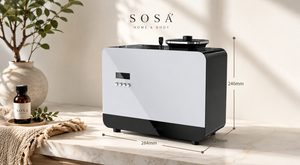
Vaayu: waterless cold-air nebulisation · no water, no heat, no dampness · under 38 dB 1000 m³ (≈2,000–3,000 sq ft) · 400ml tank ≈75 days · app + 1h/4h/8h/24h timers · key-lock 0.9 kg and smaller than a shoebox — one machine can serve a whole portfolio of listings


Founder Diaries · Property Viewings · Apartments, Penthouses & Villas
By Sonal Sahani · ISIPCA Versailles 10 min read Updated September 2026
The answer is yes and no in a way that matters, so it is worth being precise about which half is which. Bedrooms should read lighter than the living areas of a property. They should not smell of anything different. Intensity is the variable; composition is not. And the useful part of that answer is that you do not need a second machine, a second bottle or any additional expenditure to achieve it — a single Vaayu at ₹11,999 running in the living area, with the bedroom doors opened two hours before the buyer arrives, produces exactly the result this page is going to argue for.
Quick answers — read this first
Same scent, lower intensity. A buyer walks a property as one place. A change of fragrance between rooms reads as two separately prepared spaces rather than one well-kept home, and it draws attention to the preparation itself.

Why bedrooms read lighter: they are smaller volumes, so identical output reads stronger; they are more enclosed, so it accumulates; and a bedroom is the room in which a buyer is most conscious of being sold to.

The instruction: run one machine in the living area and open the bedroom doors two hours before the viewing. The bedrooms arrive at a diluted version of the same composition, which is the result you wanted, with no extra equipment.
The short answer
Short answer: no — not different, only lighter. One composition throughout the property, at a lower reading in the bedrooms. A change of scent between rooms tells a buyer the property was prepared rather than kept, and a bedroom is the room where that impression does the most damage.
The pick: one Vaayu at ₹11,999 in the living area on its lowest useful setting, running the Ritz-Carlton-inspired Quiet Luxury, with every bedroom door open for the two hours before. No second machine and no second bottle. The Sukoon at ₹1,899 has one honest use here and it is a genuinely detached annexe, not a bedroom.
Shop: the Vaayu ₹11,999 — waterless, up to 1000 m³, adjustable intensity, 1h/4h/8h/24h timers, 400ml tank lasting about 75 days, under 38 dB, key-lock, 0.9 kg, four hotel-inspired scents supplied. Hotel Collection 15ml ₹299 for the ultrasonic machines. Free shipping above ₹499.
Straight answer
Should bedrooms smell different from the living areas during a luxury home viewing?
1. One composition throughout the property. Not a fresh scent for the living room and a calming one for the bedroom. A buyer experiences a house as a single place, and a change of fragrance between two rooms reads as two spaces that were prepared separately rather than one that is looked after.

2. Lower intensity in the bedrooms, for three separate reasons. They are smaller volumes, so the same output produces a higher concentration. They are more enclosed, so what arrives accumulates rather than dissipating. And they are the rooms where a buyer is most alert to being sold to.

3. You do not need equipment to achieve that. Run one Vaayu in the living area on its lowest useful setting and open every bedroom door two hours before the viewing. The bedrooms will arrive at a diluted version of the same composition, which is precisely the reading you were trying to engineer.

4. Never put a second machine in a bedroom. A 70 m³ room receiving the output intended for a 195 m³ one is receiving roughly three times the concentration. That is the most common over-scenting mistake in residential viewings and it happens in the smallest rooms.

5. The honest exception has nothing to do with fragrance. A bedroom with an attached bathroom whose drain trap has dried out will smell of drains, and that is a defect-adjacent problem. Run water down it, and if the smell persists, find the cause, fix it or disclose it. Do not scent over it.

A portion of every order supports girl-child education through Nanhi Kali.
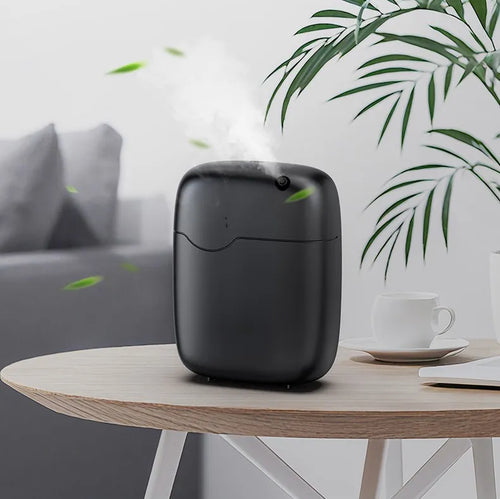
TL;DR: different intensity, never a different scent. One composition throughout, lighter in the bedrooms because they are smaller, more enclosed and the rooms where a buyer is most conscious of preparation. Run the Vaayu in the living area and open the bedroom doors two hours before — they arrive lighter on their own, with no second machine.
SOSA Vaayu · adjustable intensity
One setting, and doors that do the zoning for you
SOSA Vaayu · adjustable intensity ₹11,999
Adjustable intensity and 1h/4h/8h/24h timers, which between them are the whole apparatus for making a bedroom read lighter than a living room without buying anything for the bedroom. Set the level for the largest volume in the property, open the bedroom doors two hours before the viewing, and the bedrooms arrive at a diluted version of the same composition on their own. That is not a compromise. It is the result you were trying to engineer. Waterless, so nothing damp is introduced into a room with a made bed and dressed cushions in it. Under 38 dB, auto-stop, key-lock, 0.9 kg.

A buyer walks a property as one place

The instinct behind this question is a good one and the conclusion it leads to is wrong. People reason that a bedroom is a different kind of room doing a different kind of job, so it should smell of something restful while the living room smells of something bright — and every part of that reasoning is sound until you remember that the buyer is not living in the property. They are walking through it once, in a single continuous sequence, and the thing they are forming an impression of is the house. A resident experiences rooms. A visitor experiences a route. Advice written for the first is frequently wrong for the second, and this is one of the clearest examples in the trade.

1
WHY ONE SCENT
A change between rooms reads as two prepared spaces, not one kept home
Start with what actually happens in a buyer's head when the fragrance changes at a doorway. Scent is processed as a property of a place rather than as an object in it, which is why nobody walking into a well-kept house thinks about fragrance at all — they think the house is nice. The moment the register changes between two rooms, that stops. The nose registers a discontinuity, and a discontinuity has to be explained. The explanation available to a buyer is not a flattering one: somebody has been in here arranging things. The fragrance has moved from being an attribute of the property to being an action taken upon the property, and once a buyer is thinking about what was done to a house before they arrived, they are also thinking about why. That is the entire risk, and it is a larger one than any individual scent choice. There is a second, smaller reason that is worth knowing. Two compositions in one flat do not remain in their rooms. Air moves through doorways continuously, so the two meet somewhere in the corridor between them and produce a third accord that neither of them was composed to be — usually muddier and heavier than either, and impossible to adjust because adjusting one changes the boundary rather than the blend. One bottle removes both problems at once, and it also halves what you have to carry, rinse and remember.
2
WHY LOWER
Smaller, more enclosed, and the room where being sold to is most obvious
Now the other half, where the three reasons are genuinely separate and stack on one another. The first is volumetric. A living room of 700 sq ft under a 10 ft ceiling is 65 m² and about 195 m³ of air. A master bedroom of 250 sq ft is 23.2 m² and about 70 m³ — a little over a third. Put the same output into both and the bedroom receives roughly three times the concentration, which is not a subtle difference and is exactly why bedrooms are the rooms people over-scent. The second is enclosure. A living area in most Indian flats is connected to a hall, a dining space, sometimes a kitchen and usually a balcony door, so air is exchanged constantly and fragrance is diluted as fast as it arrives. A bedroom typically has one door and one window, both shut. Whatever reaches it stays, builds and does not clear, so a level that was correct at two o'clock is heavier at four without anybody touching anything. The third reason is not physical at all and it is the one I would put first. A bedroom is the most private room in a stranger's house, and a buyer standing in one is already slightly on guard. It is the room where they open a wardrobe, look at a bathroom door, imagine sleeping there — and it is therefore the room where an obviously fragranced atmosphere is most likely to be read as staging rather than as housekeeping. Lighter is not a matter of taste in a bedroom. It is a matter of not interrupting the one moment in a viewing when a buyer is genuinely picturing themselves living somewhere.
3
THE INSTRUCTION
Open the doors two hours out, and the bedrooms sort themselves
Which produces an instruction so simple that people distrust it. Put one Vaayu in the living area, on its lowest useful setting, and open every bedroom door for the two hours before the viewing. That is all of it. Air moves from a supplied volume into an unsupplied one continuously and without any assistance, and because the bedrooms are further from the source and separated by a doorway, what reaches them is a diluted version of the same composition — the same accord, at a lower reading, arriving gradually enough to have settled by the time the buyer walks in. You have produced a zoned property with one machine and no additional expenditure, and the zoning is done by architecture rather than by equipment. Close the doors again at the thirty-minute mark if the property is shown room by room; the level that has arrived will hold for the length of a viewing. Then the exception, and it is not a fragrance problem. If a bedroom with an attached bathroom smells sour, stale or faintly of drains, that is almost always a dried-out trap — the water seal in the waste has evaporated because the room has not been used, and sewer air is coming back up the pipe. Run water down every waste in the property twenty-four hours before, including the shower gully and the basin overflow. If the smell survives that, you have a defect rather than a smell: a failed seal, a leak in a wall, damp behind a shower tray. Find it, fix it or disclose it. It is a material fact about the property and no machine on this site is for hiding it.
The check I would make in every bedroom before a viewing, and it takes ninety seconds: shut the door, stand inside with it closed for a minute, and then decide. A bedroom judged from its doorway is always judged too light, because you are still smelling the corridor.

The same output, room by room

One machine in the living area, on one setting, and what each room in a typical 2,500 sq ft flat actually receives. The fourth column is the reading you are aiming at rather than a number on a dial — the point of the table is that the variation happens on its own, provided the doors are handled correctly.

One setting, several readings
Why the same machine produces a correctly zoned property
Room Typical volume Why it reads as it does The reading you want What you do
Living area ★ About 195 m³ Largest volume, most connected, most air exchange — it dilutes as fast as it is supplied At level. This is the room that decides the setting Machine here, lowest useful setting, from two hours out
Entrance hall About 33 m³ Very small, but with the front door opening it has the highest air turnover in the property At level, and arriving rather than announcing Machine placed here if the plan allows, since it is the first reading and cannot be retaken
Master bedroom About 70 m³ A third of the living room's air, one door, one window, and very little exchange once shut Distinctly the lightest reading in the property Door open for two hours, then nothing. No second machine
Second and third bedrooms 45–60 m³ each Smaller again and usually further from the source, so they arrive lighter without any intervention Lighter still, and that is correct Doors open. If they will be shut, accept that they are separate volumes
Attached bathrooms 15–25 m³ Where a dried-out drain trap produces a smell that has nothing to do with fragrance Neutral. Not scented Water down every trap 24 hours before. If a smell survives, it is a defect
A detached study or annexe 60–90 m³ Genuinely cut off from the plan, so the main machine will not reach it at all The same composition, quietly A Sukoon at ₹1,899 in an occupied property, or leave it unscented
Shop this guide
One machine, one bottle, one exception
The SOSA principle
A resident experiences rooms. A buyer experiences a routeand a fragrance that changes at a doorway turns a house into a set of separately prepared spaces.
One composition throughout. The bedrooms read lighter because they are smaller and more enclosed, which happens on its own the moment their doors are open and the machine is somewhere else.

Two open doors, two hours, and nothing else

Start with the setting, because it is decided in the wrong room by most people. Set the Vaayu for the largest volume in the property and let every smaller room be a consequence of that, rather than setting it in a hall and hoping the living room catches up. The living area is where a buyer will sit, where a conversation happens and where the longest continuous exposure occurs, so it is the space whose reading has to be right; everything else follows. On the machine itself, the lowest useful intensity is almost always correct in a residential property, and the reason is the headroom: a 1000 m³ unit supplying a 500 m³ flat is working at half its capacity, which means the low setting produces a genuine level rather than a thin one. Use the 4h timer so it is running through the appointment and stops itself afterwards, and start it two hours before rather than thirty minutes before. The distinction is not about strength. A property that has already arrived at its level reads as a property of the building; a property still climbing while the buyer is in it reads as an event they walked into. The 400ml tank runs about 75 days, which for a listing shown weekly means one fill covers the whole marketing period, and the key-lock means the setting cannot be altered by anybody who has a key to the flat between your visits.

Then the doors, which is where all the actual zoning happens. Twenty-four hours before, open the property and every internal door, put windows on opposite elevations, and water down every drain trap in every bathroom, the kitchen and the utility. Three hours before, close the windows and let the flat come to temperature with the air conditioning on if it is warm. Two hours before, the machine goes on, low, in the living area or entrance zone, with all the bedroom doors standing open. Thirty minutes before, walk the property from the front door in the order the buyer will walk it, and go into each bedroom with the door closed behind you rather than assessing it from the threshold. Adjust down if a bedroom reads at all emphatic. Never adjust up because a bedroom reads light — light is the specification. Placement follows the usual rules: above waist height, not on the floor, out of the direct path of an air-conditioning supply grille, not in a doorway where the front door will move air across it, and out of the sightline in an empty flat, where the Vaayu will wall-mount at 165 × 80.5 × 215 mm and disappear. If the bedrooms are to be shown with their doors shut, accept that they are separate volumes and will read close to neutral, which is a perfectly respectable result and better than the alternative.

Then the two things that go wrong afterwards, and the line underneath all of it. The first is habituation. Within twenty minutes of being in a property you have stopped registering its fragrance, which makes you the least qualified person present to judge whether a bedroom is over-scented. Step outside for ten minutes and come back through the front door, or ask a colleague to walk the flat cold and tell you the truth rather than something polite. The second is accumulation: a shut bedroom that has been receiving air for two hours is heavier at the end of that period than at the start, so a level checked at the beginning of the window is not the level the buyer meets. Check at the thirty-minute mark, not at the two-hour one. On the constraints: the Vaayu takes its own undiluted oil, not the water-based Hotel Collection bottles, which run in the ultrasonic Sukoon, Boond and Megh at three to six drops per tank; those ultrasonics add 30–50 ml of water an hour to the air and have no business in a closed vacant flat. A reed diffuser needs 24 to 72 hours to establish. A candle needs attending, which rules it out of an empty property entirely. And the rule that matters more than every setting on this page: a bedroom that smells of damp, drains, smoke or anything with a structural cause is not a fragrance problem. It is a material fact about the property. Find it, fix it or disclose it, and scent only a home that is genuinely sound.

Light is the specification in a bedroom, not a shortfall. Adjust down when it reads emphatic; never adjust up because it reads quiet.
— Sonal Sahani, SOSA

The SOSA edit

In buying order for a realtor scenting a multi-bedroom listing. The first two rows cost nothing at all, which is unusual for a buying table and accurate here. The last row names the thing this page is most often asked for and most firmly declines to recommend.

The SOSA edit
Living areas and bedrooms, in the order the work happens
Buy What it is When it earns its place Price
1. Open bedroom doors, two hours ★ Every internal door standing open while the machine runs in the living area First, and free. It produces a lighter, correctly diluted reading in every bedroom with no equipment at all ₹0
2. Water down every drain trap The bathrooms, the kitchen, the utility, the shower gully and the basin overflow, 24 hours before Before any fragrance. A dry trap is the commonest cause of a bedroom that smells wrong, and it is not solved by scenting ₹0
3. SOSA Vaayu Waterless, up to 1000 m³, adjustable intensity, 1h/4h/8h/24h timers, 400ml for about 75 days, key-lock, 0.9 kg One unit, in the living area or entrance zone, set for the largest volume and left on its lowest useful setting ₹11,999
4. One composition, not two The Ritz-Carlton-inspired Quiet Luxury as the default, among the four scents supplied with the Vaayu Throughout the property. Two scents meet in the corridor and produce a third that nobody composed included
5. SOSA Sukoon 500ml ultrasonic, 270–320 sq ft, steady/2H/4H timers, three 15ml scents included Only for a genuinely detached study or annexe in an occupied property. Water-based, so never in a closed vacant flat ₹1,899
Not recommended: a machine in the bedroom A 70 m³ room receiving output intended for a 195 m³ one takes roughly three times the concentration Printed rather than implied. This is the single commonest over-scenting mistake in residential viewings
Honest notes for buyers: fragrance is the last step in preparing a property, never the first, and it must never be used to cover a defect. Damp, a leak, drains, smoke or anything structural is a material fact about a property: find it, fix it or disclose it. Scent a listing that is genuinely sound. On the machines: the Vaayu at ₹11,999 is waterless cold-air nebulisation — no water, no heat and no dampness — covering up to 1000m³ or roughly 2,000–3,000 sq ft, with a 400ml tank lasting about 75 days, Bluetooth app control, 1h/4h/8h/24h timers, under-38dB running, auto-stop and a key-lock, at 0.9 kg and smaller than a shoebox, so one machine can serve a whole portfolio. The Aangan at ₹25,999 covers up to 3,000m³ for sales galleries and clubhouses. The ultrasonic Sukoon, Boond and Megh are water-based and add 30–50 ml of water an hour to the air, which makes them the wrong choice for a closed or humid vacant property. A reed diffuser needs 24–72 hours to establish, so it suits a listing shown over months rather than a viewing tomorrow. A candle must be attended and put out, which rules it out of an unoccupied property. SOSA does not make a room spray for the home; the sprays in the range are car perfumes. The Hotel Collection scents are SOSA's own interpretations inspired by the world's finest hotels; SOSA is an independent Indian fragrance house, not affiliated with or endorsed by any hotel brand. A portion of every order supports girl-child education through Nanhi Kali.
The Ritz-Carlton-inspired · Quiet Luxury
One composition, whichever room you are standing in
The Ritz-Carlton-inspired · Quiet Luxury ₹299 / 15ml
White tea, bergamot and cedar — cool, quiet, unmemorable as a product and very hard to dislike, which is the entire brief for a property somebody else is buying. The mistake this page argues against is not a matter of taste. Two compositions in one flat do not stay in their rooms; they meet in the hall and produce a third accord that nobody chose and nobody can adjust. The 1 Hotels-inspired Forest Suite is the alternative where the property runs warm or the kitchen has no door. Water-based, for ultrasonics; the Vaayu runs its own oil.
SS
ISIPCA
Versailles
A note from Sonal

I was asked once to specify a calming lavender for the bedrooms of a listing and something brighter for the living room, which is exactly the arrangement a good hotel would use and exactly the wrong one for a viewing. A hotel is selling a series of separate experiences and has every reason to mark the boundaries between them. A house is selling the idea that it is one coherent place somebody has lived in well, and every boundary you mark works against that. The buyer does not need to be told where the bedroom begins. They can see the bed.

What I recommended instead cost nothing: one machine where it already was, one bottle, and the bedroom doors left open from four o'clock. The bedrooms came in lighter than the living room on their own, which is what the original request had actually been asking for — it had simply been expressed as two scents when what it meant was two levels. That is the whole of this page. I would add one thing that has nothing to do with fragrance and everything to do with the trade: the bedroom is where a buyer is most alert and least polite, and if there is a smell in one with a cause behind it, they will find it. Better that you found it first, and said so.

Everything is made and supported from Pune, and a part of every order funds girl-child education through Nanhi Kali. You get a space that smells like somewhere considered; a girl gets a classroom. That equation has always felt right to me.

Frequently asked questions

Should I use a different fragrance in the bedrooms from the living room?
No. One composition throughout the property, at a lower reading in the bedrooms. A change of scent between rooms reads as two separately prepared spaces rather than one well-kept home, and it draws a buyer's attention to the preparation itself, which is the one thing scenting a viewing is supposed to avoid.
Why should bedrooms be lighter than the living areas?
Three reasons. They are smaller volumes — a 250 sq ft bedroom is about 70 m³ against a living room's 195 m³ — so identical output reads roughly three times stronger. They are more enclosed, so what arrives accumulates. And a bedroom is the room in which a buyer is most conscious of being sold to.
Do I need a second machine for the bedrooms?
Almost never. Run one Vaayu in the living area and open every bedroom door for the two hours before the viewing. Air moves from a supplied volume into an unsupplied one continuously, so the bedrooms arrive at a diluted version of the same composition, which is the result you were trying to engineer.
What if a bedroom smells stale or of drains?
That is not a fragrance question. It is usually a dried-out drain trap in the attached bathroom — the water seal has evaporated and sewer air is coming back up the pipe. Run water down every waste twenty-four hours before. If the smell survives that, you have a defect: find it, fix it or disclose it, and do not scent over it.
Should the bedroom doors be open or closed during the viewing itself?
Open for the two hours before, so the level arrives. During the viewing it makes little difference, and if the property is shown room by room you can close them again at the thirty-minute mark — the level that has arrived will hold for the length of an appointment.
One scent, two levels
The bedrooms read lighter on their ownif the doors are open and the machine is somewhere else
The Vaayu is ₹11,999 — waterless cold-air nebulisation, coverage up to 1000 m³, adjustable intensity, 1h/4h/8h/24h timers, a 400ml tank lasting about 75 days, under 38 dB, auto-stop, key-lock, 0.9 kg and four hotel-inspired scents supplied. The Hotel Collection is ₹299 for 15ml for the ultrasonic machines, and the Sukoon is ₹1,899. Free shipping above ₹499, and a portion of every order supports girl-child education through Nanhi Kali.
See the Vaayu · ₹11,999 Shop the Hotel Collection →
Continue the read
More from SOSA
Editorial standards & sources
About this guide: Written by Sonal Sahani, ISIPCA Versailles-trained founder and perfumer at SOSA Home & Body, on why a property should carry one composition throughout but read lighter in its bedrooms, why a change of fragrance at a doorway tells a buyer the house was prepared rather than kept, the three separate reasons a smaller enclosed room reads stronger at identical output, and why an open door for two hours does the zoning that a second machine is usually bought to do.

Facts verified August 2026: Product facts used in this guide. SOSA Vaayu ₹11,999: waterless cold-air nebulising diffuser, atomises undiluted fragrance oil to a dry residue-free nano-mist, coverage up to 1000m³ (approximately 2,000–3,000 sq ft), 400ml refillable tank lasting up to about 75 days per fill, Bluetooth app plus onboard control, 1h/4h/8h/24h timer scheduling, adjustable intensity, under 38 dB, DC 12V/1A at 5W, 165 × 80.5 × 215 mm and 0.9 kg, freestanding or wall/HVAC mounted, auto-stop and key-lock, CE, RoHS and SGS certified, supplied with four hotel-inspired fragrances. SOSA Aangan ₹25,999: HVAC-connected or standalone commercial nebulising diffuser, coverage up to 3,000m³ (roughly 8,000–10,000 sq ft), 800ml reservoir, metal body, programmable schedules, under 42 dB. Ultrasonic machines are water-based and consume 30–50 ml of water an hour: Sukoon ₹1,899 (500ml, 270–320 sq ft, 16–18 hours on low, 3–6 drops per tank, steady/2H/4H timers, three 15ml Hotel Collection scents included), Boond ₹899 (300ml), Megh ₹3,499 (6 litres). Hotel Collection water-based fragrance 15ml ₹299, 100ml ₹999, 300ml ₹1,799, Pack of 7 at 15ml ₹1,799 against ₹2,093 bought singly; the Vaayu and Aangan take their own undiluted oil rather than these water-based bottles. Reed diffusers (separate alcohol-free line) from ₹749, requiring 24–72 hours to reach their working level. Scented candles from ₹379, scenting a room in roughly 15–20 minutes but requiring attendance. Free shipping above ₹499. Timings: a nebulising diffuser reaches a working level within minutes and a stated viewing level well inside two hours. This guide makes no claim that fragrance affects a property's price, offer level or time on market; it is presentation, in the same category as photography, styling and lighting. Fragrance must never be used to conceal a material defect. SOSA is not affiliated with or endorsed by any hotel brand. Prices subject to change — see the live product pages.
Back to blog

