

- The direct answer
- Why this is a process, not a shortlist
- The three groups of decisions in the process
- The five factors, worked through in order
- How the chosen register is delivered, once decided
- What to specify, once the process is complete
- A note from Sonal
- Questions asked about choosing a signature scent
2. Check proximity to clinical areas. A hospitality zone that sits metres from blood collection or imaging needs a register and an intensity that will not travel into a room that must stay unscented — this can rule out a stronger register even if the interior would otherwise carry it.
3. Weigh dwell time honestly. A client sitting for three to four hours adapts to an unchanging scent within minutes — the register needs to work at a lower intensity than a space people simply pass through.
4. Test for multi-site repeatability. If the brand runs, or plans to run, more than one location, the register has to be one that a second site can reproduce exactly — climate, ceiling height and floor plan will vary, so the register itself should be the constant.
5. Confirm staff can tolerate it daily. Reception and lounge staff spend entire shifts near the source. A register that reads well to a visitor for twenty minutes can still be the wrong choice if the people working beside it eight hours a day cannot.
Run the interior, the clinical map, the dwell time, the site count and staff tolerance in that order — the register that survives all five, at low intensity, is the signature worth choosing.
Why this is a process, not a shortlist
Most founders arrive at this decision with a shortlist of two or three fragrances they personally like, and ask which one is 'more premium'. That is the wrong question, because premium is not a property of a fragrance on its own — it is the outcome of a register that fits five separate constraints at the same time, in the same way this cluster asks what fragrance direction actually suits a high-end preventive-health brand before naming a single scent.
Skipping any one of the five factors produces a register that looks right in isolation and fails in practice. A fragrance chosen purely for the interior can still be wrong for a hospitality zone sitting close to imaging; a register that survives clinical adjacency can still be wrong for a three-hour dwell time if it is run at hotel-lobby intensity, the exact trap explored when this cluster asks whether long-dwell lounges should run lower intensity than hotel lobbies.
The process is also what makes the eventual choice defensible to a partner, an investor or a second site's operations team, rather than a founder's personal taste that nobody else can explain. A register chosen through five stated factors can be handed to someone else, at a different site, with the reasoning intact — a register chosen because someone liked it cannot.
The three groups of decisions in the process
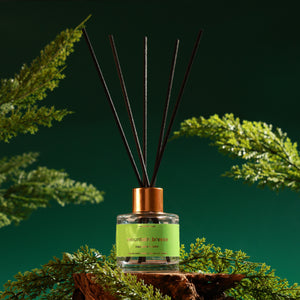
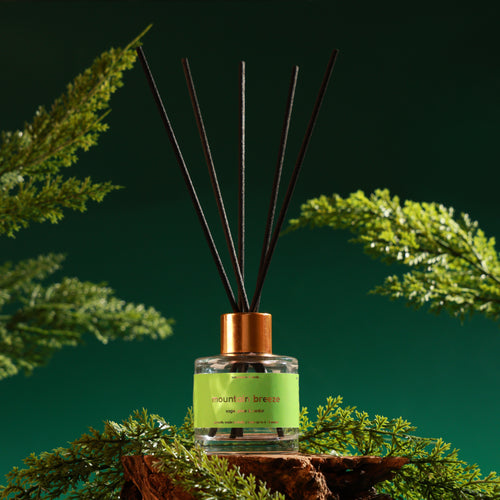
 Mountain Breeze₹849Match the register to the interior's own materials, then immediately check what sits next to the hospitality zone. A register the interior would otherwise carry can still be ruled out if it sits too close to a room that must stay unscented.
The five factors, worked through in order
Each factor narrows the field before the next one is applied — the table below shows what each factor actually rules in or out.
| Factor | What it tests | What it typically rules out | Applied when |
| Interior palette | Materials — dry versus warm, mineral versus soft furnishing | Sweet or floral registers against a dry, architectural interior | First |
| Clinical adjacency | Distance and airflow to blood collection, imaging, procedure rooms | A stronger register that would drift into a room that must stay unscented | Second |
| Dwell time | How long a client sits in the space, typically three to four hours | Any intensity above what still reads correctly after twenty minutes | Third |
| Multi-site repeatability | Whether the register can be reproduced identically elsewhere | A register too dependent on one site's specific layout or HVAC | Fourth |
| Staff tolerance | Whether front-of-house staff can run it comfortably all day | Any register that survives every factor above but fails with the people working beside it | Last, and decisive |
| A register only earns the recommendation once it has cleared all five factors, not the first two or three that happened to be easiest to test. | |||
 Vaayu · the process, delivered₹11,999Shop → Mountain Breeze · clears most tests₹849Shop →
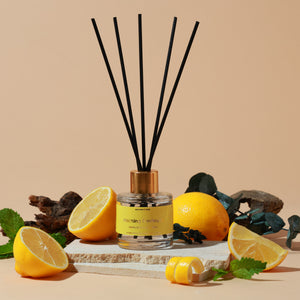
 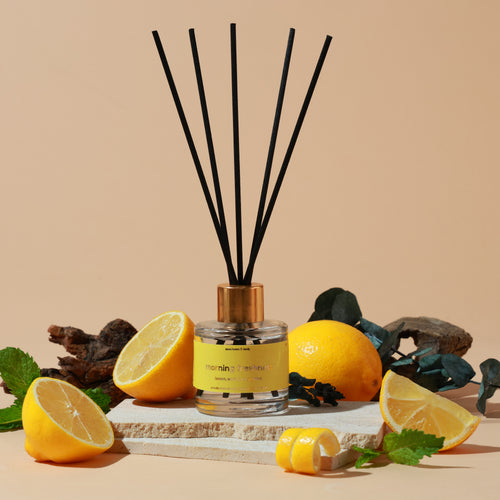 Morning Freshness · the alternative₹749Shop →
How the chosen register is delivered, once decided
Once a register clears all five factors, delivery still has to respect this cluster's standing intensity rule: a level that reads once, clearly, on arrival, and is gone from notice within a minute. Reception can carry it most clearly; a lounge sits below that; a consultation room sits lower again, or stays unscented if a result is being discussed there.
Clinical adjacency, one of the five factors, becomes a delivery question once the register is chosen: mount away from returns that feed blood collection or imaging, respect door discipline, and have the facility's own engineer confirm the pressure regime rather than assuming the register alone will stay where it is meant to.
Staff tolerance, the last factor and the veto, is confirmed in practice, not on paper — run the chosen register for the first few weeks and ask the people working beside it directly. If a client or a staff member ever objects once the register is live, the answer is to reduce it or switch it off, never to defend a choice on the strength of the process that produced it.
What to specify, once the process is complete
The specification below assumes the five-factor process has already identified Mountain Breeze, or a comparably dry register, as the signature.
| Route | Stage | Why | What it costs |
| Vaayu, reception and lounge, set to the intensity dwell time calls for | Any brand that has completed the five-factor process | Delivers the chosen register at the ceiling the dwell time and clinical adjacency factors already set | ₹11,999 per site |
| Two Vaayu units, one per hospitality zone | A site with a separated reception and private lounge, or two independently air-handled wings | One point cannot hold the same register and intensity across two structurally separate zones | ₹23,998 |
| Sukoon, single zone, at the process's chosen intensity | A first or single site, before multi-site repeatability needs to be tested | Confirms the register works at real scale before it has to repeat anywhere else | ₹1,899 |
| A written record of how each factor was decided, kept alongside the intensity setting | Any brand planning a second site | What lets a second location repeat the process's conclusion rather than re-litigate the choice | No cost |
| Clinical and consultation rooms excluded from the register entirely | Every site, without exception | The clinical-adjacency factor is enforced in delivery, not only in the initial choice | — |
Founders come to me with a scent already chosen more often than they come with a blank question, and my first job is usually to ask them to explain the choice back to me using these five factors, not their own preference. Most of the time, two or three of the factors were never actually considered.
The factor that gets skipped most often is staff tolerance, and it is the one I now ask about first, before interior or dwell time. A founder can walk through a lounge for ten minutes and love a register; a receptionist working an eight-hour shift beside the same diffuser has a completely different relationship with it, and that relationship is the one that actually determines whether the setting survives its first month.
What I want from any brand at the end of this process is not a fragrance I personally think is beautiful — it is a register that a second site can install next year, that a facilities engineer can sign off near a testing room, and that the staff running it every day will still tolerate after the novelty of a new diffuser has worn off.
Questions asked about choosing a signature scent
- What fragrance works with a beige, wood and stone executive-health interior? — a worked example of the first factor in this post's decision process.
- Which areas of an executive health centre should be kept fragrance-free? — the clinical-adjacency factor, worked through in full.
- Clients spend several hours at my executive health centre — how subtle should ambient fragrance be? — the dwell-time factor, answered on its own terms.
- How do I control fragrance intensity across locations without staff constantly adjusting it? — the staff-tolerance and multi-site factors, combined into an operational answer.
- Brand: the SOSA founder story.
SOSA products & prices (verified September 2026): Reed diffusers 50ml ₹749–₹849 (to 150 sq ft, 6–8 weeks at six reeds) · 130ml ₹1,249–₹1,349 (above 150 sq ft, 14–18 weeks) · reed refill 300ml ₹2,399. Ultrasonic: Boond ₹899 (~150 sq ft) · Sukoon ₹1,899 (270–320 sq ft, ships with three 15ml Hotel Collection fragrances) · Megh ₹3,499 (6L tank, ~100 hrs runtime, ~215 sq ft — a runtime machine, not a coverage upgrade). Waterless cold-air: Safar ₹3,999 (no published coverage figure) · Vaayu ₹11,999 (up to 1000 m³, roughly 2,000–3,000 sq ft; 400ml tank lasting about 90+ days; app and onboard control, 1h/4h/8h/24h run windows, adjustable intensity, key-lock, under 38 dB, freestanding or wall/HVAC mount, 5W, CE/RoHS/SGS) · Aangan ₹25,999 (8,000–10,000 sq ft). Hotel Collection water-based fragrance 15ml ₹299 · 100ml ₹999 · 300ml ₹1,799 is for ultrasonic machines; reed oil and Hotel Collection are not interchangeable. Reed diffusers are alcohol-free, phthalate-free, paraben-free, IFRA-compliant and low VOC, handmade in small batches in Pune. Every purchase funds a girl's education through Nanhi Kali. Prices and availability subject to change — see the live product pages.