



What it requires: one composition, held at one level, for a long time. Changing the scent every quarter is not a signature, it is a rotation.
What it will not do: most people will never consciously notice it, it does not communicate anything specific about your firm, and anybody promising that a scent conveys trust or luxury as a message is overreaching. Nothing here claims it affects a deal.
What it does do: it makes the space consistent and considered, which is the same job good stationery does. Identity, not persuasion.
2. Choose one composition and stop choosing. One bottle, one level, held for years. A firm that changes its scent every quarter has a rotation rather than a signature, and the whole value of the thing is in the sameness. If that sounds dull, it is meant to. Sameness is the product.
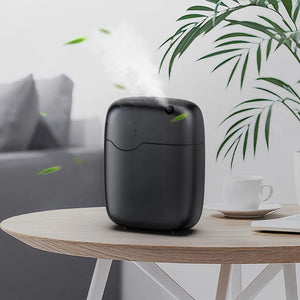
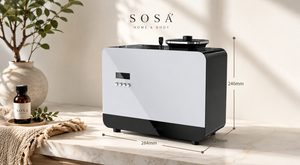
3. Set the level once, with an outside nose, and lock it. Everybody who works in the office will stop perceiving the scent within about a fortnight, which makes internal opinion useless for calibration after week two. The Vaayu at ₹11,999 has a key-lock for exactly this reason.
4. Solve the supply before you solve the branding. Signatures die in stockrooms, not in boardrooms. The 300ml 300ml refill at ₹1,799 works out around ₹6 per millilitre against roughly ₹20 at 15ml, and keeping a spare unopened is what stops the office quietly changing scent in March.
5. Now the limits, and I would rather you had them from me than discovered them. Most people will never consciously notice it. It does not communicate anything specific about your firm — no scent says integrity, discretion or luxury, and anybody telling you otherwise is selling. Nothing on this page claims it affects an offer, a decision or a deal.
6. What it does do is worth the ₹299 anyway. It makes a space consistent and considered, which is precisely what good stationery does and nobody expects a letterhead to close anything. Treat it as identity rather than persuasion and it is an easy decision.
A portion of every order supports girl-child education through Nanhi Kali.

Why a signature can form in an office and not in a listing
The case for a brokerage signature is usually made emotionally and it does not need to be, because there is a structural argument sitting underneath it. Recognition of a smell requires more than one exposure at reasonable intervals, and a property business gives a client exactly one repeating space: yours. Everything else in the portfolio is temporary by design. You prepare a flat, you show it a handful of times, it sells, and within weeks it belongs to somebody who will paint it and put their own life into it. Your office is the one address in the whole business that is still yours in five years, and that difference is what makes this question answerable at all.
What a signature scent can and cannot do
Six claims that get made about signature scent in professional services, sorted honestly. Three of them are true and modest, two are overreach, and one is a claim this brand will not make in any form. If a supplier leads with a row from the middle column marked no, that tells you most of what you need to know about them.
| The claim | Verdict | What is actually true |
|---|---|---|
| It makes the office consistent and considered ★ | True, and it is the whole case | A space that smells the same at every visit reads as looked after. This is the same job good stationery, matched lighting and clean glass do |
| Clients will remember your firm by its smell | Partly, and rarely consciously | Recognition on return is real and quiet. Almost nobody will be able to name it, and a client who can is receiving too much of it |
| It works across your office and selected listings | True, with conditions | It extends to an occupied listing with the owner's consent. It does not extend to a property you are about to hand over, and never to one with a defect |
| It communicates trust, discretion or luxury | No | Smell carries association and mood, not propositions. There is no accord that says integrity, and anybody selling one is overreaching |
| It needs to be custom-blended to be a signature | No | A signature is made by holding one composition for years, not by owning it exclusively. A ₹299 bottle held for three years outperforms a bespoke one changed twice |
| It raises offers, shortens sales or closes deals | This brand will not make that claim | There is no defensible figure for what scent does to a property transaction. Fragrance is presentation, in the same category as photography and lighting |
Holding one scent steady for three years
Begin with the calibration, because everything downstream depends on getting the level right once. Install the machine, run it for a week at a modest setting, and then bring in somebody who has not been in the building that day and ask them to walk in from the street and tell you the truth. Not a colleague from the next desk, whose nose adapted on day three, and not you. A person from another branch, or a friend briefed to be blunt rather than kind. Adjust once on that evidence, and then stop. On the Vaayu at ₹11,999 the intensity control and the key-lock are what make that stick, and I would use the lock — not because your team is untrustworthy but because a dial in a workplace gets moved by fifteen people over a year, each of them moving it slightly up, none of them able to smell why. On an ultrasonic like the Sukoon at ₹1,899 the equivalent is writing the drop count on a card taped inside the cupboard: three drops per tank of the water-based Hotel Collection bottles, per tank rather than per litre, with the same number used by whoever happens to be filling it. Then schedule rather than remember. The 1h, 4h, 8h and 24h timers and the app on the Vaayu let the office run its own hours, and a signature that depends on the first person in remembering to switch something on is not a signature by Thursday.
Then the supply chain, which is where most office signatures actually die. The failure is always the same and it is entirely mundane: the bottle runs out, the person ordering is not the person who chose it, something similar arrives, and six weeks later the office smells of a decision nobody made. Three things prevent it. Write the exact scent name inside the stationery cupboard door, in the same place as the printer cartridge number, because that is the level of institutional memory this needs. Buy at 300ml — the 300ml refill at ₹1,799 works out at roughly ₹6 per millilitre against about ₹20 at 15ml, and for a machine running office hours that is months of supply rather than weeks. And keep one spare unopened, because the gap between running out and reordering is exactly when somebody helpfully buys a substitute. On the hardware side the equivalent discipline is the tank: the Vaayu's 400ml runs about 75 days per fill, which means roughly five fills a year, which means putting it in a calendar rather than waiting for the room to go quiet. And note which machine takes which fluid. The Vaayu and the Aangan atomise their own undiluted oil; the water-based Hotel Collection bottles are for ultrasonic machines only. Putting the wrong one in the wrong machine is the other way a carefully held signature ends.
Then the boundaries of where a signature may extend, because this is the question that follows within about a week of installing one. The office is unambiguous: it is yours, you never hand it over, and the people in it have been consulted. An occupied listing where the owner is your long-standing client and has agreed is defensible, and it is how a small consultancy ends up with a recognisable presentation style. A property that is about to be handed over is not: leaving your firm's identity in a home somebody is moving into is an imposition rather than a service, and it fades in a fortnight in any case. And a property with anything wrong with it is not, ever — damp, a leak, drains, smoke damage or anything with a structural cause is a material fact, and the instruction is to find it, fix it or disclose it and to scent only a property that is genuinely sound. A signature used to smooth over a defect is worse than an ordinary scent used the same way, because you have attached your firm's name to it. The last boundary is habituation, and in a signature it is structural rather than incidental. You will not be able to smell your own office after a fortnight, permanently, for as long as you work there. That is not a flaw to be corrected. It is the expected condition, and the only sensible response is to stop trusting your own judgement about the level and to trust the number on the card instead.
The SOSA edit
In the order a consultancy should actually do this, which starts with a decision rather than a purchase. The last row prints the claim this brand will not make, and it belongs in the table rather than in a footnote, because it is the reason to believe the rows above it.
| Step | What it is | Why it is in this position | Cost |
|---|---|---|---|
| 1. Pick one and stop picking ★ | One composition from the seven, chosen with your team, and no seasonal versions of it | The sameness is the product. Every decision that makes it more interesting makes it less of a signature | ₹299 |
| 2. Calibrate once, with an outside nose | A person who has not been in the building that day, walking in from the street, briefed to be blunt | Everybody inside has adapted by week two, which makes internal opinion useless for setting a level | ₹0 |
| 3. Write it down | Scent name and setting on a card inside the stationery cupboard, beside the printer cartridge number | In three years the person refilling it will not be the person who chose it. This is the whole of institutional memory | ₹0 |
| 4. Vaayu with the key-lock on | Waterless, up to 1000 m³, app scheduling, 400ml lasting about 75 days, adjustable intensity behind a lock | A dial in a workplace gets moved by fifteen people a year, each slightly upward, none able to smell why | ₹11,999 |
| 5. 300ml refills, one in use and one spare | About ₹6 per millilitre against roughly ₹20 at 15ml, bought before you run out rather than after | Signatures die in stockrooms. The gap between empty and reordered is when a substitute arrives | ₹1,799 |
| Not this: a scent that conveys your brand values | No composition says trust, discretion or luxury. Smell carries association and mood, not propositions | Printed rather than implied, because it is the claim this category is sold on and it does not hold | — |
Versailles
I have been asked twice to make a scent that communicates trust, and both times by people who meant it sincerely and were not trying to sell me anything. The honest answer is that fragrance does not work that way. It carries association, memory and mood, and it does not carry statements — there is no material in any perfumer's cabinet that says reliable, and if there were, everybody would be using it and it would stop working by Tuesday. What I could offer instead was a room that smelt the same in November as it had in March, which sounds like a smaller thing and is a real one. A consultancy whose reception has been identical for three years is telling a client something true about how the firm operates, and it is telling it in a register nobody has to consciously process.
The firm I think about when this comes up changed its office scent four times in a year. Something green in the spring because it felt fresh, something warmer for the monsoon, something with a bit of spice in it for the festive season, and then back to a version of the first one because a partner missed it. They then told me that signature scent had not worked for them. It had not been tried. What they had was a diffuser and an opinion, changed quarterly, which is a perfectly pleasant way to run a room and is not a signature by any definition. I told them to choose the quietest of the four, run it for two years without touching it, and not to expect anybody to mention it — and that if a client ever did mention it, to turn it down rather than to feel pleased. That is unglamorous advice and it is the only advice on this subject I have ever seen work.
Everything is made and supported from Pune, and a part of every order funds girl-child education through Nanhi Kali. You get a space that smells like somewhere considered; a girl gets a classroom. That equation has always felt right to me.
Frequently asked questions
- What a luxury broker's office should smell like — the free work that comes before any of this.
- Should a luxury realtor develop their own signature scent? — the same question asked about the person rather than the firm.
- One signature scent or a different fragrance per listing? — where the portfolio argument actually lands.
- A recognisable fragrance across an office and selected listings — the practical version, in full.
- Brand: the SOSA founder story.
Facts verified August 2026: Product facts used in this guide. SOSA Vaayu ₹11,999: waterless cold-air nebulising diffuser, atomises undiluted fragrance oil to a dry residue-free nano-mist, coverage up to 1000m³ (approximately 2,000–3,000 sq ft), 400ml refillable tank lasting up to about 75 days per fill, Bluetooth app plus onboard control, 1h/4h/8h/24h timer scheduling, adjustable intensity, under 38 dB, DC 12V/1A at 5W, 165 × 80.5 × 215 mm and 0.9 kg, freestanding or wall/HVAC mounted, auto-stop and key-lock, CE, RoHS and SGS certified, supplied with four hotel-inspired fragrances. SOSA Aangan ₹25,999: HVAC-connected or standalone commercial nebulising diffuser, coverage up to 3,000m³ (roughly 8,000–10,000 sq ft), 800ml reservoir, metal body, programmable schedules, under 42 dB. Ultrasonic machines are water-based and consume 30–50 ml of water an hour: Sukoon ₹1,899 (500ml, 270–320 sq ft, 16–18 hours on low, 3–6 drops per tank, steady/2H/4H timers, three 15ml Hotel Collection scents included), Boond ₹899 (300ml), Megh ₹3,499 (6 litres). Hotel Collection water-based fragrance 15ml ₹299, 100ml ₹999, 300ml ₹1,799, Pack of 7 at 15ml ₹1,799 against ₹2,093 bought singly; the Vaayu and Aangan take their own undiluted oil rather than these water-based bottles. Reed diffusers (separate alcohol-free line) from ₹749, requiring 24–72 hours to reach their working level. Scented candles from ₹379, scenting a room in roughly 15–20 minutes but requiring attendance. Free shipping above ₹499. Timings: a nebulising diffuser reaches a working level within minutes and a stated viewing level well inside two hours. This guide makes no claim that fragrance affects a property's price, offer level or time on market; it is presentation, in the same category as photography, styling and lighting. Fragrance must never be used to conceal a material defect. SOSA is not affiliated with or endorsed by any hotel brand. Prices subject to change — see the live product pages.