




If it passes, the answer is very light — and usually no new product. The right move is nearly always to let the reception source reach the lounge at the same level, not to add a second source with a second character.
If the counselling or consent conversation happens in that room, it is clinical space. Furniture does not change that, and I would not scent it.
What this page will not claim: fragrance does not settle anyone before a procedure, improve comfort, shorten a wait or affect recovery, enquiries or revenue. Some people are sensitive to airborne fragrance, which is why a fragrance-free seat must exist and why your clinicians — not SOSA — set the policy.
2. The second question is the one that most often ends it. Does anyone sit in that lounge after a procedure — a day-one review, a wait between drops, a companion holding a discharge sheet? If the seating is shared with post-operative use at any point in the week, the answer is nothing, and that is the strictest position on this page.
3. If it passes, go lighter than reception, not equal to it. A lounge is a smaller volume with longer occupancy and less traffic, so a level that reads as almost nothing in an open hall reads as considerably more by the fortieth minute.
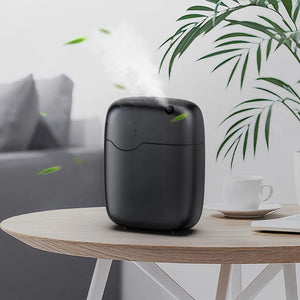
4. Prefer one source shared with reception over a second source of its own. If the lounge opens off the front hall, let the existing Sukoon at ₹1,899 reach both at one setting. Two sources in one air path produce a seam, and a second fragrance produces a muddle.
5. If the lounge is closed and separate and still passes, a reed diffuser at four reeds. A Mountain Breeze 50ml at ₹849 with four of its six fibre reeds in place, on a tray, away from the seating and away from the door. Fewer reeds is the only real volume control a bottle has.
6. Keep a seat the fragrance does not reach, and keep it somewhere else. If the lounge is the only seating in the building, there is no fragrance-free option — and a practice that scents its waiting space should always be able to offer one. That failure alone is enough to specify nothing.
7. None of this is clinical advice. Air handling, cleaning protocol, infection control and patient suitability rest with you and your surgical team; the medical judgement is not mine. Everything SOSA makes is composed in small batches in Pune, and a portion of every order supports girl-child education through Nanhi Kali.

Part one — why furniture is the wrong evidence
Almost every centre that asks me about a lounge describes it by its contents: two armchairs, a sofa, a low table, sometimes a coffee machine. None of that tells me whether the room is hospitality or clinic, because the same furniture appears on both sides of the boundary in every refractive centre I have seen.
 Mountain Breeze₹849 · four reedsMost small centres run one comfortable room and use it for several things: the pre-consultation wait on Monday, counselling on Wednesday, and on Thursday morning the place day-one review patients sit. That third use puts post-operative patients in the room, and post-operative space is the strictest fragrance-free category in the building. A source cannot be moved in and out reliably; a reed diffuser in particular is constant, passive and has no off switch. So the test is not what the room does today but what it does in any week of the year. If post-operative review happens there even occasionally, specify nothing.
Part two — the five-question lounge test
Answer these in order and stop at the first fail. There is no scoring and no majority: a single fail means the room gets nothing, which is a perfectly good outcome and costs you nothing.
| The question | A pass looks like | A fail looks like | What a fail means |
|---|---|---|---|
| 1. What work happens in this room? ★ | Waiting only — people sit, then are called through | Counselling, consent, results, any part of the decision | Clinical space by function. Specify nothing |
| 2. Does anyone sit here after a procedure? | Never — post-operative review has its own seating elsewhere | Day-one reviews, waits between drops, discharge conversations | Post-operative area. The strictest no on this page |
| 3. Is there a door to the clinical corridor, and is it shut by default? | A door that closes and stays closed between movements | An open archway, or a door propped for trolley access | The lounge is the corridor. No placement fixes a floor plan |
| 4. Does it share a return-air path with workup or theatre? | Your facilities engineer has confirmed it does not | Nobody knows, or the same system serves both | Nothing until that is answered — and it is their answer, not mine |
| 5. Can a patient sit somewhere else instead? | Reception seating, or a second bay, kept fragrance-free | The lounge is the only seating in the building | No fragrance-free option can be offered. Specify nothing |
| The honest caveat: this test decides where a fragrance product may be placed, not who is suited to being near one. It makes no claim about what fragrance does for anyone, and nothing here is medical, clinical or safety advice. Ventilation, air handling and patient policy are matters for you and your surgical team — question four in particular is a question for your engineer, not for a perfumer. A centre that fails one question and buys nothing has used this table exactly as intended. | |||
Sukoon · one source, reception and lounge₹1,899Shop → 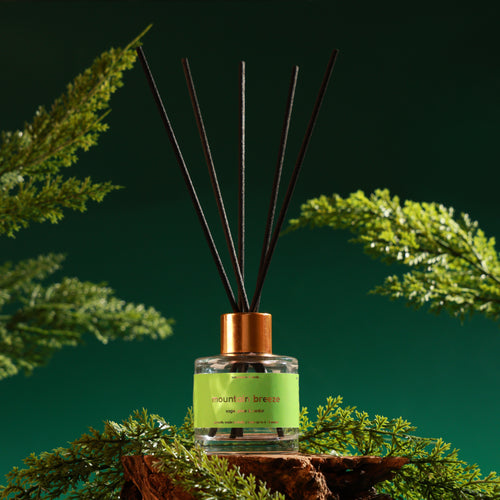 Mountain Breeze · closed lounge, four reeds₹849Shop →
 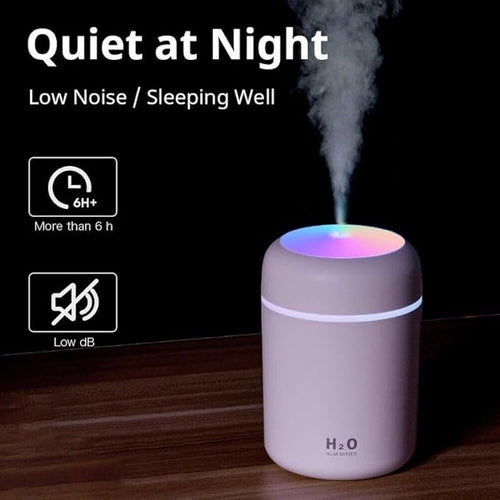 Boond · ~150 sq ft, but ultrasonic₹899Shop →
Part three — when a lounge should get nothing at all
Three situations end this conversation, and none is unusual. The first is the multi-use room, the commonest lounge in Indian refractive practice. One good room used for pre-consultation waiting, counselling and day-one reviews depending on the morning. There is no version of a scented multi-use room I would specify: a passive source cannot be present on Monday and absent on Thursday, and a machine on a schedule cannot follow a diary that changes. If your comfortable room does three jobs it gets nothing, and the fragrance stays in the front hall where the job never changes.
The second is the lounge that is really a widening in the corridor. Many premium fit-outs place seating in the run between reception and the workup rooms, with no door anywhere. A source in that space is a source in the clinical corridor, and careful placement does not repair a floor plan. The third is the lounge whose air the centre cannot account for — shared returns, a ceiling void that connects to the theatre corridor, a system nobody has drawn since the fit-out. That is a question for your facilities engineer and your surgical team, and until they have answered it the correct specification is none. I do not advise on ventilation, air handling or infection control, and a page that pretended otherwise would not be worth reading.
There is also the case where a centre wants the lounge to smell different from reception — warmer, or more distinctive, to mark it as a considered room. I would not. Two scents on one air path do not read as two zones; they read as one muddled scent with a seam in the middle, and the seam is at exactly the place people walk through. If the lounge is genuinely sealed from the hall it can carry its own composition, but at that point ask whether a second fragrance is adding anything except an inconsistency to explain. One scent, one level, and fewer rooms than you started with is nearly always the better specification.
Part four — what to specify, by what your lounge really is
Find the row that matches the room's actual use rather than its furniture. Three of the six end in spending nothing.
| What your lounge actually is | Verdict | If it passes: what, and where | The one thing that would change my answer |
|---|---|---|---|
| Waiting-only lounge opening off reception, door to the corridor ★ | Yes — very light | Sukoon ₹1,899 in the hall, lowest setting, reaching both rooms | Any post-operative use of the seating, in any week |
| Closed, separate waiting lounge, own door, no clinical use | Yes — lighter still | Mountain Breeze 50ml ₹849, four reeds, on a tray away from seating | If it is the only seating in the building, the answer becomes nothing |
| Counselling or consent conversations happen here | No | Nothing. The front hall carries the whole ambience | Moving counselling permanently into a cabin would change it |
| Day-one reviews or post-operative waits use this seating | No — the strictest | Nothing, and not on a schedule either | Nothing would. Separate seating for reviews is the only route |
| Seating in an open run between reception and workup | No | Nothing. Spend on acoustics, seating and light temperature | A door, and a hall the seating actually belongs to |
| Lounge inside one connected front of house above ~320 sq ft | Yes, as part of the hall | Vaayu ₹11,999, freestanding, key-lock, run window in consulting hours | Confirm current refill supply before committing to it |
Versailles
I wrote this test after getting the same question four times in a month and giving four slightly different answers — a sign the answer was not mine to give in that form. Every centre described the same room, armchairs and a low table and good light, and every room turned out to do something different.
The question that changed my mind came from a centre manager who said, almost in passing, that day-one reviews were held in the lounge because it was the nicest place to sit. Everything else about her room passed. That one fact ended it, and I have put it second in the test ever since because it is the fail people do not see coming.
A test is also more honest than an opinion, because it can be applied to a building I have never visited. I am a perfumer; I do not know your floor plan, your air handling or your Thursday morning. What I can do is write down the five things that decide it and be clear that a single fail means nothing goes in that room — which is the answer for most lounges, and costs the practice nothing. Composed and made in small batches in Pune, and a part of every order funds a girl's classroom through Nanhi Kali.
Frequently asked questions
- What a premium LASIK centre should smell like — the two halves of a surgical building.
- Zoning a whole LASIK centre — a decision for every room type, including this one.
- Keeping the clinical areas fragrance-free — placement, doors and air pressure in practice.
- Premium without reading as a hotel or spa and the restraint argument in full.
- Brand: the SOSA founder story.
SOSA range, specifications and prices used in this guide (verified August 2026): Vaayu ₹11,999 — waterless cold-air nebulisation of undiluted fragrance oil; no water, no heat, no added humidity, no white mineral dust. Coverage up to 1000 m³, about 2,000–3,000 sq ft. 400ml refillable tank lasting roughly 90+ days at a mid setting. Bluetooth app plus onboard controls, 1h / 4h / 8h / 24h run windows, day selection, adjustable intensity, auto-stop and key-lock. Under 38 dB. DC 12V / 1A, 5W. Freestanding or wall / HVAC mount. CE, RoHS and SGS certified. SOSA does not currently sell a separate Vaayu cold-air refill oil; the 400ml supplied in the box is the fragrance available at the time of writing, so a practice planning continuous or multi-site use should confirm current refill availability with SOSA before committing. The water-based Hotel Collection is made for ultrasonic machines and must not be used in a Vaayu. Other machines: Boond 300ml ₹899 (~150 sq ft, ultrasonic) · Sukoon 500ml ₹1,899 (270–320 sq ft, 16–18 hours on low, remote and steady/2H/4H timers, three 15ml fragrances included, ultrasonic) · Megh 6L ₹3,499 (~215 sq ft — a runtime and humidity machine that covers less than a Sukoon, never a coverage upgrade) · Safar ₹3,999 (waterless cold diffusion, cordless, 20ml, about 6.9cm, three speeds, 1/2/3-hour auto-off — sold as a car and travel diffuser, personal-scale only; SOSA publishes no coverage figure for it) · Aangan ₹25,999 (HVAC nebulising, ~8,000–10,000 sq ft) · Meenar ₹38,500 (commercial HVAC, 12,000–18,000 sq ft). Water-based Hotel Collection for ultrasonic machines: 15ml ₹299 · 100ml ₹999 · 300ml ₹1,799 · pack of seven ₹1,799; scents are inspired by the atmosphere of well-known hotels — SOSA is an independent Indian brand and is not affiliated with, endorsed by or supplying any hotel group. Reed diffusers ₹749–₹1,349 (50ml 6–8 weeks, 130ml 14–18 weeks, six fibre reeds, no 100ml size; replacement reeds are not sold separately). Reed oil cannot be used in an ultrasonic machine and Hotel Collection oil cannot be used in reeds. SOSA sells no room spray or home spray — every SOSA spray is a car perfume. Nothing in this guide is medical, clinical or safety advice. A fragrance diffuser adds a scent to the air. It does not clean, purify, filter, sanitise or disinfect air, does not remove or neutralise disinfectant, damp or occupancy smells, and has no effect on comfort, anxiety, waiting time, recovery or any clinical outcome. Some people are sensitive to airborne fragrance, which is why this guide recommends that examination rooms, diagnostic areas, consultation cabins, procedure suites and post-operative areas remain fragrance-free, that a fragrance-free seating option always exist, and that a diffuser is never mounted into shared HVAC in a clinical building. Decisions about clinical policy, ventilation standards, infection control and patient suitability rest entirely with the practice and its clinicians. A persistent stale, damp or disinfectant smell is a ventilation, moisture or cleaning problem — SOSA sells no dehumidifier and no air purifier, and fragrance should never be used to cover one. Coverage, runtime and longevity figures are manufacturer specifications and typical ranges, not guarantees, and vary with room volume, ceiling height, air exchange, occupancy and season. SOSA publishes no commercial or bulk pricing, no corporate account, no annual maintenance contract, no installation service, no stated warranty term and no multi-location programme; warranty length, spare parts, servicing and app platform availability are unconfirmed, and larger or multi-site enquiries should go through the contact page before any commitment. Composed and made in small batches in Pune, India. Free shipping above ₹499. A portion of every order supports girl-child education through Nanhi Kali. Prices subject to change — see the live product pages.