


- The direct answer
- Why fragrance-first almost always fails
- The order that actually works
- Washroom odour, matched to its actual cause
- Where fragrance genuinely belongs in this sequence
- What fixing the source, then the fragrance, actually costs
- A note from Sonal
- Questions about diagnosing a café washroom
2. Confirm extraction is actually running, not just installed. An exhaust fan that exists on the plan but has been switched off to save power, or cycles on a timer that doesn't match trading hours, produces exactly the symptom owners mistake for a fragrance gap.
3. Match the cleaning cadence to real traffic, not a fixed clock. A rota written once and never revisited under-serves a washroom whose traffic has grown since, and no fragrance dosage compensates for a cleaning schedule that's fallen behind the room's actual use.
4. Look at porous materials — grout, mats and silicone seals. These absorb odour over months and release it slowly regardless of how well the visible surfaces are cleaned, which is why a washroom can look spotless and still smell faintly wrong.
5. Only after all four are confirmed clean does fragrance belong in the conversation. At that point it's a genuine finishing step — before it, it's an attempt to cover a problem that a fragrance was never built to solve.
Source, then fragrance — in that order, every time. Reversing it doesn't just fail to fix the smell; it usually adds a second, more noticeable one on top of it.

Why fragrance-first almost always fails
A fragrance molecule doesn't replace the air underneath it — it sits alongside whatever's already there. When the underlying smell is a dry drain trap, a damp mat or an ammonia-based cleaning residue, adding a citrus or woody register doesn't remove that base note; it combines with it. The result is very often a third smell, one that neither the source nor the fragrance produced on its own, and one that reads to a customer as an attempt to cover something up rather than as a washroom that's genuinely well kept.
The instinct to respond to a lingering smell with a stronger dose makes this worse, not better. A washroom fragrance that's been turned up to fight an unresolved source becomes identifiable in exactly the way this cluster argues against everywhere else — a customer who can name what they smelled has been given too much of it, and in this case too much of the wrong thing entirely, since no dosage of fragrance was ever going to resolve a drain or extraction fault.
There's also a plain economic case for checking the source first. A dry trap costs nothing to refill. A cleaning rota costs nothing to adjust. An extraction fan that's already installed costs nothing to switch back on. Fragrance is a recurring purchase, and spending on it before ruling out four free or near-free checks means paying repeatedly for a fix that was never going to hold, because the actual cause was never addressed.
The order that actually works
 Morning Freshness₹749Every fixture with a trap — the floor drain, the under-sink trap, any unused fixture — needs water in it to seal sewer air out of the room; a trap that's run dry, particularly on a fixture used less often, lets that air straight through.
Washroom odour, matched to its actual cause
Most of the rows below resolve with no purchase at all — the fragrance line only appears once everything above it is confirmed.
| Symptom | Likely cause | What actually fixes it | What it costs |
| A faint sewer-like smell, worse near one specific fixture | A dry drain trap on that fixture | Run water through the trap to refill the seal; repeat weekly if the fixture is rarely used | No purchase |
| The washroom smells noticeably worse right after cleaning | A cleaning product reacting badly with a surface, or diluted incorrectly | Confirm the product and dilution with the supplier or cleaning contractor | No purchase — a supplier or contractor query |
| Smell is strongest at floor level, or near a mat | Porous grout, sealant or a mat that's absorbed odour over months | Deep-clean or replace the affected grout, seal or mat | A maintenance cost, not a fragrance purchase |
| The extraction fan is switched on but odour still lingers | The fan may be undersized, incorrectly ducted, or simply not running for full trading hours | Assessed by a maintenance or fit-out professional, not resolved by fragrance | A professional assessment |
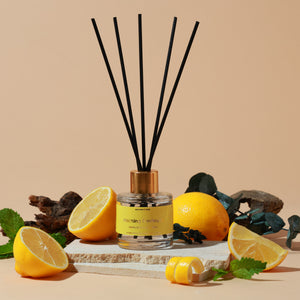
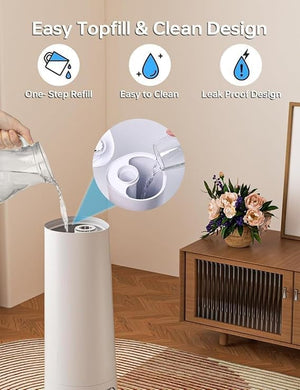
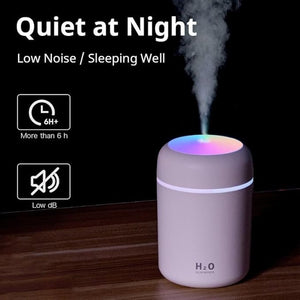
| All four checks above are confirmed clean, and the room still feels merely functional rather than finished | A genuine fragrance gap — the correct point to introduce one | A reed diffuser or ultrasonic machine, sized to the room | ₹749–₹1,899 |
| Reaching for fragrance before confirming these four is the most common mistake in this cluster — it treats a plumbing, extraction or materials question as if it were a retail one, and no amount of fragrance resolves a question it was never built to answer. | |||
Morning Freshness · bright citrus and mint₹749Shop → 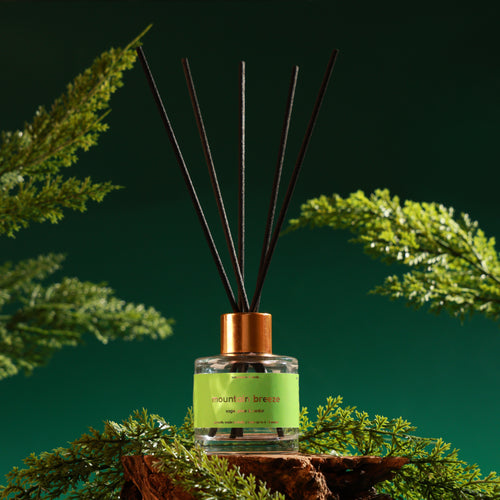 Mountain Breeze · dry pine, sage, cedar₹849Shop →
  Sukoon · for a larger washroom suite₹1,899Shop →
Where fragrance genuinely belongs in this sequence
Never treat fragrance as the first response to a washroom that smells wrong — it is the last item on this list for a reason, and moving it earlier doesn't speed up the fix, it just delays finding the actual one.
Sometimes the source issue sits beyond what a café's own cleaning team can resolve — an undersized extraction fan, a drainage fault, or a grout and sealant job — and in those cases the honest step is a call to a maintenance or fit-out professional, not a stronger diffuser standing in for that call.
Usually, once the four checks are genuinely done, the fragrance decision itself is simple and modest: a 50ml reed diffuser at six reeds for most washrooms, sized to the room rather than to how urgently the owner wants the smell resolved.
What fixing the source, then the fragrance, actually costs
Almost everything on this list costs nothing but attention — the fragrance line only appears once the rest is confirmed.
| Route | Premises | Why | What it costs |
| Check and refill drain traps | Any washroom with an intermittent, sewer-like smell | The most common single cause, and the cheapest to rule out | No purchase |
| Confirm extraction runs for the full trading day | Any washroom, before anything else is assessed | Removes the single biggest cause of a washroom that smells worse than it looks | No purchase — a scheduling and switch check |
| Match the cleaning rota to real, current traffic | A washroom whose traffic has grown since the rota was written | Closes the gap between a schedule that looked adequate once and the room's actual use now | No purchase — a scheduling change |
| Assess porous materials — grout, mats, seals | A washroom that passes a visual clean but still smells faintly wrong | Addresses odour absorbed into materials that cleaning alone doesn't reach | A maintenance cost, not a fragrance purchase |
| Reed diffuser, sized to the room, once the source is clean | A washroom under 150 sq ft that's passed all four checks | The correct finishing step, in the correct order | ₹749–₹849 |

The call I get most often about a washroom isn't "which fragrance should I use" — it's "the fragrance isn't working." Almost every time, a few questions in, it turns out the washroom has a dry trap, a fan that's been switched off, or a mat nobody's replaced in a year, and the fragrance was asked to do a job that was never its job to begin with.
I ask the same four questions before I'll talk about a product at all: are the traps holding water, is the fan actually running, is the cleaning rota still matched to how busy the room is, and has anyone looked at the grout and the mats lately. It sounds unglamorous for a fragrance brand to lead with plumbing questions, but selling a diffuser into an unresolved source doesn't help the café and it doesn't help SOSA's name either.
The washrooms that end up smelling genuinely well kept are never the ones with the strongest fragrance in them — they're the ones where someone checked the first four items on this list before reaching for the fifth. That order isn't a sales pitch. It's the only sequence that actually holds.
Questions about diagnosing a café washroom
- Why Does a Café Washroom Still Smell Bad After Adding Air Freshener? — the exact failure mode this diagnostic order prevents.
- Why Does My Café Smell Amazing but the Washroom Ruins the Customer Experience? — the standards gap that source-first checking is meant to close.
- Can a Café Use Professional Scenting Only in Its Washrooms and Entrance? — the plan this diagnostic sequence sits underneath.
- How Do I Stop Washroom Fragrance From Reaching the Dining Area? — the containment question that follows once the source is confirmed clean.
- Brand: the SOSA founder story.
SOSA products & prices (verified September 2026): Reed diffusers 50ml ₹749–₹849 (to 150 sq ft, 6–8 weeks at six reeds) · 130ml ₹1,249–₹1,349 (above 150 sq ft, 14–18 weeks) · reed refill 300ml ₹2,399. Ultrasonic: Boond ₹899 (~150 sq ft) · Sukoon ₹1,899 (270–320 sq ft, ships with three 15ml Hotel Collection fragrances) · Megh ₹3,499 (6L tank, ~100 hrs runtime, ~215 sq ft — a runtime machine, not a coverage upgrade). Waterless cold-air: Safar ₹3,999 (no published coverage figure) · Vaayu ₹11,999 (up to 1000 m³, roughly 2,000–3,000 sq ft; 400ml tank lasting about 90+ days; app and onboard control, 1h/4h/8h/24h run windows, adjustable intensity, key-lock, under 38 dB, freestanding or wall/HVAC mount, 5W, CE/RoHS/SGS) · Aangan ₹25,999 (8,000–10,000 sq ft). Hotel Collection water-based fragrance 15ml ₹299 · 100ml ₹999 · 300ml ₹1,799 is for ultrasonic machines; reed oil and Hotel Collection are not interchangeable. Reed diffusers are alcohol-free, phthalate-free, paraben-free, IFRA-compliant and low VOC, handmade in small batches in Pune. Every purchase funds a girl's education through Nanhi Kali. Prices and availability subject to change — see the live product pages.