
- The direct, honest answer
- What 'barnyard' oud actually is, and why white oud reads differently
- The three decisions before you buy
- Oud, by register, across this range
- How to test your own tolerance properly
- What to buy, and the honest fallback if it doesn't work
- A note from Sonal
- Questions from readers who are wary of oud
2. What you're probably reacting to has a name, and it isn't 'oud' as a whole family. The dark, medicinal, almost barnyard note that puts people off oud usually comes from a specific kind of material — wild or heavily aged agarwood, rich in the animalic, leathery compounds that read as sharp and challenging rather than woody at all.
3. Nawaab does contain real oud — a white royal oud — and no amount of honest framing changes that. What's worth knowing is that 'white oud' is a genuinely cleaner, brighter register than the dark, barnyard-and-medicine note that oud usually means when someone says they hate it, not a euphemism for 'basically none.'
4. A 3 ml roll-on at ₹399 is the honest, low-risk way to test whether your specific objection survives. Some readers who've reacted badly to a dark, aged oud find a white oud register genuinely wearable; others find any oud, at any register, unwelcome — a small size is how you find out which reader you are without committing to 12 ml first.
5. If the answer turns out to be 'any oud at all,' this range's honest fallback is Adaa. Bergamot, green cardamom, jasmine sambac and white musk carry no oud whatsoever — it isn't a dry wood, and it won't pretend to be one, but it's the one attar here that genuinely asks nothing of an oud-wary nose.
This isn't a post that talks you out of disliking oud — it's one that tells you plainly what's in the bottle, so a 3 ml test is an informed decision rather than a gamble.

What 'barnyard' oud actually is, and why white oud reads differently
'I hate oud' is one of the most common reactions in perfumery, and it's almost never a reaction to oud as a whole material family — it's a reaction to a specific character that shows up most often in wild-harvested or heavily aged agarwood oils. That character reads as dark, medicinal, sometimes leathery or animalic, occasionally close to a barnyard — genuinely challenging notes that a lot of noses, including trained ones, find unpleasant in isolation. If that's what put you off oud, your reaction was accurate; that's a real and reasonable thing to dislike.
A white oud is a different register of the same broad family, generally built to present a cleaner, brighter, more resinous-woody character with far less of the sharp animalic top note that defines the barnyard style. It isn't a synthetic stand-in and it isn't oud with the volume turned down to nothing — it's a genuinely different way of sourcing and presenting the material, one that a number of oud-wary noses find they can wear where a darker, aged oud stopped them cold. That distinction is real, but it's a matter of degree and character, not of absence, and it deserves to be described that way rather than oversold.
Nawaab is built around that white register, next to Mysore sandalwood and Kashmir saffron that keep the whole composition dry rather than dark or sweet. Whether it clears your specific bar is genuinely something only your own nose can answer — some readers whose objection is to the barnyard style specifically find a white oud clears it easily; others discover their objection runs to oud as a category, at any register, and no amount of honest framing changes that outcome for them. Both are legitimate results of an honest test.
The three decisions before you buy
 Nawaab₹399If you can recall the specific perfume that put you off oud, think about whether it read as dark, smoky and animalic, or simply as woody-resinous but strong — the two are different objections with different odds of surviving a white oud.
Oud, by register, across this range
Every attar here is described honestly for its oud content, because 'mostly oud-free' isn't a real category — either an attar carries it or it doesn't.
| Attar | Oud register | How it reads | Verdict for an oud-wary wood lover |
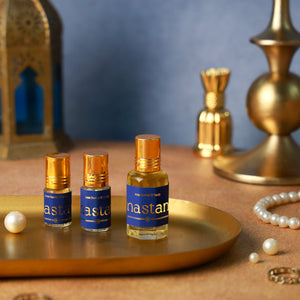
| Nawaab | White royal oud | Cleaner and brighter than a dark, aged oud, but a real presence alongside dry sandalwood and saffron | The closest fit for dry woods — test at 3 ml before assuming it will or won't work |
| Ameeri | Soft oudh | Gentler in intensity, folded underneath Taif rose and Persian saffron rather than leading | Still real oud, in a warmer, rosier composition than Nawaab |
| Mastani | Oudh | Sits under night-blooming jasmine and Damask rose, in a floral-forward rather than wood-forward build | Not the closest fit for a dry-wood taste regardless of oud tolerance — its lead notes are floral |
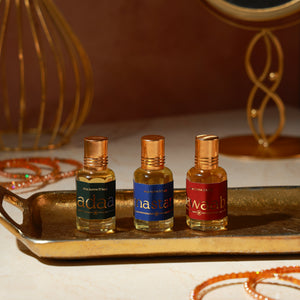
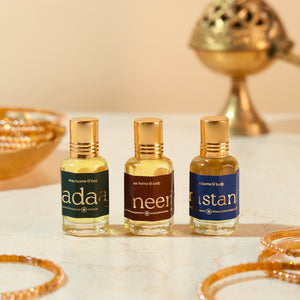
| Adaa | None | Bergamot, green cardamom, jasmine sambac and white musk — no wood, no oud anywhere in the composition | The only genuinely oud-free option, at the cost of leaving the wood family entirely |
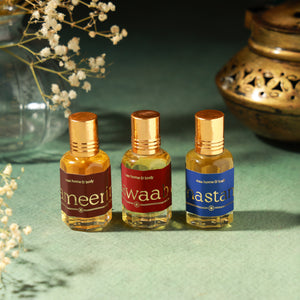
| The Attar Trio | Includes Nawaab and Ameeri, both oud-bearing | Useful for comparing registers once oud in some form has already been accepted | Not the right first step for a reader still testing their basic tolerance |
Nawaab · dry wood, white-register oud₹399Shop → 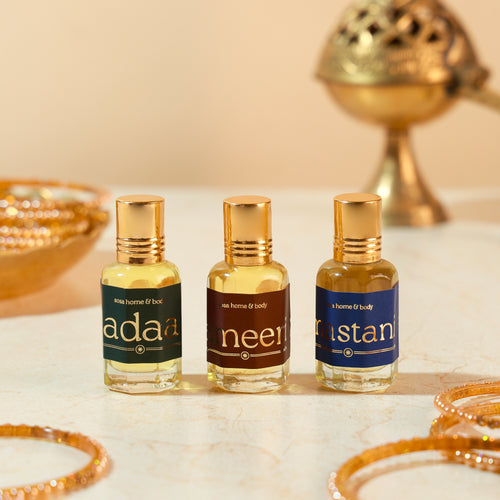 Adaa · genuinely oud-free, a different family₹379Shop →
 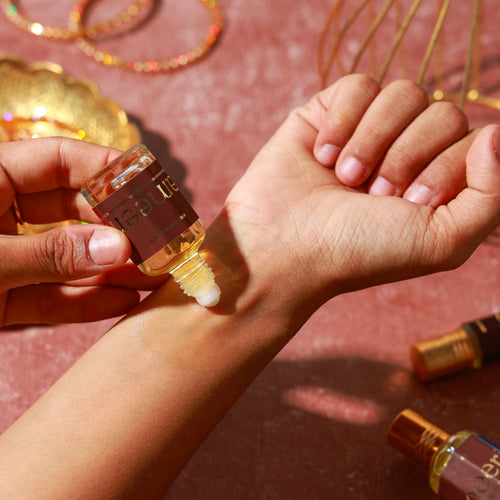 Ameeri · softer oudh, wrapped in rose₹385Shop →
How to test your own tolerance properly
Never judge Nawaab's oud from a single sniff of the bottle straight after opening it — an oil attar changes on skin over the first hour in a way a quick smell at the cap doesn't show, and the sandalwood and saffron often move to the front before the oud settles into its place underneath.
Sometimes the honest test needs a full day, not a first impression — apply it in the morning and notice, specifically, whether what bothers you late in the day is a sharp, dark, medicinal note or simply a general wood-and-spice intensity, because those are different verdicts.
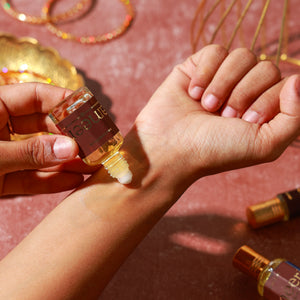
Usually, one light application at the wrist from a 3 ml roll-on is enough to answer the question honestly — there's no need for a second or third test on the same bottle before deciding whether the white oud register works for you.
What to buy, and the honest fallback if it doesn't work
Matched to how confident you are about what specifically put you off oud, and what to do if the test doesn't go your way.
| Route | Best for | Why | What it costs |
| Nawaab, 3 ml | A genuinely open test of whether white oud clears your specific objection | The closest dry-wood-and-saffron fit in this range, with the oud disclosed rather than hidden | ₹399 |
| Ameeri, 3 ml | If Nawaab's oud is still too present for you, but you want to try one softer step before giving up on this range's woods | Soft oudh sits further back, under rose and saffron, rather than leading | ₹385 |
| Adaa, 3 ml | If the test confirms oud, at any register, isn't for you | The only attar here with no oud at all — a genuinely different, citrus-and-jasmine family, not a wood | ₹379 |
| Nawaab, 6 ml or 12 ml | Only once 3 ml has confirmed the white oud register genuinely works for you | The same dry sandalwood-and-saffron profile, sized for regular wear rather than a trial | ₹699 / ₹1,199 |
| The Attar Trio | Not recommended as a first step here | It bundles two oud-bearing attars with a third, Mastani, that carries oud too — worth revisiting once your tolerance is established, not before | ₹1,055 |
This is the question I answer most carefully in this whole range, because 'I hate oud' is almost always a real, specific reaction, and I'm not going to write around it to make a sale. Nawaab has oud in it. That's not a footnote I can soften — it's a white royal oud, and while that's a genuinely cleaner register than the dark, aged oud that puts most people off the material, it is not the same thing as no oud at all.
What I can tell you honestly, from training with both natural and synthetic materials, is that the note most people mean when they say 'oud' — dark, medicinal, sometimes close to a barnyard — comes from a specific character in wild or aged agarwood, and it is a genuinely different experience from a white oud's cleaner, more resinous-woody profile. Some noses that reject the first find the second entirely wearable. Others don't, and that's not a failure of the fragrance or the nose — it's simply where that person's tolerance sits.
I'd rather a reader spend ₹399 finding that out honestly than ₹1,199 discovering it the expensive way, and I'd genuinely rather send someone to Adaa — which shares nothing with the wood family they came here loving — than sell them a bottle I already suspect won't survive contact with their actual nose.
Questions from readers who are wary of oud
- I Love Woody Perfumes — Which Attar Should I Buy? — this series's entry point, before the oud question narrows things.
- I Love Cedar-Like Dry Woods — What Type of Perfume Oil Should I Look For? — a neighbouring dry-wood taste and how it holds up against the same oud question.
- I Already Wear Oud EDPs — Is Oud Attar Worth Adding to My Collection? — the opposite reader, already comfortable with oud, for contrast.
- I Love Oud but Don't Want Something Extremely Smoky — Which Attar Should I Choose? — more on how this range's oud registers differ from the darkest, smokiest style.
- Brand: the SOSA founder story.
SOSA attars & prices (verified September 2026): All four are alcohol-free roll-on attars in 3 ml, 6 ml and 12 ml. Adaa (bergamot, green cardamom, jasmine sambac, white musk) ₹379 · ₹669 · ₹1,149. Ameeri (Taif rose, Indian sandalwood, Persian saffron, soft oudh) ₹385 · ₹679 · ₹1,165. Mastani (night-blooming jasmine, Damask rose, oudh) ₹389 · ₹685 · ₹1,179. Nawaab (white royal oud, Mysore sandalwood, Kashmir saffron) ₹399 · ₹699 · ₹1,199. The Ameeri + Nawaab + Mastani trio is ₹1,055 · ₹1,859 · ₹3,189. Prices are the live store prices at the time of writing.