




The calendar: three weeks out, announce and open the opt-out. Two and a half weeks out, collect addresses. Two weeks out, draw, and publish the cap, the date and the handover in the same message. One week out, the order-by date passes.
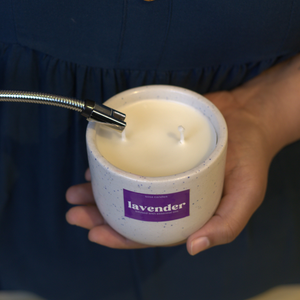
The three things that actually go wrong: somebody receives nothing because their giver resigned, forgot or is on leave · an opt-out visible enough that using it looks like a refusal · a cap everybody reads as a target. Keep two or three spare gifts; a Bookshop candle at ₹379 is the cheapest honest spare there is.
2. Open the opt-out before the draw, not after it. One line in the announcement: reply to me by Thursday if you would rather sit this one out, no reason needed, and nobody will know. Some people cannot afford it in December. Some do not celebrate Christmas and would rather not be in a Santa draw. Both should be able to decline invisibly, and once a name has been drawn, withdrawing requires a conversation with you, which is exactly the cost you were trying to remove.
3. Collect delivery addresses with the sign-up, before the draw. This is the single most useful administrative thing an organiser does, and almost nobody does it. If half your floor is remote or hybrid, a giver who wants to send a parcel has to ask their recipient where they live, which ends the secret. Collect addresses from everybody at sign-up, hold them yourself, and release one address to one giver after the draw.
4. Publish the date and the handover method in the same message as the draw. The exchange date, the hour, the room, and what happens to gifts for people who are not in the office that day. A handover with no stated method turns into fourteen people standing around a table waiting for somebody to start.
5. Suggest categories, never products. Four is enough: something for a room they spend time in, something for their car if they drive, something for a desk, and something consumable that is not food. Non-food is the right default — allergies, diabetes, diets and religious observance are all common and none of them is anybody's business. The category list I would circulate is written to be pasted into an email without reading as an advertisement.
6. Set an order-by date and say what it is for. Five working days before the exchange, for metro addresses, and a week earlier for everywhere else. Metro addresses usually see two to four working days, and the rest of India longer. A Secret Santa exchange tomorrow morning is not a delivery problem any online order can solve, and no page here will pretend otherwise: if it is tomorrow, buy locally, or tell the organiser you will hand it over on the Monday.
Then stop organising. The remaining risk is not in your hands and most of it never materialises.

The six decisions that cost nothing, in the order to make them
I have put these in the order an organiser has to make them rather than in order of importance, because the sequence is where most of the damage happens. An opt-out offered after the draw is not an opt-out. An address collected after the draw is not a secret. A cap announced a week after the sign-up has already been guessed at by forty people, several of whom have guessed high. Each of the six is a single line in a single email and between them they remove almost every message you would otherwise receive. I would add one thing that is not a decision so much as a habit: write the announcement as though it will be forwarded to somebody who joined last week and knows none of the context, because it will be.
The opt-out. It has to be free in the only currency that counts here, which is social. Not a form, not a conversation, not a reason. One line in the announcement, a reply to you, and a list only you hold. December is an expensive month for people on the lowest salaries in the building, and a draw named after a Christian saint is not something everybody wants to be in. If you only take one thing from this page, take this: open the opt-out before the draw and close it before the draw, so that nobody has to withdraw from something they are already inside.
The addresses. Collect a delivery address from every participant at sign-up, in the same form they use to say yes, with a note saying what it is for. Hold them. After the draw, each giver receives one name and one address. This is how a hybrid floor does Secret Santa at all, and the alternative is a giver messaging a near-stranger to ask for their address, which is a recognisable way of announcing yourself.
The handover method, stated. There are three that work and you should pick one and name it. A table, where everything is placed before the hour and recipients collect by name tag, which is the fastest and the kindest to anybody who hates an audience. A round, where each person hands theirs over in turn, which takes about ninety seconds a head and becomes long above twenty people, so split a large floor into teams for the handover even if the draw was floor-wide. Or post, for anybody not in the building, with the giver sending to the address you released. Say in the announcement which one it is and what happens to a gift whose recipient is on leave that day: somebody named holds it in a drawer until they are back.
The order-by date. Work backwards from the exchange: five working days for a metro address, eight or nine for a smaller city, and add the weekend. Publish it as a date, not as a number of days, because people do not do that arithmetic. The guide HR can share with the whole team repeats it in a form you can forward. After that date passes, the honest advice to anybody who has not ordered is to buy locally on the way in, and you should say so rather than let them order and hope.
Two: the opt-out is visible. A shared spreadsheet, a reply-all, a line in a team meeting asking who is not taking part. The intention is inclusive and the effect is the opposite, because the person who most needs to decline is the person least able to do it in public. Keep the list to yourself, and if somebody asks why a particular colleague is not in the draw, the answer is that not everybody is and you do not discuss it.
Three: the cap is read as a target. One person spends ₹1,400 against a ₹500 cap, the recipient feels indebted, and next year everybody budgets ₹1,400. The fix is wording rather than policing: up to ₹500, with a sentence saying that the cap exists so that nobody has to compete, and that a well-chosen ₹300 gift is the point of the exercise. The case for ₹500 specifically goes into why that number, and why a limit is not an instruction.
The run sheet, week by week
Three weeks is enough and four is comfortable. Everything in the first two columns is free; the only money on this sheet is the float for the spare pile and the gifts themselves, which are not yours to spend. Print it, put your own dates in, and send the two-week row as a single message.
| When | What happens | Who owns it | Cost |
|---|---|---|---|
| Day 1 ★ | Announce it. The cap as up to ₹500, the exchange date, the hour and the room. Open the opt-out in the same message with a reply-by date and no reason required | You, in one email, not three | ₹0 |
| Day 1–4 | Sign-up form collecting three things: in or out, a delivery address, and an optional one-line note about themselves. The opt-out closes when the form closes | You. The address list stays with you | ₹0 |
| Day 5 | Buy the spare pile before the draw, while you are still thinking about it. Two for a floor of forty, three or four above a hundred | You, from the team budget if there is one | ₹379–₹449 each |
| Day 6 | Run the draw. Any random pairing works; what matters is that one person holds the list and nobody else sees it | You, and only you | ₹0 |
| Day 6, same hour | Send each giver one name, one address and one optional note. Re-state the cap, the date, the handover method and the order-by date in that same message | You. This is the message that prevents the questions | ₹0 |
| Day 7 | Circulate category suggestions, not products, with non-food as the default and a line saying nobody is obliged to buy from anywhere in particular. A version you can paste is written for exactly this | You, once, with no follow-ups | ₹0 |
| Day 14 | The order-by date. After this, the advice to anybody who has not bought is to buy locally rather than order and hope | Each giver. Metro addresses need five working days | The gift |
| Never | Publishing who drew whom, chasing an opt-out for a reason, naming the people who have not bought yet, or moving the date | Nobody. All four are unforced errors | — |



The cap, the addresses and the three failures, at length
The cap is the most consequential thing you will decide and it is usually decided in thirty seconds by one person using instinct. Set it too low and you have not saved anybody money; you have simply guaranteed that forty people spend ₹200 each on objects that go into a drawer, which is ₹8,000 of collective waste and a floor full of politely disappointed faces. Set it too high and the arithmetic turns against the people you can least afford to charge: a ₹1,500 cap is a rounding error to a director and a visible amount to somebody on a stipend, and the junior person will pay it rather than admit the problem. There is no cap that is generous to everybody, which is why the wording does as much work as the number. Write it as a ceiling, say in the same sentence that nobody is expected to reach it, and resist every suggestion to set different caps by grade — a two-tier cap tells half the room which tier they are in. I have set out the arithmetic for each common Indian office cap, with what it actually buys, in the budget page, and the specific case for ₹500 in the ₹500 page. If you want the one-line version: ₹500, because free shipping starts above ₹499 and a ₹400 cap quietly spends ₹80 of a ₹400 gift on courier charges.
Addresses are the part of this that has changed completely in five years and almost no organiser has updated the process. On a hybrid floor, a meaningful share of your participants will never be in the building on the exchange date, which means a parcel, which means an address, which means that unless you collected it at sign-up the giver has to ask. Asking is not a small problem. It identifies the giver, it forces the recipient to hand a home address to somebody they may barely know, and it puts the recipient in the position of deciding whether to say so. Collect every address in the sign-up form, state plainly in the form that it will be shared with exactly one colleague for exactly one delivery, let people write an office address instead if they prefer, and delete the list in January. Some people react badly to fragrance, and an office is exactly where you will not know. That is one more argument for a reed diffuser over a personal perfume: a reed goes home with them and gets placed, or not, in a room of their choosing. Nobody has to wear anything, and nobody has to explain why they are not wearing it. Collect that in the same form if you are collecting anything at all: one optional line reading anything you would rather not receive is worth more than any suggestion list you circulate, and it catches food, fragrance and alcohol in one go.
And then the three failures, which are worth a paragraph because the fixes are cheap and the consequences are not. Keep a spare pile. Two gifts for a floor of forty, three or four above a hundred, bought at the start rather than on the morning, unwrapped, neutral, and genuinely good. A Bookshop candle at ₹379 or a Smoked Oudh candle at ₹449 works because it is a real gift rather than an obvious substitute, and because an unopened one keeps for next year. Then protect the opt-out: the list is yours, it is not discussed, and nobody who used it should ever learn that anybody knew. Then police the ceiling with words rather than rules, because an organiser who starts inspecting receipts has turned a party into a compliance exercise. What you are actually running is not a gift exchange; it is a set of conditions under which a gift exchange cannot embarrass anybody. If half your floor joined this year and nobody knows anybody, the page on running this for people who have not met has the mechanisms that make the draw possible at all.
The SOSA edit
The six decisions as a table you could put in front of a leadership team, with what I would actually write in the email and what each line costs. Only one row on it involves spending anything, and it is the spare pile rather than the gifts.
| The decision | What I would write | Why | Cost |
|---|---|---|---|
| 1. The cap ★ | Up to ₹500 per person, same for everybody. Nobody is expected to spend the full amount | Below ₹400 people buy things nobody wants; above ₹1,000 it becomes a charge on your most junior staff. Free shipping starts above ₹499 | ₹0 to set |
| 2. The opt-out | Reply to me by Thursday if you would rather sit this one out. No reason needed and the list stays with me | Some cannot afford December, some do not celebrate, and both should be able to decline invisibly. It closes before the draw | ₹0 |
| 3. The addresses | The sign-up form asks for a delivery address, shared with one colleague for one delivery, deleted in January | A hybrid floor needs parcels, and a giver who has to ask for an address has already identified themselves | ₹0 |
| 4. The date and handover | Friday the nineteenth, four o'clock, the large meeting room. Gifts on the table by half three, collected by name tag | A handover with no method becomes fourteen people waiting for somebody to start. Name who holds a gift for anybody on leave | ₹0 |
| 5. The suggestions | Four categories — a room, a car, a desk, something consumable that is not food — and a line saying buy wherever you like | Categories survive the fact that most givers know very little. Non-food is the right default because allergies and observance are nobody's business | ₹0 |
| Not on the list at any price | Publishing who drew whom, asking anybody why they opted out, a two-tier cap by grade, or moving the date | Never. Each one converts a small administrative convenience into a thing somebody remembers for a year | — |

Versailles
I have never run Secret Santa for a large office, and I want to be straightforward about that. What I have done is stand on the other side of it for six Decembers, which means several hundred conversations with people buying under a cap and a deadline, and the pattern in those conversations is consistent enough to be worth writing down. The questions are almost never about fragrance. They are: is ₹500 enough that this will not look cheap, will it arrive by Friday, and is a candle a strange thing to give somebody I have spoken to twice. Those are organiser questions arriving at a shop counter, which tells me they were not answered in the announcement.
The two that stay with me are from the same week in 2023. One was a woman in Pune buying a reed diffuser at nine in the evening for an exchange the next morning, who I had to tell plainly could not have it delivered in time and who went out and bought something locally instead. The other was a man who had drawn a colleague on a stipend and wanted to spend ₹2,000 against a ₹500 cap, because he thought generosity was the point, and who had not considered that his recipient would then be standing in a room holding a gift worth four times the one they had given. Both of those are failures of the brief rather than failures of taste, and both are fixed by one sentence in an email three weeks earlier.
So this page is the email I wish those two had received. Six lines, a date, and a cap written as a ceiling. I am aware that the business case for a fragrance company publishing a page that does not recommend buying fragrance is thin, and I have made peace with it: the people who come back are the ones who were told something useful first. Everything is made and supported from Pune, and a part of every order funds girl-child education through Nanhi Kali. Somebody gets a gift that was actually thought about; a girl gets a classroom. That equation has always felt right to me.
Frequently asked questions
- What should HR set as an office Secret Santa budget? — the cap argued with the actual arithmetic rather than instinct.
- Secret Santa gift ideas HR can share with employees — the category list, written to be pasted into an email.
- How to make office Secret Santa easier for employees who do not know each other — the mechanisms for a floor that joined this year.
- Office Secret Santa gift guide HR can share with the whole team — the version for forwarding, with the delivery window in it.
- Brand: the SOSA founder story.