



2. Dryness is the register decision that keeps a health centre out of spa territory. Cedar, pine, sage, tea, restrained citrus and light woods stay dry and cool; sweet, gourmand, powdery and warm-amber families are the spa direction, however tastefully composed.
3. Consistency is what makes restraint read as intentional rather than accidental. A register held at the same low intensity, in the same family, day after day, reads as a designed standard. A register that drifts, or that varies by shift, reads as an afterthought regardless of how well the fragrance itself is chosen.
4. The warm-oil, spa-adjacent register specifically undermines medical credibility. Heavy florals, gourmand notes and warm ambers signal relaxation and indulgence — associations that work against, not for, a client's confidence in a clinical result a few metres away.
5. Vaayu is the equipment that holds this discipline without drama. A locked, scheduled, low setting is the mechanism by which restraint stays restraint through a full working day, rather than drifting warmer or stronger as staff and seasons change.
The premium signal in this category is discipline, not indulgence — get that the right way round and the spa risk disappears on its own.

Why warmth reads as a spa, and restraint reads as expensive
The confusion at the heart of this question is a category mix-up. In hospitality generally, 'premium' often does mean 'warmer, richer, more generous' — a five-star hotel lobby, a fine restaurant, a luxury retail store can all afford a bolder, rounder signature because the visit is short and the association being built is indulgence. A health centre is not selling indulgence. It is selling an organised, unhurried experience of being tested, to a client who is about to trust the same building with a clinical result. Indulgence and clinical confidence are different impressions, and a fragrance that builds one can actively work against the other.
Sweet, floral, warm-oil registers — heavy rose or jasmine, gourmand coffee-vanilla notes, warm ambers and resins — are exactly the materials a spa or a wellness retreat reaches for, because warmth and roundness are the correct signal in that category. Import the same materials into a health centre and the building starts to read as a spa, which is a genuine problem here: it suggests relaxation and pampering at the expense of the medical seriousness the facility also needs to project, and it can raise a question in a client's mind, even briefly, about whether the space is designed around indulgence rather than around precision.
Restraint solves this because it signals the opposite of indulgence: control and a standard held on purpose, not an ambience being manufactured. A dry, cool, quiet register that never announces itself loudly reads as confident rather than self-conscious — which is precisely the double signal this cluster's opening post describes as the target for the category; see what a premium executive health centre should smell like. This post takes that general principle and states its sharpest, most practical form: luxury here is restraint, and the spa direction is the one mistake most likely to undo it.
The three levers that actually build luxury without spa
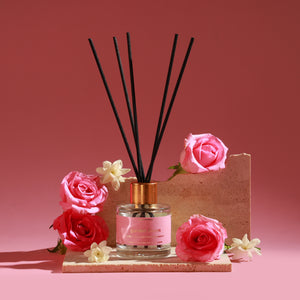
 Garden Bloom₹799Mountain Breeze (Himalayan pine, sage, cedar) and Morning Freshness (Malabar lemon, peppermint, eucalyptus) both sit firmly in the dry, cool family this category needs. Garden Bloom (rose, jasmine), Evening Calm (lavender, chamomile) and Fresh Brew (coffee, vanilla) all sit in the warmer, sweeter or gourmand direction that reads as spa or domestic — genuinely well made, and genuinely the wrong signal here.
Spa register vs the executive-health register
Set side by side, the two registers are not close variants of each other — they are opposite answers to the same brief, and only one of them belongs in this category.
| Trait | Spa / wellness register | Executive-health register | What it signals |
| Typical materials | Heavy florals, gourmand notes, warm ambers and resins | Cedar, pine, sage, tea, restrained citrus, light woods | Indulgence and warmth vs control and clarity |
| Typical intensity | Warm, often projecting, designed to linger | Low, noticed once, gone within a minute | Relaxation vs confidence |
| Typical consistency | Can vary by season or occasion, part of the wellness narrative | Fixed, scheduled, locked — the same every day | An experience being curated vs a standard being held |
| What it reads as in a health centre | A spa, working against clinical credibility | A premium, considered medical facility | The entire difference this post is about |
| Neither register is 'better' in the abstract — a spa register is correct in a spa, and the executive-health register is correct here. The mistake is only in crossing the two. | |||
Mountain Breeze — the right register₹849Shop → 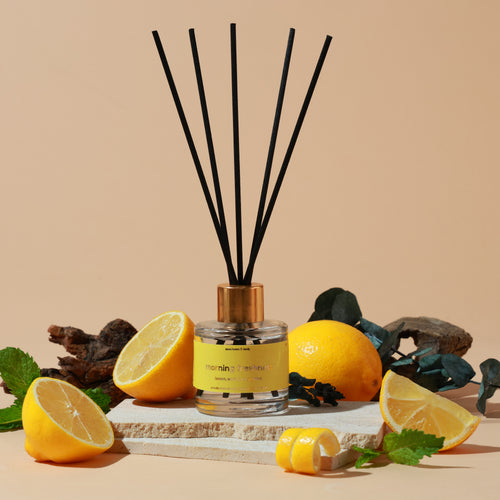 Morning Freshness — the right register₹749Shop →
 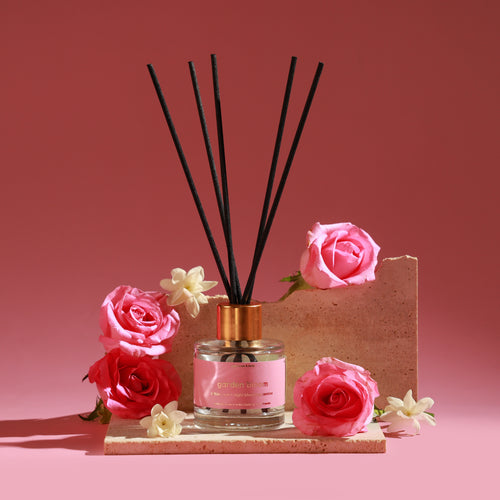 Garden Bloom — the spa direction₹799Shop →
Holding the line in practice
In practice, holding this line starts with the register choice already argued elsewhere in this cluster: Mountain Breeze or Morning Freshness, and nothing from the warmer, sweeter side of SOSA's catalogue. That decision alone removes most of the spa risk before intensity or placement is even discussed — see which fragrance actually suits a premium preventive-health clinic for the full register-by-register argument.
Intensity is the second half of the discipline, and it is where operators most often slip, usually with good intentions. A lounge that has been running quietly all morning can feel under-scented to a manager walking through at midday — what they are actually noticing is their own adaptation, not an empty room, and the fix is never to raise the setting to compensate. Raising it to fight a fade the client has already adapted past is exactly the projection this post argues against, and it moves the register toward the spa side of the line by strength alone, even with the correct fragrance in the tank.
Consistency closes the loop: the same register, at the same low intensity, on the same schedule, every day, is what turns restraint into a credible standard rather than a one-off good impression. That is a staffing and equipment question as much as a fragrance one — a key-locked, scheduled machine is what prevents a well-chosen register from drifting warmer or stronger over a busy season, which is the practical reason this cluster recommends zoned equipment over a passive bottle throughout.
What to specify
The specification below is built to hold restraint as a standard, not as a one-off impression on opening day.
| Route | Facility | Why | What it costs |
| Vaayu carrying Mountain Breeze or Morning Freshness, low intensity, key-locked | A working executive health centre of any size | Holds the dry, restrained register at a fixed low level, immune to well-meaning drift | ₹11,999 |
| Vaayu, scheduled to opening hours, same setting every day | Any executive health centre | Turns restraint into a consistent, repeatable standard rather than a variable impression | Included with the unit |
| Two Vaayu units, one per hospitality zone, same low-intensity register throughout | A larger facility with several hospitality spaces | Holds the same restrained standard everywhere, rather than letting one zone run warmer by accident | ₹23,998 |
| Sukoon, single zone, low setting, same register | A single small lounge under roughly 320 sq ft | The same restraint principle at a smaller scale | ₹1,899 |
| Any sweet, floral or warm-oil register, at any intensity | None | The spa direction this post argues against, regardless of how it is dosed | Not recommended |

This is the question I most enjoy answering directly, because the honest answer runs against almost every other hospitality category I work with. In a hotel, a restaurant, a retail flagship, more warmth and more generosity in the fragrance usually does read as more premium. In an executive health centre it does the opposite — and once an operator sees why, the rest of this cluster's advice tends to click into place all at once.
The spa mistake almost never arrives as a deliberate choice. Nobody sets out to make their health centre smell like a spa. It happens gradually: a warmer fragrance is chosen because it tested well on a blotter strip, the intensity creeps up because a manager wants the lounge to feel more 'finished', and eighteen months later the facility has a register and a strength that would suit a wellness retreat rather than a place clients go to be taken seriously about their health.
What I ask operators to hold onto is a simple test: would this register and this strength suit a spa's relaxation room? If the honest answer is yes, it is the wrong choice here, no matter how expensive or well composed the fragrance is. Restraint, dryness and consistency are not the cautious option in this category — they are the actual luxury signal, and the sooner an operator trusts that, the less tempted they are to chase warmth instead.
FAQs
- We want premium hospitality but absolutely not a spa — what fragrance direction achieves that balance? — the same question, worked through for an operator further along in their build.
- How do I make a health-check lounge feel more like premium hospitality without losing medical credibility? — the hospitality-without-spa balance applied specifically to the lounge.
- How do I make a premium health lounge feel warm without losing clinical credibility? — the warmth question asked from the opposite direction, and answered with the same discipline.
- How do I make an executive health centre feel luxurious without scenting every space? — restraint applied to zoning rather than register.
- Brand: the SOSA founder story.
SOSA products & prices (verified September 2026): Reed diffusers 50ml ₹749–₹849 (to 150 sq ft, 6–8 weeks at six reeds) · 130ml ₹1,249–₹1,349 (above 150 sq ft, 14–18 weeks) · reed refill 300ml ₹2,399. Ultrasonic: Boond ₹899 (~150 sq ft) · Sukoon ₹1,899 (270–320 sq ft, ships with three 15ml Hotel Collection fragrances) · Megh ₹3,499 (6L tank, ~100 hrs runtime, ~215 sq ft — a runtime machine, not a coverage upgrade). Waterless cold-air: Safar ₹3,999 (no published coverage figure) · Vaayu ₹11,999 (up to 1000 m³, roughly 2,000–3,000 sq ft; 400ml tank lasting about 90+ days; app and onboard control, 1h/4h/8h/24h run windows, adjustable intensity, key-lock, under 38 dB, freestanding or wall/HVAC mount, 5W, CE/RoHS/SGS) · Aangan ₹25,999 (8,000–10,000 sq ft). Hotel Collection water-based fragrance 15ml ₹299 · 100ml ₹999 · 300ml ₹1,799 is for ultrasonic machines; reed oil and Hotel Collection are not interchangeable. Reed diffusers are alcohol-free, phthalate-free, paraben-free, IFRA-compliant and low VOC, handmade in small batches in Pune. Every purchase funds a girl's education through Nanhi Kali. Prices and availability subject to change — see the live product pages.