


The instrument: schedule, not dose. Vaayu offers run windows of 1h / 4h / 8h / 24h, a choice of days and adjustable intensity. Aangan runs an intelligent PCB with programmable work and pause cycles and daily schedules. Use the cycles to raise the average during the busy block and let the quiet hours coast.
The rule that makes it hold: reach the working level before the first member arrives, not after. A lobby that starts its machine at opening time is always an hour behind its own door.
The honest gap: SOSA publishes no consumption rate in millilitres per hour for any machine, and no air-change rate. So nobody — including me — can calculate your refill cadence from a schedule on paper. You establish it by running one cycle in your own building and recording it. The Vaayu tank is 400ml and lasts up to about 90+ days depending on intensity and hours; the Aangan reservoir is 800ml and the published claim is weeks between refills on business-hours schedules. Those are the only life figures published.
- The straight answer, in five parts
- Why a busy lobby smells weaker with the same machine
- Writing the club’s occupancy curve into the machine
- A worked timetable for a seven-day club
- Making the setting survive contact with the night shift
- The consistency edit — and the honest gap
- A note from Sonal
- FAQs
2. Then do all the rest of the work with time. Use the run windows on Vaayu or the programmable work and pause cycles on Aangan to put a higher proportion of running time into the hours when the lobby is busy, and a much lower proportion into the hours when it is empty. Same intensity throughout. Different duty.
3. Lead the door by an hour. A lobby does not reach a stable level the instant a machine starts, and the first member of the day is the single most perceptive nose that will enter the building — fresh from outside, arriving into a quiet room. Start the schedule before the club opens, and stop it before the club closes rather than after, because the empty last hour is pure cost.
4. Use day selection, because a club week is not seven identical days. Most clubs have two or three heavy evenings and several near-empty afternoons, and a single seven-day schedule serves neither. This is the feature people forget exists, and it is the cheapest consistency you will ever buy: you already own it.
5. Lock it and write it down. Engage the key-lock on Vaayu, record intensity, run windows, days and position in the operations file, and name one person who owns the number. Anything not written down will be adjusted within a month by somebody acting in good faith at the end of a shift. Everything SOSA makes is alcohol-free, phthalate-free, paraben-free, IFRA-compliant and 0 ppm formaldehyde, composed in Pune, and a portion of every order supports girl-child education through Nanhi Kali.

Why a busy lobby smells weaker on exactly the same setting
Three things rise together when a club fills, and all three work against the fragrance at once. It is worth separating them, because clubs tend to attribute the whole effect to the one they can see.
 Aangan₹25,999A full lobby is a lobby whose air is being replaced faster. Doors are open more, the kitchen and toilet extract are working, banqueting ventilation may be running, and a well-managed building will have increased fresh air to keep the room comfortable. All of that is correct operation and none of it is negotiable. But air that leaves takes the fragrance with it, so the identical output now has to scent a body of air that is being renewed several times faster than it was at eleven in the morning. This is the largest of the three effects and the least visible, which is why it is almost never the one blamed.
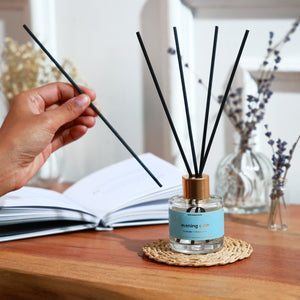
 Evening Calm₹799The second variable is that a busy club lobby is not a neutral background at seven in the evening. It contains the personal fragrance of everyone in it, the carry-over from the kitchen, cigarette smoke from the terrace on people’s clothing, damp umbrellas in the monsoon and the warm smell of bodies in a warm city. The ambient composition is no longer the only thing in the room, and it should not try to be. The instinct to raise the intensity so that the club fragrance “wins” is the instinct that produces a lobby members describe as overpowering, because at that level the fragrance stops being an atmosphere and becomes a participant. A club that smells discreetly of itself under forty people is doing better work than one that shouts over them.
Vaayu₹11,999The third variable is not in the building at all. Olfactory receptors adapt to a constant stimulus within minutes: the signal still arrives, the brain stops reporting it. So the duty manager at eight in the evening is genuinely not smelling what a member walking in from the car park is smelling, and is not being careless in saying the lobby has gone flat. The person who decides the intensity is therefore the one person in the building who cannot judge it. A member, by contrast, crosses the gradient from outside to inside in two seconds, and the nose reports change far better than it reports a steady state — which is also why members notice the lobby walking through it and stop noticing it once they sit down.
Evening Calm₹799The second variable is that a busy club lobby is not a neutral background at seven in the evening. It contains the personal fragrance of everyone in it, the carry-over from the kitchen, cigarette smoke from the terrace on people’s clothing, damp umbrellas in the monsoon and the warm smell of bodies in a warm city. The ambient composition is no longer the only thing in the room, and it should not try to be. The instinct to raise the intensity so that the club fragrance “wins” is the instinct that produces a lobby members describe as overpowering, because at that level the fragrance stops being an atmosphere and becomes a participant. A club that smells discreetly of itself under forty people is doing better work than one that shouts over them.
Vaayu₹11,999The third variable is not in the building at all. Olfactory receptors adapt to a constant stimulus within minutes: the signal still arrives, the brain stops reporting it. So the duty manager at eight in the evening is genuinely not smelling what a member walking in from the car park is smelling, and is not being careless in saying the lobby has gone flat. The person who decides the intensity is therefore the one person in the building who cannot judge it. A member, by contrast, crosses the gradient from outside to inside in two seconds, and the nose reports change far better than it reports a steady state — which is also why members notice the lobby walking through it and stop noticing it once they sit down.
Writing the club’s occupancy curve into the machine
Every club already has this document; it is just not usually shared with whoever sets the diffuser. The reception log, the F&B covers report and the card-room book between them describe the building’s day in a way that can be turned directly into a schedule. Mark the hours when the lobby is genuinely occupied, the hours when it is transitional, and the hours when it is a room with a steward in it. Then give the machine more duty in the first, ordinary duty in the second and very little in the third. On Vaayu this is done with the run windows of 1h, 4h, 8h or 24h combined with day selection; on Aangan it is done with programmable work and pause cycles and daily schedules set at the board, which is a different control philosophy for a different machine and should never be described as an app, because it is not one.
Two refinements matter more than they sound. The first is the lead time. A lobby comes up to a stable level gradually, so a machine that starts when the doors open produces its best hour when the early rush has already passed. Start it before opening, at the same time the air handling starts its morning run, and the room greets the first member rather than catching up with them. The second is the tail. Clubs habitually run the machine until closing and sometimes overnight, which puts a substantial share of the annual oil into an empty hall. Fragrance evaporating into a room nobody is in is the only genuine waste there is, and it is an occupancy decision rather than a product one.
A word on the AHU, because it interacts with all of this. Where a club has central air conditioning, the fragrance can be introduced into the return rather than into the room, and it is then distributed on every supply pass for as long as the plant runs. That produces the most even result available and it makes the schedule simpler, since the machine’s cycle can be aligned to the plant’s. It also means that when the plant stops — on a closed morning, during a power changeover, on the two days a week a heritage club is dark — distribution stops with it. Recirculation in a conditioned building distributes very evenly, which is a real advantage, and dry conditioned air also speeds evaporation, which is a real cost. Both are worth knowing before the schedule is written.
A worked timetable for a seven-day club
Not a formula and not a recommendation for your building — a shape, so that a committee can see what “schedule rather than dose” looks like on paper. Intensity is the same in every row. Only the duty changes. The last row is the one clubs most often get wrong and it costs nothing to correct.
| Block | What the lobby is doing | Duty | Reasoning |
|---|---|---|---|
| Before opening ★ | Air handling on full fresh air; cleaning finishing | Machine running, ahead of the first arrival | The first member of the day is the harshest instrument you own |
| Morning | Light traffic, quiet hall, low air change | Short cycles, long pauses | An empty room needs the least and exposes excess the most |
| Lunch | A burst of arrivals, food service adjacent | Ordinary duty | Never compete with the dining room; let the lobby recede |
| Afternoon | Near-empty on most days | Minimal, or off entirely on quiet days | Oil into an unoccupied hall is the only real waste there is |
| Evening peak | Doors open, extract high, forty people and their own fragrance | The longest work cycles of the day | More duty, not more intensity — the removal rate is what changed |
| Late | Thinning out, staff adapted, controls within reach | Winding down before closing | Stop ahead of the last member rather than after them |
| Quiet days and dark days | A Tuesday is not a Saturday, and a closed day is not either | Day selection, not a seven-day compromise | You already own this control and it is usually unused |
App and buttons · Vaayu₹11,999See it → PCB cycles · Aangan₹25,999See it → 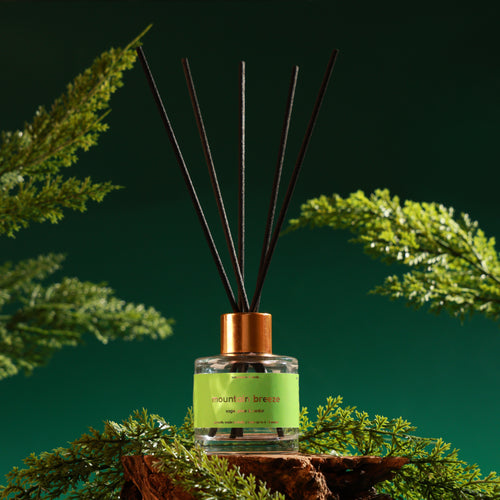 A secretary’s office · reeds₹849See it →
Making the setting survive contact with the night shift
A schedule is only worth writing if it is still the schedule in three months, and this is where most club specifications quietly fail. The sequence is always the same and it is always well-intentioned. A steward who has been on duty since morning stops perceiving the fragrance, a member makes a passing remark, and the intensity goes up one step at nine in the evening. Nobody records it. Two months later a different person does the same thing. By the end of a year the club is running three steps above the level it chose, nobody has decided anything, and the complaint has inverted from “we cannot smell it” to “it is too much”. The key-lock on Vaayu is the single most useful club feature in the range for exactly this reason, and it is worth more in a lobby than any coverage figure.
The procedural half matters as much as the hardware. Put the position, the intensity, the run windows and the selected days in the operations file as numbers, not adjectives. Name one person — usually the club secretary or the head of operations — who owns those numbers, and make it explicit that nobody else changes them. Then build in a review that is honest about adaptation: once a month, somebody who has not been in the building that day walks in through the members’ entrance and reports. Not the duty manager, not the steward on the desk. A visitor is a better instrument than anybody employed there, and the monthly walk-in is free.
Finally, resist the two purchases this problem invites. The first is a second machine for the peak, which is a real answer only if there is a second volume — a closed door, a separate hall, a stair landing that behaves as its own space. Two units in one connected volume mostly deliver a stronger version of the same unevenness. The second is a stronger fragrance, which changes the character of the club to solve a timing problem. Neither is necessary, and both are more expensive than an afternoon spent with the occupancy log and the schedule screen.
The consistency edit — and the honest gap
What I would put in an operations file, in order. Six of the seven steps cost nothing at all, which is the usual shape of a consistency answer. The last row is what is not published.
| Step | What it is | Why it matters | Cost |
|---|---|---|---|
| 1. Set the intensity once, from outside ★ | Leave for fifteen minutes, return through the members’ entrance, decide there | Everyone inside has adapted; the fresh nose is the only instrument | No purchase |
| 2. Map the occupancy curve from records you already hold | Reception log, covers report, room bookings, by hour and by day | Turns a guess into a timetable a committee can approve | No purchase |
| 3. Put duty where the people are | Run windows of 1h / 4h / 8h / 24h on Vaayu; work and pause cycles on Aangan | Raises the average at peak without raising the peak level | Included |
| 4. Lead the door, and stop before closing | Start with the morning air-handling run; wind down ahead of the last member | The first arrival judges the club; the empty hour is pure cost | No purchase |
| 5. Use day selection | Different schedules for heavy evenings, quiet weekdays and dark days | A seven-day compromise serves none of the seven days | Included |
| 6. Key-lock and record | Engage the Vaayu key-lock; intensity, windows, days and position written down with one named owner | Stops the slow annual climb that nobody ever decided on | No purchase |
| 7. A monthly walk-in by somebody who was not there | A committee member or a manager on a day off, entering from the car park | The only review that is not made by an adapted nose | No purchase |
| What is not published: the honest gap | No millilitres-per-hour consumption rate, no air-change rate, no adaptation time in minutes, and no machine count as a formula. Refill cadence must be measured in your own building over one cycle. No refill oil is listed for the waterless commercial machines either; that fragrance is specified and quoted per property | Named rather than modelled, because a club will plan a budget around any number I print | Quoted |
Versailles
The word consistency gets used as though it described a property of the fragrance, and it does not. A composition is consistent by construction; the same oil leaves the same machine at the same rate all day. What varies is the room, and specifically how fast the room is emptying itself of air. Once a club sees the problem that way round, the conversation changes from “is this the right scent” to “what does our building do at seven o’clock”, which is a much more productive question and one the club can answer from its own records.
I have a small piece of advice that has done more good than any specification I have written. Ask a committee member who is not involved in operations to walk in through the members’ entrance once a month, at a different hour each time, and to write one line about what they met in the first ten seconds. Not a score. A sentence. It takes four minutes, it is the only judgement in the building made by an unadapted nose, and it will catch a drifting setting long before a member says something at the bar.
And I would gently push back on the reflex to buy a second machine for the busy hour. A second unit is the right answer to a second volume — a room behind a closed door, a stair landing, a floor on its own air. It is the wrong answer to one volume that is busy, because the two sources then compete in the same air and you get a stronger version of the same unevenness for twice the oil. Time is the free control. Most clubs have not used it yet. Everything we make is composed in Pune, and a part of every order funds a girl’s classroom through Nanhi Kali.
Frequently asked questions
- The pillar: the first fifteen seconds — what the arrival window is for.
- Entrance and lobby and whether the entrance should be stronger.
- Arrival as choreography and where the machine is installed.
- Automatic doors — the physics behind the evening the schedule has to absorb.
- Reception versus the lobby, reeds versus machines, and the hotel method.
- Brand: the SOSA founder story.
SOSA commercial scenting — facts verified August 2026: Vaayu ₹11,999, waterless cold-air nebulising, up to 1000 m³ ≈ 2,000–3,000 sq ft, 400ml refillable sealed tank lasting up to about 90+ days depending on intensity and hours, Bluetooth app plus onboard buttons, run windows of 1h / 4h / 8h / 24h, day selection, adjustable intensity, auto-stop and key-lock, under 38 dB, freestanding, wall-mounted or HVAC-return, DC 12V / 1A at 5W, CE, RoHS and SGS, black and white. Aangan ₹25,999, HVAC or AHU connection or standalone wall-mount or lay-flat, up to 3,000 m³ ≈ 8,000–10,000 sq ft, 800ml reservoir giving weeks between refills on business-hours schedules, under 42 dB, DC 12V at 14W, intelligent PCB with programmable work and pause cycles and daily schedules, metal body 3.9 kg at 284 × 125 × 246 mm, black or white, one-year warranty, imported; it is not app-controlled, has no Bluetooth, and no certifications are published for it. Meenar ₹38,500 is the larger-property option, specified on enquiry; no coverage figure is published for it here, and it should not be assumed to reach further than Aangan. Ultrasonic machines: Sukoon ₹1,899 at 270–320 sq ft with a 500ml tank and 16–18 hours on low, Boond ₹899 with a 300ml tank at up to about 150 sq ft, Megh ₹3,499 with a six-litre tank and around 100 hours of runtime but only about 215 sq ft of coverage. Hotel Collection fragrance oils are water-based and ultrasonic-only at 15ml ₹299, 100ml ₹999 and 300ml ₹1,799; they are not for reed diffusers and not for the waterless commercial machines. No purchasable refill oil is listed for the waterless commercial machines; that fragrance is specified and quoted per property. SOSA publishes no leather fragrance in any format and no tobacco or smoky fragrance for any diffuser. SOSA sells no air purifier and no dehumidifier, and every SOSA spray is a car perfume rather than an interior product. No SOSA machine offers Wi-Fi, Alexa, Google Assistant, KNX, Crestron, Control4, Modbus, BACnet or any building-management integration; the Aangan HVAC connection is mechanical. Reed diffusers 50ml ₹749–₹849 lasting 6–8 weeks and 130ml ₹1,249–₹1,349 lasting 14–18 weeks, six fibre reeds, alcohol-free, phthalate-free, paraben-free, IFRA-compliant, 0 ppm formaldehyde, heat-stable CCT carrier, refillable glass bottle, tested at 45°C and 85% RH, composed in Pune. No dealer programme, reseller margin, trade price, territory or service contract is published. Free shipping above ₹499. A portion of every order supports girl-child education through Nanhi Kali. SOSA is an independent Indian fragrance house; the Hotel Collection scents are SOSA’s own interpretations inspired by the world’s finest hotels, and SOSA is not affiliated with or endorsed by any hotel brand. Prices subject to change — see the live product pages.