


Running one signature scent at different strengths in different areas — full front-of-house, a trace in treatment rooms, clean air in wet zones — so each space gets the right amount.
How is it delivered?
Per-room with units like the Boond (₹799) and Vaayu (₹11,999), or centrally with a zoned Aangan (₹25,999) through the HVAC.
2. Full front-of-house. Reception and the relaxation lounge carry the signature at full strength — the first and last impression, where dwell and rebooking live. A Vaayu (₹11,999) holds it.
3. A trace in treatment rooms. Massage and facial rooms drop to near-neutral so the therapy’s oils and the guest’s breath lead. A Boond (₹799) on low, ideally therapist-adjustable.
4. Clean air in wet and heat zones. Steam, sauna, hammam and hydrotherapy amplify scent; keep the chambers clean and ventilated and scent only the cool approach.
5. Near-silence in breath rooms. Meditation and yoga rooms want almost nothing; scent the corridor and changing areas, not the practice space.
6. Deliver it per-room or from the HVAC. Small spas zone with individual units; whole centres zone one Aangan (₹25,999) by damper. A portion of every order supports girl-child education through Nanhi Kali.
Zoning as a mixing desk
The single most common scenting mistake I see in spas is flooding — one strong smell pushed to the same level everywhere, on the theory that if a little is nice, more is luxurious. It is the olfactory equivalent of setting every light in the building to maximum. The result is a space with no shape: the treatment rooms are as loud as reception, the corridors are as loud as the lounge, and because nothing recedes, nothing stands out. Zoning is the cure, and the mental model that helps most is a mixing desk. You have one track — the signature — and a fader for every room. The art is in where you push the fader up and where you pull it almost to nothing.
Why one track and not many? Because a spa that uses different fragrances in different rooms stops feeling like one place. The through-line that lets a guest recognise your brand — and lets a returning guest settle faster because the air is familiar — depends on the signature being constant. Change the volume as much as you like; change the scent and you have thrown away the very thing that makes zoning worthwhile. Congruence and consistency do the work; intensity is just the fader position.
This is also the doctrine that keeps you honest about restraint. Once you think in levels, “should this room be scented at all?” becomes a normal question rather than a heresy. Some rooms — the meditation space, the steam chamber — have their fader at or near zero by design, and that is not a failure of ambition. It is the plan working.
Setting the level for each area
| Area | Level — and why |
|---|---|
| Reception & relaxation lounge | Full — first and last impression; dwell and rebooking live here |
| Corridors & changing rooms | Light trace — connective; carries the signature between zones |
| Treatment & massage rooms | Near-neutral — therapy’s oils lead; respect the face-cradle and allergies |
| Meditation & yoga rooms | Almost nothing — breath rooms; scent the approach only |
| Steam, sauna, hydrotherapy | Clean, ventilated — heat amplifies scent; scent the transition, not the chamber |
SOSA Aangan · zone centrally₹25,999View → 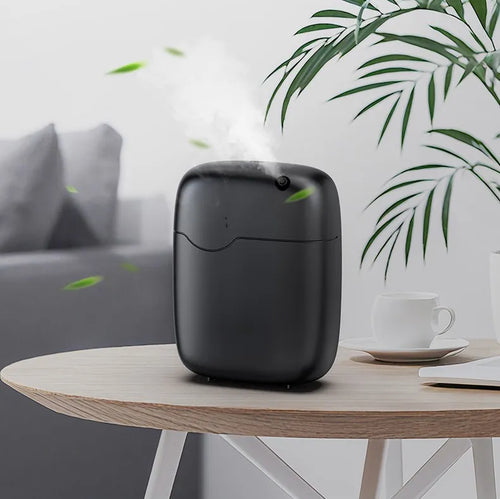 SOSA Vaayu · front-of-house₹11,999View →
 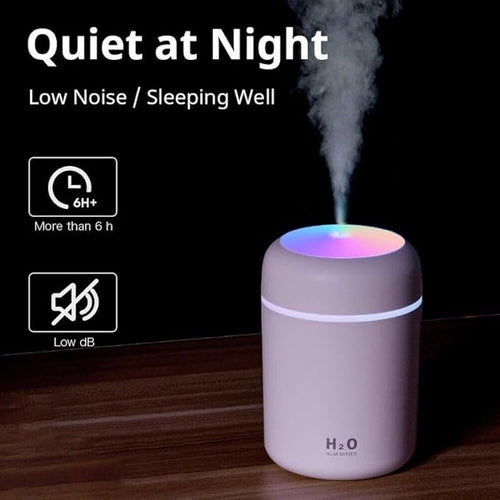 Boond · treatment trace₹799View →
The wet-zone rule
If there is one place zoning discipline earns its keep, it is the wet and heat areas, because they behave in the exact opposite way to intuition. Heat and humidity amplify fragrance dramatically — a scent that is pleasant at reception becomes cloying and inescapable in a steam room, and there is no ventilation trick that fully tames it once it is injected into hot, wet air. So the rule is simple and firm: do not scent the steam chamber, the sauna cabin, the hammam or the hydrotherapy pool itself. Keep those spaces clean, well-ventilated and honest, and let the guest’s own senses — the heat, the water, the eucalyptus of a traditional treatment — lead.
Where scent belongs near water is the transition: the cool approach corridor, the changing area, the anteroom where a guest prepares to enter or has just left. Scenting the threshold gives the wet suite a sense of arrival without loading the chamber. And when you do scent anywhere near humidity, run it waterless — a Vaayu (₹11,999) or an HVAC unit — because the last thing a wet zone needs is an ultrasonic diffuser adding yet more moisture to already saturated air. This is doubly true in humid coastal cities, where waterless is the right choice for anything running several hours a day.
Delivery follows the same two paths as the rest of the plan. A whole centre is best zoned from a single Aangan (₹25,999) or, for a large property, a Meenar (₹38,500), with the wet-zone supplies simply left off the scented circuit and their extract kept independent. A smaller spa zones with individual units — full at reception via a Vaayu, a trace in each treatment room via a Boond (₹799), and nothing at all plumbed into the wet rooms.
The SOSA commercial edit
Zoning can be delivered from one central unit or from a handful of per-room diffusers. Here is the shortlist for both approaches.
| System | Best for | Why it works | Price |
|---|---|---|---|
| Boond | A single treatment room, washroom or changing room | Compact, low-output ultrasonic; easy to hold to a trace so the treatment leads | ₹799 |
| Sukoon + Hotel Collection | A single reception or a small relaxation lounge | Compact front-of-house scenting; audition two casts a fortnight apiece | ₹1,799 + from ₹299 |
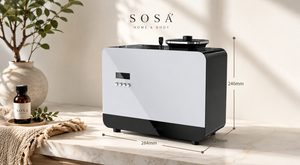
| SOSA Vaayu ★ | Reception, corridors and lounges — the professional standard | Waterless cold-air nebulising, up to ~1000m³, app + 1/4/8/24h timer, <38dB, no added humidity | ₹11,999 |
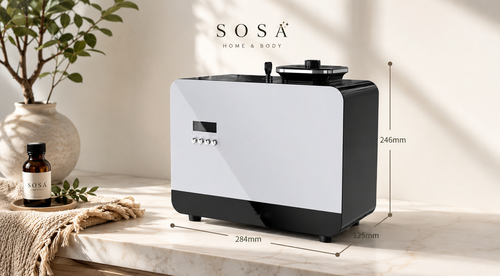
| SOSA Aangan | A whole wellness centre, 8,000–10,000 sq ft, via the HVAC | One signature ducted across every public zone, wet areas left on their own circuit | ₹25,999 |
| SOSA Meenar | A flagship or large property, 12,000–18,000 sq ft | The largest HVAC unit for multi-wing centres and resort spas | ₹38,500 |
| Hotel Collection refills | Keeping the signature running | 100ml / 300ml top-ups; low running cost across long daily hours | from ₹999 |
Versailles
I am asked, more than any other question, “how strong should it be?” And the honest answer is that there is no single number — there is a plan of numbers, one per room. The spas that get scent right are the ones that stop looking for a setting and start drawing a map.
My favourite conversion moment is watching an owner realise the treatment room should be quieter than the corridor, not louder. It runs against every instinct, and yet the moment they zone it that way, guests relax faster and the complaints stop. Restraint, placed correctly, reads as luxury — flooding never does.
We make our scents in Pune, and a portion of every order supports girl-child education through Nanhi Kali. Your spa gets a map; a girl gets a classroom.
Frequently asked questions
- How to Create a Signature Spa Journey With Fragrance — the movements your zoned volumes play.
- How Architects Can Plan Fragrance Into Spa Layouts — delivering the zones from the HVAC at design stage.
- SOSA Aangan — the HVAC unit that zones a whole centre, ₹25,999.
- Brand: the SOSA founder story — how an ISIPCA perfumer thinks in levels, not settings.
Facts verified August 2026: ambient scent-marketing effects on dwell time, perceived quality and recall are real but moderate, congruence with the space matters more than intensity, and there is no measurable benefit on unclean or poorly ventilated premises. SOSA system specifications and prices as stated: Boond ₹799, Sukoon ₹1,799, Megh ₹3,499, Vaayu ₹11,999, Aangan ₹25,999, Meenar ₹38,500, Hotel Collection scents from ₹299, refills from ₹999. The Hotel Collection scents are SOSA's own interpretations inspired by the world's finest hotels; SOSA is an independent Indian fragrance house, not affiliated with or endorsed by any hotel brand. Prices subject to change.