



The intervention is ten minutes at about one o'clock. Front door and one opposite opening, held open together, during your quietest half hour. Cross-flow, not a single door. It costs nothing and it is the whole recommendation of this page.
Move the second clean to after close. Most clinics mop again at three or four, which puts a fresh chemical peak into a room that is already at its daily maximum. The same work at closing time lands in an empty building.
Your fragrance source has been emitting for nine hours too. If you already run one, switch it off for a fortnight and see what the evening is like without it before you consider changing anything about it. Sukoon ₹1,899 has 2H and 4H timers for exactly this reason, but the timer is a second-order fix and the door comes first.
2. The reason they add up rather than clearing is that nothing in your building removes air. A split air-conditioning unit cools and filters the air it already has and re-delivers it. Cooling, filtering and ventilating are three separate jobs, and most clinic systems are doing the first two only. If your front door is the only real opening and it swings for two seconds per patient, your removal rate is close to zero.
3. So the lever is not the addition side. It is the removal side, and it is free. You cannot stop cleaning a clinic and you cannot stop admitting people. You can change the air.
4. Ten minutes, once, at about one o'clock, with two openings at opposite ends. One door alone does very little; two openings on different walls give you a path. Pick your quietest half hour, hold both open, put a pedestal fan blowing outwards at one of them if you have one, and let the building empty itself. This is the whole intervention and it costs nothing.
5. Move the second clean out of the working day. Most clinics mop again around three or four, which is precisely when the room is already at its highest load — you are adding a fresh chemical peak to a maximum. The same task at closing time lands in a building nobody is sitting in, and has all night to decay.
6. Find the removal capacity you already own and are not using. A toilet extract fan on a light switch that nobody touches. A pantry window painted shut. A rear service door. A consultation room window in a room that is empty for two hours a day. None of these is a purchase.
7. If you already run a fragrance source, switch it off for a fortnight before you change anything about it. It has been emitting for the same nine hours as everything else, so it is inside your sum. You cannot judge what it contributes while it is running, and the commonest mistake here is to raise it because the evening is heavy — which makes the evening heavier.
8. Only after that is fragrance a fair question, and it is a small one. One source, arrival zone only, two or three of six reeds, set at the far end away from the corridor. Nothing goes past the consultation door in any format at any level: examination rooms, diagnostics, consultation cabins, the procedure suite and any post-operative area stay fragrance-free, and that boundary is the practice's own clinical judgement. Nothing here is medical, clinical, ventilation, infection-control or regulatory advice. Composed and made in small batches in Pune, and a portion of every order supports girl-child education through Nanhi Kali.

Part one — two inputs, one ledger, no exhale
The useful way to think about a clinic's air is as an account with deposits and withdrawals. Everything you notice in the evening got there by being deposited, and stayed there because nothing withdrew it — and once a practice sees the problem that way, the shopping list changes completely. Three things are worth separating out.
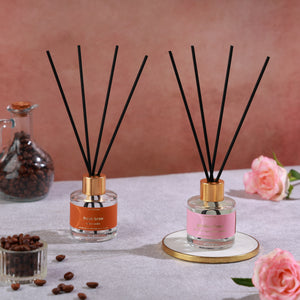
 Morning Freshness₹749 · adds, never removesAn eye clinic's waiting room is denser than almost anybody assumes. Two accompanying relatives per patient is normal in India, dilation means people stay rather than leave, and a room designed for fourteen routinely holds twenty-two by mid-afternoon. Every one of them brings clothing that has been somewhere else, footwear that has crossed a car park, food carried in, a bag and — on a wet day — an umbrella; and unlike the cleaning input, none of this has a peak and a decay. It is a flat, continuous deposit that runs for the whole of your opening hours. Upholstered seating is the part people miss, because fabric and foam take up what lands on them in the morning and give it back through the afternoon, which is why the first two rows of chairs are usually the strongest part of a waiting room at five o'clock. None of this is a hygiene failure: an occupied room smells of occupancy, and every busy building in the country has the same arithmetic. The relevance to a fragrance decision is only this — whatever level you set in the morning was set against a fraction of the load the room will carry by evening, and a source with no schedule keeps emitting the morning quantity into the evening room.
Part two — the openings you already own
This is the table I would rather a practice used than any product page on my site. Nine ways to get air out of a clinic, all of which you already own, with what each genuinely moves, what it costs and why almost nobody does it. The last two columns are the honest ones, because the reason this fix is rare is not that it is hard — it is that it interrupts a working day and belongs to nobody.
| The opening | What it actually moves | What it costs | Why clinics do not do it | Effect on the evening state |
|---|---|---|---|---|
| Front door plus one opening on the opposite wall, held together for ten minutes ★ | A genuine cross-flow — the only arrangement that empties a room rather than stirring it | Nothing, plus ten minutes of cooling you will pay back in twenty | It needs two people at once, and nobody has been told it is their job | The largest single change available to you, and the entire recommendation of this page |
| Front door alone, propped | Very little — one opening gives you exchange only by chance draught | Nothing | It is the one thing people do try, which is why they conclude airing does not work | Small, and easily mistaken for evidence against the whole idea |
| A consultation-room window in a room that is empty between one and two | A second point for the cross-flow, with the door to that room open | Nothing, if the room is genuinely unoccupied | The room is clinical, so nobody thinks of it as part of the reception's air | Substantial, and it is usually the missing half of the pair |
| Rear or service door | The best opposite point in most clinic plans, because it is furthest from the entrance | Nothing, though it may need a person standing at it | Security, and a habit of treating it as an exit rather than an opening | Large — and it pulls the corridor and the back store into the flow as well |
| Toilet extract fan, left running all day rather than on a switch | A small, continuous, genuine withdrawal — one of the few your building already has | A few rupees of electricity a day | It is wired to the light switch and everybody switches the light off | Steady rather than dramatic, and it works on the corridor as much as the toilet |
| A pedestal fan blowing outwards at one opening | It turns a passive pair of openings into a directed exchange | What a pedestal fan costs, if you do not already own one | People instinctively point fans inwards, which pushes the room around instead of emptying it | It roughly halves the time the doors need to be open, which is what makes the habit survive |
| The store cupboard and records room, opened during the exchange | Still air that has been sitting undisturbed since the last time somebody needed a file | Nothing | Nobody thinks of a cupboard as part of the clinic's air until it is opened at four | Small on the room, large on the corridor outside it |
| The fresh-air setting on a ducted or cassette system, if you have one | Whatever your system is actually specified to deliver — which only your contractor knows | A phone call, and possibly a service visit | Almost nobody knows whether their system has one or whether it is enabled | Potentially the largest of all, and it is the one question here worth asking a professional |
| The honest caveat: every row above is a way of removing air, and SOSA sells none of them. A diffuser adds a scent alongside what is already in the air; it does not clean, purify, filter, neutralise, freshen or exchange it, and it removes no cleaning residue and no occupancy smell. SOSA sells no air purifier, no filter, no ioniser, no ozone device, no odour neutraliser and no room spray — every SOSA spray is a car perfume. Air handling, ventilation rates, filtration and infection control in a healthcare building are matters for the practice's own clinicians and its engineering contractor, and nothing on this page is medical, clinical, ventilation, building or regulatory advice; no assessment of air quality is offered or implied. No claim is made in either direction about how any patient or member of staff perceives, tolerates or responds to fragrance, and no SOSA product or setting is described as safe or unsafe for any group. Some people are sensitive to airborne fragrance, which is exactly why the clinical pathway — examination rooms, diagnostics, consultation cabins, the procedure suite and any post-operative area — stays fragrance-free at all times, and why a fragrance-free seat must genuinely exist wherever fragrance is used. | ||||
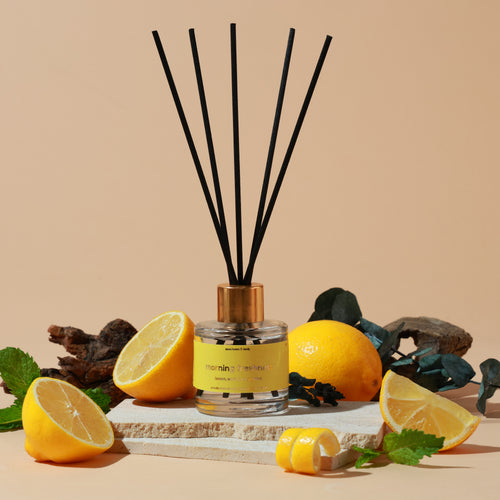 Morning Freshness · two or three reeds₹749Shop → Sukoon · stops by itself at 2H or 4H₹1,899Shop →
 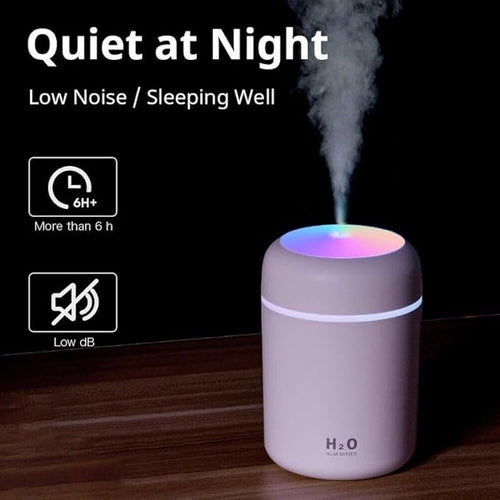 Boond · about 150 sq ft, ends at ~6 hrs₹899Shop →
Part three — the practice that should change a rota and buy nothing
I want to be exact about who this page is telling to spend nothing, because it is most of the people who arrive on it. If your clinic is fine in the morning and compound by evening, and you have not yet established a mid-day air exchange, then you do not have a fragrance question at all — you have an unexercised removal side, and any product decision taken before you fix it will be taken against the wrong baseline. That last clause is the part that costs money. A practice that buys a machine in this state sets its level against an evening room, which means it sets it high; then it fixes the ventilation six months later, and now the level is wrong in the other direction and nobody knows why the reception suddenly seems strong. Do the free thing first, run it for a fortnight so you know what your building is actually like, and make the purchase decision — if any — against the version of your clinic that exists after the change rather than the one that exists before it.
The second reason to spend nothing is that the compound is very often smaller than it seems, and made of two or three specific, findable things. Before you accept "the day builds up" as an explanation, spend twenty minutes with your nose close to surfaces at four in the afternoon rather than in the middle of the room. The bin behind the reception desk, emptied at close rather than at lunch. The mop and bucket in the store cupboard, still damp from eight o'clock. The pantry, where somebody heated food at one and shut the door. The first two rows of upholstered seating. Each is a discrete item with an owner and a fix, and two of them together usually account for most of what a practice has been calling an atmosphere.
The third case is the one where I would ask you to switch something off rather than buy something. If you already run a fragrance source in that reception, it has been contributing for the same nine hours as your cleaning residue and your occupancy, and it is therefore inside the compound you are complaining about rather than outside it. The instinct when a room gets heavy is to raise the source so it reads over the top, and in a sealed room that instinct is exactly wrong: raising a continuous emitter in a space with no removal simply raises the total, and the compound becomes both stronger and less identifiable. Take it out for two weeks. Note what the evening is like without it, honestly, with somebody who has been outside for ten minutes doing the smelling rather than somebody who has been sitting in it since nine — your own nose adapts hardest in the room you occupy daily, and it is the least reliable instrument in the building. Then decide. A good number of practices who do this never put the source back, and I would rather they reached that conclusion from evidence than from a sales page. A clinic is judged on competence, and the arrival zone should read as considered, never as scented.
Part four — addition side or removal side, spend by spend
Nine things a practice might do about an evening compound, sorted by the only question that matters: whether it acts on what goes into the air or on what comes out of it. The third column is the spine of this page, and it is why most of the effective rows cost nothing.
| What you might do | When it acts | Addition side or removal side | Cost | Honest verdict |
|---|---|---|---|---|
| Ten-minute cross-ventilation at about one o'clock ★ | Mid-day, before the load peaks | Removal — the only genuine withdrawal on this table | ₹0 | Do this first, for a fortnight, before deciding anything else |
| Second clean moved from mid-afternoon to after close | Removes a peak from the working day entirely | Addition — you are deleting a deposit rather than removing one | ₹0, a rota line | The second-largest free change, and often the one that fixes the complaint outright |
| Toilet extract fan rewired or left running all day | Continuously, from opening to close | Removal, small and steady | A few rupees of electricity; an electrician if it is switched with the light | Unglamorous, permanent and it works on the corridor too |
| Bins emptied at lunch rather than at close | Halves the dwell time of every deposit in them | Addition — the bin stops being a source for the second half of the day | ₹0, a rota line | Cheapest specific fix in this family. Start with the one behind the desk |
| Asking your air-conditioning contractor about fresh-air capability | Potentially all day, if the capability exists and is enabled | Removal, and the largest available if the answer is yes | A phone call, possibly a service visit | The one question on this page worth putting to a professional. Not a fragrance decision at any point |
| An air purifier | Continuously, on particulates and on some gases depending on the unit | Removal, within the limits of whatever you buy | Whatever it costs — SOSA does not sell one | Legitimate as a category, and you must buy it from a company that actually makes them |
| A reed diffuser at ₹749–₹1,349, refills 300ml ₹2,399 or 500ml ₹3,499 | Continuously, with no schedule and no off switch | Addition, permanently — it removes nothing | ₹749–₹1,349 to start; ₹2,399 ÷ 300 = ₹8.00 a millilitre on refill | Fine after the exchange habit exists. Wrong as an answer to the compound itself |
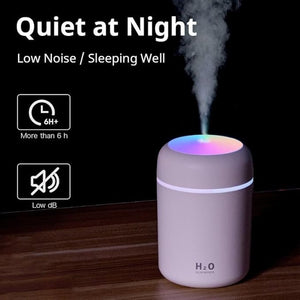
| Sukoon ₹1,899 on a 2H or 4H timer | Only during the window you set, then it stops by itself | Addition, but bounded — and boundedness is the point | ₹1,899, three 15ml scents in the box; a 100ml refill at ₹999 is ₹999 ÷ 100 = ₹9.99 a millilitre | The sized machine for a 150–320 sq ft arrival zone, and the only SOSA control that limits exposure by clock. Adds humidity |
| Raising whatever you already run, because the evening is heavy | All day, at a higher rate | Addition, and in a room with no removal it compounds | The price of more oil, plus the problem getting worse | The commonest mistake on this page. Do the opposite: switch it off for a fortnight |
Versailles
A clinic manager in a three-doctor practice sent me a message at ten past six one evening, which is the hour this complaint always arrives at. She wrote that the reception "smells of Lizol and people" by the end of the day, that they had tried a bigger reed diffuser and then a second one, and that she was about to order a machine because the bottles clearly were not enough. Two bottles had already been bought against a problem that was never going to respond to a third.
I asked her one question before I answered anything: when had a door last been open at the same time as another door. The reply was that the front door opened for patients, and that was it — everything else stayed shut for the air conditioning. So there it was. Two continuous deposits, ten hours, and a withdrawal rate of approximately zero. She did not need a stronger scent; she needed a building that breathed out once in the middle of the day.
What she did was small. The front door and the rear service door, held open together from ten past one until twenty past, with a pedestal fan at the back door blowing outwards, done by whoever was second on the desk. The second mop moved from half past three to after close. Bins at lunch. Eleven days later she wrote again to say the evening problem had gone, and asked whether she should still buy the machine. I told her to leave it a month, and then to decide about fragrance as a separate question with no complaint attached to it — which is the only condition in which that decision gets made well. Composed and made in small batches in Pune, and a part of every order funds a girl's classroom through Nanhi Kali.
Frequently asked questions
- Why reception smells different after a full day of patients — the occupancy-and-schedule version of this question.
- Cleaning products, air conditioning and fragrance together — the three-source interaction and the sequencing that prevents it.
- Why a clinic smells stale at opening and why a fully air-conditioned clinic smells closed.
- How to find the source of a persistent odour and when to fix the building instead of the scent.
- Brand: the SOSA founder story.
SOSA range, specifications and prices used in this guide (verified August 2026): Vaayu ₹11,999 — waterless cold-air nebulisation of undiluted fragrance oil; no water, no heat, no added humidity, no white mineral dust. Coverage up to 1000 m³, about 2,000–3,000 sq ft. 400ml refillable tank lasting roughly 90+ days at a mid setting. Bluetooth app plus onboard controls, 1h / 4h / 8h / 24h run windows, day selection, adjustable intensity, auto-stop and key-lock. Under 38 dB. DC 12V / 1A, 5W. Freestanding or wall / HVAC mount. CE, RoHS and SGS certified. SOSA does not currently sell a separate Vaayu cold-air refill oil; the 400ml supplied in the box is the fragrance available at the time of writing, so a practice planning continuous or multi-site use should confirm current refill availability with SOSA before committing. The water-based Hotel Collection is made for ultrasonic machines and must not be used in a Vaayu. Other machines: Boond 300ml ₹899 (~150 sq ft, ultrasonic) · Sukoon 500ml ₹1,899 (270–320 sq ft, 16–18 hours on low, remote and steady/2H/4H timers, three 15ml fragrances included, ultrasonic) · Megh 6L ₹3,499 (~215 sq ft — a runtime and humidity machine that covers less than a Sukoon, never a coverage upgrade) · Safar ₹3,999 (waterless cold diffusion, cordless, 20ml, about 6.9cm, three speeds, 1/2/3-hour auto-off — sold as a car and travel diffuser, personal-scale only; SOSA publishes no coverage figure for it) · Aangan ₹25,999 (HVAC nebulising, ~8,000–10,000 sq ft) · Meenar ₹38,500 (commercial HVAC, 12,000–18,000 sq ft). Water-based Hotel Collection for ultrasonic machines: 15ml ₹299 · 100ml ₹999 · 300ml ₹1,799 · pack of seven ₹1,799; scents are inspired by the atmosphere of well-known hotels — SOSA is an independent Indian brand and is not affiliated with, endorsed by or supplying any hotel group. Reed diffusers ₹749–₹1,349 (50ml 6–8 weeks, 130ml 14–18 weeks, six fibre reeds, no 100ml size; replacement reeds are not sold separately). Reed oil cannot be used in an ultrasonic machine and Hotel Collection oil cannot be used in reeds. SOSA sells no room spray or home spray — every SOSA spray is a car perfume. Nothing in this guide is medical, clinical or safety advice. A fragrance diffuser adds a scent to the air. It does not clean, purify, filter, sanitise or disinfect air, does not remove or neutralise disinfectant, damp or occupancy smells, and has no effect on comfort, anxiety, waiting time, recovery or any clinical outcome. Some people are sensitive to airborne fragrance, which is why this guide recommends that examination rooms, diagnostic areas, consultation cabins, procedure suites and post-operative areas remain fragrance-free, that a fragrance-free seating option always exist, and that a diffuser is never mounted into shared HVAC in a clinical building. Decisions about clinical policy, ventilation standards, infection control and patient suitability rest entirely with the practice and its clinicians. A persistent stale, damp or disinfectant smell is a ventilation, moisture or cleaning problem — SOSA sells no dehumidifier and no air purifier, and fragrance should never be used to cover one. Coverage, runtime and longevity figures are manufacturer specifications and typical ranges, not guarantees, and vary with room volume, ceiling height, air exchange, occupancy and season. SOSA publishes no commercial or bulk pricing, no corporate account, no annual maintenance contract, no installation service, no stated warranty term and no multi-location programme; warranty length, spare parts, servicing and app platform availability are unconfirmed, and larger or multi-site enquiries should go through the contact page before any commitment. Composed and made in small batches in Pune, India. Free shipping above ₹499. A portion of every order supports girl-child education through Nanhi Kali. Prices subject to change — see the live product pages.