
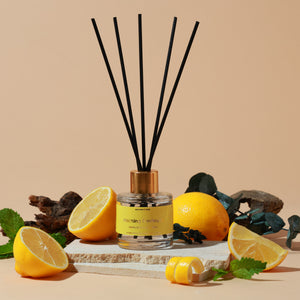
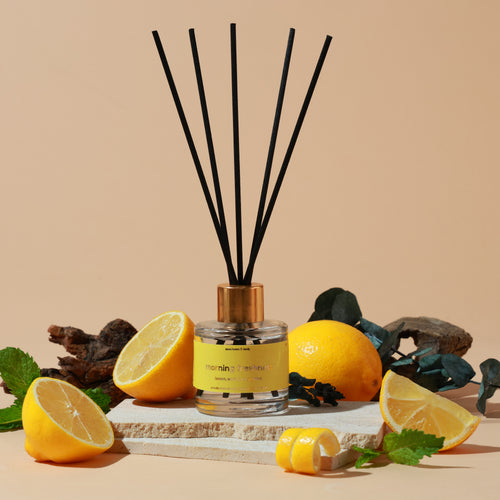
 Morning Freshness ₹749
 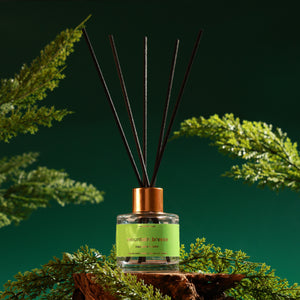 Mountain Breeze ₹849
 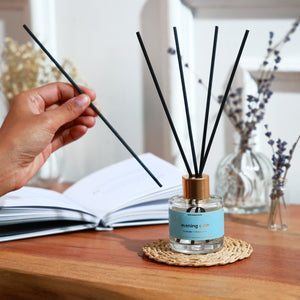 Evening Calm ₹799
 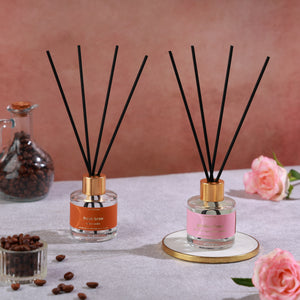 Oil refill 300ml ₹2,399
  Garden Bloom ₹799
The multiplier. If you counted one reading week in a four-week month, your effective rate is four times whatever you paid. Two weeks is double. Zero weeks is not cheap — it is undefined, and the entire outlay was the cost.
The SOSA figure to hold it against. Morning Freshness 50ml at ₹749 is built to read for 6–8 weeks at six reeds: ₹749 ÷ 8 ≈ ₹94 a week, ₹749 ÷ 6 ≈ ₹125.
Do the free things first. Move it off a draught, raise it to waist height, close the room for an hour, flip all six reeds. A recovered week costs nothing and beats every purchase on this page.
2. Count it before you argue with it. Write the open date on the box. Once a week, leave the flat or sit in another room for twenty minutes, come back and take the first breath at the doorway. If it reads, that week counts. Four ticks in a four-week month is a full month; one tick is a quarter of one.
3. Apply the multiplier. One reading week in four means your effective rate is four times whatever figure you would name for that bottle. Two weeks means double. Three means about a third more. Four means you got what you paid for and should carry on.
4. Zero is the case people get wrong. If the count is nought, there is no cost per scented week, because you cannot divide by nothing. The correct way to write it down is that the whole amount was the cost and the return was nil. A low price attached to that is not a saving; it is a smaller loss.
5. My side of the sum, in full. A 50ml at ₹749 is built to read for 6–8 weeks at six reeds: ₹749 ÷ 8 ≈ ₹94, ₹749 ÷ 6 ≈ ₹125 a week. A 130ml at ₹1,249 across 14–18 weeks is ₹69–₹89. A 300ml refill at ₹2,399, poured into glass you already own, is about 35–48 weeks: ₹50–₹69.
6. SOSA is not exempt from the multiplier. Put one of my bottles beside an open balcony or on a sunlit sill and its reading count shortens too: ₹749 across four read weeks is ₹187 a week. That is my own bad case, and it is a room fault rather than a bottle fault.
7. Then act on the number. Three or four, keep buying what you buy — nothing here is cheaper. One or two, stop rebuying and change one thing. Zero, change the room first and the bottle second.
Composed and handmade in small batches in Pune, tested through 45°C summer heat and 85% monsoon humidity; a portion of every order supports girl-child education through Nanhi Kali.
Part one — the denominator nobody prints
Every price you have seen on a fragrance bottle uses a denominator that flatters it. Millilitres flatter; weeks-until-empty flatter. The one number that flatters nobody, including me, is the count of weeks in which the room read — and no manufacturer can print it, because it is set partly by your flat.
 Evening Calm₹799 · 50mlSitting in a room is the worst place to judge it, because your nose stops reporting a constant and adapts hardest at home. The honest reading is taken on arrival: be somewhere else for a while, then walk in and use the first breath only. Tick the week or leave it blank. Do it on the same day each week, and before you open any windows. Four ticks means the bottle delivered a full month; anything less is the number you divide by, and it belongs to your flat as much as to the bottle. Evening Calm at ₹799 is the softest thing I make, which means it needs this test more than the others, not less.
Part two — your multiplier, worked out
Here is the table in the form you can actually use it. The left-hand column is your own count, taken at your own doorway; the third column runs the sum against a figure you would state for your own monthly outlay, not a price I have quoted for any product. Substitute your real figure and the shape of the answer does not change. The starred row is where most people who ask this question land.
| Weeks the doorway read, out of four | Your multiplier on whatever you paid | On a monthly figure you state as ₹300, the rate per scented week | SOSA at ₹749 ÷ 6–8 read weeks | What the number is telling you |
|---|---|---|---|---|
| One week in four ★ | ×4 | ₹300 ÷ 1 = ₹300 a scented week | ₹94–₹125 a scented week | You are paying two to three times my rate for a cheaper bottle. Stop rebuying it |
| Four weeks in four | ×1 | ₹300 ÷ 4 = ₹75 a scented week | ₹94–₹125 a scented week | You are ahead. Nothing I sell is cheaper for you — carry on |
| Three weeks in four | ×1.33 | ₹300 ÷ 3 = ₹100 a scented week | ₹94–₹125 a scented week | Level. Cost is silent here; decide on the fragrance instead |
| Two weeks in four | ×2 | ₹300 ÷ 2 = ₹150 a scented week | ₹94–₹125 a scented week | You have already lost the price advantage. Fix the room, then reconsider |
| No weeks at all | Undefined | ₹300 ÷ 0 — there is no rate | ₹94–₹125 a scented week | Not a cheap month. A month with an outlay and no return |
| You have not counted yet | Unknown | Unknown, and worth four seconds a week to find out | ₹94–₹125 a scented week | Count for one month before you spend anything, mine included |
| The honest caveat: the ₹300 in the third column is not the price of any product — it stands in for a monthly figure you would state about your own spending, and you should replace it with your real one. No competing product is named, priced or rated anywhere on this page, and I make no claim about how long anything other than a SOSA bottle lasts or how far it carries. My own figures are ranges rather than guarantees: 6–8 weeks for a 50ml, 14–18 for a 130ml, both shorter in a warm or draughty room. SOSA bottles are not exempt from the multiplier either — ₹749 across four read weeks is ₹187 a week, my bad case, stated so you can hold me to the same rule. The first three days of any new bottle are the loudest it will ever be, so do not start counting from a day-one impression. | ||||
Morning Freshness · ₹94–₹125 a scented week₹749Shop → 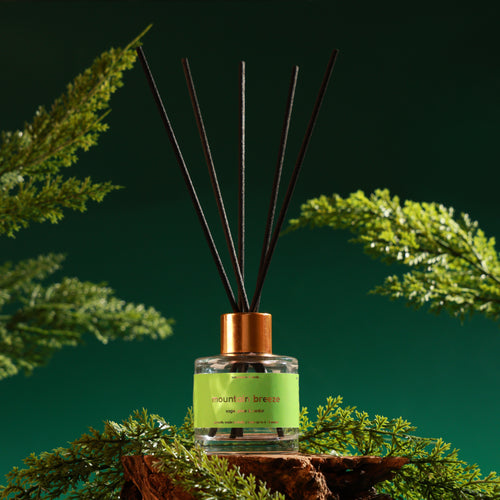 Mountain Breeze · ₹106–₹142 a scented week₹849Shop →
 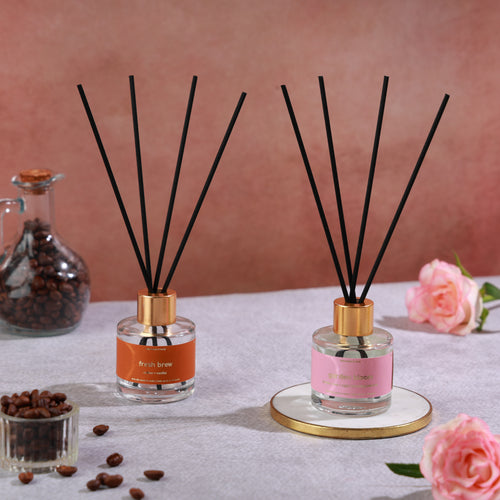 300ml refill · ₹50–₹69 a scented week₹2,399Shop →
Part three — the weeks you can get back for nothing
Before you accept a low count as a verdict on the bottle, take it as a verdict on the room, because that is where it usually belongs and the repairs are free. Draught is the first and worst. A ceiling fan, an air-conditioner vent, an open balcony door or a running exhaust removes scent from a room faster than reeds can release it, and it strips the reeds continuously as well, so the bottle empties weeks early while the room stays quiet. That is the exact signature you have described — liquid going down, nothing arriving. Move the bottle clear of the moving air and take a fresh count for a fortnight before concluding anything.
Height and position are the second. A bottle on a low table sits below the level at which air circulates, and a bottle wedged behind a photo frame has nothing but still air around it. Waist to chest height, clear space on all sides, near a doorway or a route people walk through — gentle incidental traffic is what distributes a passive fragrance, since there is no fan doing it. And if the bottle stands in afternoon sun, move it: sunlight raises the evaporation rate, so the liquid goes faster while the room gains nothing from it.
Third, flip the reeds weekly and then leave them alone — turning all six exposes freshly soaked surface, and flipping daily does not raise the level, it only shortens the bottle. Then check the wet line: lift one reed and find the boundary between the darkened, oil-soaked part and the dry part. High and dark means the reed is saturated and stalled — flip. Barely above the oil means it is not wicking and the reeds are done. That last case is the honest gap in my range: SOSA does not sell replacement reeds separately, so a fresh bottle is the only way to obtain fresh fibre reeds. And one thing none of this changes: a reed diffuser adds a fragrance alongside whatever is already in your air. It removes and neutralises nothing, so if a room smells of something you want gone, the order is find the source, ventilate or extract, and only then add fragrance.
Part four — what to buy once you have your number
Six counts, six decisions. Two of them end in buying nothing from me. The rate column is the point of the table: it is what each purchase costs per week that the room is built to read, not per week that liquid remains.
| Your count after the free fixes | The purchase | Scented weeks it is built for | The rate, with the division shown |
|---|---|---|---|
| One or two weeks in four, room already fixed ★ | Morning Freshness 50ml ₹749 | 6–8 at six reeds | ₹749 ÷ 8 ≈ ₹94 · ₹749 ÷ 6 ≈ ₹125 a week |
| Three or four weeks in four | Nothing. Keep doing what you are doing | Whatever you are already getting | Your rate already beats or matches mine |
| Zero, and the room is draughty | Nothing yet — move the bottle, recount for two weeks | Unknown until the room is settled | A recovered week costs ₹0, which no purchase can beat |
| Low count and you hate reordering | Mountain Breeze 130ml ₹1,349 | 14–18 at the same level as the 50ml | ₹1,349 ÷ 18 ≈ ₹75 · ₹1,349 ÷ 14 ≈ ₹96 a week |
| Good count, second cycle, glass and reeds kept | 300ml oil refill ₹2,399 | Roughly 35–48 | ₹2,399 ÷ 48 ≈ ₹50 · ₹2,399 ÷ 35 ≈ ₹69 a week |
| You want loud, and only for an evening | A jar candle at ₹379, not a diffuser | None — roughly 15–18 hours of burn in total | A different unit entirely, and honest about it |
Versailles
I spent a long time in Versailles learning to build a composition and almost no time learning how people would judge one once it was in a flat in Pune. The judging turns out to be the harder half. Somebody keeps a bottle for a month and forms an opinion about value from an impression rather than a count — and the impression is taken while sitting in the room, which is the one place a nose is least reliable.
So I started asking people to keep a tally instead. Four ticks a month, taken at the doorway on the way in. It is a small, slightly absurd ritual and it settles arguments that adjectives never settle. The first thing it usually reveals is that the room, not the bottle, was eating the weeks — a vent, a fan, a sill in the afternoon sun. Those weeks come back for nothing.
The second thing it reveals is uncomfortable for me too, and I have decided to print it: my own bottles score badly in the wrong room. ₹749 across four read weeks is ₹187 a week, and I cannot talk that number down. A brand that publishes only the denominator that flatters it is not being honest about arithmetic. Made in small batches in Pune, and a part of every order funds a girl's classroom through Nanhi Kali.
Frequently asked questions
- Lasted for weeks, stopped projecting on day ten — the two measurements behind the one word.
- Is paying more for the oil worth it? — what a higher price can and cannot buy.
- The monthly-spend arithmetic and the honest monthly number for a 2BHK.
- Why can't I smell my reed diffuser? — the free ladder, in order.
- Brand: the SOSA founder story.
SOSA range, specifications and prices used in this guide (verified from the live store, 27 August 2026): Reed diffusers — alcohol-free, phthalate-free, paraben-free and IFRA-compliant compositions on a heat-stable coconut-derived (CCT) carrier, low-VOC, in a refillable glass bottle with six fibre reeds; flip weekly. 50ml lasts 6–8 weeks and 130ml lasts 14–18 weeks; there is no 100ml reed diffuser size. Morning Freshness (Malabar lemon · peppermint · Nilgiri eucalyptus) 50ml ₹749 · 130ml ₹1,249; Garden Bloom (British rose · night-blooming jasmine) ₹799 · ₹1,299; Evening Calm (Kashmir lavender · chamomile) ₹799 · ₹1,299; Fresh Brew (Coorg coffee · Kerala vanilla) ₹849 · ₹1,349; Mountain Breeze (Himalayan pine · sage · Indian cedar) ₹849 · ₹1,349. Duo sets ₹1,498–₹1,598 for 2 × 50ml and ₹2,498–₹2,598 for 2 × 130ml. Oil-only refills 300ml ₹2,399 · 500ml ₹3,499 — the glass vessel and reeds are not included, and replacement reeds are not sold as a separate product. Machines: Boond 300ml ₹899 (~150 sq ft, about 6 hours a fill) · Sukoon 500ml ₹1,899 (270–320 sq ft, 16–18 hours on low, three 15ml fragrances included) · Megh 6L ₹3,499 (~215 sq ft — a runtime and humidity machine that covers less than a Sukoon, never a coverage upgrade) · waterless Vaayu ₹11,999 · Safar ₹3,999 (a car and travel product) · Aangan ₹25,999 · Meenar ₹38,500. The water-based Hotel Collection for ultrasonic machines (15ml ₹299 · 100ml ₹999 · 300ml ₹1,799 · pack of seven 15ml ₹1,799) cannot be used in a reed bottle or a Vaayu. Below ₹749: jar candles ₹379, Sandalwood or Smoked Oudh candle ₹449, wax melts ₹474 (a burner is required and not included), mugs ₹474, bubble and taper candles ₹569, Amber Rose candle ₹599, ceramic trinket dish and candle two-pack ₹664. A reed diffuser adds fragrance to a room. It does not clean, purify or filter air, remove or neutralise cooking, damp or smoke smells, reduce humidity, or change how anyone feels. A reed diffuser adds no moisture to the air; ultrasonic machines work by aerosolising water and therefore do. A persistent musty smell indicates moisture that needs finding and drying, and SOSA sells no dehumidifier or air purifier. Ventilate or extract first; add fragrance second. Evaporation rate rises with warmth and falls with humidity, and airflow carries scent away from the bottle — so performance varies with season, ventilation, ceiling height and room use; longevity figures are typical ranges, not guarantees. Not noticing a constant fragrance is ordinary olfactory adaptation; the reliable checks are leaving the room and returning, or asking someone who has just arrived. Strength figures are positions on SOSA’s own internal scale, not an industry standard. Fragrance oil is flammable — keep bottles away from open flame and out of direct sunlight, and out of reach of children and pets. Composed and handmade in small batches in Pune, India; tested through 45°C summer heat and 85% monsoon humidity. Free shipping above ₹499. A portion of every order supports girl-child education through Nanhi Kali. Prices subject to change — see the live product pages.